
Situated on the 45th parallel and on the Atlantic coast, Bordeaux enjoys a moderate maritime climate with the warm Gulf Stream giving an extra boost to the season, allowing grapes to ripen well into October. This slow ripening period allows complex aromas to develop whilst maintaining a fresh acidity in the grapes, giving Bordeaux wines their signature elegance and propensity to age.
Red Bordeaux. Bordeaux is dominated by red wine, representing 89%* of production. Commonly described as a Cabernet blend, it is dominated by Merlot at 66 %. Cabernets (Sauvignon 22% and Franc 9%) represent just over 30% of black grapes in Bordeaux. and the remaining 3%, for those of you are doing the maths, is Malbec, Petit Verdot and Carmenère
Why does Bordeaux blend? Blending is not an obligation in all of the appellations but it is a signature of Bordeaux and some Bordeaux appellations do specify a minimum and maximum of certain varieties. For example, the red Côtes de Bordeaux wines can include Merlot, Cabernet Sauvignon, Cabernet Franc, Malbec, Petit Verdot and Carmenère in the blend, but the total of Petit Verdot and Carmenère must be less than 10%.

Bordeaux is a big region, offering a wide range of terroir and topography. Certain grapes varieties grow better in certain soils. Some grapes ripen better in given climatic conditions and, with the variable climate that Bordeaux ‘enjoys’, the range of varieties helps with these climate challenges.The famous combination of gravel in the left bank Médoc appellations and the influence of the Gulf Stream allow the thick-skinned Cabernets to mature well at this latitude. The majority of soil across Bordeaux is a mixture of clay and limestone, Merlot ripens better and earlier in most other appellations due to these soils.
Merlot has a shorter window of opportunity for picking, going from under to overripe relatively rapidly; unlikely the thicker-skinned cabernets where, conditions permitting, growers can wait days or weeks for the perfect moment to pick.
It could be argued that a little global warming would help out Bordeaux, that Cabernet planting would be on the increase benefiting from warmer summers to come.
The blend as part of history . The trend seems to be going in the opposite direction. In the years since I have been teaching in Bordeaux, statistics show a steady increase in Merlot plantings. This may seem odd in terms of global warming, but not so odd when you look at the recent history of Bordeaux.
Everything changed with the dramatic frosts of spring 1956. The damage was so severe, especially on the right bank and Entre deux Mers, that many vines were uprooted and replaced.
Before the frost over 60% of vines plants in Bordeaux were white varieties, with this new planting as of the early 70s, red wine dominated Bordeaux production and has done ever since.
The advice of the Chamber of Agriculture was to replant the vast majority with Cabernet. Traumatised by the frost, you can see the attractions of the late budding, late flowering capacity of Cabernet making it more frost resistant. Our understanding and capacity to analyse the soils as we do, now came later and we now know these cooler soils are unsuitable for Cabernet.
The seventies produced wines with some pretty under ripe tannins, perhaps one of the reasons why Bordeaux has the reputation of needing bottle age before you drink, to let the tannins round out. When should I drink this wine is one of the questions I get asked most often in the classroom.
The blend that never stands still. As new tools made soil analysis more detailed, so planting started to change again. Cabernets planted on these cooler soils were replaced by Merlot and in some cases by Cabernet Franc, especially on the clay and limestone soils of Saint Emilion.
Merlot driven wines are also accessible younger and in tune with consumer demand; 50% of production of Bordeaux is produced under the Bordeaux and Bordeaux Supérieur appellations, eminently affordable wines, very approachable young, although they may well gain some complexity with a little bottle age.
Plus ça change. Frost continues to be an issue in Bordeaux, 1991 and more recently 2017 spring to mind as being particularly damaging.
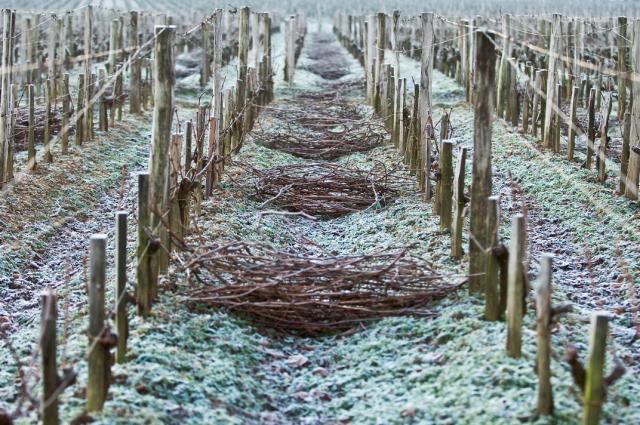
Bordeaux producers understand climate uncertainty and vintage variations. Alongside spring frosts, other challenges include humidity thanks to the proximity of the Atlantic Ocean encouraging fungal growth (downy and powdery mildew), rain at flowering or harvest and now, with climate change, hotter summers and increased hydric stress.
An increase in average temperatures and climate uncertainty and a change in rainfall will increase vintage variation and affect resources and ecosystems.
In the vineyards, this translates to a shorter vine growing cycle with earlier ripening and harvesting (approx. 20 days less over the past 30 years), an increase in hydric stress, changes in yield, alcohol, acidity and aromas in the finished wine.
Although the effects are currently still favourable for the quality of Bordeaux wines, the perspective of the temperature rising 1° or 2°C could have a substantial impact on their style. Bordeaux must still taste like Bordeaux offering consumers aromatic and balanced wines. With over 60 000 jobs dependent on the sector it’s an economic and social as well as environmental challenge.
Winemakers have lots of tools in their kit to produce healthy ripe grapes, with consistently higher sugar levels and more aromatic complexity, whilst maintaining acidity. These tools will be even more useful with climate change. They include canopy management, managing planting densities, planting cover crops, strict selection of grapes during and after harvest, adapting wine making and extraction techniques, and so much more.
Blending is one of these tools.
One step ahead? Bordeaux has had a proactive rather than reactive response to these challenges. The Interprofession has invested €1.2m annually in on-going research by 200 researchers in over 20 public laboratories.
The most newsworthy recent innovation has been adapting plant material. Looking at changing the blend and introducing new grape varieties.
Traditionally Bordeaux AOC wines are limited to six main red grape varieties and up to eight white grape varieties, already offering growers a catalogue of grape varieties with different growing cycles and ripeness spread over time.
Blending is useful, not only for increasing complexity in the finished wine, but also as a way to manage the variability of the climate from one year to another; the famous vintage effect. Blending from this selection allows winemakers to diversify their varietal mix to subtly mitigate the effects of climate change.
The future of the Bordeaux blend. As I mentioned above, Merlot, which represents 66% of Bordeaux vineyards in red varieties, is early ripening, currently able to produce quality wines across the region, but with the shorter and warmer future growing seasons it may struggle to reach its ideal window of ripeness.
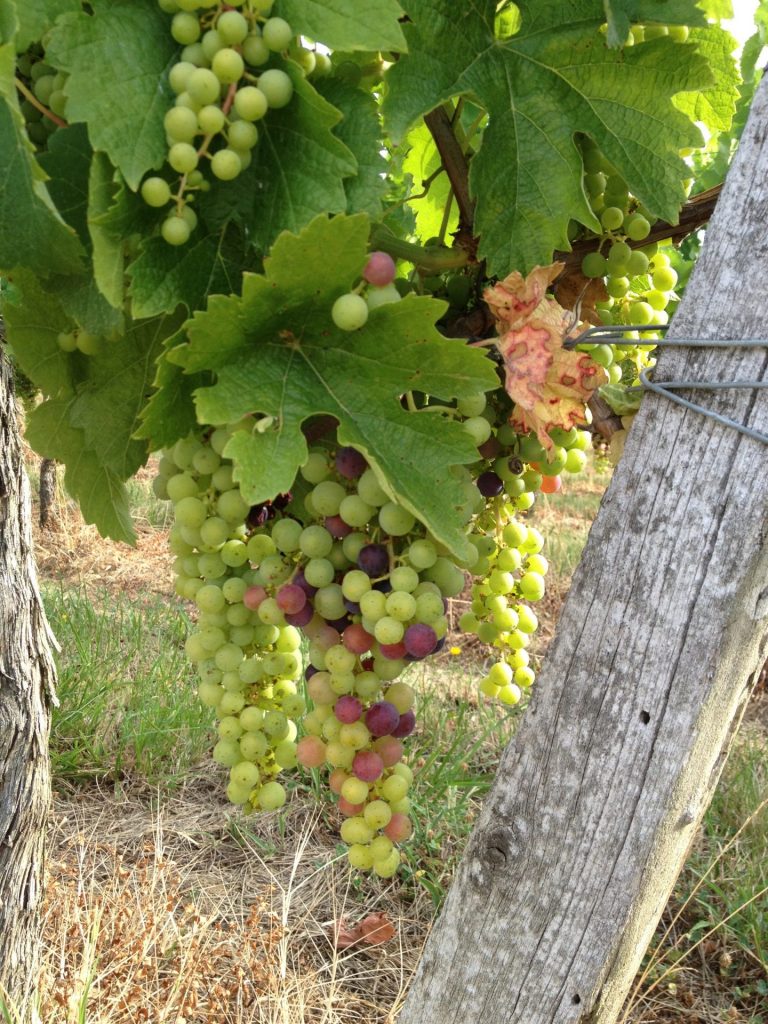
Now, with increased physiological information older grape varieties that previously more difficult to grow, are making a come back. Petit Verdot is the perfect example. It is a later ripening red grape, so benefits from warmer growing seasons. In 2000, it was planted on just 375 hectares. By 2019 a 212% increase brought it to 1174 hectares. It brings colour, acidity and elegant tannins and liquorice and violet aromas to the blend. Adapting to the climate and adding complexity, it’s a win-win.
Building on this philosophy, in June 2019, Bordeaux was the first French vineyard to include new grape varieties into its AOC specifications. Bordeaux and Bordeaux Supérieur AOC winegrowers adopted a list of new grape varieties specifically to adapt to climate change.
The six ‘new’ grape varieties include four red grape varieties: Arinarnoa, Castets, Marselan and Touriga Nacional and two white grape varieties: Alvarinho and Liliorila.
An on going experiment. These things take time; the cycle from planting to producing is around 10 years in Bordeaux. A couple of years fallow between uprooting and planting, at least three years until any fruit produced can be used and a few more years before that fruit starts to become really interesting.
As this is a working experiment, to maintain their AOC, growers are limited to planting just 5% of their vineyards with these grape varieties and they must represent no more than 10% of the final blend for each colour.
Other current research in plant material includes studying the effects of global warming on 52 French and foreign grape varieties and 55 different rootstocks, 30 already authorised in France and 25 from abroad. Grown in experimental plots, they are grafted with five emblematic French varieties (Cabernet Sauvignon, Grenache, Pinot Noir, Syrah, Ugni Blanc).
Researchers are also working on creating new varieties hoping to marry typical Bordeaux characteristics with resistance to the fungal diseases whilst integrating adaptation to climate change.
In almost two thousand years of wine production, a dynamic and delicate balance has been established in Bordeaux between this terroir, the climate and selected grape varieties. The Bordeaux blend is one of the traditional signatures of Bordeaux; it could also be the guarantee of its future.
If you have enjoyed this post please sign up here to receive future blog posts directly to your in box. If you would like to learn more about Wine and Wellness, buy your copy of The Drinking Woman’s Diet here and to learn more about Bordeaux, buy your copy of Bordeaux Bootcamp here.
* CIVB / Source: Customs – CVI (Computerized Vineyard Register) 2018