Yoga and wine really?

When I first shared the idea of wine and yoga tours I was met with some raised eyebrows. Wine and yoga? Are they really compatible?  

I’ve been teaching about Bordeaux and touring Bordeaux with guests for over 30 years. I’ve been practicing yoga for just as long. Mixing the two may seem counter-intuitive but I think it works, for me the two are very complimentary. 

I’m well aware of the pitfalls of working in food and wine for a living, yoga helps me maintain my sanity as well as my physical health. Aren’t we constantly told that moderate wine consumption can be beneficial as part of a healthy lifestyle? For me, yoga is part of that healthy lifestyle. 

As I started sharing the idea of wine and yoga tours with properties in Bordeaux I was amazed by how many of my colleagues in wine enjoy a yoga practice and how they too use it to balance the demands of their life in wine. They loved the idea and many of them have shared their challenges and solutions of wine and wellness on the Insider Tasting blog. 

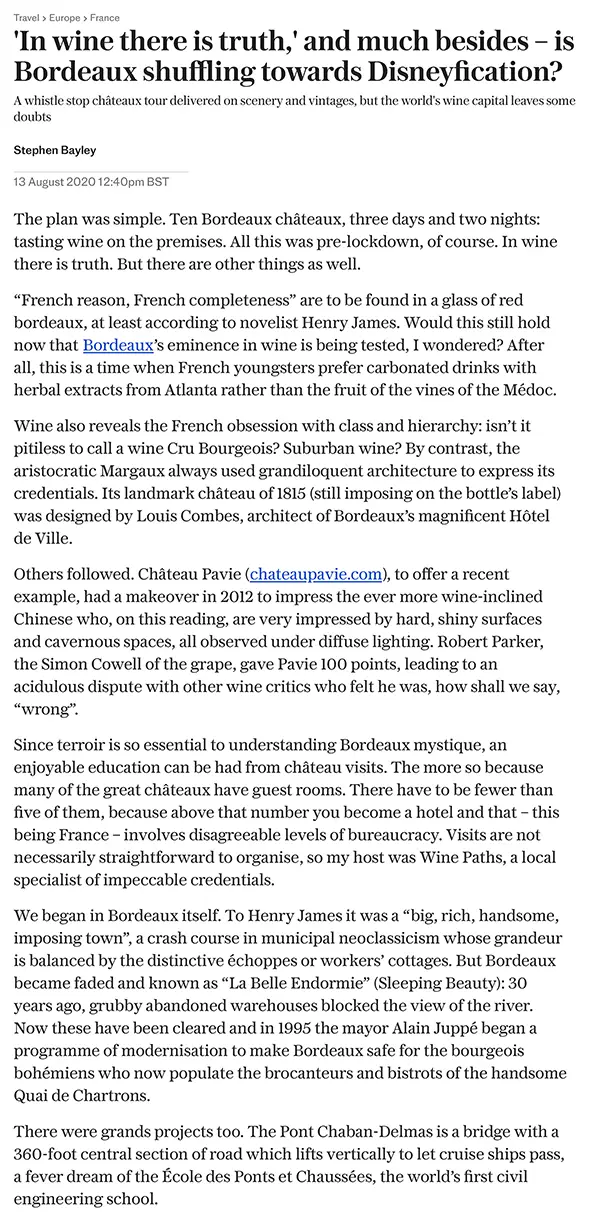
Yoga and wine are two of the things that many of my contemporaries and clients love, even on classic wine tours, clients often start the day with me on the mat. What better place to practise yoga than in front of the vines on the terrace of a chateau or in a cellar amongst the barrels? 

Perhaps people who raised questions have a particular view of both yoga and wine? 

Hair shirt and sandals?

Yoga includes lots of movement, building up a sweat and an appetite – more of which later.  Certain yoga poses can specifically help towards detoxing the body – perfectly designed for a wine tour! Movement stimulates the lymph, ridding the body of accumulated impurities in different organs, including the liver. When the lymph and the liver work in tandem, health improves. 

Detox

Non-yogis may think of yoga as being very abstemious, a lot of sitting around and chanting, so I can understand linking it to wine might raise a few eyebrows. My yoga practice does not involve abstinence; it is one of balance and of tolerance. 

Winefulness

As well as poses, yoga invites you to be in the moment, breathing, and taking time out for yourself, a kind of meditation in action. Trust me, people in the wine business, who taste and drink for a living, need this as much as anyone else. Yoga is good for the brain, mind and body.

Poses take concentration, balancing poses in particular; as soon as your mind wanders, you topple. Yoga can help increase your self-discipline, willpower and self-control. We know how important these skills are when it comes to managing drinking.

But on a wine tour?

You might think a wine tour is the opposite of yoga, as a boozy week away.  Of course there is booze, and we will probably drink more than the recommended units but we’re aiming at quality not quantity. A wonderful philosophy for life, not only wine. 

How to drink. 

It’s also about how we drink. In wine regions, local food is inextricably linked to local wine. Most of the wine tasted on wine tours happens with wine makers around a table over lunch or dinner, pairing wine with food. We know drinking wine with food is much better than drinking on an empty stomach.

Being in a wine region brings you to a more intimate understanding of place, the people and the passion behind the product. Taking the time to taste wine, learn more about it, see where it comes from means we pay more attention to what we are drinking. When you taste wine, you consume slower than when you drink. 

Wine tasting as a meditative experience.

Taking the time to look at, smell and savour the wine in the glass is all about being in the moment (Winefulness?) In the Drinking Woman’s Diet, I argue that taking time with wine, paying attention to what’s in the glass means you tend to slow down. Learning about wine makes you more selective about the wines you drink, which can mean no more cheap wine, another motivation for drinking less but better.

A day of balance.

Starting the every day with a yoga practise followed with relaxation and deep breathing sets us up for an exploration of the winery and its wines. 

Breathing is an important part of yoga, as it is in wine tasting – a perfect pairing. 

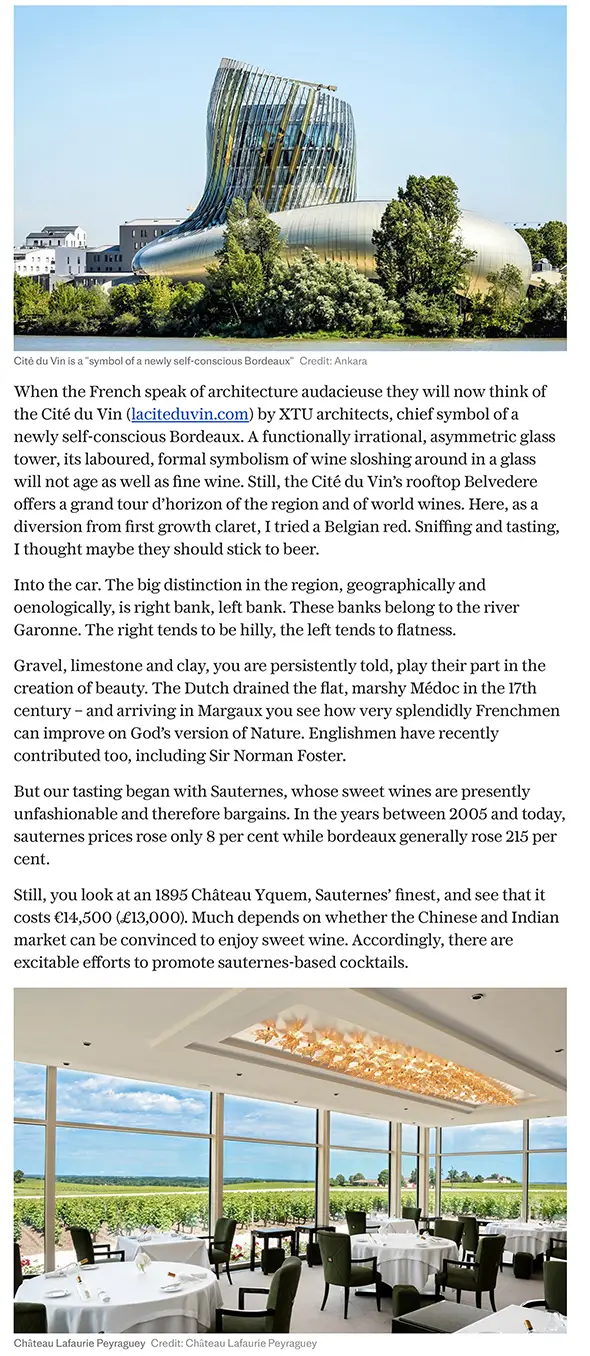
Yoga at Château Georges 7 in Fronsac

Join the fun

Still unconvinced?  I’m not alone in thinking wine and yoga is a thing, Sally Evans of Château George 7 in Fronsac recently held a yoga retreat amongst her vines, including mindful drinking and at Château Climens you can enjoy a yoga nidra classic the tissanerie where Berenice Lurtons dries herbs for biodynamic vine treatments.

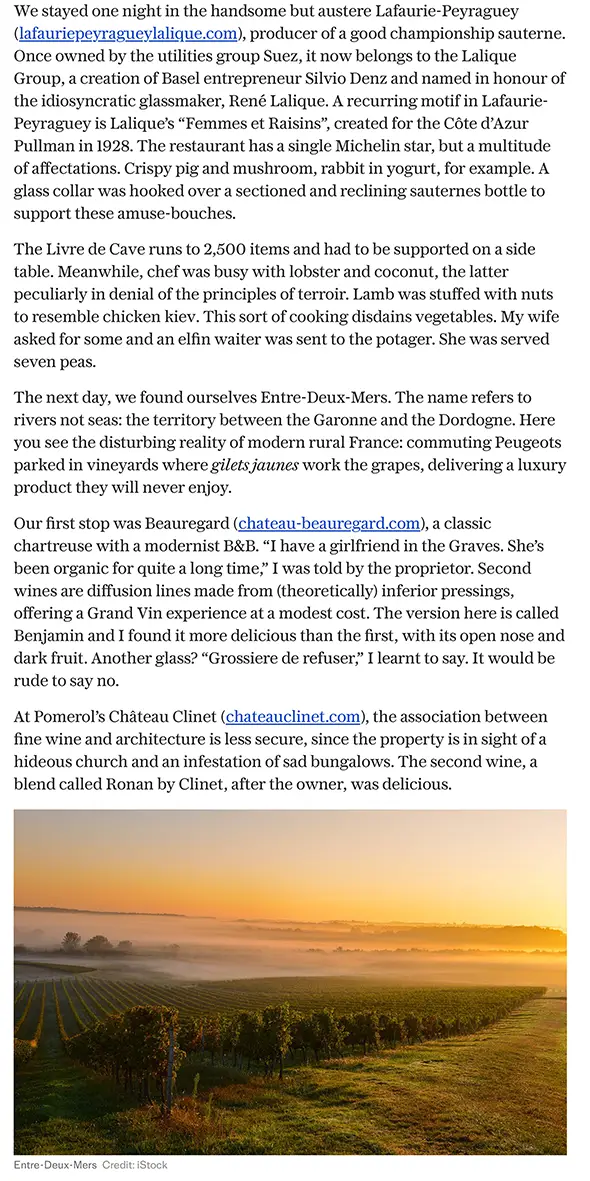
At Château Boutinet, near saint Emilion, owner and yoga teacher Nathalie Escuero has a yurt, hidden away in her vines, offering a yoga class to open your palate and your chakras for a tasting and in Paris Cynthia Coutu of Delectabulles, a champion of women Champagne producers, organises Champagne tastings with yoga. 

Delectabulles, Champagne yoga in Paris

Taking time out, away from real life, to breath, explore passions whether wine, food or yoga may just open the door for a life of balance and pleasure.  

Wine and yoga? It’s a match made in heaven.

For the hair shirts – I’ll send the dress code before the tour! 

Want to know more?  If you have enjoyed this post please sign up here  to receive future blog posts directly to your in box. If you would like to learn more about Bordeaux, buy your copy of Bordeaux Bootcamp here, to learn more about Wine and Wellness, buy your copy of The Drinking Woman’s Diet here. 

Château Climens: Nature in a bottle.

The French definition of ‘Terroir’ often includes climate or at least microclimate. Nowhere in Bordeaux does this seem more appropriate than in Sauternes and Barsac. Thanks to its proximity to two rivers, the large and sluggish Garonne and the smaller more vibrant Ciron, this south-western corner of the region has its own unique microclimate.

In autumn, the summer sun has warmed the Garonne during its journey down from the Pyrenees; the Ciron however remains cool traversing the Landes forest. When they meet, they create the magical misty mornings of the region. Magical as they encourage the growth of the Botrytis Cinerea; the noble rot that transforms the ripe berries of Semillon, Sauvignon and Muscadelle into highly concentrated store houses of sweet juice. It is this juice that the wine makers transform into the liquid gold wine. 

The Cirons River

Visiting this unique corner of Bordeaux in the autumn allows you not just to experience these romantic morning mists but also to see the berry-by-berry hand picking necessary to preserve the quality of the wines. When the sun burns off the mist the beautiful countryside and ancient properties of the region reveal themselves. Elsewhere in Bordeaux producers fear botrytis, treating against it, but not here. Here they encourage it. Could it be the perfect terroir for biodynamic agriculture?

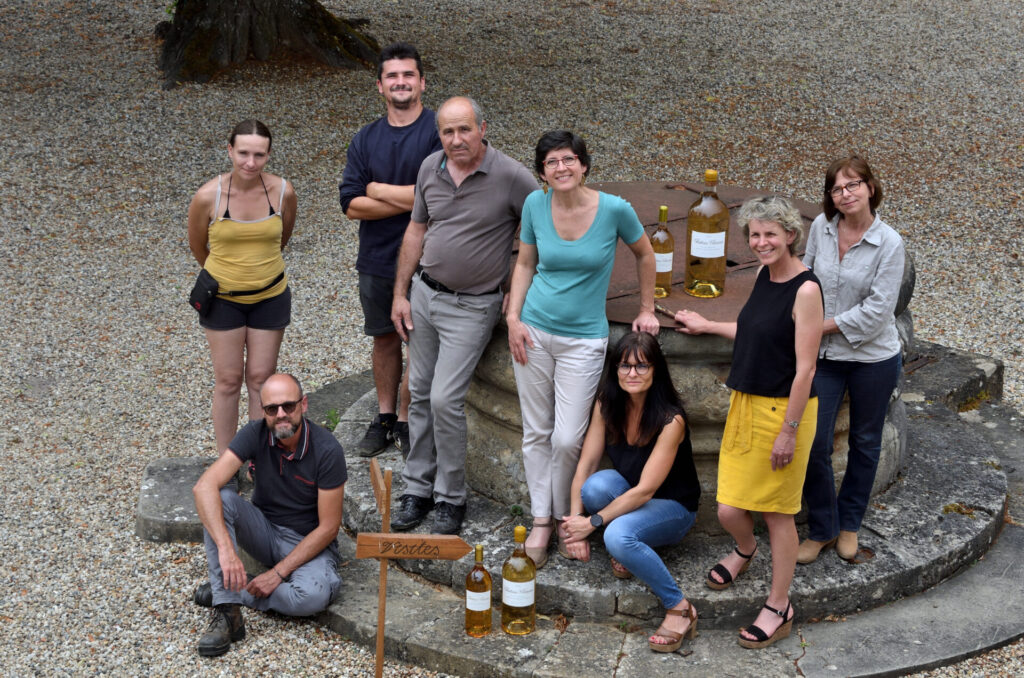
A family affair. At Château Climens, Bérénice Lurton thinks so. Going biodynamic was not a decision to be taken lightly, after all Chateau Climens is a family affair. Lucien Lurton bought the property in the 70s, lacklustre days for both the property and the region. Two decades of rigour brought it back to its place of excellence: It is a first growth in the 1855 Classification. He handed the reins over to his daughter Bérénice in 1992 at the grand age of 22! 

Bérénice was no stranger to wine, growing up at the family vineyard of Brane Cantenac in Margaux; she is a member of the fourth generation of this iconic family of wine makers. With her brothers, sisters and cousins they are a group of 12 wine makers bringing together about 20 domains both in Bordeaux and across the world. 

Biodynmaics In 2010, helped by Corinne Comme as a viticulture consultant and Frédéric Nivelle, the director of wine making and viticulture they decided to convert the entire vineyard to biodynamics. 

The aim is not only to respect the environment but also to allow the vines to find their own healthy equilibrium (that notion of balance again), transmitting the qualities of this unique terroir to the wine. 

Biodynamics is hard work, Berenice with the Chateau Climens team.

This was a revolution in terms of observing and running the vineyard: all chemical sprays have been replaced by plant infusions and other natural preparations and the weaving of branches has systematically replaced trimming of the vines. Changes were not quite as radical in the cellars but winemaking remains a natural process with natural yeasts and very careful use of sulphur. 

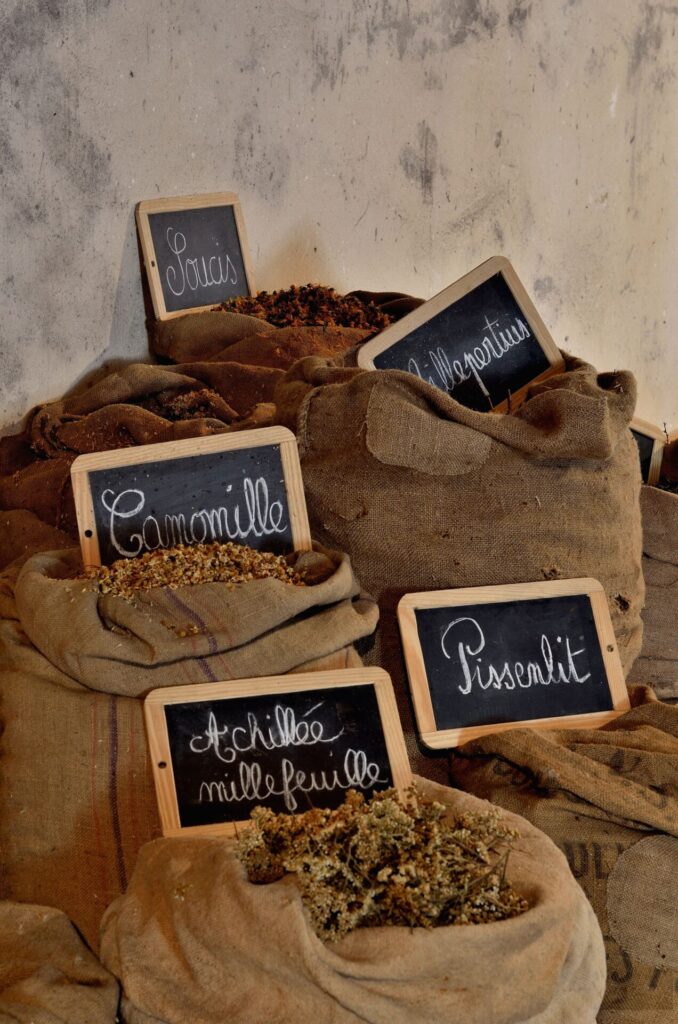
Slow Wine. You can experience all this first hand when you visit the chateau. Bérénice is both passionate and very open; discover the wonderful simplicity of her philosophy of biodynamics. As well as walking through the vineyard you will discover the ’tisannerie’, the attic above the cellars where Bérénice dries the herbs picked in the vineyards. Breathe in the aromas of fennel and camomile before they are transformed into the natural vine treatments. 

The loft is also a wonderful place to practice yoga, deep breathing all these heady aromas followed by a restorative tasting is a perfect wine and wellness experience, it’s on my wine and yoga wine tour programme.

Dried herbs drying in the tisannerie, lady for the biodynamic vineyard treatments.

The proof, of course, is in the tasting. At the property you can taste both sweet wines, Château Climens and Cyprès de Climens. Or slow down, very much the house approach, and choose the ‘Slow Tasting’ to taste three vintages of the ‘Grand Vin’ and discover how these exquisite sweet wines evolve and gain in complexity with age.  

Another insider secret you’ll discover is just how beautifully these wines match with food. With the Slow Gourmand tasting you will taste the wines with both original and classic food pairings served as ‘gourmet tapas’. Or stay for lunch in the elegant chateau dinning room with a menu specially created by the chef of the local restaurant Claude Daroze.  

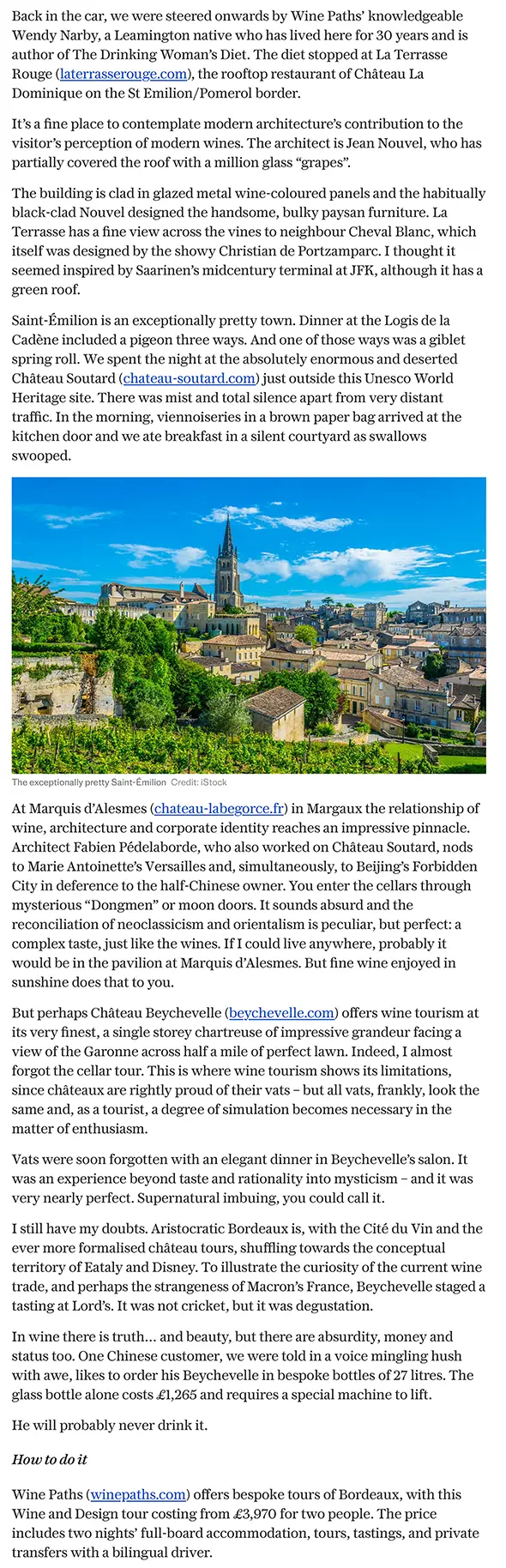
A new creation. Berenice has just released the 2018 Asphodèle, the first vintage her new biodynamic, dry white wine. Totally inline with Berenice’s philosophy it is named after a wild white lily that thrives on limestone. 100% Sémillon and selected from plots of younger vines the grapes are picked well before botrytis to persevere freshness, they are cold fermented using natural yeasts and no oak. This first vintage was conceived with the help of Pascal Jolivet, renown specialist of Sauvignon Blanc from the Loire.

Asphodele-2018, The new dry white 100% Semillion from Château Climens ©F-Nivelle-Chateau-Climens

 I raved about the dry white wines from the Sauternes and Barsac appellations on the blog back in 2012, and again in 2015, so I’m thrilled a new wine has joined this exclusive club.

Want to know more? If you have enjoyed this post please sign up here  to receive future blog posts directly to your in box. If you would like to learn more about Bordeaux, buy your copy of Bordeaux Bootcamp here, to learn more about Wine and Wellness, buy your copy of The Drinking Woman’s Diet here.Â