Sustainable cellars

There’s been no shortage of brand-new cellars in Bordeaux in recent years, each one more spectacular than the next, the architectural prowess combining functionality with beauty. 

Part of this has been a reflection around the environmental impact of these buildings, their carbon footprint, their insulation and their integration into the surroundings, some more successfully than others. 

I’m fascinated by the different solutions properties have come up with. Not all of them are multi-million-euro creations, although, deep pockets help, and a few do smack of vanity projects. But leaving a marvellous piece of architecture as your legacy is nothing new in Bordeaux, look at what owners in the Médoc did in the 18th and 19th century, where chateaux were built as show cases for the wine. Then, owners wouldn’t have dreamt of inviting guests into a winery. Now, cellars are an integral part of the visitor experience and the image that the property portrays. 

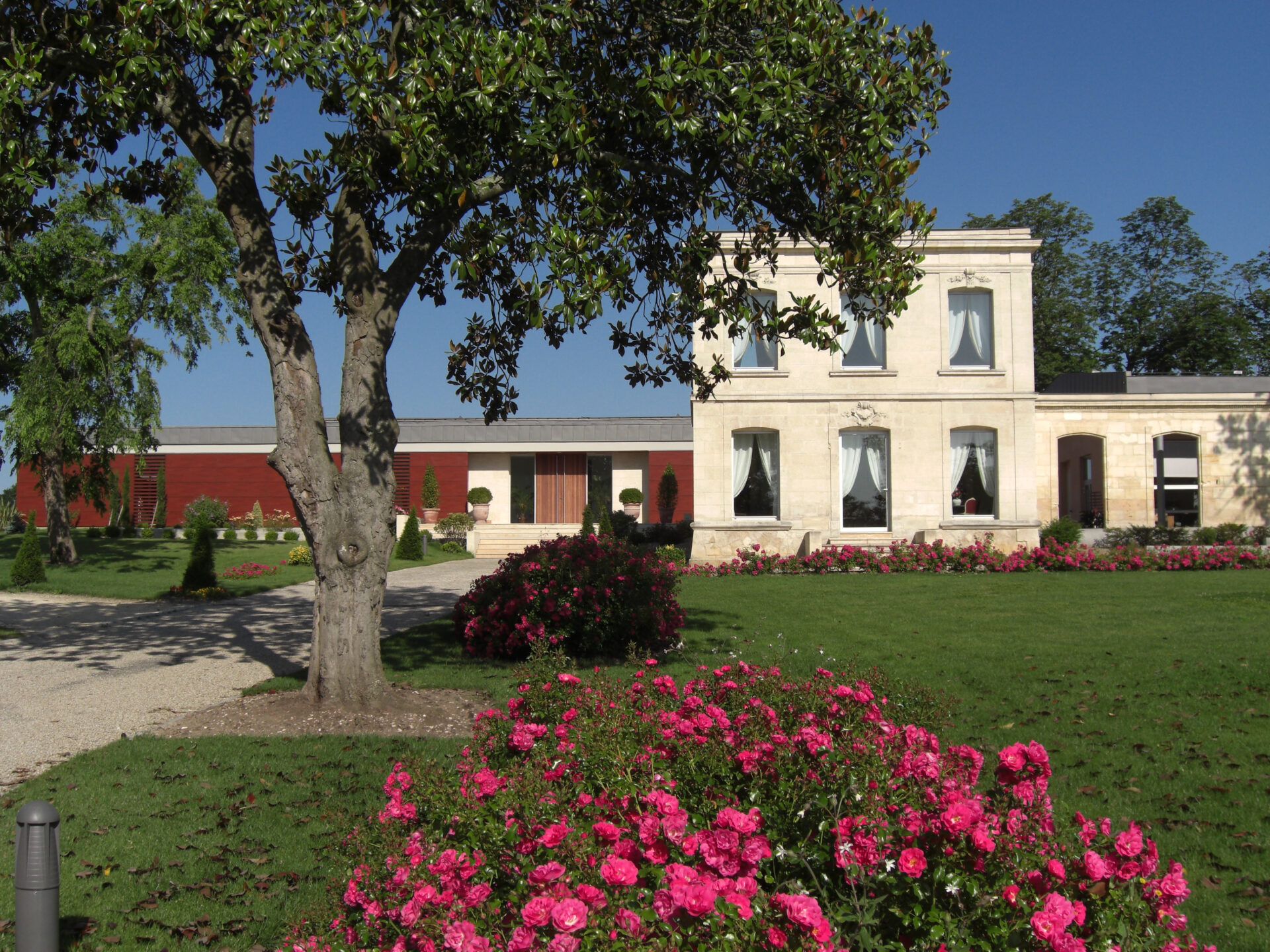
Château Pichon Baron, the perfect showcase chateau

It’s hard to choose which cellar projects to talk about here, recent exciting cellars include Lynch Bages, Beychevelle, Le Dome, Haut Bailly, Cheval Blanc.….

Working with what you have 

Cellars were always designed with an eye to controlling the temperature, even more important before air conditioning and temperature control and some properties are lucky enough to have inherited cellars that have already worked with nature. 

The two cellars of Château de Cérons were built at the end of the 17th century, the same time as the Château (now a classified monument). The wine making cellar was built on the southern side of the courtyard to receive warm sunlight to help the fermentation, whereas the barrel or aging cellar faced north protected from the light with no openings and shaded by trees. 

This image has an empty alt attribute; its file name is CH.CERONS-11-09-2018-319-683x1024.jpg
Caroline and Xavier Perromat in their renovated gravity cellar

In the 1970’s the father of the current owner built one of the very first ‘modern’ cellars in Bordeaux to reintroduce gravity instead of pumps. Using gravity is common practice now but it was very innovative at the time. The harvest arrives at the top of the cellar feeding down to the next level for alcoholic fermentation and down again for the secondary, malolactic fermentation. The recent renovation by Caroline and Xavier Perromat has reserved their historical advantages.

and the original cellar built to keep the aging Cérons cool

A history of innovation. 

Gravity cellars were already being used in the Médoc back in the late 1800s, winching the harvest to an upper floor and allowing the sorted and crushed grapes to fall into tanks using gravity rather than pumps. At Château Lynch Bages the 19th century two-storied vat rooms have been preserved as a witness to past innovation. 

The old integrated into the new

The system, invented by Pierre Skawinski, around 1850, not only used gravity but had slatted flooring allowing  air to circulate to protect workers from Carbon Dioxide. Wooden hoppers would run along metal rails to deliver grapes into the vats below. The vats were elevated to allow the wine to run off but also to allow embers to be placed underneath if the vats needed warming to get fermentation started. This design was reproduced across the Medoc with the remains of similar systems still visible at Pontet Canet, Mouton and Giscours.

At Lynch Bages this preserved vat house is a fascinating reminder of how history repeats itself; it isright next door to the brand-new cellar to be officially inaugurated this year. 

The new wine making cellar

Back to the future

In 2006, an analysis of the Lynch Bages vineyard identified over 80 distinct plots. It was impossible to vinify  these plots separately in the existing structure. In 2009, they started  four years of planning with architect Chien Chung (Didi) Pei and Bordeaux architect Arnaud Boulain. In 2017, they demolished the existing cellar, digging down 10 meters to create once again a gravity flow cellar – but a very different one!

and barrel cellar

The impressive 11 000 M2 glass building, as befits the architect of the Louvre pyramid, has 80 stainless steel vats to accommodate all the plots across the 100ha property and barrel cellars that can house two vintages of 2 000 barrels each. 

Soil to cellar

Henri Lurton is the fourth generation Lurton at Château Brane Cantenac in Margaux. His environmental credentials are impeccable. He is well known as a pioneer of eco-friendly agriculture and passionate about the microbiological life of the soil. He started experimenting with biodynamic viticulture in 2009 and was certified by DEMETER in 2016.

the clever and aestetic shutters for ventilation

He had already applied the same philosophy to his cellar, building  a new ecological cellar in 1999. Built on sustainable principles to minimise its impact on the environment, reduce the carbon footprint and preserve the terroir. The energy-efficient winery uses natural ventilation including an innovative, and stunning system of shutters to control air circulation and sun exposure 

Carbon footprint 

In 2010, Bordeaux was the first vineyard region to measure their carbon footprint. An online carbon footprint calculator, available for all producers and merchants, allows them to understand exactly where and how carbon economies can be made. Some properties have taken this a step further. 
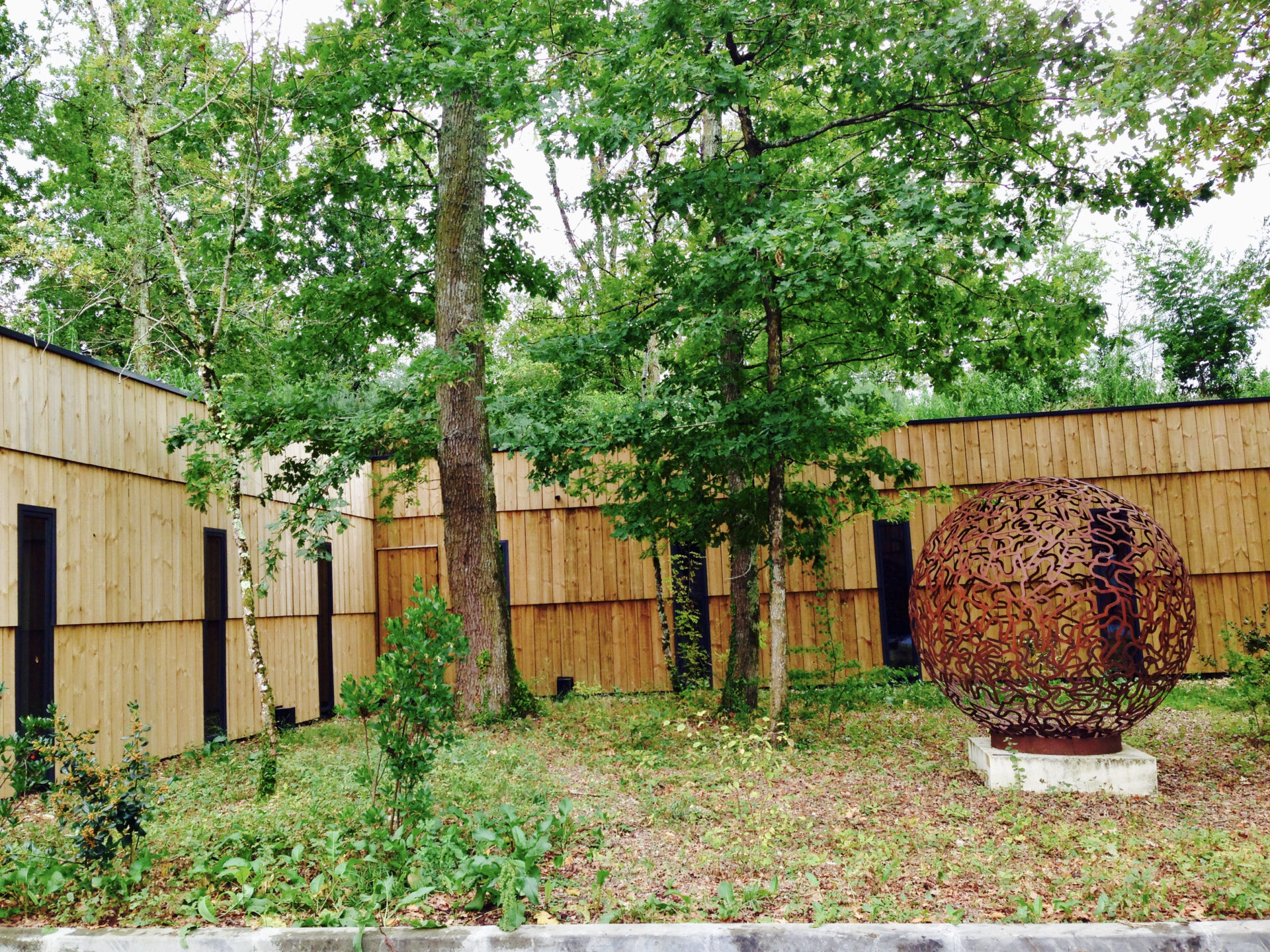
The Stealth Cellar at Château Smith Haut Lafitte, was built around existing trees

Another sustainability pioneer in Bordeaux is Château Smith Haut Lafitte. They built their ‘Stealth Cellar’ in 2013 to receive grapes from younger vines destined for the second wines of the property; Le Petit Haut Lafitte and Les Hauts de Smith.  With a name inspired by its location, and designed to minimise its environmental impact, it was built around existing trees, with the moss and shrubs growing on the roof to blend into the environment and increase insulation. It is low energy and local, the thick walls are built from local materials by local builders and the natural humidity and geothermal heat exchangers maintain cool temperatures. Solar panels help power the cellar and since 2014, CO2 from fermentation is recovered to make bicarbonate of soda 

Owner Daniel Cathiard says “it is a cellar in keeping with the times: discreet and technical, eco-friendly and effective.”

Carbon negative

Martin and Olivier Bouygues bought Château Montrose in 2006 and invested in a spectacular cellar that took over seven years to create, as they worked around the constraints of each vintage. 2013, was the first vintage from the new cellar.

Sustainability was at the heart of the project from the get-go. The 10,000-m² renovation was conceived to give the property the best winemaking facilities, but also to take every opportunity to save and to produce energy. They have installed a geothermal heating/cooling system and 3,000 m² of rooftop solar panels, without affecting the 18th century architecture the Château. 

Behind the scenes carbon recuperation

They now generate enough electricity to meet most of the day-to-day needs of the buildings. Geothermal energy heats or cools water for air conditioning in the barrel hall and for the stainless-steel fermentation vats and they also produce bicarbonate from the CO2 produced during fermentation making the property carbon negative. 

The spectacular barrel cellar at Château Montrose

The centrepiece is a breath-taking 1,000-m² barrel cellar 11-metres high that visitors can admire from above on a unique walk around balcony, bringing the consumer into the heart of the production. 

Sun powered 

Both these sustainable power sources are being used by more and more properties. Château Pontet Canet, the first classified growth to become certified biodynamic, (Biodyvin in 2010 and Demeter in 2014) uses heat pumps and insulation to reduce energy consumption and solar panels to produce green energy. Château Chasse-Spleen in Moulis is self-sufficient in energy thanks to solar panels, and Château Lagrange installed 800 m2 of solar panels in 2019 that now supply about 15% of power used at the winery. 

It’s not only classified growths, Cru Bourgeois Château Paloumey in Haut Medoc has installed  400 m2 of solar panels on the south facing roof of the tractor hangar, enough to be autonomous in energy. 

Château d’Eyran traces its origins back to the 1300s, with a history that bears witness to the highs and lows of the Graves appellation. Inheritance laws, economic crises and the German occupation lead to the vines finally being uprooted in the 1930s. In 1984, Stéphane and Brigitte Savigneux started replanting the vines. In 2015 their son and daughter in law, Charles and Fernanda joined them and they wanted respect for the natural environment to be at the heart of the property. In 2016, they built a unique eco-friendly cellar. From the outside it looks like a traditional U-shaped winery, but clever insulation economizes energy thanks to locally made bio-bricks and light is maximized with floor to ceiling windows reducing electricity use.The wooden cladding, terracotta tiles and paint using natural pigments allow it to blend into and respect the environment.  

Back to nature 

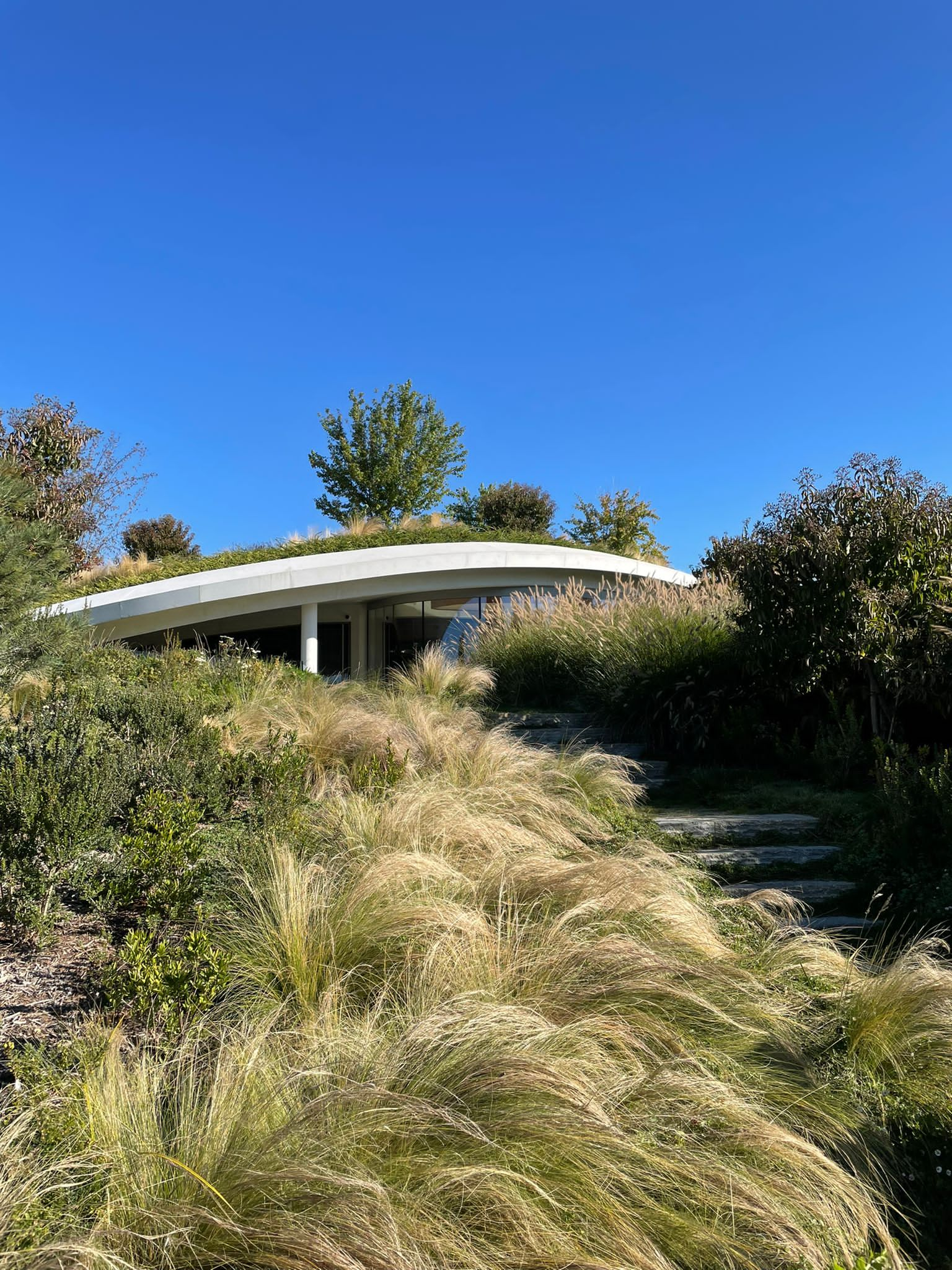
Among the many new cellar projects my favourite (it’s a tough call) must be Chateau Haut Bailly in Pessac Léognan. Here environment and aesthetics go hand in hand. It took 100s of people working together for five years to create this stunning structure that perfectly integrates into the surroundings.
It helps that chairman of the board is an ecologis.  Chris Wilmers is a Professor of Environmental Studies at Santa Cruz University. The family bought the property in 1998, Chris was always a board member becoming chairman in 2017 on the death of his father.

The cellar is not only carbon neutral but has increased biodiversity on the estate.  Part of the back lawn of the château was excavated to create the semi submerged cellar with a biodiverse roof garden, purposely sown with plants to offer a mix of seeds and berries to support fauna. 

From grapes to bottling the wine is protected under an asymmetric 38 M diameter roof, even more impressive when you know there’s a garden growing overhead. As well as beautiful, the garden keeps the temperature constant in the cellar.

It is also surprisingly discreet,  the domed structure is an echo of the gravel outcrops in the vineyard, and blends into the view from the garden over the vineyards. 

Despite the living roof, skylights allow natural light to enter the space that descends 10-20 meters underground. This gives natural cooling and needs little energy to moderate temperature. 

It is built on the gravity principal, good for both wine and energy consumption. The barrel cellar in the basement is also stunning with the technical equipment cleverly hidden away behind wooden walls. 

The building has a HQE (High quality environment) certification and even the tasting room has a stunning view over chateau and vines. 
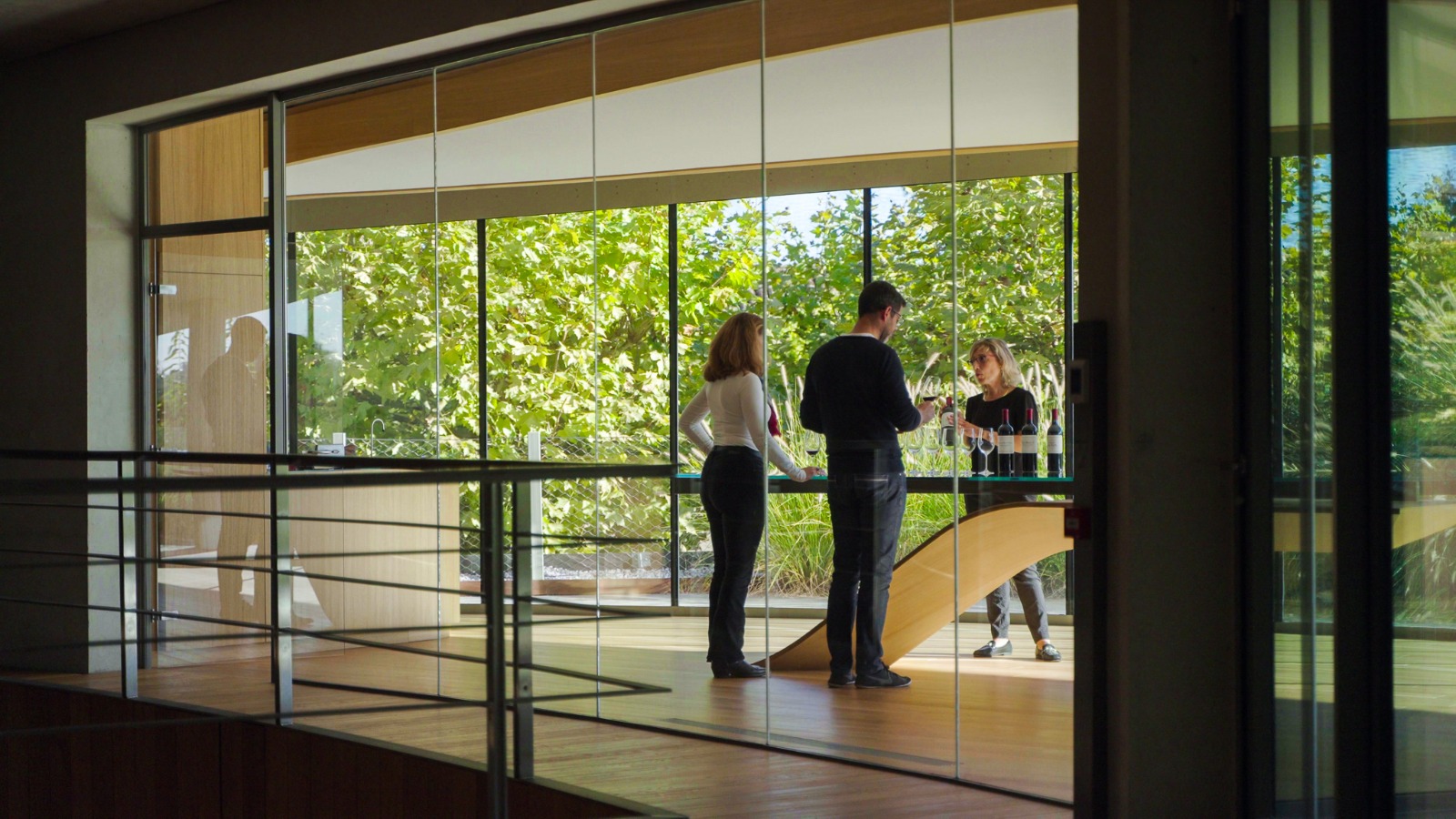
Tasting room with a view at Château Haut Bailly

Managing director Véronique Sanders explains that she wanted it to be positive for the total environment, both for nature and as a working environment and you can see that she is thrilled with the result as she shows you around. It  gives more space for winemakers to work in comfort and is more aesthetically pleasing for both staff and visitors. 
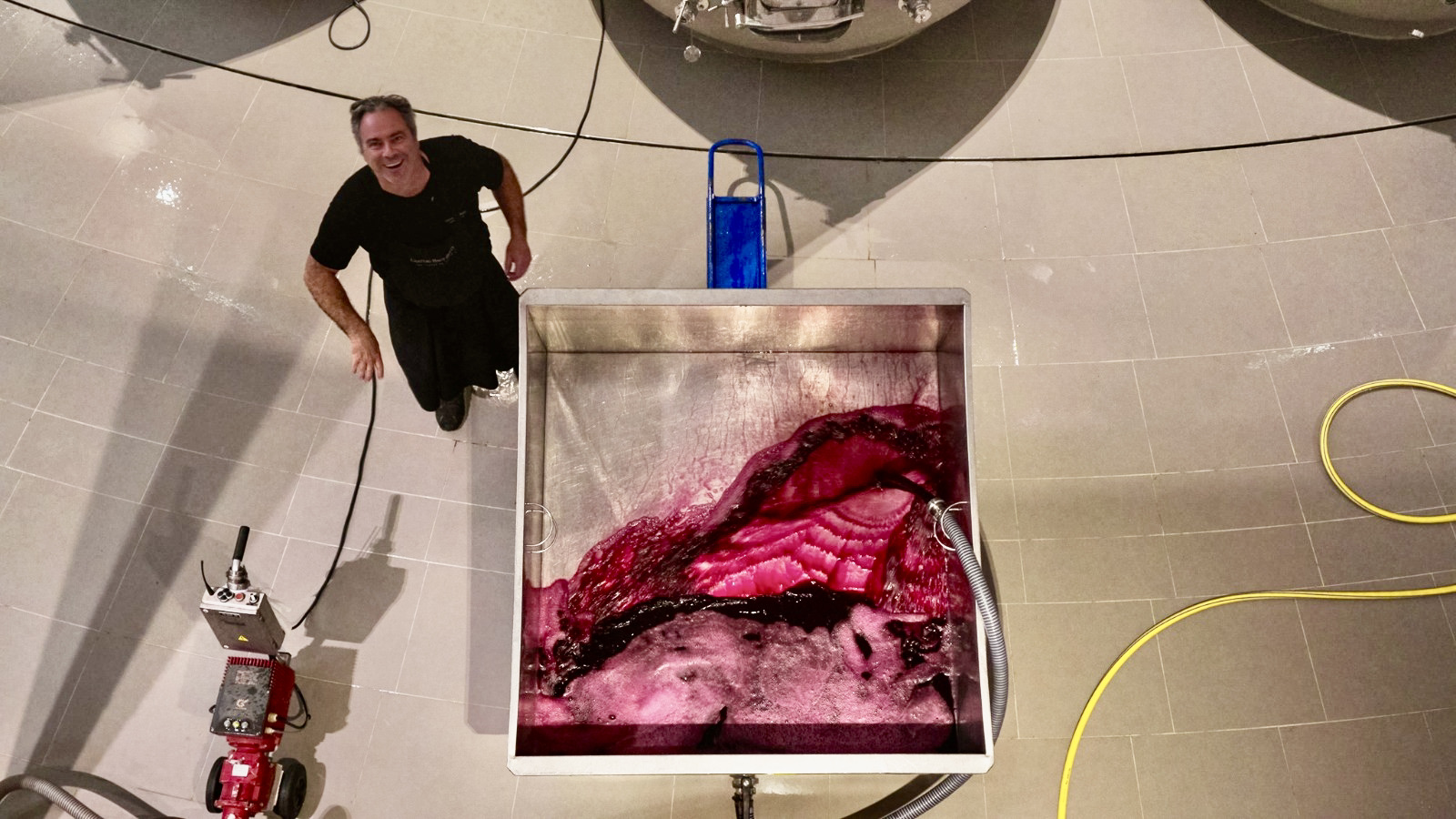
A great place to work

The whole effect is one of elegance and discretion, just like their wine and the team that is behind it. Another example of imagination and innovation working together to serve both the natural and working environments as well as the quality of the wine.

In the next post I’ll look at the challenges that packaging and transport pose for the industry.  Please sign up here to receive future blog posts delivered directly to your inbox. 

To learn more about Bordeaux, you can buy Bordeaux Bootcamp here, and to learn more about Wine and Wellness, with The Drinking Woman’s Diet here.  

Social Sustainability, looking after the people who look after the wine.

Over the last few posts, we’ve looked at different initiatives and certifications for sustainable viticulture in Bordeaux. But what about a broader definition of the environment? A definition that includes people, workers, suppliers, neighbours – the social responsibility of the properties. Is CSR, Corporate Social Responsibility (in French RSE – Responsabilité sociale des entreprises) the next stepping stone in sustainable certification? 

It’s understandable that vineyards would look to their natural environment first, it’s a more tangible and sometimes urgent challenge, but what next?

The people behind the product

The production and sale of wine is the number one employer in the Gironde region. 60,000 people work directly or indirectly in the sector across both urban and rural areas. The activities in and around wine have a profound influence on the local economy, society and the environment. 

The CSR definition of environment includes all stakeholders, employees, partners, suppliers, customers, neighbours, local public authorities and even future generations. The term ‘responsibility’, rather than ‘sustainability’, underlines an accountability towards all these stakeholders. 

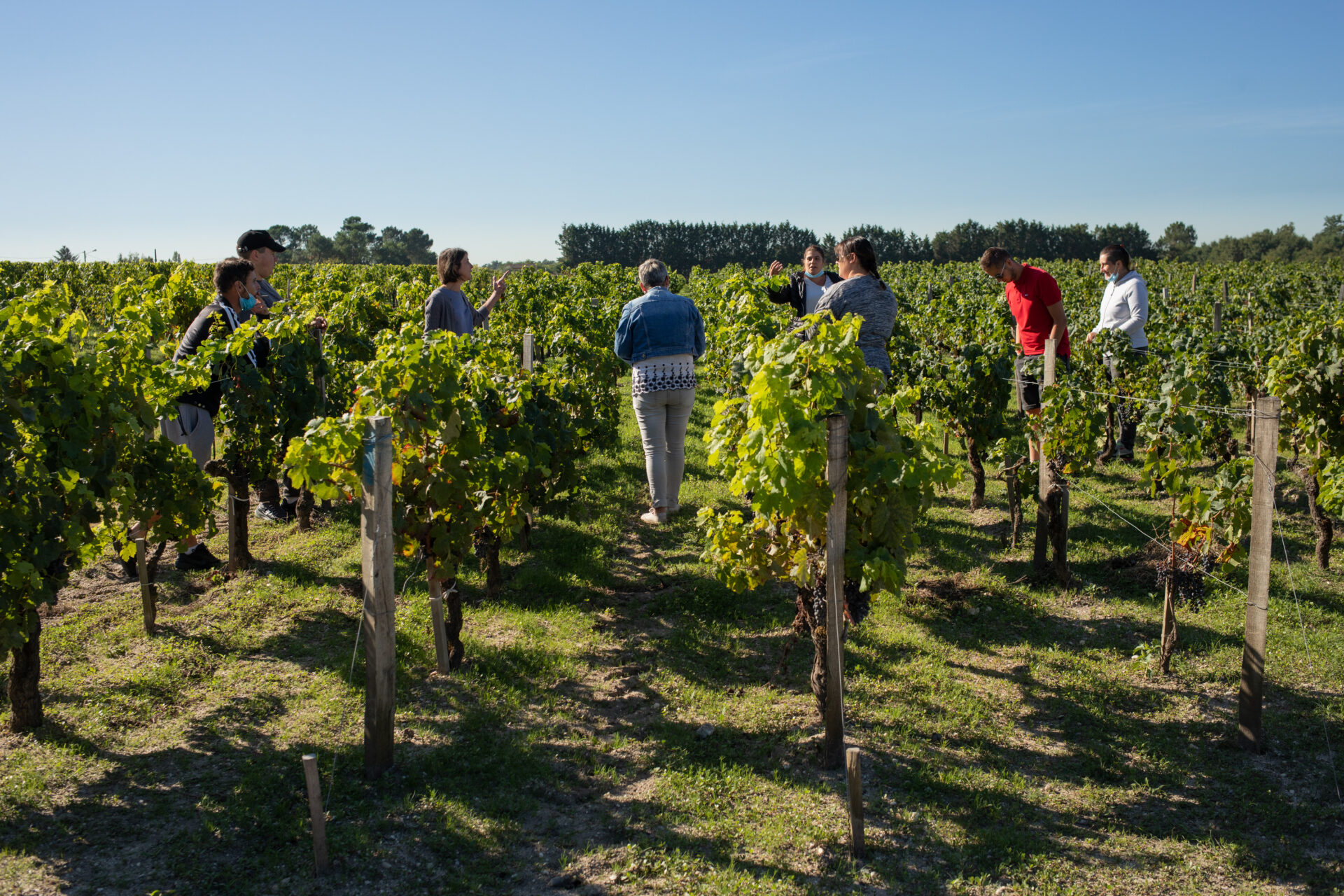
Work in cellars and vines can be physically demanding.

The CIVB (Conseil Interprofessionnel du vin de Bordeaux – Bordeaux Wine council) have taken the same successful collaborative model of the Environmental Management System (EMS) and applied it to CSR. The technique of collaborative action, shared experience, bringing together different actors in the sector that we looked at previously, this time to reach their own CSR strategy. This support is particularly important for smaller vineyards where owner wine makers don’t necessarily have the time or support to deal with the admin constraints.

Bordeaux Cultivons Demain 

The CIVB have created their own certification;  Bordeaux Cultivons Demain. Introduced in 2020, it translates as: Bordeaux, let’s cultivate tomorrow. It is built on the ISO 26000 standard. ISO 26000 is to CSR, what ISO 14000 is to sustainable agriculture. An international standard but not a certification.

Bordeaux Cultivons Demain is a certification, audited by Bureau Verita.  It is similar to HVE in that it has three progressive levels. Upon completion of the third level, the label is granted and can be added to a wine label. 

In 2019, A pilot group of 28 companies tested the concept. They included merchants, winegrowers and a cooperative cellar with very different profiles; from 0 to 3000 employees. All already held environmental certifications.

December 2021, saw the first labels awarded to 13 companies. Wine merchants Castel Bordeaux, Grands Chais de France, Jules Lebègue, and Maison Johanès Boubée and wineries Château de La Dauphine, Château de la Rivière, Château Lagrange, Château Lapelletrie, Château Luchey-Halde, Château Rauzan-Ségla, Famille Ducourt, Vignobles Rousseau and Vignobles André Lurton. 

The programme is now open to the entire sector and over 100 companies have already signed up. The CIVB has set an objective that 30% of the volume of Bordeaux wine will be produced by CSR certified companies by 2030. 

Key concepts.

The ISO 26000 guidelines cover seven central issues: Governance, Human Rights, Labour Relations and Conditions, The Environment, Fair Practice, Consumer Issues, Communities and Local Development.

Bordeaux Cultivons Demain interprets these to cover

• Health and safety of workers and the quality of the work environment , including training and professional and talent development, supporting equality and diversity. 

• Increasing the attractivity of the region and the industry, promoting the culture of wine, encouraging responsible purchasing, making the sector’s practices and commitments better known to the inhabitants of the region, encouraging recruitment, etc.

• Communication, a sector that anticipates and is open for innovation and R&D, promoting responsible consumption, product transparency from the vine to the consumer, wine tourism, etc.

Each participating company creates their own ways to rise to these challenges. The initiatives of the first cohort, some of which are below, show the potential for innovation. 

We’ve looked at initiatives that preserve and respect the environment, these often have a social impact, almost as a by-product: they create safe and agreeable working conditions. Planting hedges and creating wildlife refuges in the interest of  biodiversity create a better local environment for workers and neighbours.

The kitchen gardens at Château Giscours and Château Phelan Segur are great for biodiversity, but employees enjoy the fresh veg too. Locals love seeing sheep in the vines, it makes a change in vineyards that are normally animal free. 

The kitchen garden at Château Giscours, produces vegetables for the chateau and the staff

The flower garden at Château Brown (see previous post) is both an environmental and social initiative. It started with horticulturalist Pauline Rival who belongs to the social “Collectif de la fleur française“, with the aim of making flower production local and  responsible. Beautiful, biodiverse and social.  

The Ducourt Family works with Dephy Ferme, a network of experimental farms that test and demonstrate the latest equipment and techniques aiming to reduce the use of crop-protection products and improve agricultural practices that respect the environment and biodiversity. These experiments are essential to verify the techniques before they go into general use. Hundreds of winegrowers take part, pooling results and accelerating improvements and transformation of  viticulture.

Making the sector attractive 

Brand image is important to consumers, but it is also important to attract the right talent. The sector needs a wide range of skills. As well as wine production, there are cooperages, transporters, printers, oenologists, educational and research organisations and many other suppliers. Environmental initiatives make the wine sector exciting and attractive especially to younger people. Diversifying into activities such as wine tourism attracts candidates with broader skill sets, as does technical innovation in the field and cellar and in marketing.

Recruitment 

You might think working in and amongst the vines in beautiful surroundings is enough to attract workers, but for some professions (tractor drivers, sales people) recruitment is a struggle. Most people who work in wine will tell you it’s a thrilling sector to work in, with lots of passionate people, but both vineyard and cellar work is physically demanding. The physical and mental wellbeing of workers is important in retaining staff and in encouraging new employees. New ideas alongside experience is key to ensuring the future of the industry.

Training and education

Bordeaux has dynamic further education sector working with organisations such as FAFSEA and VIVEA to offer specialised training to both employees and owners, but some properties have also created their own initiatives. 

Training in the classroom
and in the vines for Les Vignerons du Vivant

I mentioned Les Vignerons du Vivant, in a previous post, it’s an initiative created by Jean-Baptiste Cordonnier of Château Anthonic, now coordinated by Pierre Caseneuve of Château Paloumey, to not only recruit and train but also retain precious vine workers.  

Also, in the Médoc, The Vineyard School was created in 2014, to respond to the wine sector labour shortage. Led by Château Larose Trintaudon, ten Médoc châteaux grouped together to recruit, train and qualify operational staff. Staff are trained in the vine and cellars directly by the estates with complimentary ‘soft skills’ at the school. Students come from a wide range of backgrounds and ages; they follow the 18-month work-study programme and graduate with a professional qualification certificate (CQP) as a wine estate specialist, and even better, a job. 

Cap Metiers is an organisation that helps people understand what jobs are available in the region and what they involve and find their calling. They are working with the Bordeaux Cultivons Demain initiative to help young people to discover and engage with the wine trade, creating interactive tools to bring them into the world of wine, virtually. These include 360° immersive videos in cellars, vineyards and bottling plants. They have gamified the management of a vineyard during the seasons and there is even an escape game to find someone apt to inherit a vineyard! If you understand French, have a go.

Virtual vineyard, the Cap Metiers escape game

Seasonal Sauternes 

Shortage of seasonal labour is a recurrent problem in vineyards with seasonal peaks of employment, none more so than in Sauternes. 13 Sauternes properties have together created a consortium to help recruit the 30 to 250 workers needed during the year. The goal is to offer employees better and more motivating working conditions and training, to make the work more interesting and improve the skills of seasonal employees. Although the priority is given to locals, they also offer a free harvest bus. They now retain 30 to 40% of more skilled seasonal workers, a huge improvement.

Harvesting in Sauternes

Attractive Innovation

Wine making doesn’t have a very high-tech image and doesn’t always attract younger workers. But it is innovative in both natural and environmental science, the bio-chemistry of wine making and ageing, carbon capture, packaging (more of which to come), marketing and communication. 

It’s the young management team at wine merchant  Jules Lebègue that is leading their vision to become the Bordeaux leader of “green” wines. 

They obtained ISO 14001 through EMS and are HVE3, organic and biodynamic certified and producing both vegan and  sulphite-free wines, working with winegrowers that committed to environmental and sustainable development. A member of the pilot group since 2019 their CSR action plan, includes a product Life Cycle Analysis (LCA) to understand and reduce the environmental impact of their products. 

The 50 employees have their own ideas about improving their working environment. Listening to them creates new opportunities. They suggested creating an insect hotel and installing beehives for biodiversity and a shared vegetable garden. They initiated improved waste sorting and becoming paper-free. Workshops introduced to reduce their climate impact at work have benefited the company and the employees in their own homes.

Employee Wellbeing

The arduous nature of work in the field and the cellar can’t be ignored. There are innovations here too; pneumatic secateurs, tying machines for pruning are common and even exercise routines in the vines. Château Lagrange is testing adapted exoskeletons, tailor-made support devices to provide relief from repetitive movements and limit the development of musculoskeletal disorders. 

Brand image 

Successful communication is not just about sending messages out via social media, it’s about creating dialogue between châteaux and employees, consumers, suppliers, stakeholders and the neighbours. It is probably the key to many of the issues addressed in a CSR strategy. Consumers with questions and complaints can be a great source of inspiration rather than simply a source of irritation.

Wine tourism is a great way to communicate. On their ‘Green Tour’ Château de la Dauphine specifically makes visitors aware of environmental issues when they visit the estate. They discover the regenerative ecosystem: bee hives, wild bee houses and bird and bat shelters made from recycled wooden cases, the presence of chickens for food waste and to protect bees from Asian hornets, the permaculture vegetable garden, etc. 

Good neighbours

Wine tourism also offers an opportunity to open the doors to the neighbours through art and music festivals, farmers markets with local producers, restaurants, bars and guest rooms and gites. The vineyards of Bordeaux are intimately connected with the local population. 110,000 of the 900 000 ha in the region are under vine. The networks of towns and villages in and around vineyards means continued communication with the neighbours is important, especially around vineyard treatments. 

Protecting the neighbours 

Regional wine organisations have created ‘good neighbours’ charters with local councils  and the CIVB has created an atlas showing which plots of each vineyard are close to schools, kindergartens and hospitals. 

The BVE App

There’s a legal obligation to communicate before any treatments organic or otherwise, are used in the vines. There is a legal distance to respect that varies as a function of the product being used  and an obligation not to spray in school hours. Since spring 2021 the BVE 33 App (“Bien vivre ensemble”, or “Living well together”) tells neighbours and walkers when spraying has been carried out or is in progress. 

Heritage 

Many chateaux are known for their architectural beauty, it’s part of the region’s heritage, a heritage that needs protecting. Locals might be proud of this heritage, but  large vineyards can seem cut off from the villages and people around them. There is a perception that wealth stops at the chateau gate. Despite the fact 56% of wineries in Bordeaux are small family-owned properties, it’s a hard image to shake but it needs to change. The chateaux need the local workforce more that the locals need the châteaux. 

Château Paloumey works with the local district council to open their world to primary school pupils. The chateau cultivates a plot specifically so the children can come and experience viticulture, to increase understanding and respect for the role viticulture in the community and who knows, inspire future vocations.

Eat and drink local

Not all communication is negative or warns people away. The #Bordeauxlocal movement, launched in 2020, brings actors together to raise a positive profile of the region as a whole and the wine sector in particular. It’s a collective endeavour to encourage and promote local consumption. 

Chateau Luchey Halde is in a unique situation to communicate and work simultaneously on two of these fronts: education and neighbour relations.

Château Luchey Halde, an urban vineyard

The château is part of the National School of Agricultural ngineering of Bordeaux Science Agro BSA and unique in that it is in an urban setting, saved from the urban sprawl across the northern Graves in the 1970s as it was military training centre and was never built upon. Working with local Town hall they are creating a market garden on land made available by both the property and municipality. Produce will be used by canteens in local nurseries and schools. It’s an economically profitable and environmental responsible model of urban agriculture and also gives BSA students a living laboratory to study agroecological solutions for minimum environmental impact. 

Perfect partners 

Negociant Maison Johanès Boubée is working with two local companies, Raisinor distillery and transporter Veynat in a transport innovation. They are fuelling tanker trucks with bioethanol from grape pomace, these trucks collect bulk wine from vineyards and deliver it to their bottling plant.

Delivering wine thanks to bio ethanol © Atelier Gallien

Château de la Dauphine in Fronsac is one of the first CSR Bordeaux cohort. They  consider the process gave them a new insight. ‘’We have made a lot of progress over the past eight years on the environment, safety, well-being at work, etc. We were undoubtedly missing a building block: greater involvement for our partners. Many of them are already well on the way, but we didn’t always know about it or we didn’t talk about it. Now we will move forward together and continue to make progress.” 

High tech traceability 

They are also in partnership with Carrefour Group, Caves de Rauzan and Terre de Vignerons, to create a blockchain for a Carrefour Organic wine. Through a QR code on the bottle, the consumer can access information on the winegrowers who grew the grapes and the cooperative cellars that made the wine. An initiative that both communicates with the consumer and empowers their partners through the supply chain. 

Fair Trade

‘Organic is great, but organic and fair is better’ is the Vin Bio Equitable philosophy. Covering quality, environmental, social and economic sustainability, the Charter was created by INTERBIO Nouvelle-Aquitaine, a regional interprofessional organic association. It includes wine makers, cooperatives, merchants and the chamber of agriculture. The consumer is guaranteed  organic wine from an environmentally certified vineyard, the wine is tested for residual levels of pesticides and blind tasted for quality. It also has a social guarantee, that of protected workers, transparent communication and ensuring a sufficient return for the winemaker on the product. All identified by their logo. 

Bigger than Bordeaux 

In 2010 Les Vignerons Engagés created the first French sustainability and CSR certification for the French wine industry. It is similar to Bordeaux Cultivons Demain in that it is based on the ISO 26000 standard, but it is exclusive to Wine Cooperatives and covers the whole of France. 

The Association includes 6000 winegrowers and employees covering 31,800ha across eight wine-growing regions, they estimate they sell one bottle every five seconds. The certification is audited and assessed by AFNOR. In Bordeaux Les Caves de Rauzan are members. 

B Corp: People, plants and profit 

Of all the global initiatives in CSR, the most highly regarded is B Corp. Certified B Corporations are leaders in the global movement for an inclusive, equitable, and regenerative economy. 

The Certification guarantees that a business is meeting high and verified standards of performance, accountability and transparency on factors from employee benefits and charitable giving to supply chain practices and inputs. 

B Lab measures the company’s entire social and environmental performance, and the results are publicly visible on B Lab’s website.  

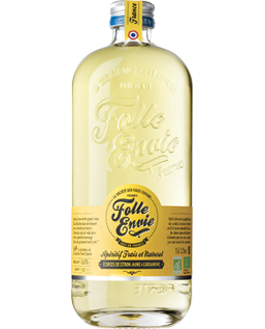
Companies are required to undergo the verification process every three years, aiming towards continuous improvement. 45 wine companies are B Corp certified worldwide. As far as I’m aware no Bordeaux vineyard is yet, but please contact me if you know otherwise. The closest I’ve found is Aquitaine based low-no aperitif company La Société des Vieux Copains, with their  Folle Envie and Archibald Brand. They were B-corp certified in 2019. 

Une folle envie

1% for the planet 

This is a different approach, it challenges companies to donate 1% of their turnover (not profit) to environmental philanthropy. According to their website only 7% of corporate philanthropy goes to the environment. 1000 French companies currently participate in the initiative, including a few wine companies.

In Bordeaux, Pierre Jean Larraqué vineyards is signed up. They own and run three Bordeaux vineyards but also source wine across 57 appellations of the region for export.  Domaine Bonabaud in Blaye, also HVE 3, donates as does ethical wine merchant Ethic Drinks who source wines across France to blend and bottle in Bordeaux. 

Not exactly wine, but related, is cosmetic company Caudalie who also contribute. Their products are based on wine extracts and saw the light of day in Bordeaux at Château Smith Haut Lafitte, a pioneer of bio-precision viticulture.

HISA, the Bordeaux environmental NGO, mentioned in several posts for their collaboration with Bordeaux vineyards, are one of the recipients that 1% contributors can choose to receive their donations. Their projects include  Château Lestrille, Vignobles Fayat and Château Clinet.  

The potential for innovation in CSR is as exciting as it is diverse and challenging. Embarking on this adventure is an opportunity to examine ethical values, to discover how they can pursue economic performance but not at the expense of their social, societal or environmental impact. How can they move towards a durable and more responsible corporate model?  How can they offer great wine, promote responsible consumption (more of which in a future post), preserve and develop the heritage of Bordeaux wine whilst looking after their workforce? Bordeaux is rising to the challenge.

In the next post I’ll look at how sustainability is at the heart of some of the latest wine cellars in Bordeaux.  Please sign up here to receive future blog posts delivered directly to your inbox. 

To learn more about Bordeaux, you can buy  Bordeaux Bootcamp here, and to learn more about Wine and Wellness, with The Drinking Woman’s Diet here.  

The birds and the bees of Bordeaux  

In previous posts I’ve looked at the classic sustainable, organic and bio dynamic certifications, but in doing the research I came across other initiatives that I wanted to share. Complementary to sustainable viticulture, they show a broader perspective of how properties interact with and preserve their natural environment. There are so many I’m only scratching the surface here – I’ll be back with more.

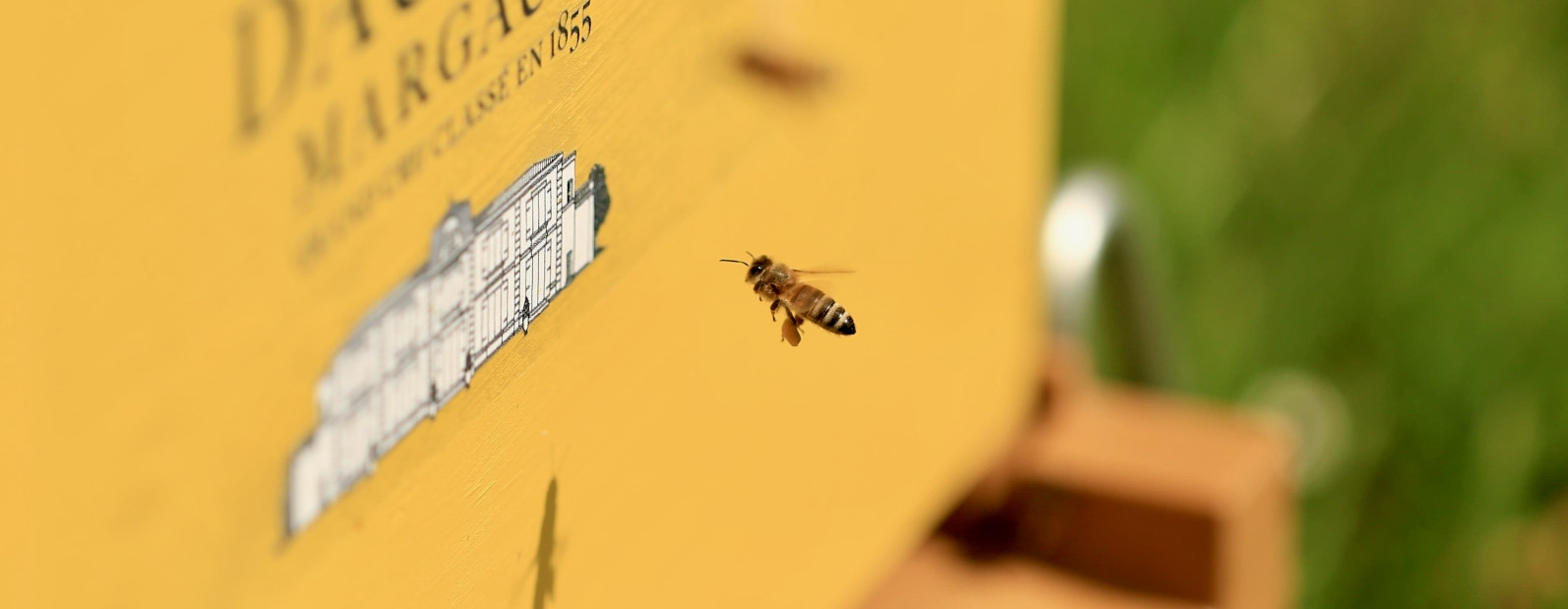
BEE FRIENDLY is a great name; it explains exactly what it’s all about and their website has a cute bee cursor that buzzes across the page. A European label created in 2011 by a panel of bee experts, organic agriculture and agribusiness specialists, it promotes pollinator-friendly systems.

There are almost 1000 species of wild bees in France, that are all weakened by both pesticides and reduced biodiversity. The vine is self-pollinating, it doesn’t rely on bees or other pollinators, but we’ve seen how important biodiversity is for the health of the vineyard. No bees, no biodiversity and vice versa.  

The Bee Friendly certification is independently audited with four levels, encouraging producers tokeep improving.  The long list of criteria covers six themes; traceability, pesticide use (with a list of banned molecules and measures to protect pollinators during treatments), a ban on GMOs, the designation and creation of areas of biodiversity, pollinator protection during harvest, and partnership with beekeepers.

Almost 30 Bordeaux properties are now certified Bee Friendly, including a few names that will be familiar for regular readers: Château Lestrille and Château Thieuley in Entre-Deux-Mers and Chateau Branaire-Ducru in Saint Julien, which is not surprising given their amazing rose collection. The cheerful Bee Friendly logo is easy to spot, so consumers can support the well-being of bees.

Roses at Château Brannaire Ducru

In 2020, Château Brown, in Pessac Léognan, started working with young horticulturist Pauline Rival, to dedicate 700 square meters of this land to create a flower farm. They use a no-till method to preserve soil microorganisms and to encourage the bees. They also leave 45% of the 60-ha property uncultivated as woods and orchards to protect the biodiversity. 

Many vineyards in Bordeaux are selling chateau-bottled honey alongside their bottles of wine. There are more and more beehives in the vines, introduced to improve or maintain the biodiversity of the properties. Château Dauzac in Margaux runs workshops with their beekeeper where visitors can learn about the life of a beehive, and Chateau Rabaud-Promis in Sauternes has redesigned their bottle illustrating their passion for bees.

Bees on a bottle at Château Rabaud Promis in Sauternes

Bats and birds 

In a previous post I mentioned how in 2015, the LPO (France’s league for the protection of birds) worked with the whole of the Margaux appellation to take a wildlife inventory. They found 17 different species of bats, 185 species of wild bees, 51 species of birds and 30 species of butterfly. They have now established biodiversity corridors, which allow this wildlife to move more freely across the appellation.

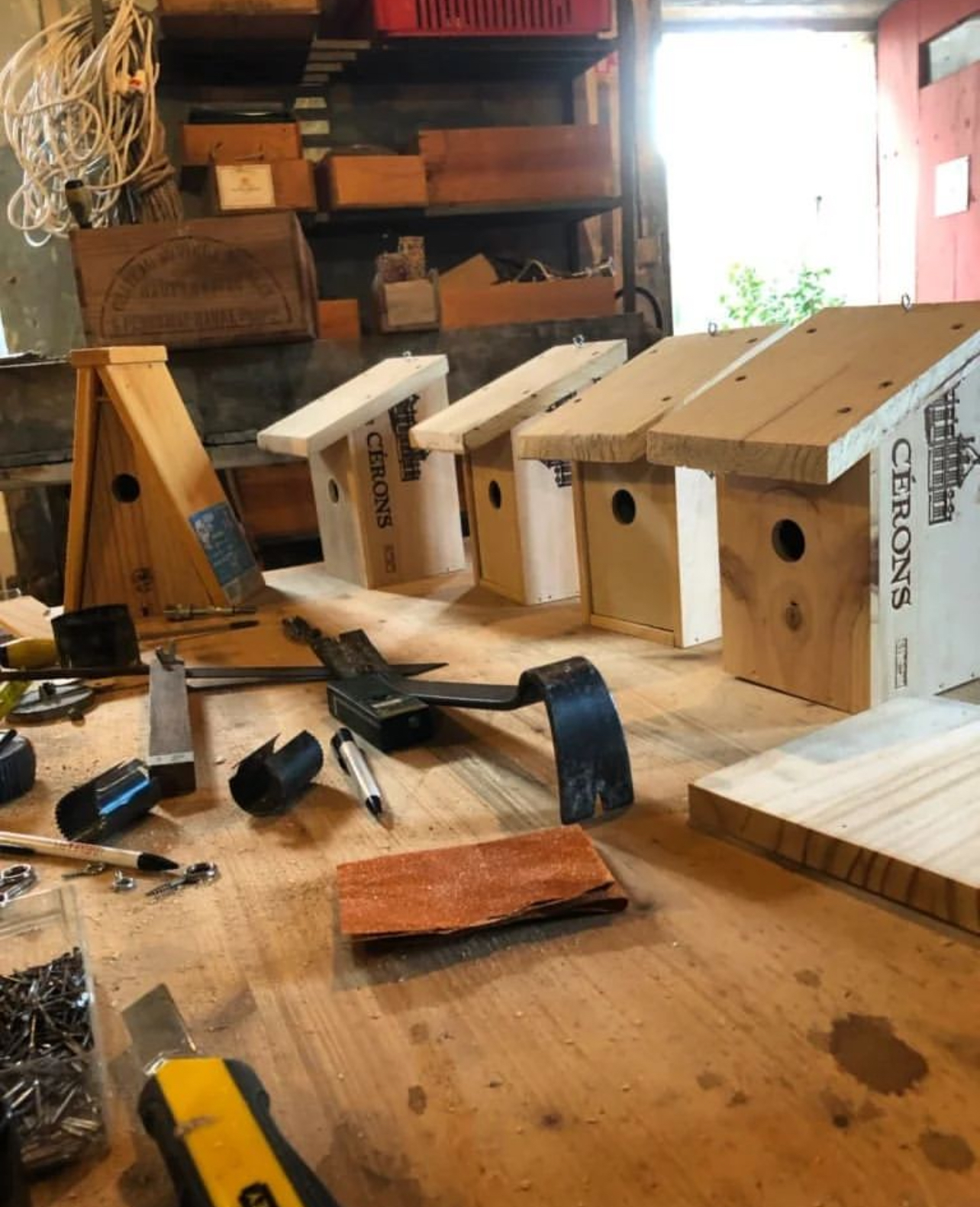
The LPO are busy across Bordeaux helping properties create biodiversity refuges. As well as trees (see below), vineyards are making birds feel at home by installing bird boxes. This recent Instagram post from Château de Cérons, shows upcycling wine cases makes very chic bird boxes!  

Chic Bord Boxes at Château de Cerons

Out of the 33 French bat species, 22 are present in the Gironde. Vineyards love them as they feed on insects, especially moths. These moths lay their eggs in vine flowers, and when they hatch, the caterpillars attack flowers and berries, reducing yield but also encouraging grey rot. 

Bats eat 1.5 to 2 times their weight in bugs, in a single evening, a bat can eat over 2000 mosquitoes and 600 moths. Encouraging bats to fly around the vineyard at dusk is one of the best ways to keep the moth population under control without using insecticides. 
Bats live in buildings, woods, and cracks in stonewalls. Saint Emilion and the satellites, the Côtes and parts of the Entre-Deux-Mers are fortunate to have natural underground limestone caves, also a perfect habitat for bats.  

A joint project by the French Bird Protection League (LPO) and the CIVB, has developed an online bat observatory, an app and a geo-location system to measure just how efficient the bats are and how wineries can provide and improve their habitat. Planting trees in the vineyards helps, as does building bat houses; the Cadillac-Cotes de Bordeaux appellation even has instructions for a DIY bat box on its website! 

A ‘Batman dans les vignes’ project encourages children to get involved in protecting the environment, with schools building bat houses for neighbouring vineyards.

Agro-forestry

Agro-forestry is a philosophy that applies how forests work to agriculture, especially monoculture, increasing biodiversity both above and below ground. Trees are also climatic shock absorbers, cooling the atmosphere in summer and offering protection against the wind, which dries the soil. 

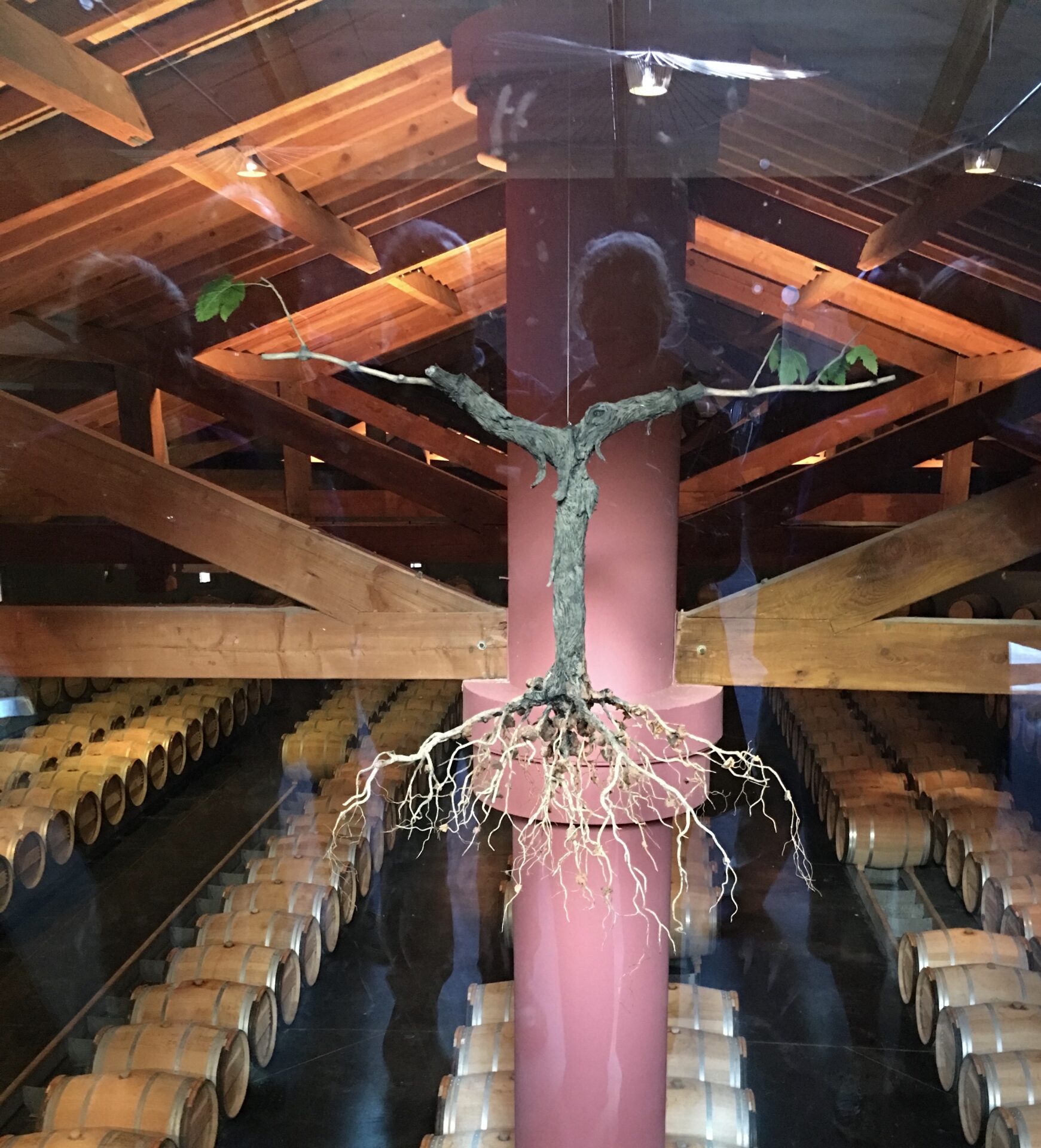
Getting to the root of the problem at Château Lafon Rochet, the Jorge Maylet sculpture in the cellars

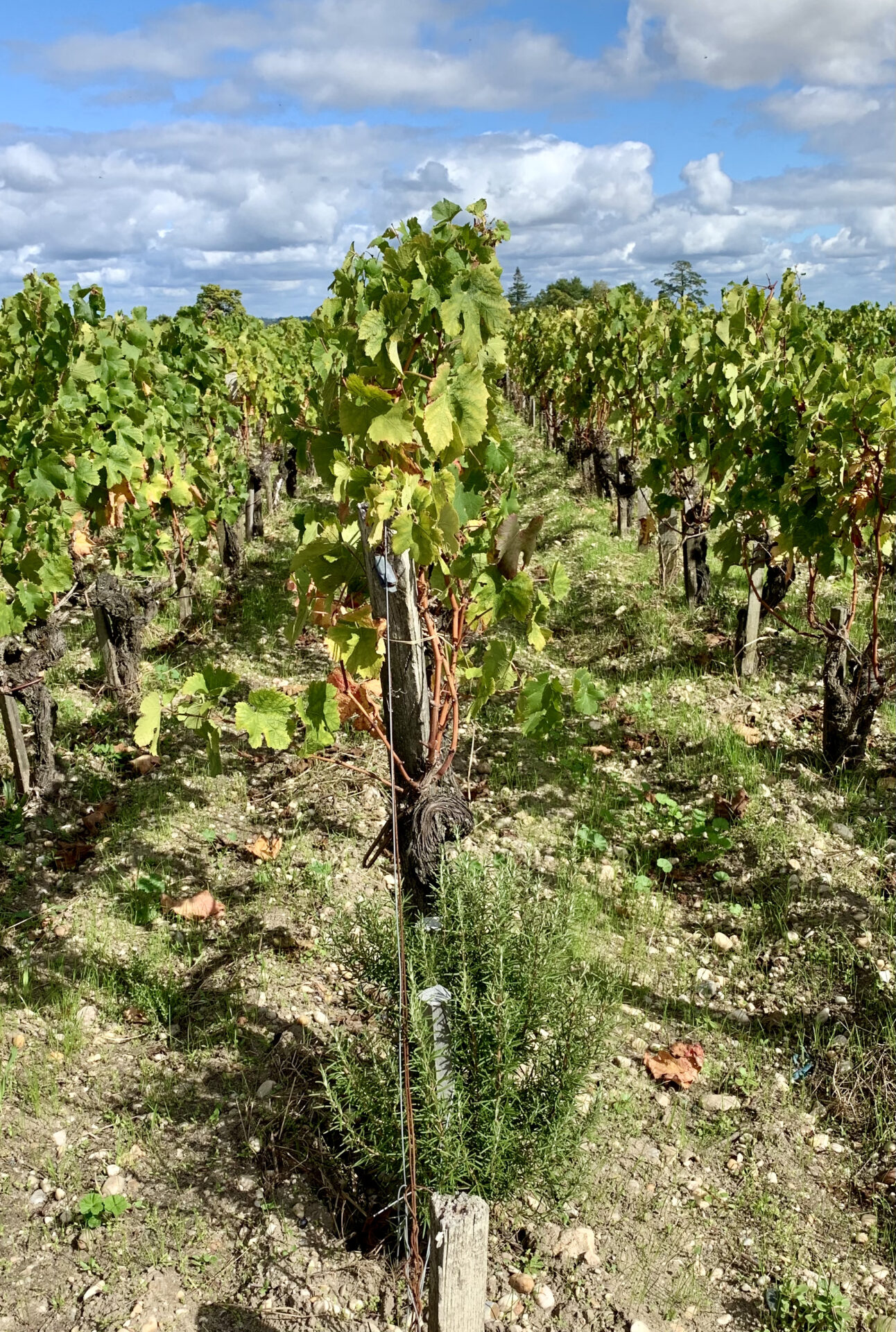
There are multiple approaches to agro-forestry in Bordeaux, too many to include them all, but when you drive through the vineyards, you’ll see more and more trees in the middle of fields of vines, often fruit trees. Chateau Lafon-Rochet in Saint Estèphe is planting 13,000 trees and hedges that will create 10kms of hedgerow in and around the estate. In Margaux, Chateau Palmer is a pioneer of agro-forestry, moving away from monoculture by planting fruit trees and hedgerows amongst the vines. They introduced biodynamics in 2008 and now have sheep grazing in the winter vineyard for even more biodiversity.

Rosemary rather than roses at the end of vine rows at Château Palmer

At Château Paloumey, as part of the conversation to organic agriculture, Pierre Cazeneuve is planting four hectares of agro-forestry. He’s testing planting a line of trees every 5 rows of vines; the trees will act as a bio-climate barrier, creating shade and humidity to reduce the impact of warmer summers.  

Château Bonnet has uprooted 2 hectares to plant 100 acacia trees as part of a crop diversification programme. These trees fix nitrogen in the soil and provide flowers for the bees. Acacia wood is often used for vine trellising stakes, on old, abandoned plots, they sometimes root and become trees. 

Microbiome and a sense of place.

We’ve seen above how trees encourage biodiversity above ground, offering homes to bats, birds and bugs, but they also help keep the soil alive. Trees encourage a natural regeneration of the topsoil, increasing biodiversity of the soil with yeasts, bacteria and mycelia that live on and around their roots. The soil microbiome.

Adepts of this approach believe it is this biodiversity of the soil that is terroir. Fungi and lichens break down mother rock to make up soil humus, allowing vines to access minerals, making wines with a better expression of the place. No biodiversity, no living soil, no expression of terroir!  

Miyawaki

Dr Akira Miyawaki was a Japonaise botanist who died last year. His method of planting mini forests of local species in close proximity to each other allows a forest to be created from nothing in tens of years whereas traditional re forestation could take hundreds of years.

Planting a Miyawaki forest at chateau Lestrille

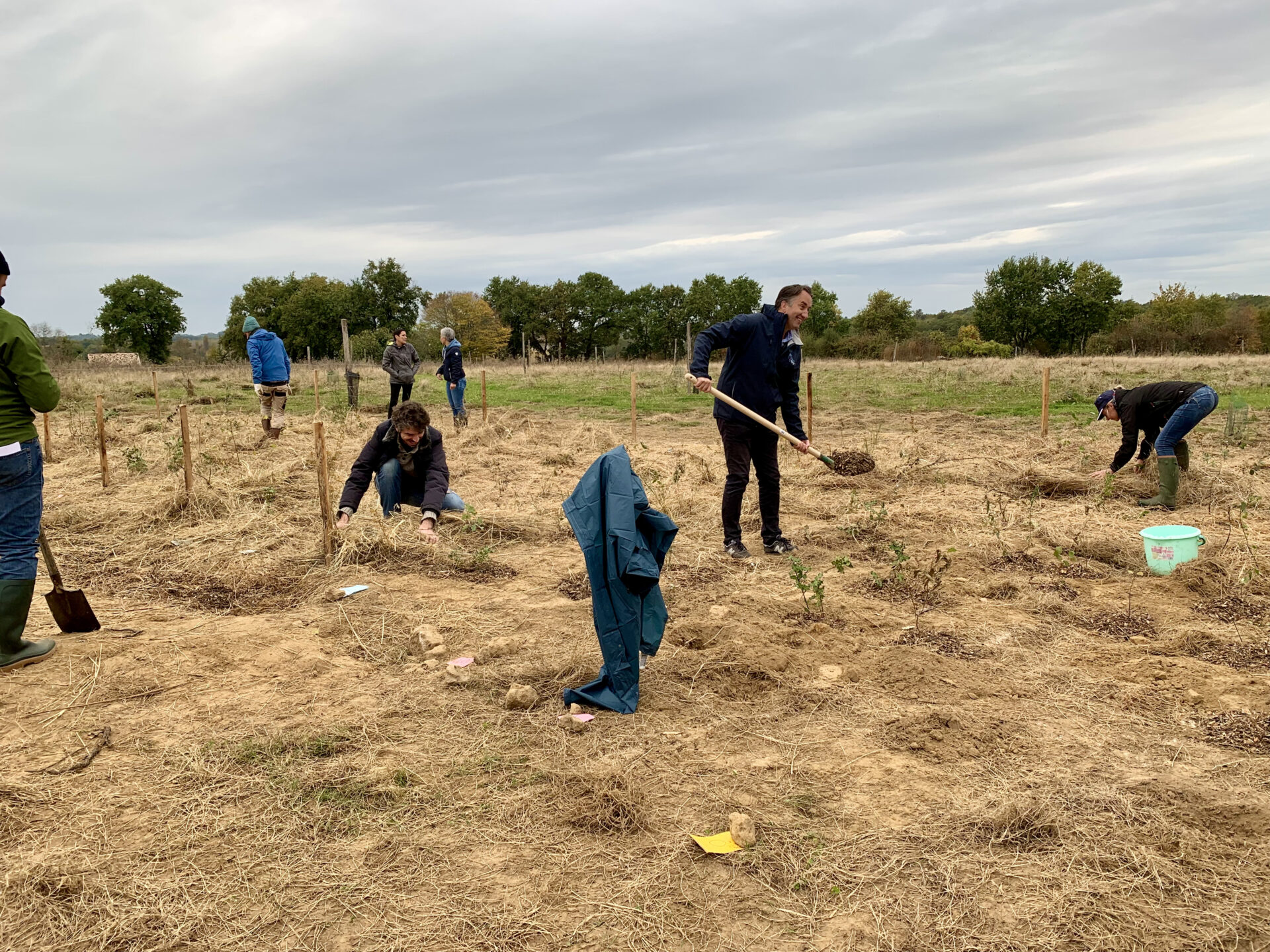
I previously mentioned the micro-forestry project at Château Lestrille. Working with the NGO HISA, the château celebrated their 120th anniversary by planting a “Miyawaki” micro forest as part of their nature trail, a faster way to create a biodiversity sanctuary using local species. 

In January 2021 Château Phélan Ségur in Saint Estèphe used the same technique in the centre of their vineyard. They created a mini forest as a biodiversity reserve as part of an on-going programme to preserve and increase the natural biodiversity across the 114 ha property. This includes a re evaluation of the beautiful 19th century park as a nature reserve and the creation of a stunning new lake in front of the chateau. Beautiful and biodiverse.

Wildlife 

The Medoc peninsula became a ‘Parc Naturel Régional’ in 2019. Those of you who are familiar with the Medoc – the place, rather than what’s in the bottle – will know it is a low-lying peninsula between the Atlantic Ocean and the Gironde Estuary. It was drained by the Dutch back in the 17th century, but there is still lots of marshland close to the estuary and along the ‘jalles’, the small streams and drainage ditches that crisscross the region. This represents a valuable biodiversity resource, especially for waterfowl, see the reference to the LPO reserve at Château La Lagune above.

Natura 2000 is a European-wide network of nature reserves that covers over 18% of EU land and 8% of its marine territory. It offers a network of breeding sites for Europe’s most threatened species. Most of the land is privately owned, where people are encouraged to work with nature rather than against it. The park and woods of Château du Taillan in Haut Medoc, just on the outskirts of Bordeaux city, is part of this network. 

Bringing it all together

Château La Lagune has been working with the LPO for several years to encourage and diversify animal life in the vineyard, preserving existing ecological structures (ditches, meadows, isolated trees and woods) and creating new ones. They are planting trees close to the ‘Moulin La Lagune’ (the old windmill represented on the label of their second wine) and have started a programme of hedge planting, already covering 2km.

As well as being organic, respecting and preserving the environment, they have created two Zones Réservoirs Naturelles (ZNR) that cover over 40ha. These are natural ecosystems for wildlife to rest or reproduce, animals that are also useful in the vineyard .

The first near the is a 10 ha wild space in the parkland of the chateau. The second is a beautiful marshland covering almost 40 ha in Ludon-Médoc, a criss cross of drainage ditches and streams where they graze their ‘Marine d’Aquitaine’ cows .

They are also planting a 5000m2 agro-ecological orchard in front of the château, with apple, pear and fig trees but also currants and blueberry bushes. Planting in four circles to recreate a forest ecosystem: the first three circles are fruit trees, and the outer one is made up of ornamental trees, again promoting biodiversity and naturally decreasing fruit pests. 

Eco-pastoralism

We’ve seen how monoculture can be the enemy of biodiversity. Some properties are going further than vegetative diversity, they are introducing animals. Geese aren’t unusual in Bordeaux, they make great ‘guard dogs’. I’ve been chased away from Chateau Gazin in Pomerol by geese in the past! 

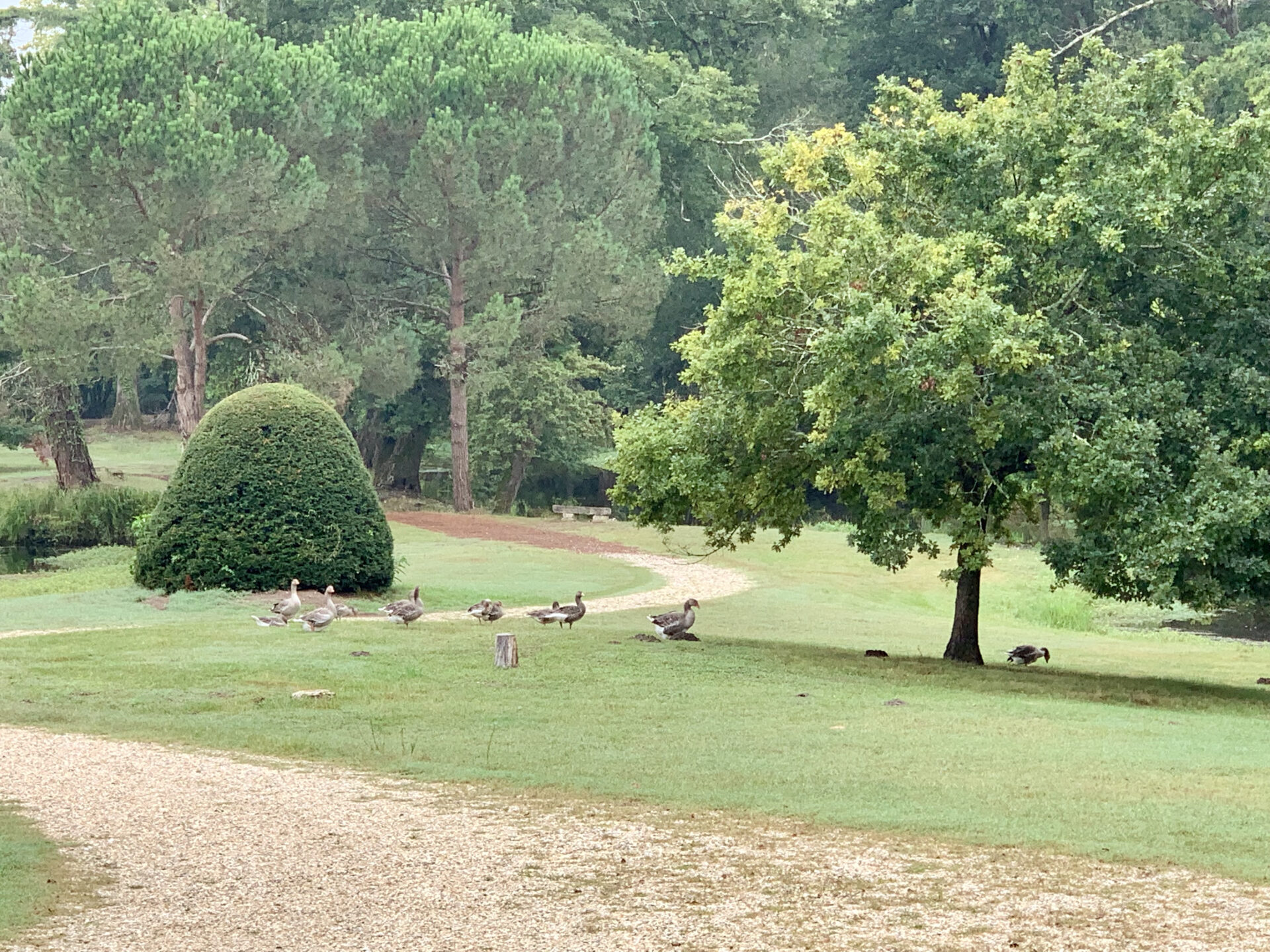
Geese in the park of Château Giscours

Château Giscours in Margaux is a real working farm. The property is enormous, 400 ha with 180 ha of vines and 50 ha of beautiful 19th century parkland, with the remainder made up of marshland and meadow, home to more than 100 farm animals. 

It’s the perfect environment to cultivate biodiversity. The low-lying meadows are grazed by cows and sheep, with goats and chickens closer to the chateau, and ducks and geese on the ponds in the park.

Livestock love at Château Giscours

In 2012, they started working with Conservatoire des Races d’Aquitaine introducing the Bordelais cattle breed to their meadows, followed in 2019 by 60 Landes sheep. These animals maintain the 150 hectares of park and meadows surrounding the Château, enhancing plant and animal biodiversity, prioritizing natural fertilization of the soils, pollution free.

In 2019, the Château planted a vegetable garden. Now Chef Benjamin Laurent creates menus for guests using produce from both the farm and gardens, even using yeast from the cellar to proof his own bread. ‘La Table de Giscours’ is a complete regenerative farm-to-table experience. 

Back to the future

Historically the large Bordeaux estates were not monoculture. Their parks, woods, marshes and hedgerows were part of a unique ecosystem. These ecosystems are now once again being seen as a valuable resource, not only for the natural environment but also for the people who work there and their guests.

Revitalized orchards, kitchen gardens, bee hives and livestock allow in-house chefs to offer guests unique farm to table experiences. With a lot more than wine being produced on the property, chateaux such as Giscours, Phelan Segur and La Lagune are using the natural resources of their properties to create unique Bordeaux experiences in beautiful and biodiverse surroundings. A biodiversity that benefits both wildlife and wine lovers.

Farm to table at Château Giscours

In the next post, I’ll look at social responsibility in the vineyards – a broader approach to sustainability.  Please sign up here  to receive future blog posts delivered directly to your inbox. 

To learn more about Bordeaux, you can buy  Bordeaux Bootcamp here, and to learn more about Wine and Wellness, with The Drinking Woman’s Diet here.