Pauillac – time for a re brand? 

The newly renovated Château Grand Puy Ducasse on the waterfront of Pauillac

Famous for being home to three of the five first growths of the 1855 classification, Pauillac is known for the deep gravel outcrops that make it the home of Bordeaux Cabernet Sauvignon. The appellation takes its name from the town of Pauillac, on the banks of the Gironde Estuary at the centre of the appellation. 

Once a thriving port, the town has fallen into disrepair. Midway up the Médoc peninsula on the famous ‘route des châteaux’ (the wine tourism version of a high-end wine list), tourists often drive through on the way from Latour to Mouton Rothschild with barely a glance at the cafés and restaurants along the promenade. 

Now, several important investments merit a closer look. Could this be the beginning of a Pauillac renaissance?

A long maritime history. 

In 1777, the Marquis de Lafayette set sail from Pauillac to America to become a hero of the American War of Independence. In its 1890s heyday, Pauillac was home to the French Compagnie Générale Transatlantique cruise liner terminal where trains from Bordeaux brought passengers right to the Trompeloup wharf, just 5 kms north of the town.  By the 1920s, improvements to the Gironde Estuary allowed bigger ships to navigate all the way to Bordeaux and the strategic importance of Pauillac started to wane. 

From Oil to Airbus

The wharfs were destroyed in bombing raids in 1944, a target due to the oil terminal, depot and refinery built here by Les Pétroles Jupiter (later Shell). Jean Michel Cazes from Château Lynch Bages writes about watching these raids as a child in his autobiography. Pauillac was also an American air force base protecting maritime convoys. 

Shell built a model village for the families of their employees, an important boost to the town’s population. The closure of the refinery in the 1980s was devasting for the town. Previously employing up to 300 people, today, less than 40 staff manage a storage facility still processing up to 150 tankers a year.

In 2004, the wharf become a staging post for Airbus A38 parts. Arriving on ocean ships from Hamburg, they were  transferred to an impressive barge to wait for the right tide to slide under the Pont de Pierre in Bordeaux, sailing on to Langon to finish their transfer via road to the airbus in Toulouse. 
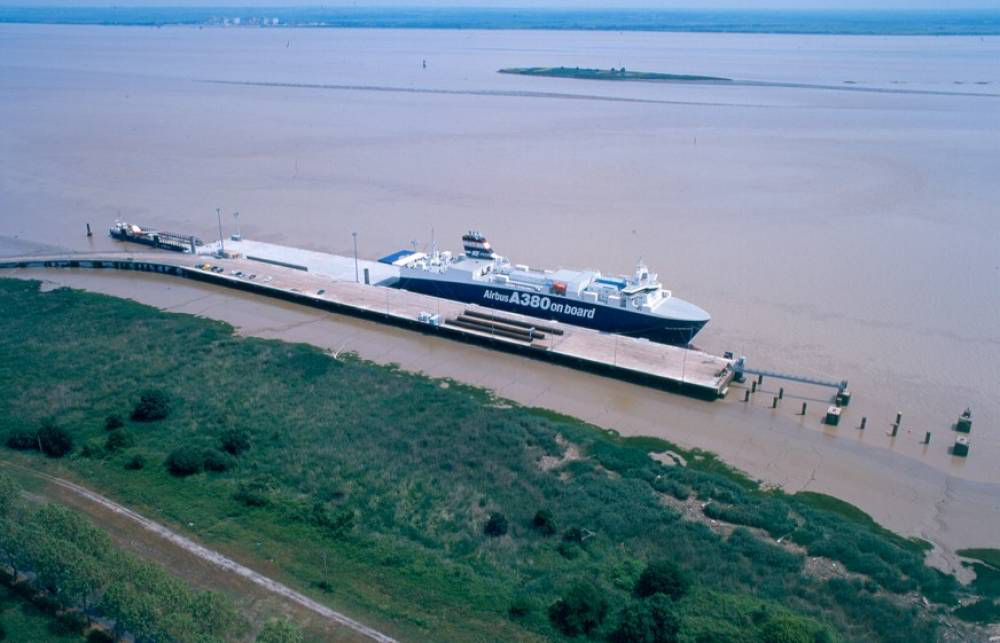
Le pôle de transbordement de Pauillac (© BORDEAUX PORT ATLANTIQUE)

History repeating itself 

As Airbus activity comes to an end, the wharfs are being rehabilitated to once again welcome Americans, this time as a stopover for ocean going cruise ships too large to moor in Bordeaux. They would previously have moored in Le Verdon at the mouth of the estuary to the north. 

Pauillac is perfectly placed for wine tourism. Two cruise ships called in this year, with guests disembarking in the morning to discover the region before embarking to continue their journey in the evening.

Excursions were organised across the Médoc by B Excellence and the tourist office, from vineyards to the seafront at Soulac sur Mer.

New arrivals

There are around five ships planned for 2025 and up to 15 in 2026. Long term, the Grand Port Maritime de Bordeaux (GPMB), owner operator, plans to transform the wharf back to its former glory aiming for 20 calls a year within 4-5 years. Pauillac is also looking to refurbish the town centre pier for smaller river cruise ships. The waterfront has already been renovated with gardens and a nature walk with a cycle path planned to link the port to the town centre.

Waterfront destination

Built on roman foundations the town centre has a long history turned toward the water. Since 1872, it is home to one of the oldest sailing clubs in France, with a marina for 150 boats built in the 1970s and the lifeboat ‘Pichon Baron’ on duty as the tidal waters can be treacherous. 

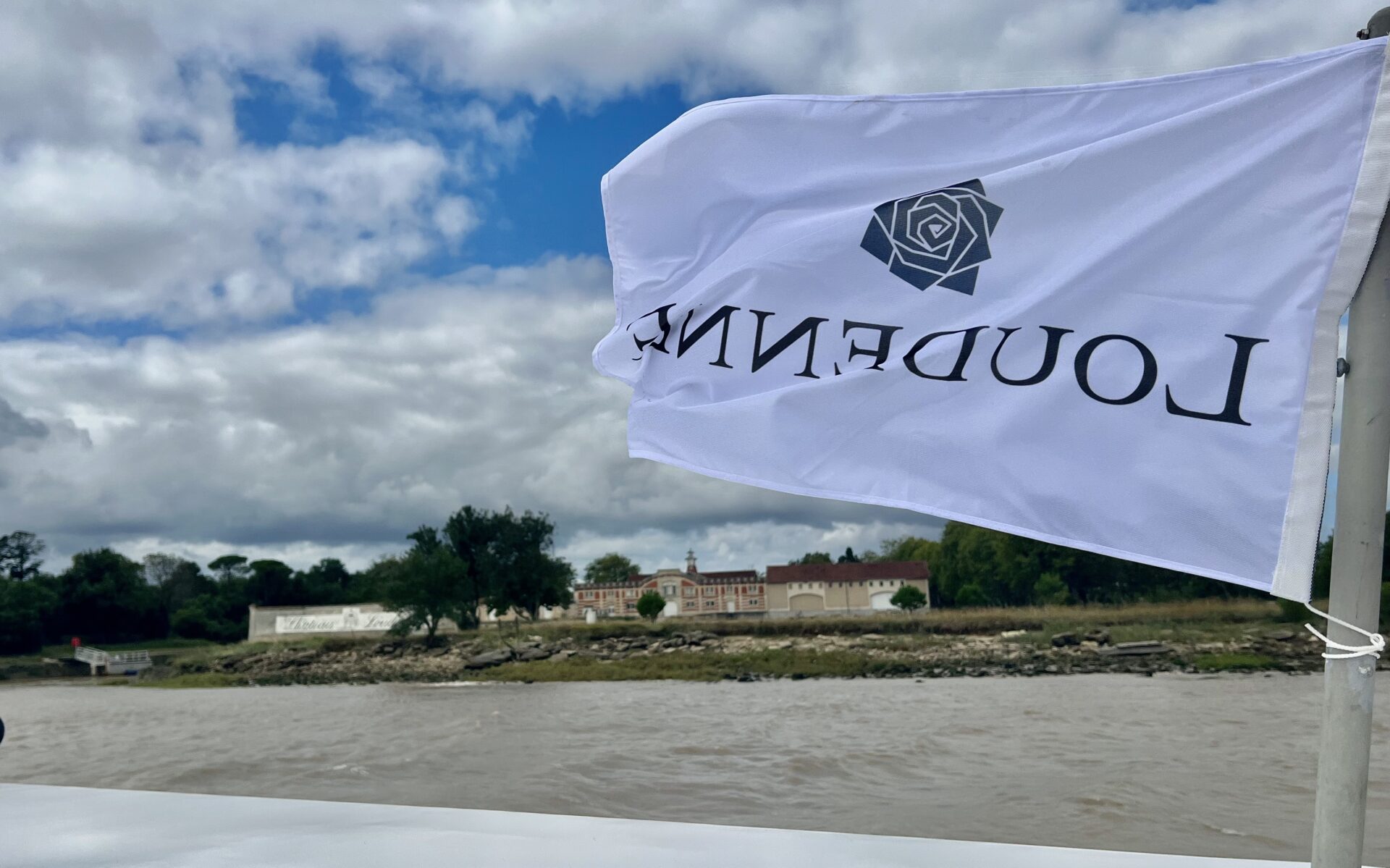
Loudenne II in the Pauillac Marina

Château Loudenne has embraced this dynamism. Owners, Sophie and Christophe Gouache pick their clients up from the waterfront in Pauillac in their 12 seater boat, ‘Loudenne II’, taking them on a cruise to the property. It’s a unique way to discover role water plays in the history and the life of the region, seeing up close the fishermen’s cabins and the islands of the estuary. They taste their wines on board and disembark at the majestic 19th waterfront cellars of the chateau. The building is a witness to the unique history of the property, the Gilbeys, then owners of Château Loudenne, were the first negociants based in the Médoc, rather than in the Port of Bordeaux. 
Wine driven 

Today 5 000 people live in Pauillac, the wine business and the services that supply it are major employers. Baron Philippe Rothschild, owners of Château Mouton Rothschild, Clerc Milon, Armailhac and Mouton Cadet, have their head office in the town centre with their vineyards just to the north of the town and the Mouton Cadet production facility 10 kms inland. 

Agent for change 

The most Pauillac of all the Pauillac properties is Château Grand Puy Ducasse with their cellars right on the waterfront. It’s an urban winery, an unusual but historical location, where the property has been making wine here since 1820. The renovation of the chateau and the cellars has brought new life to the waterfront.  After three years of renovation, the cellars were christened with the 2023 vintage and opened to visitors in July 2024. The space is designed for wine making but with guests in mind. Before reaching the cellar, an itinerary takes you on a journey through the beautifully renovated salons illustrating the history of the 18th century chateau and its maritime links.

Swallows flying through the new cellars of Château Grand Puy Ducasse

The cellars have a wow factor, the new layout has doubled the number of vats, and they are impressive. Made from shiny stainless steel, suspended from the ceiling for gravity feed, a sculpture of wild swallows flies amongst them. These protected birds had to be re-housed before construction could continue – holding up the opening!  A panoramic room above the cellars overlooks the waters of the Gironde Estuary reinforcing the link to the water.
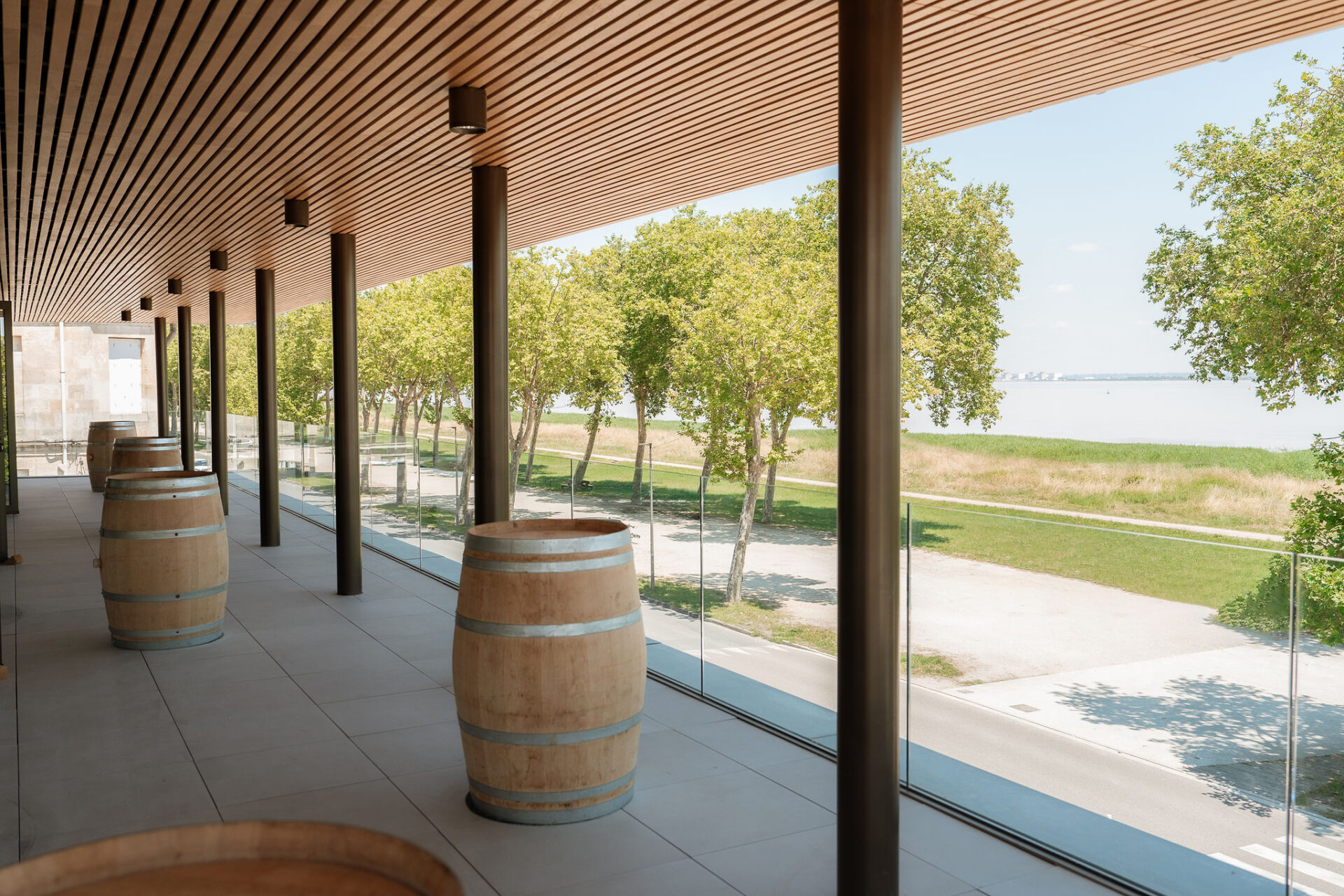
Famous for its wines the town of Pauillac on the banks of the Gironde has been overlooked
The view from the reception room across to the Gironde Waterfront

Make a run for it 

The waterfront of Pauillac comes to life every year, it is the starting and finishing line for the annual Marathon du Médoc. This September, the 38th edition saw 8500 runners from 70 countries join ‘the longest marathon in the world’ so called thanks to the ‘refreshment’ stops at some of the 44 wine chateaux along the route.
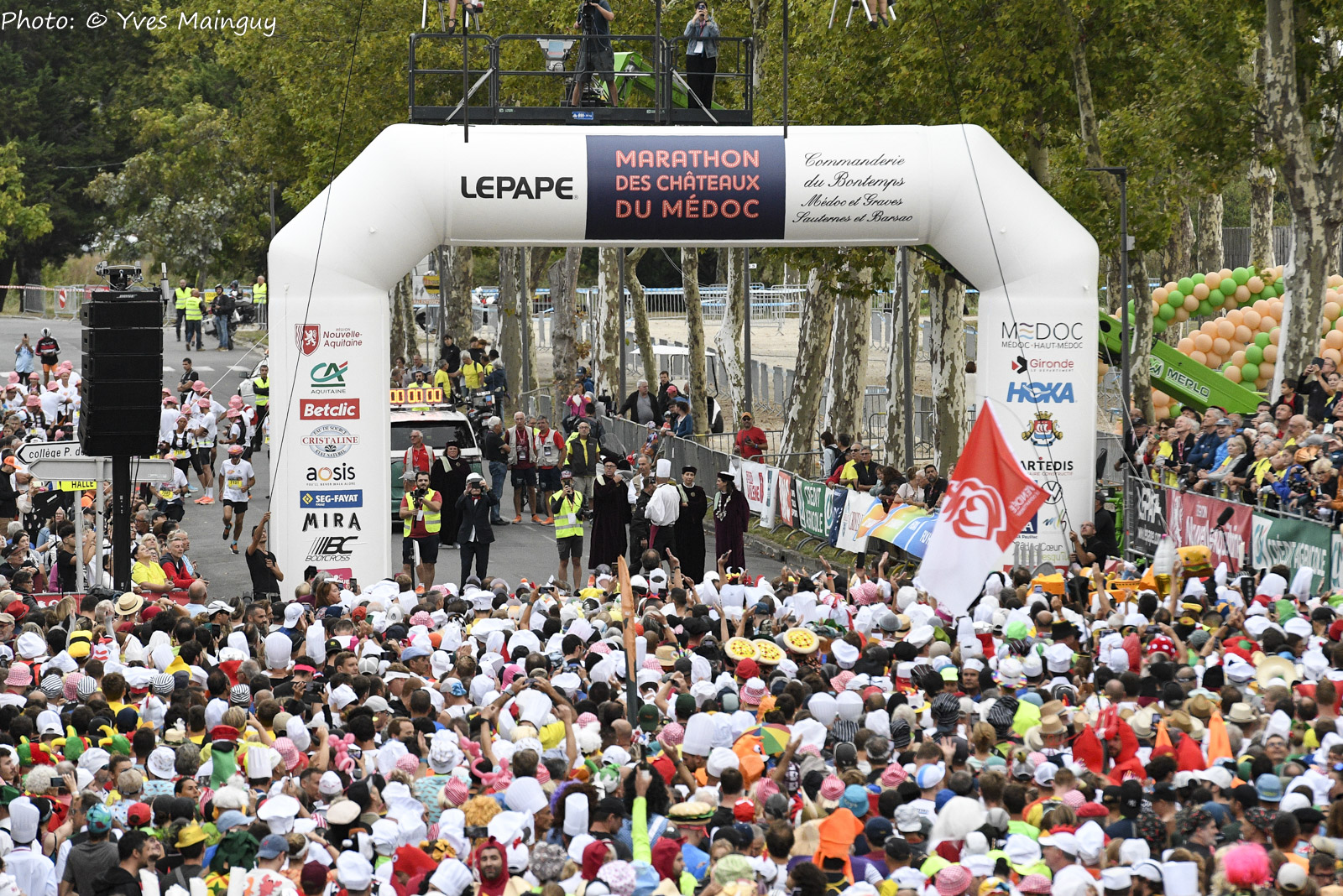
The Marathon du Médoc on the waterfront of Pauillac Photo: © Yves MAINGUY

There’s also an annual film festival  Les Vendanges du 7ieme Art celebrating francophone films with projections on the waterfront in the presence of the actors. 
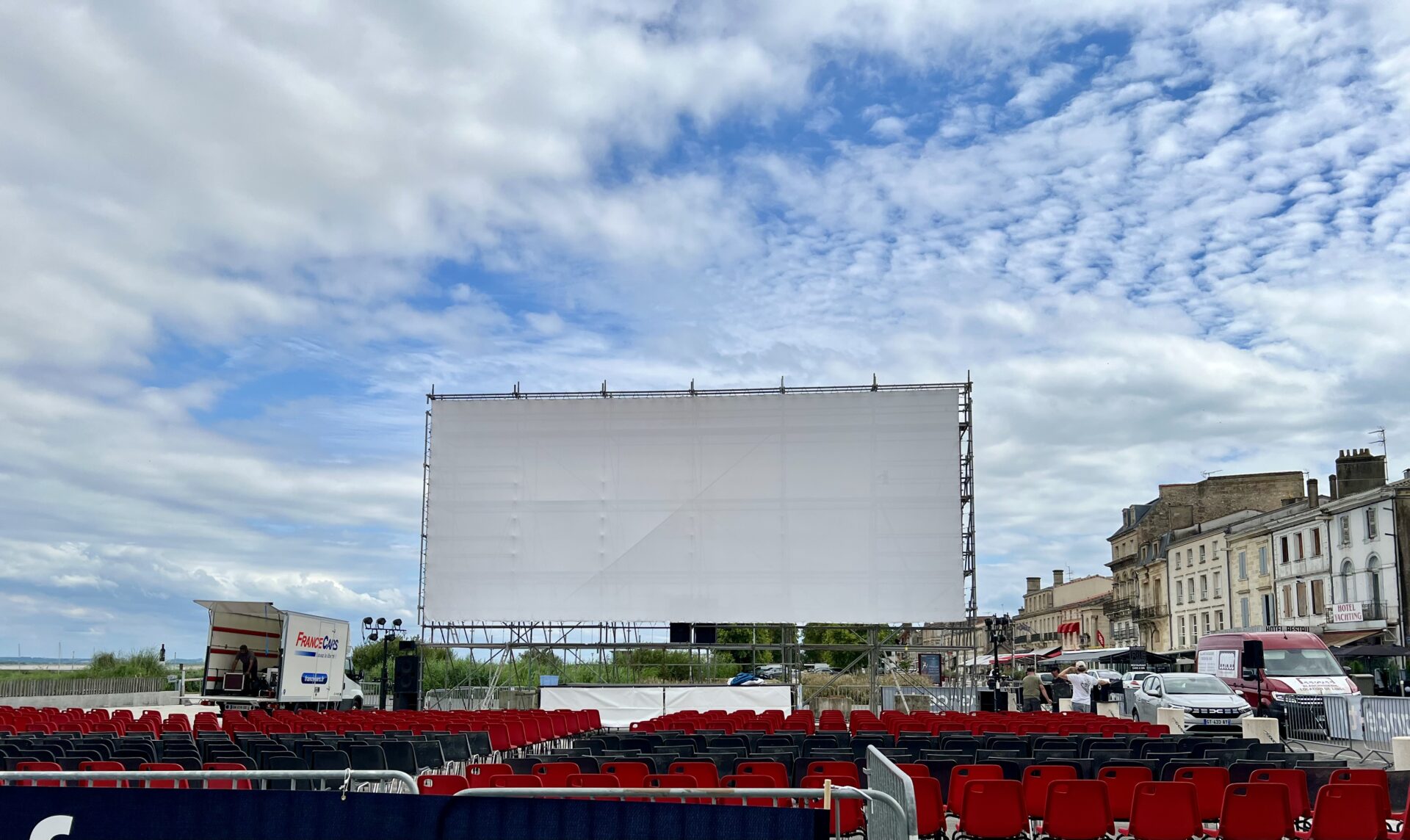
The Pauillac Waterfront ready for a projection of the Vendanges du 7ieme Art

A taste for hospitality 

Until now, visitors stayed outside of town, at the hotel Cordeillan Bages or further north in Saint-Estèphe at the Maison d’Estournel, although the Salamandre restaurant in Pauillac offers great food and a really good value wine list.
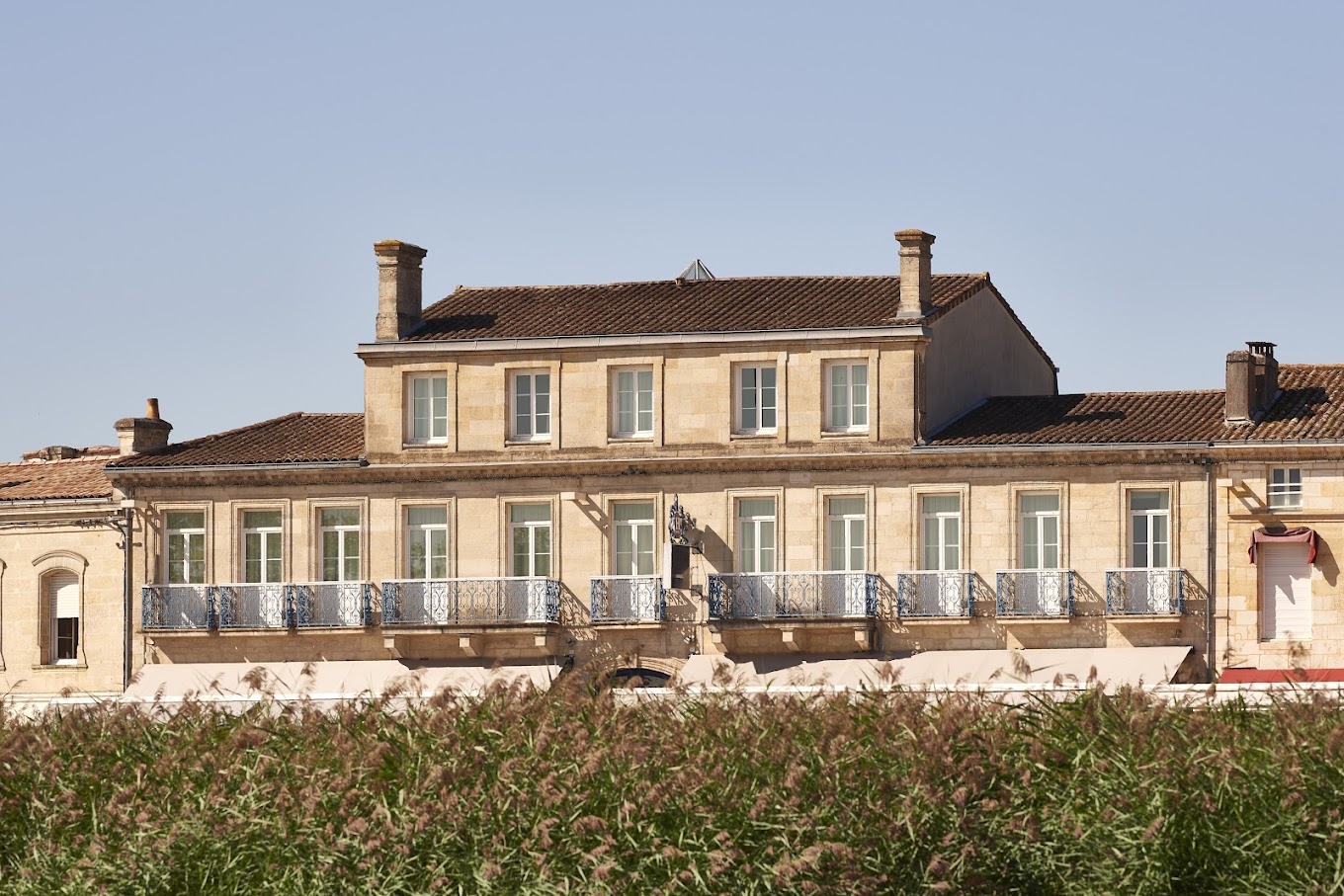
Hôtel des Vignes et des Anges

In 2023, the run down waterfront Hôtel d’Angleterre was fully redesigned and reopened as the Hôtel des Vignes et des Anges. Opposite the Pauillac marina, the hotel has 44 brand new rooms and suites in the 19th century building and its annexe. There’s an indoor pool and wellness area, a cocktail lounge, restaurant, a co-working space and seminar rooms. Part of Best Western Premier Label, owner Catherine Parinaud already owns the  Best Western Hôtel Bayonne in Bordeaux Centre.  

The pool of the Hotel des Vignes et des Anges

Look out for the opening of Château Fonbadet in 2025, owner Pascale Peyronnie is converting her beautiful Chartreuse home into a fabulous guest house.

The Chartreuse of Château Fonbadet

With the creation of gardens and a walk way along the river, the opening of a new hotel, a stunning new cellar and the arrival of new cruise companies, Pauillac has found a new dynamism. It may once again be the perfect port of call for a visit to the Médoc.

If you enjoyed this post, please share with a friend or  sign up here  to receive future blog posts. Learn more about Bordeaux with Bordeaux Bootcamp, and explore Wine and Wellness, with  The Drinking Woman’s Diet  or just say hi  here.

Château Loudenne – can history repeat itself?

I have always had a soft spot for Château Loudenne. Arriving in Bordeaux in the late eighties I knew very few people, but I was soon introduced to the world of Château Loudenne, then under British ownership. It was party central for Bordeaux Brits and most of the players in the Medoc.

The hospitality was legendary. The dining room was the scene of many a memorable dinner and the amazing vintage kitchen hosted many more. I even remember London based Chef, Albert Roux flying over one August with fresh grouse in his suitcase for a Glorious 12th dinner.

IMG_0916
View to the back of the Château looking donw from the gravel outcrop.

The rooms were always welcoming, and waking to look at that view over the Gironde Estuary was a treat. In those days Château Loudenne was owned by IDV, having been in the portfolio of Gilbeys when they purchased that company.

Gironde from terrace
The view from the terrace of Château Loudenne to the Gironde Estuary

The history of Château Loudenne goes back over 300 years. Built in 1670 in the typical ‘Chartreuse’ style, the traversing rooms ideally suited to the spectacular views over the Gironde Estuary. This beautiful pink chateau is still at the heart of the large vineyard, 132 ha under vines including 12 ha in white. As early as 1880 it was the very first Medoc vineyard to produce a white wine.

Traversing rooms
A view through the Château

Alfred and Walter Gilbey purchased the chateau in 1875 and made it their home as well as the base for their Bordeaux commerce. They were the first negociants to be based in the Medoc, rather than in the Port of Bordeaux, establishing their trade out of the huge Victorian waterfront cellars near the property’s private port. Chateau Loudenne remains the only property in the Medoc to have its own private port.

Loudenne port
The ‘Port’ of Château Loudenne from the water

It became ‘The Pink Château’ at the time of the Gilbeys; it has remained so ever since. The Gilbeys, in true English style, created the stunning landscaped park which has a rare collection of David Austin English roses.

In 1963, their family company changed hands to become IDV, which went on to join the spirits group Diageo. In their move away from wine investments, Diageo sold the chateau in 2000.

After a few years in the hands of owners that sadly didn’t invest either in the wine or the architecture, Moutai purchased Chateau Loudenne in 2013, joined by Camus Cognac as minority shareholders in 2016. They are old friends having worked together as distribution partners for over 10 years. Moutai is the number one Chinese Liquor Company and Camus Cognac the largest family-owned independent Cognac house. Camus took over the management of Chateau Loudenne when it entered into the capital in 2016.

The involvement of the Cognac family is a back to the future moment; monks from the Saintonge region, near Cognac, were the first to plant vines in the village of Saint-Yzans-de-Médoc in the 13th century.

Folly
One of the gravel outcrops with its folly

Château Loudenne is in the Médoc appellation, in the North of the peninsula just beyond the boundary with the Haut Médoc. Here two large Garonnaise gravel outcrops rise above the tide line of the estuary. Victorian brick and stone follies, the function of which is still unknown, crown these outcrops. They were possibly built to store vineyard tools but more likely to make the site easily identified from the water. Or perhaps they are simply follies with no need for justification. The traditional coat of arms of the property show one of these towers with a Wyvern sitting on top.

I remember a party for the Ban des Vendanges in 1992 when a ‘son et lumière’ bought these Wyverns back to life to the amazement of hundreds of guests in dinner evening dress strolling though the vineyard. Heady days.

The new owners have reworked the presentation and marketing using a ‘belle époque’ design for the labels reminiscing about its illustrious past reinforced by strap line ‘I will always remember’. Also playing on the word Rose (pink in French) as a reference to both Chateau and its rose garden in the new stylised rose design on the labels and capsules.

New labels
The new Chateau Loudenne Labels

Rose
and the stylised rose design

The renewal is not solely a marketing operation. They are not simply looking over their shoulder at the past. New vines are being planted with ‘complanting’ in the older vineyards, introducing Petit Verdot to the Cabernet/Merlot blend and Sauvignon Gris to the white blend with the goal of becoming organic in five years,

New planting
A recently replanted plot near the estuary

General Manager, Philippe de Poyferré, plans to modernize the emblematic waterfront cellars, adapting the Victorian vats to handle the plot selection to suit the different vineyard plots. These majestic cellars date from 1876 and were a perfect example of the Gilbey brothers’ drive to modernize the estate during the 19th century. Designed by Bordeaux architect, Ernest Minvielle, they are a classic Médoc-style two-story vat hall, already harnessing gravity to manipulate the harvested grapes and wine.

Cellars
The victorian cellars from the waterfront

De Poyferré has already reintroduced hand harvesting, sorting tables, and gone back to gravity rather than use pumps.

Cuvier
The 19th century vat room

Chateau Loudenne still produces white wine under the Bordeaux appellation. Fermented and aged in oak with 25 % of Sémillon, unusually high for a dry white from the Medoc, it is reminiscent of a Graves in style and elegance.

The red wines of Chateau Loudenne are Cru Bourgeois, currently a 50:50 Cabernet/Merlot blend and tasting recent vintages the improvement in quality as of 2014 vintage is marked. One to watch with hopefully a future party invite.


Come join the harvest

The Bordeaux harvest is under way, the dry whites are in and the reds are starting with the more precocious merlot. It is possible to join in the fun of the harvest in Bordeaux, even if you’re not feeling up to all the backbreaking work. For several years ‘Les Medocaines’ a group of 4 women wine makers have organised harvest days at their properties; Château Paloumey and du Taillan in the Haut Medoc, Château La Tour de Bessan in Margaux and Château Loudenne in Médoc .
Just sign up at the Bordeaux tourist office for one of their scheduled days and you will be whisked away to pick and sort in the morning and, after joining the harvesters for lunch, it’s off to learning how to make and blend the wine in the afternoon.

Grape selection at Château Paloumey

If you are happier observing from a safe distance but still want the atmosphere, from the 10-12 September Château Gruaud Larose, classified growth of Saint Julien, is also offering the possibility to join in the fun with their Harvest workshop days. These include a tasting of the different grape varieties during a visit of the property, a harvest lunch alongside the pickers and a tasting of the fermenting must in the afternoon. Along with the lunch at wine, that’s a start to finish tasting experience.
Or you can just turn up for a harvest lunch along side the real workers. Chateau Troplong Mondot, first growth of Saint Emilion, offers a wonderful harvest menu in the dining room next to the cellars along with 4 different wines from the property, as does Château Phelan Segur in Saint Estephe. Squeezed between top classified growths Cos d’Estournel and Montrose this family vineyard has one of the post spectacular locations overlooking the Gironde Estuary.

If you can’t decide and want someone to organise all the details for you, Decanter Tours is offering personalised Harvest tours to suit your mood. Book now before it’s all over.

Fabulous flowering

The vines may be 2 or 3 weeks ahead of flowering and winemakers looking at an early harvest, but the vines are not the only flowers just loving this hot dry spring. This year, the roses in the vineyards are some of the most beautiful I have seen.

Roses in the courtyard of Château Langoa Barton

Visiting the gardens of Château Langoa Barton in Saint Julien, I learnt that the property has over 2000 rose bushes – a most spectacular display. I don’t know if it’s the Irish connection but Château Kirwan also has a wonderful rose garden with an alleyway of roses in full bloom and Château Loudenne (another Anglo-Saxon association) also has a world-class rose collection.

Roses at Château Loudenne

There is more to see than just vines in the Bordeaux vineyards. Roses are scattered throughout the vineyards as a legacy to their use as a warning sign for mildew, not a problem we have had so far this year with this dry weather. The rose and the vine are related and owing to their sensitivity to mildew and odium the roses were the indicator as to when the vineyards should start to spray the vines with the traditional ‘Bouilli Bordelais’ (Bordeaux mixture), a lime and copper sulphate solution. It wasn’t unusual in damp springs to see the blue tinge on the vines that had been sprayed.
Legend has it that this solution was found after vines that had been sprayed with copper sulphate solution on the edges of Château Ducru Beaucaillou’s vineyards in Saint Julien to prevent predators (human ones!) from stealing the grapes. These vines were then seen not to suffer from the disease.
These days however winemakers use the less romantic but much more effective measurement of precipitation, humidity, wind and temperature by mini weather stations situated throughout the vineyards. All linked to computers, along with a detailed understanding of what constitutes the risk of the development of these diseases this does a much better job of indicating when and just how much to treat the vines, making for a more efficient and hence lower use of chemicals in the vineyards as the properties in Bordeaux move towards sustainable agriculture.

To prove it’s not just a Left Bank thing – here’s another beautiful display
at Château Angelus in Saint Emilion
Luckily for visitors however, many vineyards have kept the traditional roses on the end of the vines where they were originally placed to encourage the oxen, that pulled the ploughs, not to turn too quickly and damage the ends of the rows.The oxen were not great flower lovers – they didn’t like the thorns!

Colours of wine and shades of beauty

You will know by now that ‘Women in Wine’ is one of my favourite themes – and there are more and more women making wine that really appeals to a wider audience. One of the dynamic groups of women wine makers in Bordeaux, and one of the first to launch joint wine tourism products, is ‘Les Medocaines’, a group of 4 wine makers and owners from the Medoc : Armelle Falcy-Cruze from Château Le Taillan, Martine Caseneuve from Château Paloumey, Marie-Laure Lurton from La Tour Besson and Florence Lafragette from Château Loudenne.

They organise regular joint events including days participating in the harvest, food and wine tastings, blending workshops, etc. As they work closely with the Bordeaux tourist office you can just hop on a bus and go explore their Medoc properties without giving a thought to driving home afterwards.
Two of them, Martine and Armelle, have now taken the feminine theme a step further with Palmoumey and Le Taillan organising wine and beauty workshops with local makeup artist Annie Lay. While sipping a glass of rosé guests will enjoy a make up class and then off to the cellars to discover the beauty of wine making with tasting from different terroirs of the properties and finally the beauty of serving wine with a special tasting about decanting and presenting wines.

Men are allowed but will be ushered off to the cellars for a blending workshop whilst the ladies sip their rosé.

Let’s hope Annie shares the secrets for disguising the damage the morning after !

Get wed with wine

Just back from England I can confirm that the country is indeed awash with wedding fever. However if you want to get away from the royals why not come to Bordeaux. We might not have castles but we have châteaux instead. Some of which will be happy to open their doors to receive newly weds and their guests, not just in elegant reception rooms but many properties now have guest rooms too

The wine bill will also be considerably more affordable ‘sur place’ than in the UK and it is so much more romantic sipping the wines overlooking the vines where they were grown.

To the north of Bordeaux city in the Médoc. Between the estuary and the ocean it is famed for its vineyards and the stunning châteaux, which are perfect examples of the extravagant architecture of the 18th and 19th Century. In the village of Saint Yzan de Médoc on the banks of the Gironde Estuary is Château Loudenne , the ‘Pink Château’ owned by the Lafragette family. As well as the lavish receptions rooms there is a terrace with an amazing view across the water. It also has many guest rooms and can be accessed by boat as well as the road.
However, if it is luxury and gastronomy you are after, head south to Château Cordeillan Bages, which boasts a Relais & Châteaux hotel belonging to the Cazes family of Château Lynch Bages fame. It comes complete with a Michelin 2-star restaurant where young chef Jean-Luc Rocha has recently taken over and is making his name known.
If you prefer something more low key, the same winemaking family also owns Château Les Ormes de Pez, which is run as a guest house and you can take over the entire house with its pool for your event.
Château du Taillan has spectacular old cellars and can accommodate over 100 guests within good proximity to the city and the airport. The venue is not far from modern rooms and a spa at the Hotel du Golf (www.hotelgolfdumedoc.com).
Further south towards Bordeaux city in the village of Margaux, the recently renovated Château Marojallia has a terrace overlooking the vines and can accommodate a large group, with extra rooms at the neighbouring hotel.
Similarly

Château Giscours has rooms with the option to stay at its sister property, Château du Tertre, which has an open air pool.

The Orangerie dining room at Château du Tertre

Still on the Left Bank, but south of the city, you can explore the Graves and Sauternes areas.
Classified growths Château Pape Clement and Smith Haut Lafitte both offer sumptuous accommodation. Les Sources de Caudalie in the grounds of Smith Haut Lafitte is a fabulous hotel and wine spa with two restaurants including the Michelin starred Grand Vigne. Not only is it a wonderful way for a bride to be pampered in preparation for her big day, but Smith Haut Lafitte has a reception room that can cater for several hundred guests for a sit down wedding breakfast. Caudalie builds packages on request.
Château Pape Clement in Talence, which is the oldest wine estate in Bordeaux, has a restored glasshouse in the garden designed by Gustave Eiffel (whose significant work includes the Eiffel Tower and Statue of Liberty). For a smaller group they offer wine tourism packages including Rolls Royce rides or helicopter flights should the bride or groom wish to arrive in style.
For the French, Sauternes is a celebratory wine served at weddings, christenings and confirmations. Classified growth Château d’Arche has been transformed into a hotel with views overlooking the vines of Château Yquem.
The Côtes region is not far off the motorway north of Bordeaux with hillside vineyards surrounded by beautiful countryside. Visit Château Pitray, a glorious family property built in 1868 with a working vineyard and set in a park. The family will be delighted to show you around the cellars and taste their wines, which are available in the UK though Majestic.
At Château Biac, Youmna and Toni Asseily will welcome you to one of the three self catering cottages on the hillside vineyard with stunning views over the Garonne River where they make both red and sweet white Cadillac wines.

château Biac and the stunning view over the Garden River
The wonderful view from Chateau Biac
Saint Emilion is probably the most famous wine village in the Bordeaux region and has been listed as a UNESCO World Heritage site since 1999 and is ideal as a romantic setting.
The Hostellerie de Plaisance Relais et Château, where Philippe Etchebest’;s cuisine has been awarded two Michelin stars, is in the centre and overlooks the whole village.
There also a few rooms at Château Pavie Decesse, owned by the Perse family, who own other Châteaux making top Saint Emilion wines.
At Château Franc Mayne, a working winery, is a small hotel whose rooms each have opulent and different décor. A natural swimming pool runs down the limestone slopes under which enormous centuries-old quarries are now used for barrel ageing the wines. The terrace overlooks the slopes down towards Pomerol.

The appellations known as the Saint Emilion Satellites are on the other side of the small Barbanne River from Saint Emilion. Puisseguin, Saint Georges, Lussac and Montagne Saint Emilion are on a series of undulating limestone hills that enjoy lovely views with hospitable properties open for tastings and accommodation.
Château de Môle won the 2010 Best of Wine Tourism award. It has idyllic bridal suits with ‘spa rooms’ in this renovated working Château in Puisseguin Saint Emilion. Of the five rooms, three have their own private sauna and jacuzzi in the en suite bathrooms. You can visit the cellars under the Château to learn more about their winemaking.
Château la Dauphine is right on the river-bank of the Dordogne and has a room specifically created to cater for weddings. The proprietors know all the local specialists to help with your day. The lawns with views down to the water are perfect for wedding pictures.

Inspired ? Well even if you not not planning to tie the knot you can always come for the romance without the ceremony !

Les Medocaines in WIT

Les Medocaines; Martine Cazeneuve (Château Paloumey), Marie-Laure Lurton (Château La Tour de Bessan), Armelle Falcy Cruse (Château du Taillan) and Florence Lafragette (Château Loudenne) have always been one step ahead with their idea of 4 different châteaux, all run by women, working together to promote not only their wines but wine tourism. They have created joint wine tastings, workshops and food and wine programmes that take enthusiasts from one property to another discovering everything from pruning to blending to food and wine matching with local specialties.
Once Again they have innovated but this time in packaging and selling their wines. Already available as a mixed case the wines are now presented as ‘WIT’. Wine in a tube. The test tube of wine, containing just enough for a generous glass is sealed with a screw cap to prevent oxidation. The gift set of the 4 wines is a perfect stocking filler.

Discover Bordeaux this summer

It is no longer a secret that Bordeaux is now become a top weekend break destination thanks to the renovating of the city under the impetus of Major Alain Juppé. What is less well known is that the surrounding area has also profited from this wind of change.

The wines of Bordeaux have never been so accessible either by price, style or through the cellar door. Just check out the 100 Everyday Bordeaux wines on the site www.bordeaux.com

What was previous considered as a closed door policy by the properties of Bordeaux is no longer the case : yes most places would prefer if you called to book a visit but it is a small price to pay to open the doors to some of these estates – both great and small.

Bordeaux is by far the largest French wine region, 5 five the size of Burgundy and Beaujolais and as such offers a range of styles of wine, properties and landscapes to suit everyone’s tastes and wallet. There are over almost 10 000 producers to get to know.

Discover the diversity
Bordeaux divides itself into 6 styles of wine each one reflecting the geographical characteristics of the regions.

The Medoc (North of Bordeaux)
The most famous area of Bordeaux is probably the Medoc this stretch of land, a peninsular between the Atlantic coast and the Gironde estuary owes its fame to a classification of the wines dating back to 1855.

It takes about 90 minutes on a straight line to reach the top but the places to explore on the way will definitely slow you down. Driving up the D2 ‘La Route des Châteaux’ is like driving through a restaurant wine list the famous names and beautiful buildings dotted amongst lesser known producers.

‘Villages de Bages’ near Pauillac
Pauillac is a sleepy water front town on the estuary and one of the famous classic wine ‘appellations’ in the north-west of the region. Just before the town stop off at the Village of Bages (www.villagedebages.com) to see what the Cazes family (Chateau Lynch-Bages) are doing here. They have established a Hotel and Michelin star restaurant, Cordeillan-Bages, in this pretty village, as well as Café Lavinal and the Bazaar Bages boutique full of wine paraphernalia. Chateau Lynch Bages is open to visitors to see the old and the new approach to wine making and taste their powerful wines. The Cazes family owns their own travel company running fabulous wine tours and themed holidays which make use of all their products and properties including Château Les Ormes de Pez (www.ormesdepez.com) which is a very up market B&B or can be rented as a whole home. Contact Mary Dardenne for enquiries and bookings: mary.dardenne@bordeauxsaveurs.com

Even further North at Saint Yzans de Medoc right on the Estuary is the picturesque ‘Pink Château’ Château Loudenne, whose lovely guest rooms overlook the water. Loudenne offers a romantic weekend for 2 including a cellar visit, lunch or dinner and bed and breakfast for €280 http://www.lafragette.com contact c.berullier@lafragette.com

Many of the Château in the Medoc are delighted to welcome the public to see how the vines are grown, wines are made and aged and of course to taste the result of all the hard work.
There are three new tasting rooms open to the public:

• Château Lagrange , www.chateau-lagrange.com
Contact: charlotte.denjean@chateau-lagrange.com

• Château Kirwan , www.chateau-kirwan.com
Contact : nathalie.schyler@chateau-kirwan.com

• Château Rauzan Gassies, www.domaines-quie.com
Contact : rauzangassies@domaines-quie.com

More ideas tomorrow………….