La Marquise, a sparkling beauty from Sauternes

It’s been a while since I wrote about any historical heroines of Bordeaux. It’s not for lack of candidates. One has been on my mind for a while, La Marquise Marie-Antoinette de Lambert des Granges. In no small part because her granddaughter, Laure de Lambert Compeyrot, who looks remarkably like her, is following in her footsteps. She is now honouring her memory with a new wine. 

La Marquise Marie-Antoinette de Lambert des Granges inherited Château Sigalas Rabaud, first classified growth of Sauternes, from her father Gerard. Her brother Henri was a lieutenant during the second world war. He sadly lost his life in battle in 1940. He was quite a personality, a handsome man and would be Olympian rider if the war hadn’t put paid to the games. In 1998, a second wine of the property was created and named in his memory Le Lieutenant de Sigalas.
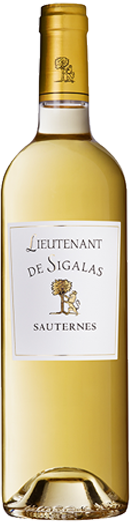
Le Lieutenant de Sigalas, named after Henri de Sigalas

Origines

Created by Le Conseiller Rabaud, the property dates from the 17th century and originally covered 60ha. In 1863, Henri de Sigalas purchased the property, upon his death in 1895, he left a prestigious and renown property, included in the 1855 classification as a 1er Growth.

He left his son a young orphan. Pierre Gaston de Sigalas, was raised with a family in the nearby Landes forest. A childhood that created a passion for the great outdoors, horses, and apparently women, but sadly not vines. 

A Jewel 

In 1903, he sold the Château Rabaud building and 45 ha of vines. He did however have the good sense to keep a small plot of 14 ha of vines on the southern slope of the vineyard and the ‘farm house’ an elegant 17th century chartreuse. Even he considered this plot to be the ‘jewel’ of the vineyard.  To differentiate the property from the newly formed neighbour Rabaud Promis, he added his name and Château Sigalas Rabaud was born. Both vineyards kept their first growth status.  

Small is beautiful

Château Sigalas Rabaud became, and remains, the smallest of the first growths of Sauternes and Barsac. In fact, the smallest of all the first growths of the 1855 classification, red or white. 

Working in the cellars of Château Sigalas Rabaud where the orignal artworks are still hanging.

Pierre Gaston’s grand daughter, Marie-Antoinette de Sigalas married le Marquis de Lambert des Granges and in 1951, the couple took over the property. They created a new vat room and started rebuilding the reputation of the property, bringing it back to its place in the Bordeaux hierarchy. Passionate about art, Marie-Antoinette, was responsible for the collection of art work that hangs in the barrel cellar. She instigated a competition and exhibition with the school of Beaux Arts to be hosted in their new cellar. The winning artist’s work was to be purchased by the property. Unable to decide, they purchased all the original works. They remain in the cellars for visitors to enjoy today. 

La Marquise, a great beauty

L’intrépide

As her portrait shows, La Marquise was a great beauty, and quite the personality. As a young women, she loved to drive and would race around the region between the three family properties. A skill that came in handy during the Second World War. Living close to the dividing line between free and occupied France, she put her driving licence and charm to good use, smuggling goods and food across the border.

The family properties were occupied during the war and Château Sigalas Rabaud was requisitioned by the Turkish Embassy making her adventures even more perilous.

Post war, she travelled the world, alone or with friends leaving her husband and four children at home, carrying back souvenirs, Russian carpets and other treasures that remain with the family today. She was an avid poker player, enjoying a weekly game right up until her death in 1998.

In 1984, Gérard, Marquis de Lambert des Granges, their eldest son, and his siblings took over the property. Le Marquis continued to pursue excellence, associating with the technical team of neighbouring first growth Château Lafaurie Peyraguey to continue modernising the property. An association that lasted 15 years, reinforcing the reputation of this small Sauternes gem.  

New beginnings 

Since 2006, Gérard’s daughter, Laure de Lambert Compeyrot is the sixth generation of the family at the helm of the property. The likeness to her grandmother is striking. Gentlemen of a certain age, often stop her, saying you must be ‘Mademoiselle Tanny’s’ granddaughter, with a twinkle in their eyes. 

Laure de Lambert Compeyrot, dynamism runs in the family

Like her grandmother, she is also intrepid, introducing change and innovation to this historic property. She is rightly proud of the heritage and keen to preserve it. Not only the history but also the natural history. Working with the Chamber of  Agriculture, they are preserving and cloning the most ancient vines of the property, shunning herbicides, preferring sexual confusion, and eliminating fungicides (especially important for a wine that depends upon the development of noble rot). Laure is also working to identify and to create the perfect environment for bats, helping to combat vine moths. 

In 2016, Château Sigalas Rabaud obtained the Haute Valeur Environnementale (HVE) certification, preferring a global approach to sustainability rather than a narrower definition of organic viticulture. 

Dry Sauternes

Laure is a champion of the dry white wines of Sauternes.  She introduced a dry white in 2009, already honouring her grandmother by naming it Demoiselle de Sigalas. It’s a blend of 70% Sémillon and 30% Sauvignon Banc, with Sémillon fermented in barrels to favour fruit and floral aromas, and the Sauvignon fermented in stainless steel for freshness. 

Intrigued by the complexity the dry Sémillon showed, in 2013, she released La Sémillante de Sigalas, a 100% dry Sémillon. (Watch the interview dating from the release with her and consultant Jacques Lurton here). Although a varietal wine, there is a blend, a blend between plots and picking dates rather than between varieties. Just like the Sauternes.

La Sémillante

Single varietal wines are a rarity in Bordeaux, Sémillon even more so, although others have since followed in her footsteps.  

Innovation 

Never one to sit on her laurels, she continued experimenting by producing a sweet wine with no added sulphur. Inspired by a friend with a sulphur allergy, it was quite the technical challenge. Le 5 de Sigalas is a sweet wine with 60g of residual sugar per litre, compared to an AOC Sauternes at 120 g. It hovers around 85% Sémillon. Laure loves to serve it, with a twist of orange zest and a couple of ice cubes, as an aperitif on the terrace of the property. 

Le 5 at sunset at Château Sigalas Rabaud

Now, Laure has taken the audacious step of pushing the expression of her favourite grape variety even further, creating a sparkling 100% dry Sémillon. 

Sparkling 

She wanted a wine that was bright, bubbly and attractive. Perfectly expressing the dynamic energy and personality of her grandmother, and I’m tempted to say herself, although she’s too modest to own up to this. 

La Marquise, the gold accent on the label and box are a nod to the Sauternes used for the liqueur d’expédition

The first cuvée of La Marquise, just released is the 2020, fermented in one year old barrels for Burgundy inspired buttery aromas and aged for 36 months on lees in the bottle in the traditional method. At just 12° alcohol the cuvée is extra brut despite the ‘liqueur d’expédition’ being Château Sigalas Rabaud. Only 807 numbered bottles are available for this first cuvée. You’ll find them at the property or in a few selected restaurants, thanks to sommeliers that are already fans of Laure’s wines. 
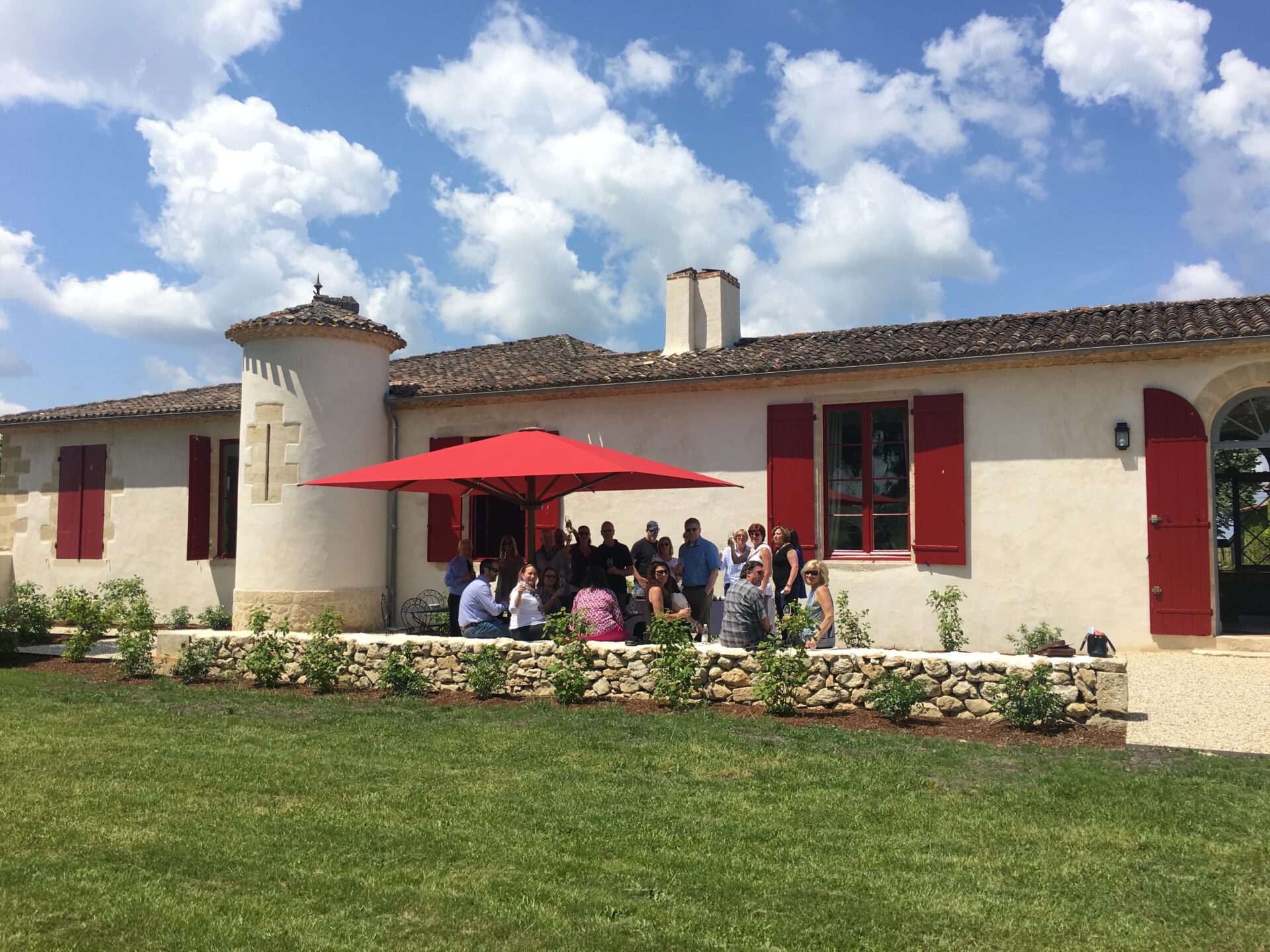
Sipping Sigalas on the terrace of the chateau

I recommend sipping it on the terrace of the chateau. In fact, I recommend visiting Château Sigalas Rabaud for a tasting of all her wines. Six very different expressions of Sémillon; dry, semi-sweet, sweet, botrytised and now sparkling. It’s a masterclass in the expression of Sémillon, a often overlooked ancient Bordeaux variety, now coming back into its own. 

Lucky visitors can even stay the night in the beautifully renovated guest rooms of the property. Some things really are worth travelling for.  

Want to read more? Please sign up here  to receive future blog posts directly to your inbox. To learn more about Bordeaux, buy your copy of Bordeaux Bootcamp here, to learn more about Wine and Wellness, buy your copy of The Drinking Woman’s Diet here or discover the new online 7 days to a Liver friendly Lifestyle  here. Thanks for taking the time to read this, I look forward to your feedback.

Château Phélan Ségur, a study in natural history 

Researching how Bordeaux is rising to the challenges of sustainability, several themes come back repeatedly, amongst them, biodiversity.

I wanted to take a closer look at how some properties are putting the theories into action, Château Phelan Ségur in Saint Estèphe is a perfect example.

Saint Estephe is the most northerly and second largest of the village or communal appellations of the Medoc. Halfway up the Medoc peninsula, the 1300 ha of Saint Estephe vines rise up and away from the banks of the Gironde Estuary commanding some of the best views of the peninsula from the gravelly outcrops and plateau. When you visit, and you really should, approach Saint Estephe from the estuary side of the appellation, along the Boulevard Maritime, rather than the D2, La Route des Châteaux. Just as you reach the village of Saint Estèphe, you’ll  see the majestic Château Phelan Ségur at the top of the slope.

Diversity 

Of this large 114 ha estate, 70 ha are vines, spread over four large sections from the waterfront marshes up the slopes and across the plateau from north to south between the vineyards of Châteaux Montrose and Calon Ségur

Geographical diversity of the Phelan Ségur vineyard

This spread brings a diversity of terroir, of gravel, clay and sandy soils. A diversity that is reflected in the blend of the grape varieties and the complexity of the wines. It also contributes to that precious biodiversity.

This distribution of plots comes from the origins of the property. Bernard Phelan, a successful Irish wine merchant bought two vineyards, first Clos de Garramey in 1805 and then Ségur de Cabanac in 1810. His son Frank followed in his footsteps and they gave their name to the property at the beginning of the 20th  century. 

Biodiversity also comes from the 44 ha not under vines, including fields and meadows that cover 25% of the agricultural land of the property, plots of poplar trees on the damp land along the Gironde estuary, streams, hedgerows and woods across the higher plots and the historic park around the château. 

An English garden 

The parkland surrounding the Château also dates from the creation of the property. It was the fashion amongst the Bordeaux bourgeoisie in the late 19th century to create natural ‘English gardens’ rather than the formal French style, using ‘exotic species’ from abroad  such as Giant American Sequoias, Cypress and Magnolias trees.

This style is still found in many Medoc properties, Château Giscours, Chateau Mauvesin Barton and Chateau Loudenne are all beautiful examples. 

From past to future 

When Philippe Van de Vyvere purchased Phelan Segur in 2018, he returned to this English theme, working with British landscape gardener Tom Stuart-Smith. Together they have planted more trees, replacing and adding to the 60 trees lost in the 1999 storms, including a new alleyway entrance from the estuary.  They have created a lake at the bottom of the slope in the front of the chateau, which, as well as being beautiful, has encouraged the arrival of new waterfowl, fish and coypu.

The lake is part of the new landscaping at Château Phelan Ségur

The garden also includes a kitchen garden, beehives (the bees love the nearby village flower gardens) and a 25 year-old orchard with figs, apples, quinces, pears and plums. All a source of inspiration for the chef, Jean-Luc Beaufils, who is a champion of Médoc cuisine. He has published a beautiful book ‘Medoc Gourmand’ and welcomes guests to a garden to table experience in the chateau dining room.

The kitchen gardens for garden to table catering of Jean-Luc Beaufils

The park and gardens are the most visible part of their philosophy to protect and increase the ecosystem and biodiversity, but it doesn’t stop here. 

Taking the measure 

An eco-inventory of the estate counted over 200 different plant species, including wild orchids and over 400 animal species, there will most likely more when they start counting invertebrates. 

Luc Peyronnet, Vineyard manager of Château Phelan Ségur

Managing such a large and diverse vineyard, spread across the appellation isn’t simple. Diversity brings complexity to the wine but also viticultural challenges. The terroirs, the grape varieties, the rootstocks, the vigour and the water resistivity of the soils all change from plot to plot. As I walked through the vineyard with vineyard manager Luc Peyronnet, it’s clear every plot is farmed differently as a function of  this diversity.

Over half the vineyard is planted with cover crops to reduce erosion and control both the vigour of the vines and the water content of the soils and, of course, adding biodiversity. But cover crops also need maintenance, mowing and discing.

Classic Saint Estephe Gravel terroir plus wildlife

Luc has been with the property since 1993 and knows each plot, knowledge that embraces both old and new techniques. Château Phélan Ségur banned the use of pesticides in the 1990s, preferring sexual confusion using pheromones. More precise forecasts and pest modelling have dramatically reduced inputs.

Careful pruning reduces bunches touching each other and spreading disease, trellising optimises leaf surface area, ‘rognage’ or strimming has been replaced by ‘tressage’ or plaiting. Nothing is prescriptive, their aim is to actively protect and preserve, a regenerative approach rather than passive maintenance. 

Touching the terroir

Certifications and cynicism

The property was certified HVE 3 (Haute Valeur Environmental) in 2020, currently they have 20 ha in organic agriculture and are experimenting with biodynamic methods. 

Luc is a fan of bio control, using natural solutions to reinforce the plants defences. As these treatments are systemic, they are not allowed under organic certification, but as they reduce the tractors passages through the vineyard they dramatically reduce the carbon footprint compared to organic. Luc is a little cynical about some ‘green washing’; why install insect hotels when old logs for insects and  piles of stones for reptiles will do the same job? Although it may not be as aesthetic for Instagram. 

Château Phélan Ségur has the good fortune to have over a km of stone walls around the ‘enclos’, the historic heart of the property. They are the perfect microcosm for both the insects and the predators that feed on them. 

Agroforestry 

As you drive through the Medoc, you could be forgiven for only seeing an ocean of vines but look more closely. There are streams and the famous drainage ‘jalles’, woods and fallow lands, hedgerows and stone walls running through the vineyards. These ecological corridors are habitats for local fauna allowing them to move safely between the zones of greenery. 

Château Phélan Ségur is the perfect example, there are eight hectares of woodlands across the vineyard that act as a reserve for flora and fauna. They have preserved old, isolated trees, mainly elms planted in the past as shade for animals working the vines. 

The Miawaki forest, biodiversity in progress

Luc is not a fan of the new agroforestry trend of planting trees in the rows of vines. Instead, working with Stephane Rougier, they have created a 100 m2 Miawaki forest on the Houissant plateau at the very centre of the appellation. This mini forest contains 325 plants of 27 indigenous species; trees and shrubs selected from the hedgerows of the property. This concentration in a small space rapidly imitates a mature forest. In 20 years, it should mimic the conditions of a 200 year old forest creating an oasis of biodiversity in the vines, bringing humidity and cooler temperatures to the heart of the vineyard. It completes the network of 10 kms of streams, ditches, strips of woodland and hedgerow across the property.

Ditches and hedges, a natural resource

Agroecology : social, technical and economic

Planting and maintaining hedgerows between plots and along the streams takes work. You see the close relationship Luc has with the vineyard team as you go through the vineyards with him, he knows their names, their jobs, what needs to be done and where. There is a visceral attachment to the terroir, its history, the soil, the environment and the team. He is very aware of the physical challenges of the job, and the challenges in finding, training and keeping the team of vine workers that tend the 600 000 vines.

The property works with training organisations l’Ecole de La Vigne and Les Vignerons du Vivant with 18 staff currently in training. A project completed by ‘compagnonnage’ or mentoring, where younger team members put newly acquired techniques into practice alongside the experience of the more established. The responsibility for the terroir, the soils and the vines is in the hands of the people who work them. 

Nothing new, everything new

It hasn’t always been this way. In the early 1800s most of this area, especially the gravel soils now highly valued for their Cabernet Sauvignon, were growing cereals and Saint Estèphe was a vibrant port. Rather than an ocean of vines, the region was under mixed agriculture using animals to work the soil, creating and maintaining a natural biodiversity. 

Knowing this, places the maintenance and regeneration of their biodiversity in a historical perspective. Just as with with the  parkland, by looking backwards, they are moving forward. 

 Please sign up here to receive future blog posts delivered directly to your inbox. 

To learn more about Bordeaux, you can buy Bordeaux Bootcamp here, to learn more about Wine and Wellness read The Drinking Woman’s Diet here or join the new online course ‘7 weeks to a liver friendly lifestyle’.