Margaret River is keeping it Green. 

The beautiful vineyard of Cullen, Margaret River

Sustainability and Biodiversity 

The unique natural environment and location of Margaret River (see previous post) gives this region a huge advantage in implementing sustainable viticulture. The region is relatively new to wine, pristine, and isolated, the vines are spread across an already biodiverse region. Where other more established wine regions are (re)introducing biodiversity corridors, hedgerows and micro forests, here the vines are already found amongst the ancient bushland and forest. 

Biodiversity 

South-West Australia is one of 36 internationally recognised ‘Biodiversity Hotspots’ and the first one identified in Australia (there are now two in Australia). These Hotspots cover just 2.5% of the Earth’s land surface but are home to over half of its endemic plant species. This is both precious and fiercely protected.  

More than 46 % of the Margaret River Wine Region is native forest, with over 1,300 native flora species. The Cape to Cape area is home to around 24 mammal, 44 reptile and amphibian and over 50 bird species. Most of them protected within the region’s national parks and state forest. Many vineyards are surrounded by native forest of Karri, Marri and Jarrah trees, all endemic to the south-west region of Western Australia. Clouds form in these tall trees – all part of the micro climate.
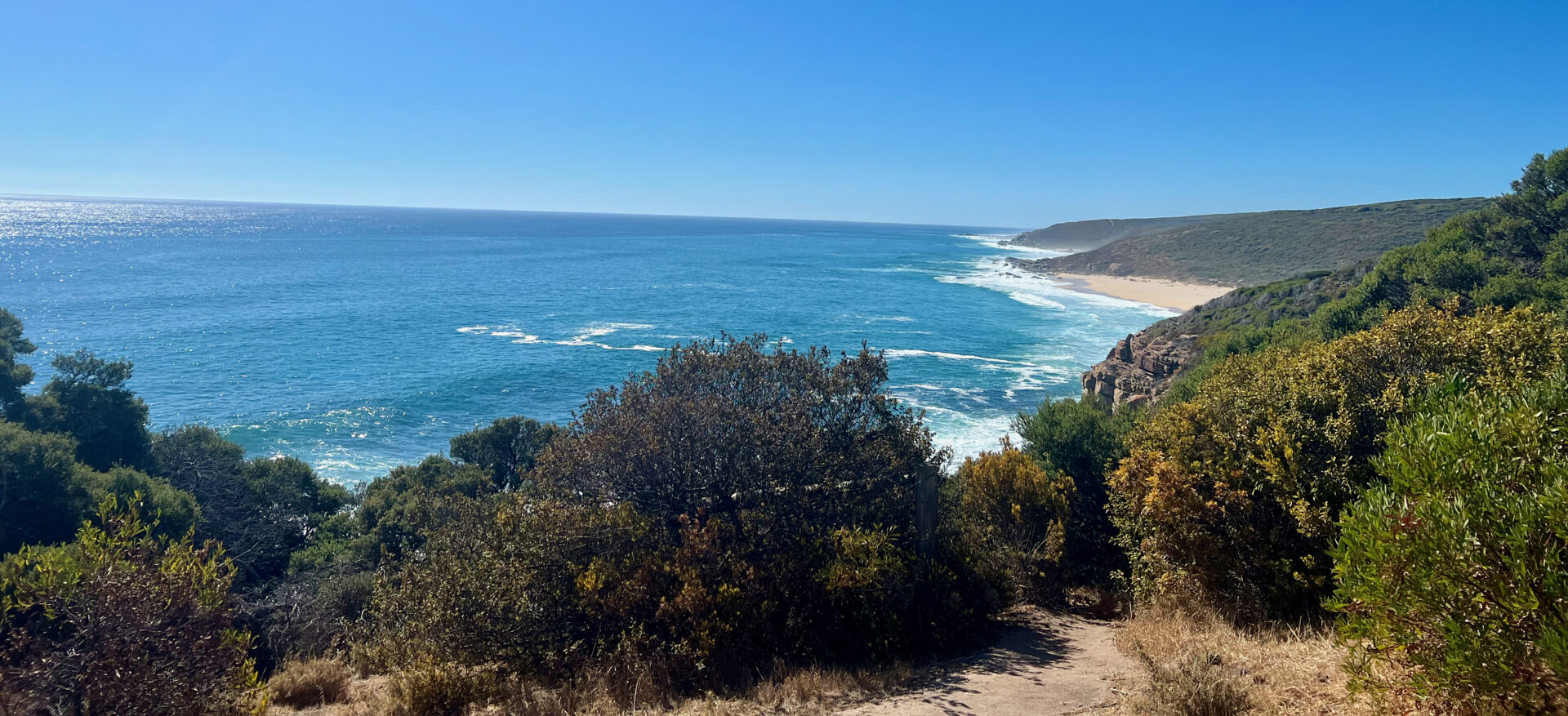
avantage of Margaret Roveer
The gorgeous natural environment

They have a plan 

The ‘Margaret River Wine Region Sustainability Plan’ identifies key initiatives and measures including environmental health and resilience, social responsibility, waste reduction and climate action. Their goal is to get 100% of members of The Margaret River Wine Association  to join the national Sustainable Winegrowing Australia program with 50% certified by December 2025.

Sustainable Australia 

Australian sustainable wine initiatives date back to the 1990s. In 2019, Sustainable Winegrowing Australia  launched as a national program for grape growers and winemakers. It covers environmental, social and economic sustainability. Profitability, resilience and innovation have to go hand in hand for this to work. 

Over 250 wine labels (across Australia) carry the ‘trust mark’, Australian Wine Industry Standards of Sustainable Practice identifying a wine as independently and annually verified as sustainable. The focus is on water use, biodiversity, waste management, energy and fuel efficiency and are encouraged through soil regeneration, water conservation and animal welfare. 

I’ve shared the differences between, sustainable, organic and biodynamic viticulture in previous posts (links) with reference to Bordeaux. Margaret River already has 52 Certified Vineyard Members covering over 2,269 hectares (vintage 2023), about 39% of the region’s vineyards. See members at www.sustainablewinegrowing.com.au

More and more producers in Margaret River have or are working towards organic and/or biodynamic certification. Over twenty estates are currently undergoing certification, there’s a continually update list on The Margaret River Organic Wine website  The certification to organic or biodynamic status can take anywhere from 12 months to 36 months depending on prior history. It’s a commitment, and once certified subject to an annual audit. It’s a slightly different approach to Bordeaux, here they may be grape growers and/or wine producers and sometimes growers are buying in supplementary grapes which adds a layer of detail.

Sharing the love

The ‘Margaret River Certified Organic and Biodynamic Wine Trail’ is a relaxed (it’s all pretty relaxed here) journey through the some of the region’s sustainably certified vineyards and wineries. An online version of the wine trail is available here link. 

Friends and foes.

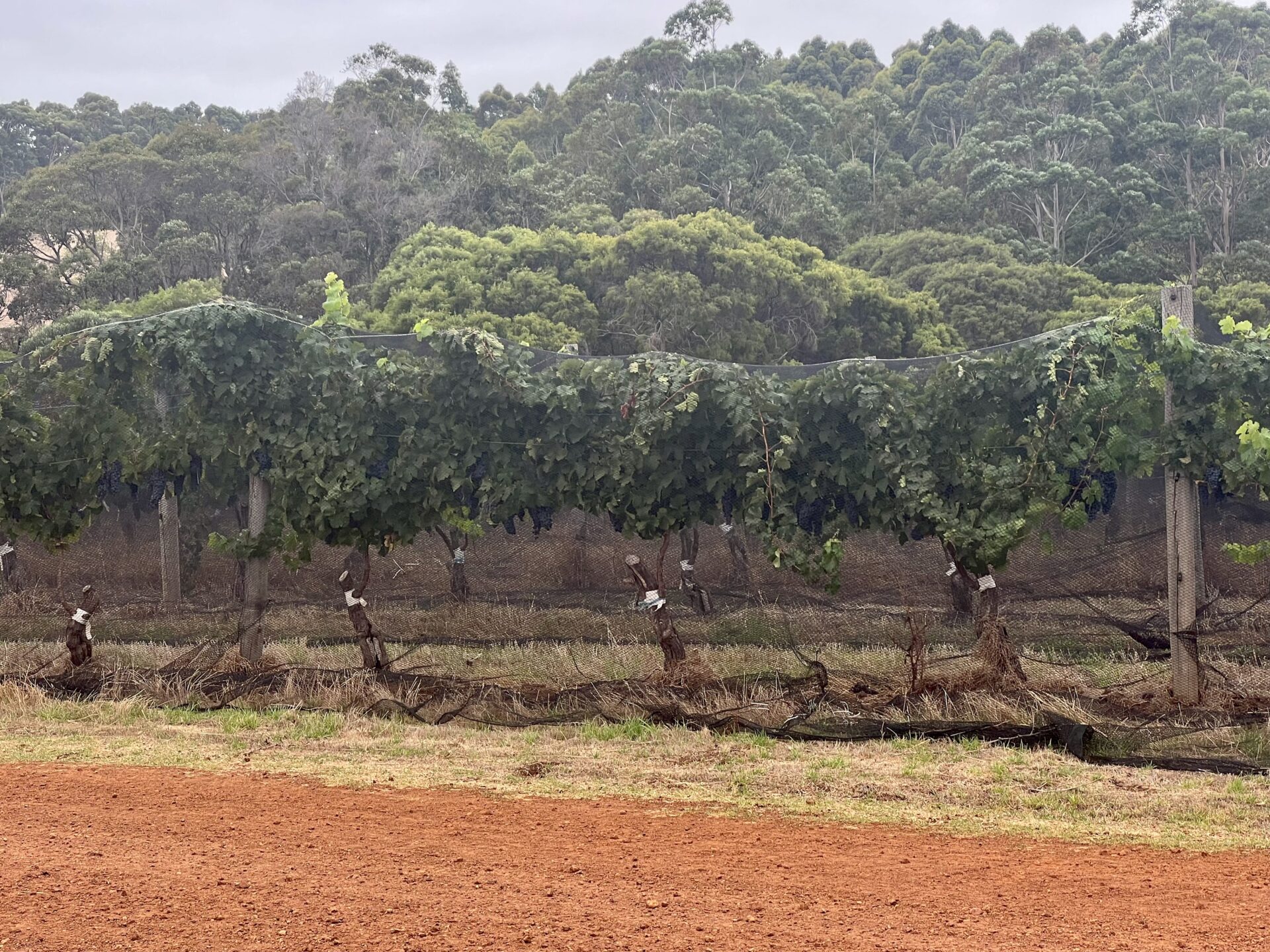
Preserving biodiversity is crucial, but not all the biodiversity is welcome in the vines. If berries ripen early (like this year), before the Marri trees bloom, Silvereye birds swoop in from the native Karri, Marri and Jarrah tree forests to gorge on the grapes. They are beautiful but damage grapes making them vulnerable to fungal attack. Nets protect vines early in the season, similar to the ones I saw in Waiheke, NZ this time last year. We could tell the progression of the harvest by who still had nets on vines compared to where they were neatly rolled up in corners of the vineyards. 

Fencing around the vineyard also keeps out hungry kangaroos who love to nibble on early vines shoots. They have a long history of fences here,  over 100 years ago the government built a 1000 Km long fence to try and keep rabbits out of WA. Other vineyard pests include Kikuyu South African grass that needs at least two under vine passes pa., garden weevils and yes, the oceanic climate sometimes brings powdery and Downy mildew (another, less welcome common feature with Bordeaux). 

Climate and Micro climate in the vintage 2024

We were there for the last days of the 2024 vintage, with conditions that bought climate change into everyone’s conversation. They had a wet winter fortunately as there was really no spring, heading straight into a long, hot and dry summer. The drought is scary, bringing harvest forward by a month, the earliest harvest on record. Some started picking early January, others were finished before the end of February, although we did see some grapes still on vines when we were there in March. It looked dry, but grapes were plentiful thanks to water stores in the sub soil. There were some sunburn issues but producers reported alcohol seemed to be around a manageable 13.5-14%.

Vines and still green cover crops at Cullen despite the drought conditions

Planets and plants

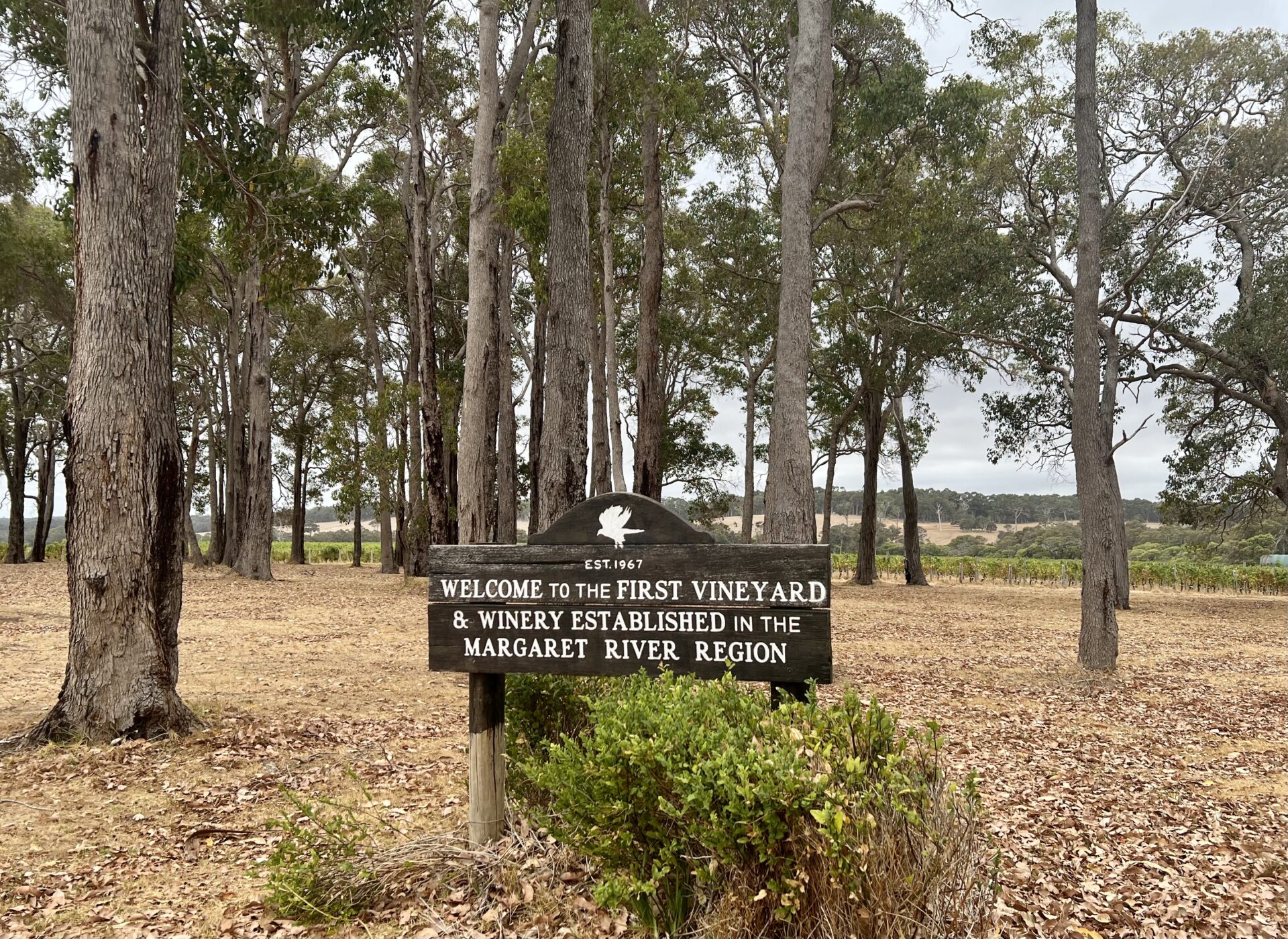
Mention sustainability in Margaret River and Cullen Winery will be part of the conversation. One of the pioneers of Margaret River wine, they are also leaders in sustainable viticulture, environmental responsibility and quality. They are a shining example of the evolution seen across the region. Entering the estate, they proudly proclaim their status as Australia’s first, and only, biodynamic and carbon neutral winery. 

Loud and proud of their environmental status

It’s been a family tradition since the 1960s, even before planting vines, Kevin John and Diana Madeline Cullen were involved in the 1st environmental bill and were instrumental in preventing mining along the coast. Since 1971, when they first planted vines, switched from cattle, chemical intervention was always minimal and vines were dry-farmed from the get go. 

In the 1980s their daughter Vanya joined the family business, alongside her dynamic mother, they became champions for the cause of women in wine (more of which in an upcoming post) and strongly motivated by a desire to heal the soil, putting back what had been taken out. The have a family history of dynamic women. Grace Madeline, Diana’s mother, was a suffragette and leading nature photographer. 

Vanya and Edward at Cullen Wines in March

In 1998, they made the change to organic viticulture, cover crops were planted, and composting introduced. Vanya continues their mission today, running the property on behalf of her five siblings, transforming the family business into one of Australia’s most successful and environmentally sustainable wineries and vineyards. At a Biodynamic Conference in 2003, Vanya decided to add Biodynamics to their holistic philosophy. 

Certification and recognition

The Cullen vineyard was certified Organic in 2003, Biodynamic in 2004 with their Mangan Vineyard and Winery following in 2008. They hand harvest according to biodynamic calendar and rely on wild yeasts.   

Originally seen as an eccentric, although not that out of place with the West coast hippy vibe, Vanya eventually become respected for her ideas as they became more mainstream. Known as the mother of ‘Oz Biodynamics’, she was the first recipient of the Halliday viticulturist of the year in 2022 and was awarded the Order of Australia (OAM) King Charles’ III Birthday Honours list in 2023 for her services to viticulture and oenology.

Sharing is caring 

Cullen also pioneered wine tourism, in 1976 they were the first winery in Wilyabrup to offer visitors food with their wine, starting with cheese platters, pastries and homemade soups. Now they have five biodynamic kitchen gardens supplying over 90% of the fruit and vegetables used in their carbon neutral Dining Room and Biodynamic Wine Room. Menus paired with current releases and back vintages of flagship wines directly from the Cullen cellar. 90% of their wines are sold in WA, the cellar door and wine club is a key part of this.

The biodynamic garden a vortex of education

Visitors intrigued by Bio dynamics can discover the theory and practice concepts in the Self-Guided Spiral Garden Biodynamic Tour, designed to echo the famous biodynamic vortex. There are also beehives, and a delicious Marri blossom honey used by the Chef in the kitchens and beeswax used to line amphorae in the cellar. 

Carbon Neutral 

Margaret River has also created an Emissions Reduction Roadmap to help producers work towards carbon neutrality. Their aim is net zero by 2050, with a 42% reduction target by 2030. Members record, report and track their emissions annually. Cullen is a pioneer here too; certified carbon neutral since 2007 and carbon positive since 2019. The first winery in Australia to be certified 100% carbon neutral.

To change it, measure it

It’s been a long process, Cullen introduced full GHG (Greenhouse Gas) inventories in 2006 (ISO standard 14064). This covers direct emissions (fossil fuels for tractors, etc.), electricity generation (40% of their power is from their own solar panels – the balance from renewables) and the trickier, indirect upstream and downstream activities, such as packaging, glass in particular, staff commuting, business travel, transport emissions, etc.

This precise measurement has allowed Cullen Wines to offset 7454 tons of emitted CO2 through the Carbon Neutral program in the Yarra Yarra diversity corridor.

Now, with Biodynamics, the organic carbon content of the vineyard soils has increased, more atmospheric CO2 is taken by the plants and added to soil. They measure this too, from 2014 to 2019 they sequestered 9042 tons of CO2 equivalent units on the property (approx. 1808 tons pa). This is above their annual GHG carbon emissions. Cullen Wines has been Carbon Positive since 2019. No mean feat.

Prep for the aromas in the flag ship Cabernets

Carbon Cost 

This comes at a cost. Since 2006, Cullen has invested about A$ 25 000 pa. into the environment, mainly though tree planting offset activities, but also creating biodiversity corridors. Now, their carbon neutral costs are down to A$5000 pa., mostly in administration and consultancy fees. Rich from this experience, they have started a Carbon Farming Initiative with the Federal Governments Emissions Reduction Fund (ERF), part of The Western Australian $15 million Carbon Farming and Land Restoration Program using agriculture’s potential to sequester carbon. The ‘Cullen Wines Wilyabrup Soil Carbon Project’ has been created on the Cullen property. On pastureland they sow multi-species cover crops, of up to 12 different species (native seeds where possible). As a registered project, any increase in Soil Organic Carbon (SOC) will become a tradable Australian Carbon Credit Unit (ACCU) to offset the emissions of the business into the future, or sell on, an attractive option for the mining industry to the north. In November 2020, Cullen Wines joined the  IWCA (International Wineries for Climate Action).

Improve the wine and save the planet 

It’s not only about the environment, Vanya wants ‘the Voice of the vineyard to be louder in the glass’. It’s working, Cullen wines constantly win awards across international competitions. All the fruit comes from their two vineyards, the Cullen estate of 31 ha planted in the 70s and 80s on gravelly loam and granite and The Cullen Mangan 19 ha, closer to the ocean on sandy loam with less water retention, planted in the 90s. Their very personal and family history can be traced through the wines of the property.
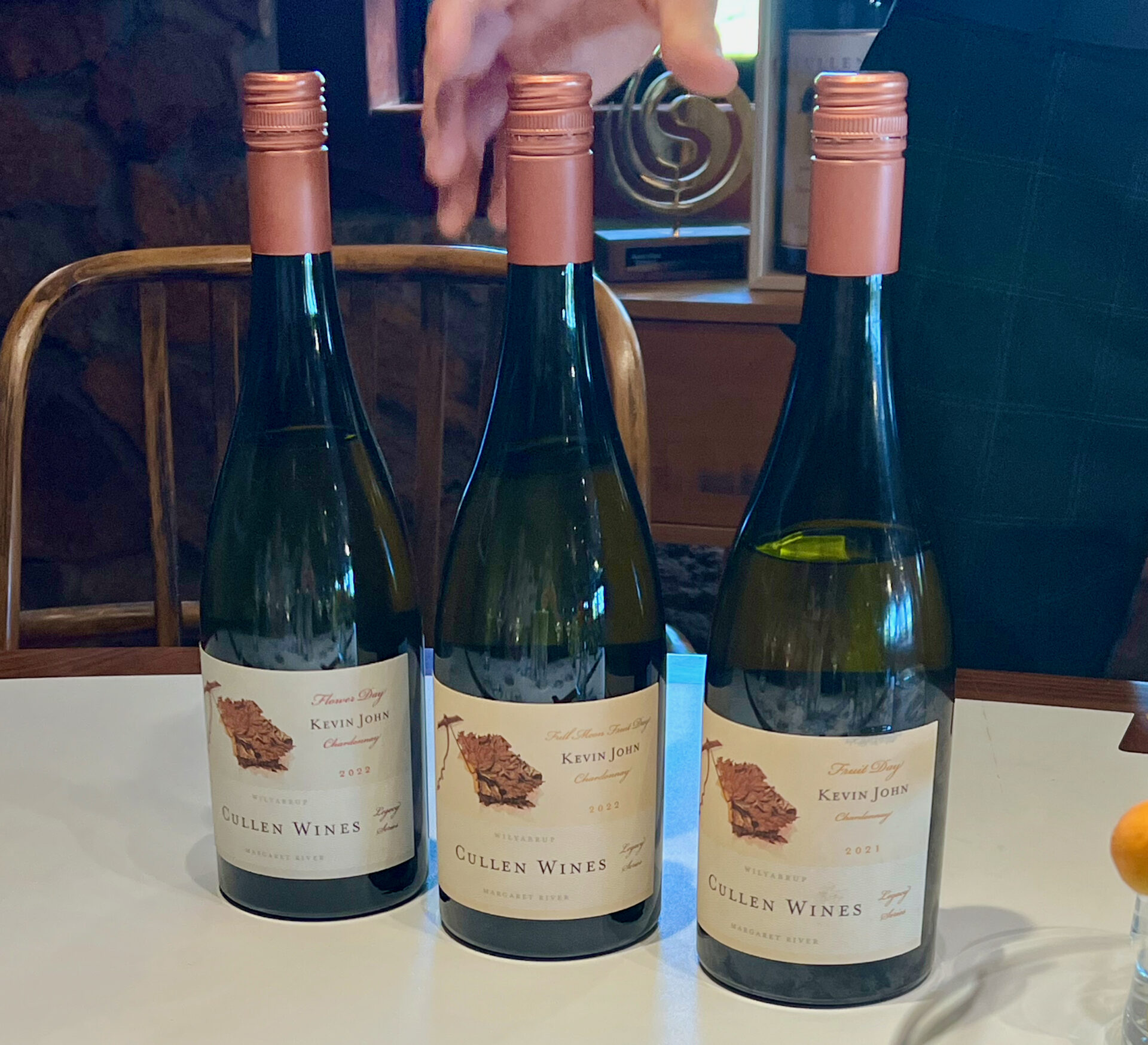
The Kevin John Chardonnay

Flagship names 

Kevin and Diana, and now Vanya, have flagship wines named after them, the Diana Madeline (their only ‘Bordeaux’ Cabernet Sauvignon blend) and the Kevin John (Chardonnay). Grace Madeline, named after the grandmother, is a Sauvignon Blanc Semillon blend. I was as excited to taste the whites as Vanya was the share them, she feels the Sauvignon Blanc in particular really expresses ‘the peculiarity’ of the place. They were stunning.

The Diana Madeline Bordeaux Blend

The Legacy series highlights their commitment to biodynamics. Tiny batches, based on and named after flower and fruit days on the biodynamic calendar, often only picked days apart, with gorgeous labels. 

The wines from the Magnan vines give a light hearted nod at biodynamics too with names like Dancing in the Sun SBS, Dancing in the Moonlight Rosé, and the Rose Moon Pet Nat. 
There’s a real sense of experimentation, including a new 100% preservative Free Malbec, which Vanya considers a possible rising star with climate change, an amber wine and a late harvest Chenin alongside the classic varieties. They are using stainless steel, terracotta amphorae lined with their own bees wax, oak of different sizes and concrete. You can’t help thinking that, as seriously as they take their wines, production manager Andy Barrett-Lennard and Vanya must be having fun. It shows in the vibrant wines. 

Stunning biodynamic whites

They are not alone,  

Cullen is a sustainable leader, but they are not the only ones embracing the movement, organics and biodynamics. Look out for Leeuwin Estate, Domaine Naturaliste, Xanadu Wines, Voyager, Vasse Felix and Windows Estate to name a few. More to come.  

If you enjoyed this post, please  sign up here  to receive future blog posts directly to your inbox and share with a friend. If you would like to read more about Bordeaux, you’ll find Bordeaux Bootcamp here, or go to  The Drinking Woman’s Diet  for wine and wellness inspiration. You can read more of my stories from Bordeaux at Decanter. If you’d like to know more please contact me here.
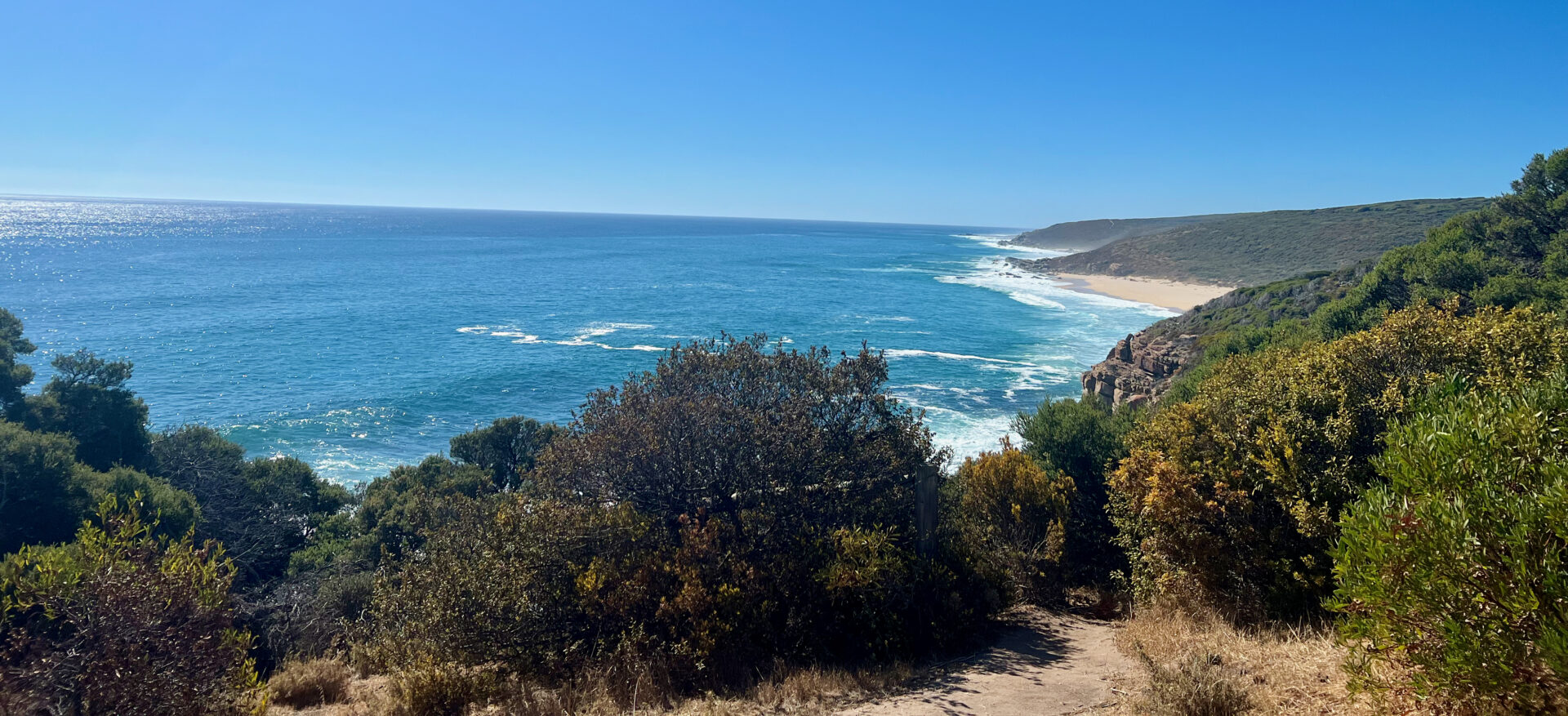
Margaret River. Old Soils, New Wines

I’m just back from Margaret River, my first trip to the region, in fact my very first trip to Australia. I had to go; it’s been quoted to me as the most Bordeaux wine region of Australia – famous for its Cabernet Sauvignon, close to the ocean.  It was a mother and son trip, with Edward scouting out new wines for Mauritius.

Three of the things I most love writing about were here in spades: sustainability, women wine makers and wine tourism – all in one place. I’ll cover them all over the next few posts, but want to start with an introduction to the region and it’s wines. 

A sense of place. 

Margaret River is a tiny part of the Australian wine scene, just 2% of national production. It claims to be one of the most isolated wine regions of the world, I can believe it, it takes some getting to, but is so worth it. Surrounded by the ocean, it has a unique geography and micro climate,  juxtaposed on some of the oldest soils of the planet, yet it’s new to wine production which imbues the place with a sense of dynamism and excitement. 

Where? 

Tucked into the south west corner of Australia, Margaret River enjoys a Mediterranean and a maritime climate – surely the best of both worlds for vines? About  300km south of Perth on the west coast, the vineyards are on a ‘heel’ sticking out into the Indian and Southern Oceans. Surrounded by water on three sides, this unique location brings cooling sea breezes. In the afternoons, we felt the famous ‘Fremantle Doctor’ blow through the vines, balancing the hot weather of the growing season. The warm Leeuwin Coastal Current brings much needed (at least this year) winter rains. All contributing to the elegance of wines we tasted.

The vineyards run along a narrow (27km wide) 110 km long strip from Cape Naturaliste in the north to Cape Leeuwin in the south. The GI (Geographical Indication) region covers 213,000 ha of which only 3% are under vine: 5,840 hectares (720 organic). 

It’s one of the most important biodiversity hotspots on Earth. 46% of the region is cloaked in unspoiled, remnant vegetation; an abundant forest and bushland of native trees, shrubs and grasses, with impressive caves. An endemic flora and fauna has been cared for by the traditional owners, the Wadandi People, for over 50,000 years. It’s certainly not monoculture, as well as indigenous forest and vines there are cows, mainly very handsome Black Angus, sheep and lots of wild kangaroos. 

A river runs through it 

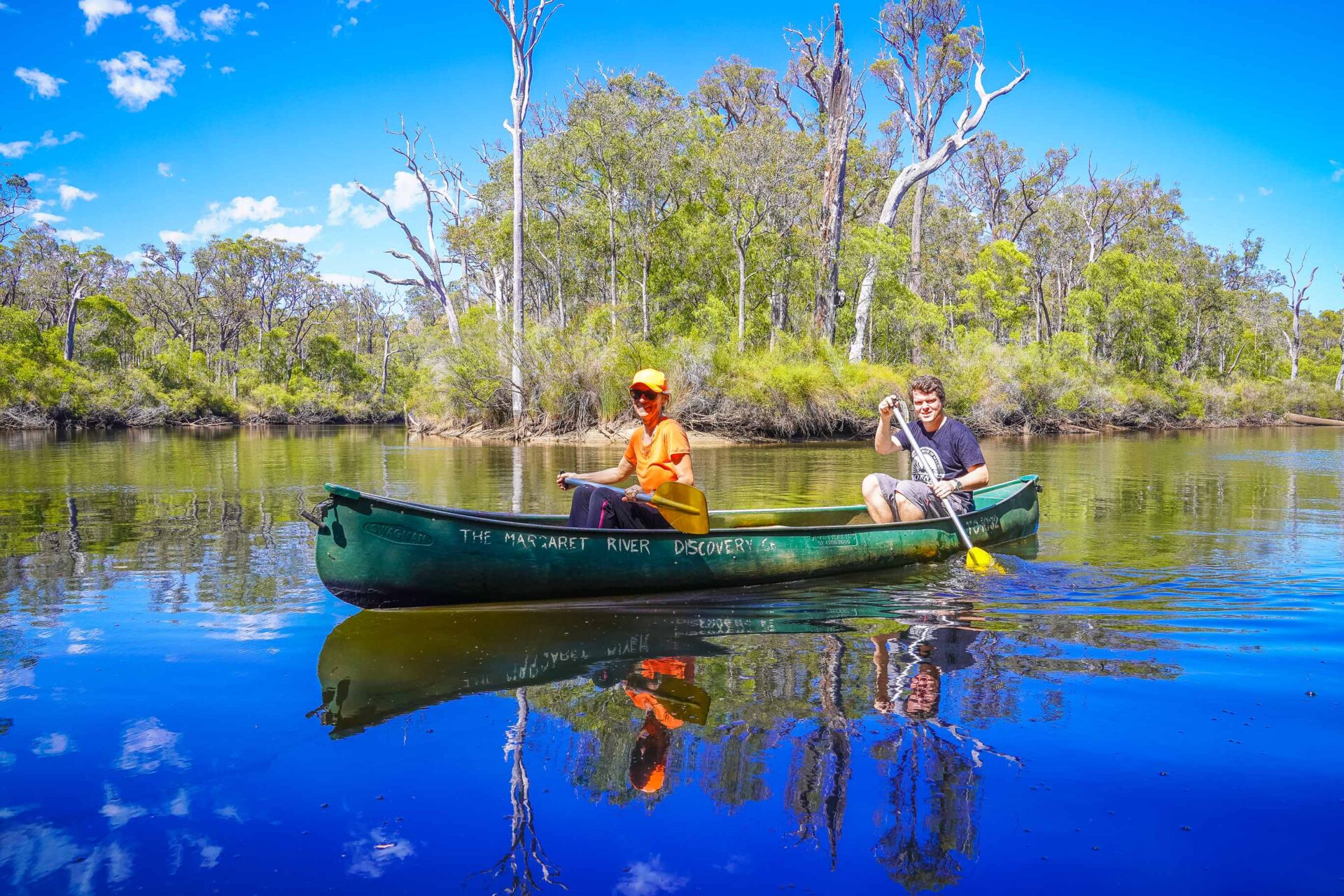
The Margaret River divides the region east to west. With local Sean Blocksidge of The Margaret Discovery Company, we canoed up it, which I highly recommend, despite water levels being low due to an exceptional early start to summer and no rain at all throughout the growing season. 

letting Edward do all the hard work

What’s in a name?

The region has been lived in for tens of thousands of years by the Wadandi. A lot of place names end in ‘up’ (Cowaramup, Willabrup), of Aboriginal origin meaning ‘place of’.

Geographe Bay and Cape Naturalist to the north take their names from French ships arriving via Mauritius in the early 1800s. Vasse is named after a poor soul who apparently fell overboard – his fate remains a mystery – or legend depending upon who you talk to. 

Scientific discovery 

Pioneering European settlers in the 1830’s lived from forestry and dairy farming. Western Australia (WA) wine making started further north in the Swan River Colony near Perth. In 1955, Dr Harold Olmo, Professor of Viticulture at University California Davis, was invited to assess the potential for viticulture here. His conclusions compared the region favourably to the best Australia and California had to offer, but it was local Agronomist, Dr John Gladstones, who is hailed as the viticultural hero of the region. In the 1960s he declared  Margaret River and Busselton as having ‘excellent potential’, highlighting Cowaramup-Bramley and Witchcliffe-Forest Grove as grape growing hot spots. This was welcome news to struggling farmers at the time desperately looking to diversify. 

Living history

Many of the wine pioneers were Doctors. In 1966, Gladstones advised Dr Kevin Cullen, a local GP and his wife Diana to plant grapes. Inspired, Cullen organised a public meeting where Gladstones encouraged other locals to join the movement. In 1967, British doctor Tom Cullity planted Margaret River’s first commercial vineyard, Vasse Felix. In 1969,  Dr Bill Pannell from Royal Perth Hospital, planted Moss Wood and Cullen planted his own eponymous vineyard in 1971, followed by Irish Dr John Lagon at Xanadu in 1977. Why so many doctors? An affinity for fine wine and its possible health benefits? A scientific background? Or perhaps a tax break – this was hinted at, but I haven’t found confirmation. (If you know the answer please share below.)

1980s recognition 

By 1980 there were 20 vineyards in the area, producing quality that was already attracting attention with wines Cape Mentelle (planted in 1970) and Leeuwin Estate (planted in 1973)  winning major competitions including Decanter Magazine’s international Chardonnay Tasting where  Leeuwin Estate ‘Art Series’ 1981 Chardonnay was the highest rated wine. They’re still winning. Today 200 vineyards are enjoying phenomenal success in a relatively short period. 

Ancient earth, young at heart 

What is the soil that makes the region so suitable for vines? There are ten main soils to choose from, a diversity that explains the array of grape varieties and wine styles. They are dominated by deep, well-drained, red gravelly loams over granite and gneiss, perhaps the oldest of the Earth’s viticultural regions. The granite bedrock of the ridge is 150–600 million years old, layered with two-million-year-old limestone!

Entrance to one of the Margaret River limestone caves

Traditionally, the native vegetation has guided grape growers. Jarrah, Marri and Karri trees indicate loam-gravel great for vines, but don’t plant where the peppermint trees grow. This intuitive knowledge is now replaced by more scientific soil studies with viticulture programmes adapted to the variability of soil type at a row and block level, embracing the benefits of the latest research.

Cover crops are common under vines but here, at Vasse Felix you can see the famous iron rich gravel in the foreground and the indigenous forest behind.

Vines are planted from  0–231m above sea level, for every 100 metres increase in elevation, there’s a temperature decrease of 0.6°C and a 1% increase in ultraviolet radiation. The Dunsborough Faultline, runs the full length of the region, dividing it into two. To the west, lies 83 000 ha of the Leeuwin Complex (although only a tiny amount is under vine). Its ironstone ridge, higher elevations (40 -100 metres) streams and valleys are home to two-thirds of Margaret River’s vineyard, planted on lateritic ironstone gravels that are unique to the region and ideal for vines, especially Cabernet. They account for over 40 % of all plantings in Western Australia (WA). To the east, the Perth Basin Complex, is lower-lying, sedimentary rock of sand, silt and shale. 

Gladstones Lines

Dr John Gladstones offered a set of recommendations for delineating the Margaret River Wine Region in June 1994. His proposal was accepted and, in 1996, Margaret River became one of the first three wine regions in Australia to have its boundaries legally defined with Geographical Indicators. The good doctor has a line of longitude named after him. The Gladstones Line runs north to south forming the eastern boundary of the Margaret River Wine Region. In 1999, he went further suggesting the potential to divide Margaret River into six sub-regions based on climate and soil differences. These unofficial areas are Yallingup, Carbunup, Wilyabrup, Treeton, Wallcliffe and Karridale. In 2017 a group of wineries tried to establish, ‘Wilyabrup’ as a GI. Although the project was abandoned, it seems common agreement that the ‘Wilyabrup Dirt’ is considered the magical land of Cabernet. For Bordeaux lovers, I’m tempted to compare it to Pauillac. The similarity to the Médoc peninsula doesn’t end there. There are two principal roads up and down the 110km region. Busselton highway and Caves road, reminds me of the D2, as you drive past many famous names of the region.  The name is not inspired by the French word for cellars but by the huge and spectacular caves (well worth a visit), created in the limestone bedrock by underground rivers and water infiltration.

Bio diversity 

The geographical isolation gives Margaret River (Margs to its friends) a unique, and fiercely protected, biodiversity. Anyone who has flown to Australia (or NZ) will know how they put the fear of god into you about bringing in anything vaguely agricultural, plant based or even mud on your shoes before you disembark. We saw visitors who wandered amongst the vines being shooed back to the path, so paranoid are they about contamination. Understandable when you know this is area of Australia that has never seen the ravages of Phylloxera, with all vineyards grown on their own root systems.

Grape Varieties 

Vines are planted to 60% white and 40% red, dominated by about 20% Cabernet Sauvignon, 18% Sauvignon Blanc, 17% Chardonnay, 16.5% Sémillon and 14% Shiraz. The remainder a mix of other reds and white – but white dominates – underlying the cool maritime climate really works for the region. 

The secret to Cabernet’s reign lies with Dr Gladstones, when he identified Margaret River’s gravel soils and proximity to the ocean as ideal growing conditions for the variety. The oldest vines were planted in the 60s and 70s, with some of the original Cabernet Sauvignon and Malbec plantings still growing. The 1970s saw the first Chardonnay vines planted at Leeuwin Estate, Cullen Wines and Moss Wood, pioneers that remain a force in the region today. 

Most vineyards are grown from cuttings, ‘massal selection’, from existing vineyards. Margaret River is proud of their high-quality, heritage clones of Gingin (Chardonnay) and Houghton (Cabernet Sauvignon). Minimal intervention viticulture aims to produce fruit that expresses terroir, there’s an exciting adoption of sustainable, organic and biodynamic viticulture that I’ll talk about in more detail in a future post. 

From Chardy party to Savalanche 

The two flagship varieties remain, Cabernet Sauvignon and Chardonnay. As delicious as the Chardonnay is, mainly bright and crisp rather than oaky and heavy, with my Bordeaux bias for Sémillon- Sauvignon blends, I was thrilled to taste some fabulous examples. Australians love to abbreviate everything (see Margs), a memorable example was a local explaining how they had left the ‘Chardy Party’ to join the ‘Savalanche’! It’s catching, by the end of our stay we were asking if blends were  Sem/Sav or Sav/Sem? It’s easy to identify: SBS is a Sauvignon Blanc dominated version of the blend SSB Sémillon dominated – nothing like keeping it simple.

Shiraz or Syrah? 

Cabernet is the traditional hero variety but it’s not alone, I loved the way producers called their Syrah wine Shiraz or Syrah depending upon the style they were looking to produce, big and bold or elegant, often alternating between the two for different cuvées 

Wine making – where the fun really starts

The region is dominated by artisan, mainly family wineries, with over 60% of producers crushing less than 50 tonnes of fruit (approx. 4,000 cases). It’s a close-knit community, regularly organising tastings amongst themselves, sharing knowledge and experience. International blind tastings for Cabernet Sauvignon and Chardonnay are held at Cape Mentelle and Cullen Wines each year, keeping them on their toes and open to new ideas and influences.

They are really proud and passionate about their region, there’s still an energy of the new and adventurous. Winemakers may draw on classic wine regions for technique but it’s the local environment that inspires them, keeps them flexible and gives them permission to experiment.

Minimalist viticulture is reflected in a hands-off low-intervention approach in the cellar too. Alcohol levels were 15% at the highest, elegantly balanced by the freshness from the maritime influence and thanks to low intervention wine making. Signature techniques are natural fermentation with indigenous yeasts and restrained use of oak. We saw lots of large 500l ‘puncheons’ preferring second use to new oak and experiments with alternative techniques including whole berry fermentation and fermenting and aging in amphorae. It’s all a bit rock and roll – as were the sound tracks in the wineries during harvest! 

Keeping it local

Just 10% of Margaret River wines are exported, they have a loyal following of domestic collectors and drinkers. If you’re in USA, UK or Singapore, the leading export markets, you’re in with a change of finding the wines. Over 100 cellar doors are open to the public, offering a huge range of wine and food tasting experiences and delicious restaurants. Door sales are an important part of the economic model with successful and fun wine clubs, thanks to the range of wines produced, original marketing and label design.

Go visit

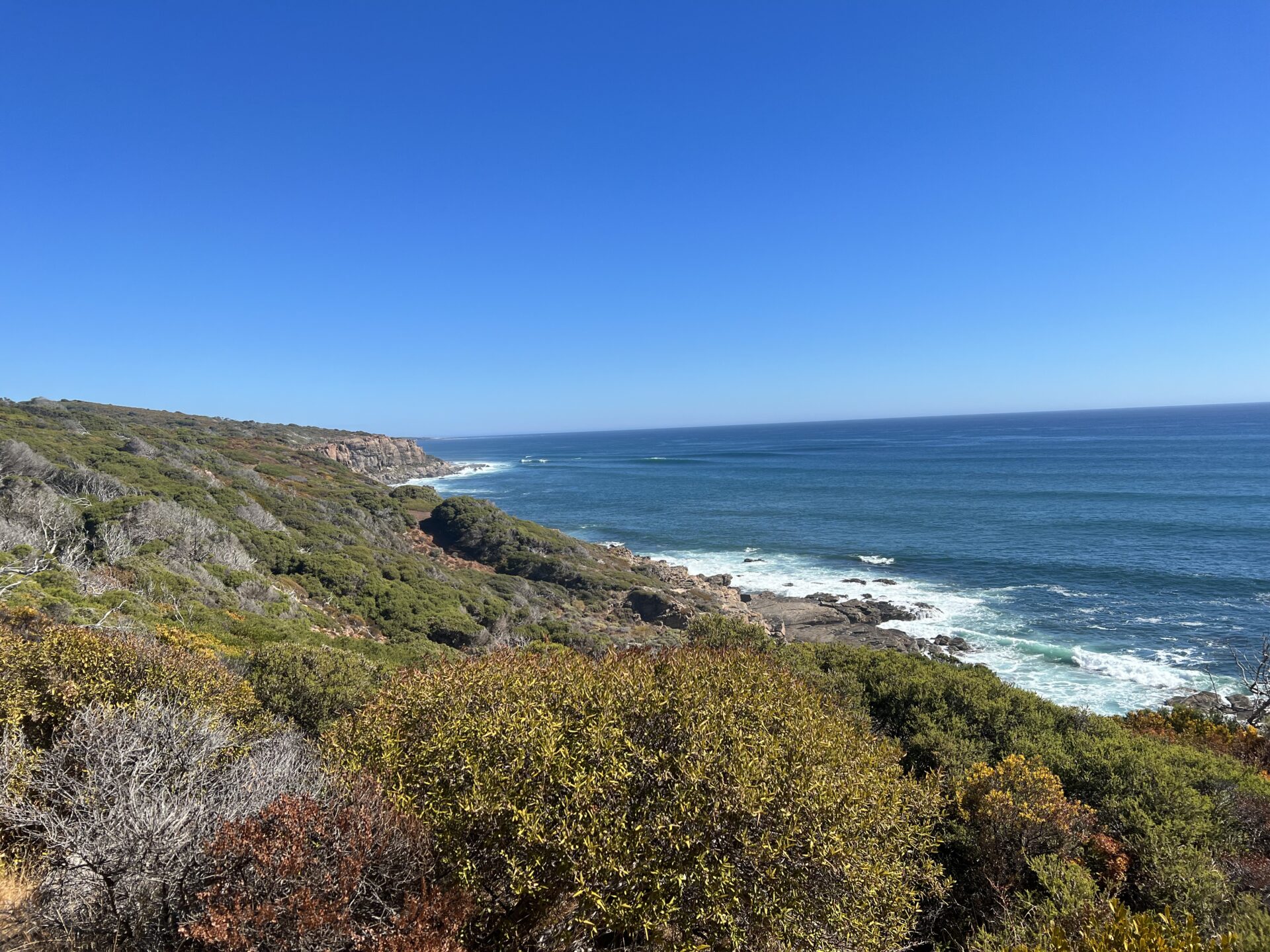
The region offers a warm and relaxed welcome. With 130 kms of stunning coastline, you’re never far from the ocean and the cool hippy vibe of barefoot surfers and beach front cafés. The wineries, breweries and distilleries, stunning natural environment, arts and events scene all attract over 1.5 million overnight visitors per year. We were there at the end of an exceptionally early harvest, but it really didn’t feel busy. We stayed in Dunsborough and Busselton. The restaurant and food scene is amazing, if you’re driving down to self-catering accommodation call in at Bunbury farmers market for delicious local produce.

I can’t recommend visiting Margaret River highly enough. Make sure you’re signed up for further blog posts to learn why, meet some of the amazing wine makers and discover wines we loved.

From seafront to cellar – stunning Margaret River

If you enjoyed this post,   please  sign up here  to receive future blog posts directly to your inbox and share with a friend. If you would like to read more about Bordeaux, find your copy of Bordeaux Bootcamp here, and learn about Wine and Wellness, with  The Drinking Woman’s Diet . Youn can read more of my stories from Bordeaux at Decanter. Interested in working with me? Contact me here.