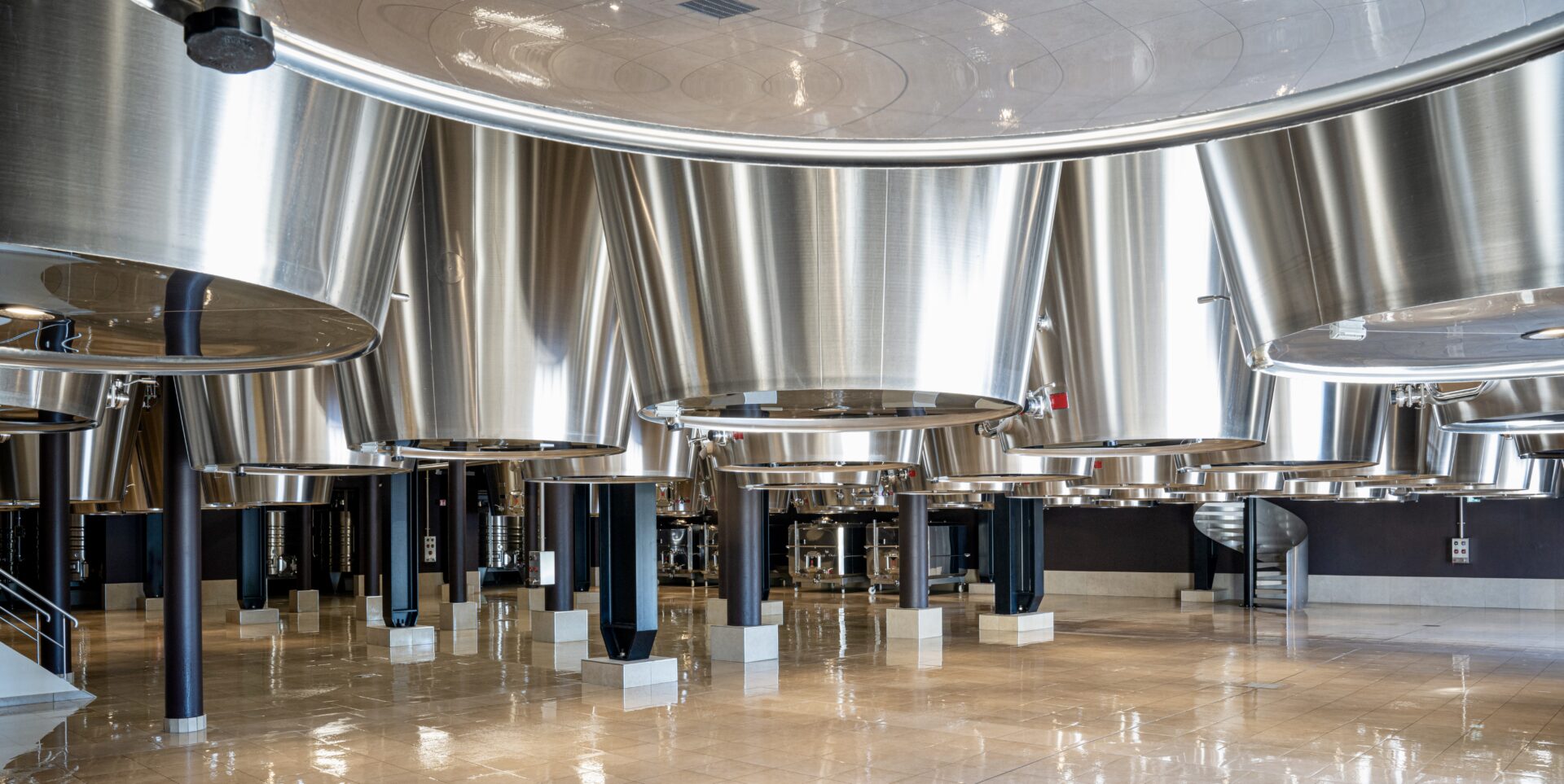
Entering Bordeaux vat rooms, you’d be forgiven for thinking that either nothing much has changed here for hundreds of years or that you’ve stumbled into a sci-fi movie. It’s an illustration of the Bordeaux dichotomy, marrying the best of tradition whilst embracing innovation. Wine making is in constant innovation, evolution and experimentation. Look closely into the corners of even the most classic cellars and you’ll see containers of all shapes, sizes and materials, tucked away being tested.
Experiments
When I arrived here, 30 odd years ago, wine cellars were dominated by large fermentation vats, stainless, oak or concrete. There was a bit of a left bank-right back divide, mainly oak and stainless on the left bank and reinforced concrete vats on the right bank. Decisions around what to use were based on a mix of received wisdom (and inherited vats), space in the cellar and how deep the wine makers pockets where. Even so, there wasn’t a lot of variation.
Why the dramatic change? The l’Institut des sciences de la vigne et du vin (ISVV), part of Bordeaux University, is the Bordeaux centre of excellence for wine and vine R & D. Their research looks into all aspects of wine making and viticulture and the two are linked. The choice of size, shape and material of containers is also linked to a deeper understanding of terroir.
Size matters
Regardless of material, there’s been a reduction in size and an increase in the number of vats in cellars. Château Branaire Ducru, almost doubled the number of vats when they opened their new cellar opened in 2024, see photo above.
Gravity and smaller vats will be the two justifications cited for cellar renovations (leaving aside PR, egos and image). A deeper understanding of the mosaic of vineyard terroir is translated into plot by plot, precision viticulture. This entails different cover crops, planting densities, pruning, trellising, picking dates as well as longer term decisions on grape varieties, clones and root stock adapted to each plot and of course the history and age of vines.
A better blend
To keep the personality of each plot, winemakers want to make the wine from each plot separately, hence more, smaller vats. Different temperatures, different maceration times and different extractions can be tailored to the style and quality of the grapes and the juice. Some of these wines may have a personality strong enough to create an individual cuvée but most will be blended. Vinifying them separately enhances the individual profile adding more complexity to the signature Bordeaux blend. The sum being greater than the parts is one of the tenets of blending.
Right bank revolution
There’s long been a right bank/left bank vat divide. The heyday of the garage wine movement in the 1990s, set the right bank up as a hub of innovation and experimentation, introducing lower yields, berry by berry selection, cold soaks, micro oxygenation and lots of new oak. Although criticised at the time by more traditional estates, much of this has now become mainstream – with the exception of excess new oak, now out of fashion as wine makers look for more fruit and less oxygen exposure.
Why the right bank? Perhaps the smaller vineyards with less corporate ownership, had a greater taste for risk? Helped in some cases by outsiders with a healthy disregard for tradition. The dominance of Merlot also lends itself better to these experimental techniques than more tannic Cabernets.

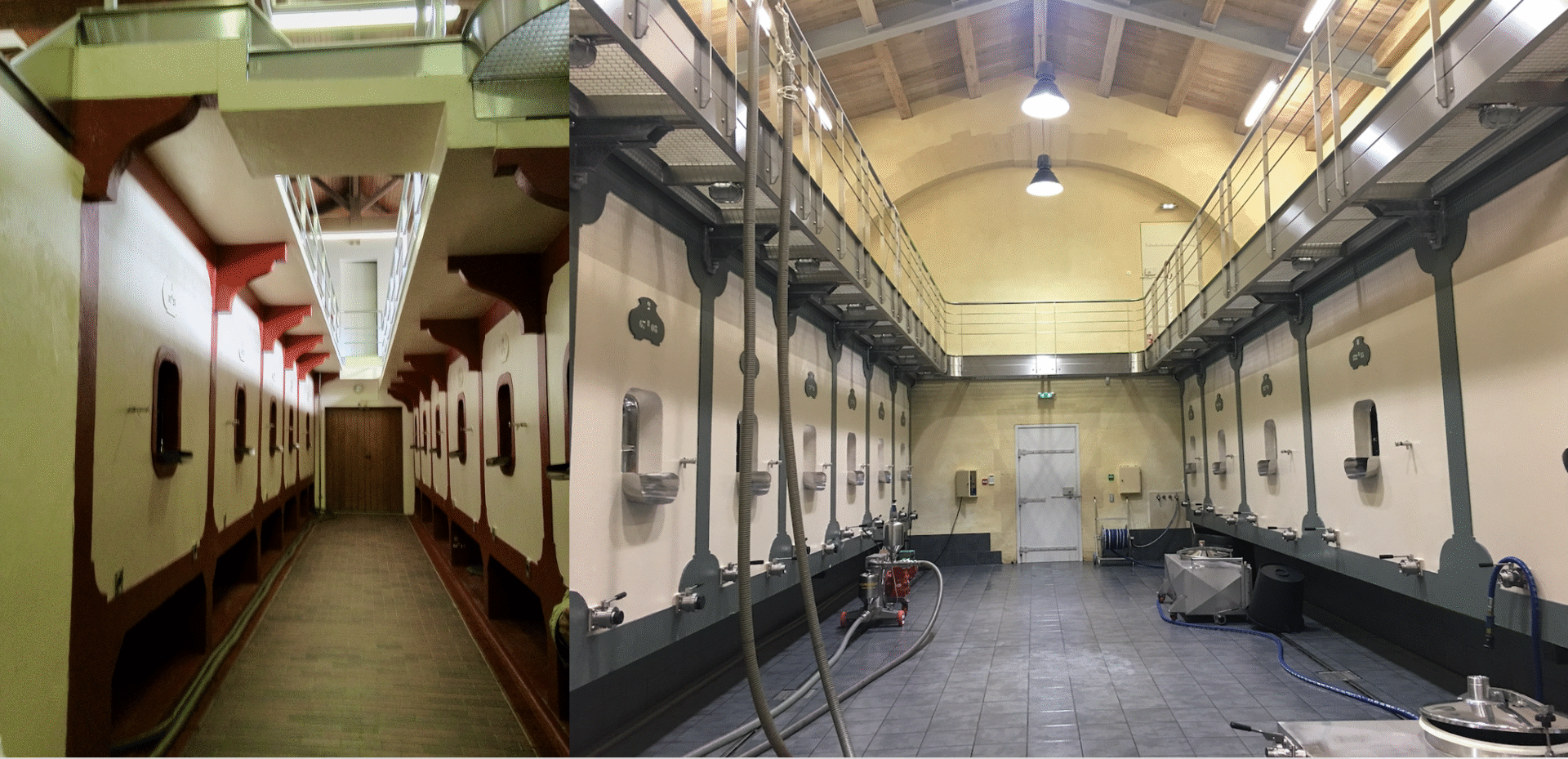
The right bank has always been enamoured with concrete tanks. I love the old, square, art-deco style tanks you still find in a lot of cellars here. Ideally suited to smaller spaces, you can squeeze a lot more square tanks into a cellar than conical wooden or round stainless steel ones. Built and poured on site they can be made to suit to the plot structure of the individual vineyard.
The most famous Pomerol, Petrus is a fan of these traditional concrete vats. So much so that when they completely renovated their cellar the new vats were almost identical to the old ones, but with a lot more space for ease of working.
Concrete and thermal inertia
Thick concrete walls naturally insulate the wine, an inertia that allows temperatures to rise and fall more slowly, less aggressive for the more fragile Merlot. Today, cooling and warming systems are systemically added either inside the vats or built into the walls of newer versions.
Traditionally lined with epoxy resin or even tiles, making them easier to clean, today we see more brut cement, prepped with tartaric acid before being filled with juice, increasing porosity and also (more controversially) minerality. Shine a torch in the empty vats after vinification, and you’ll see the sparkle of tartaric crystals deposited during fermentation.

Shapely
Properties are having fun with the design and shape of concrete vats. No longer limited to straight sided tanks they are imitating the ‘’tronconic’ or “truncated cone” shape of traditional wooden vats or creating completely new shapes. A mixture of imagination, technical needs and deep pockets has given us some pretty spectacular cellars.
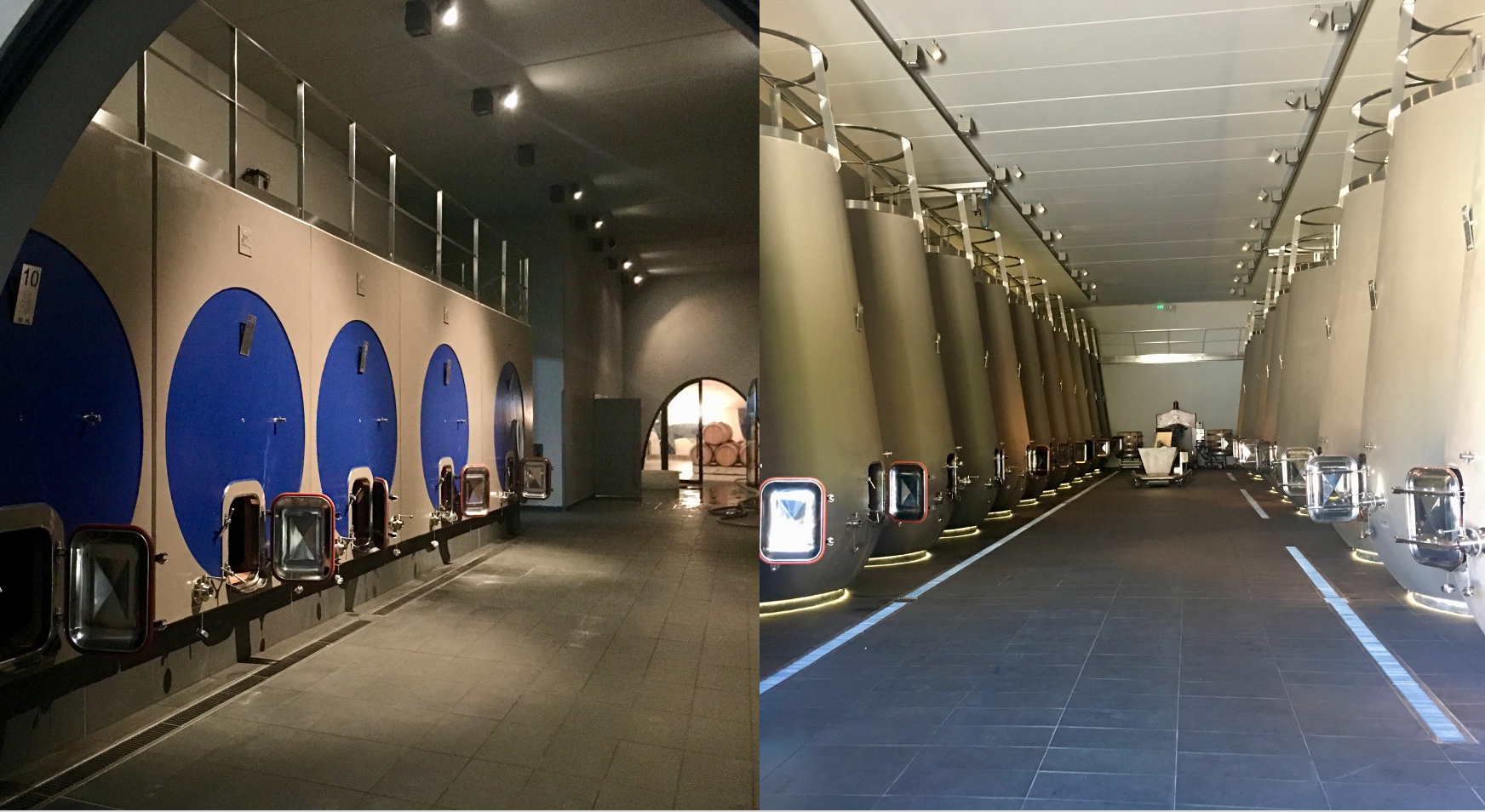
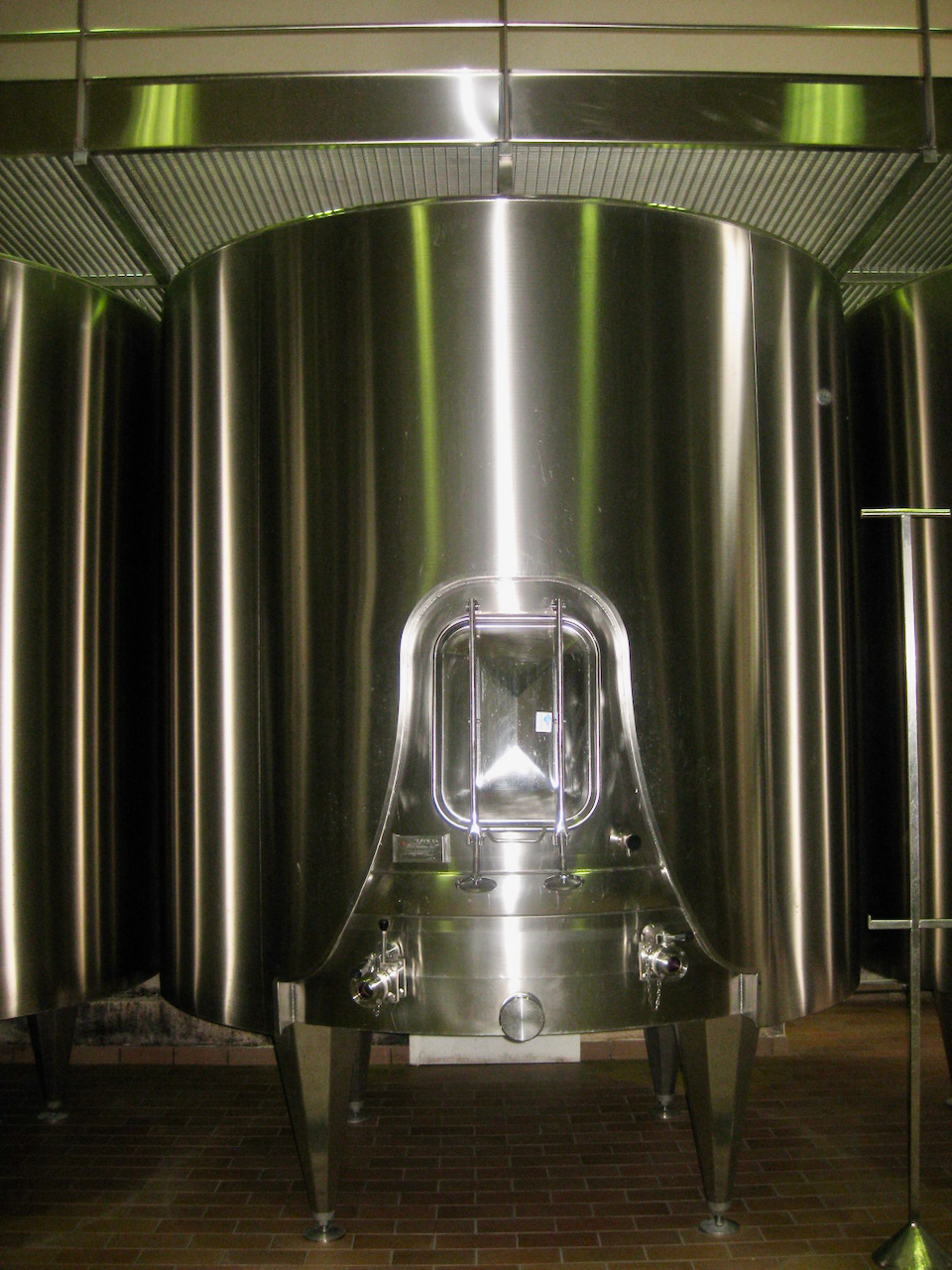
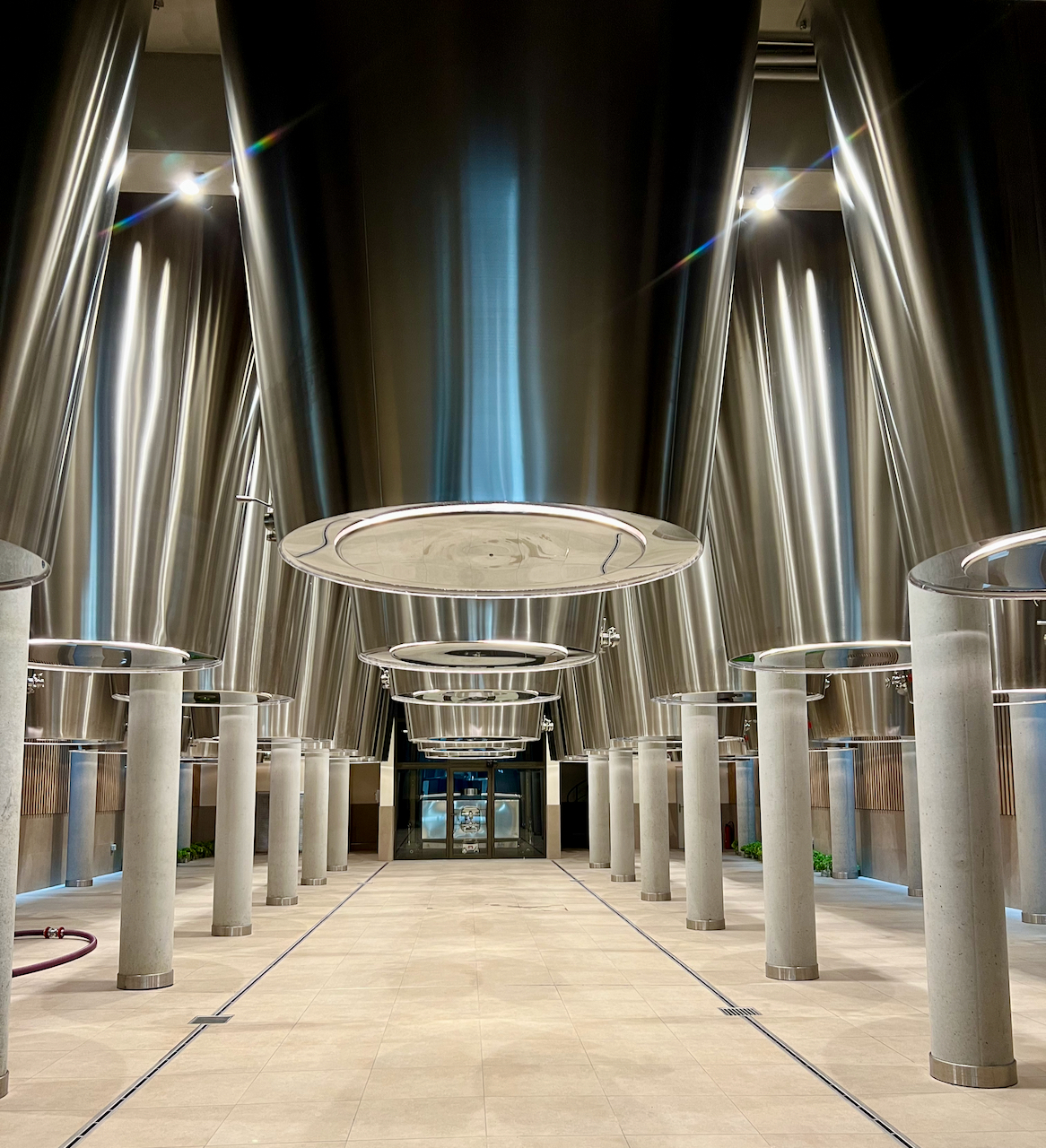
At Château Cheval Blanc the majority of wine making has always been in concrete. In 2011, 52 elegantly shaped, Italian designed concrete vats were built in the spectacular eco building affectionately known locally as the flying saucer. They had been experimenting with different concrete tanks for a while, the picture below shows a prototype in the old cellar and below the spectacular new ones.
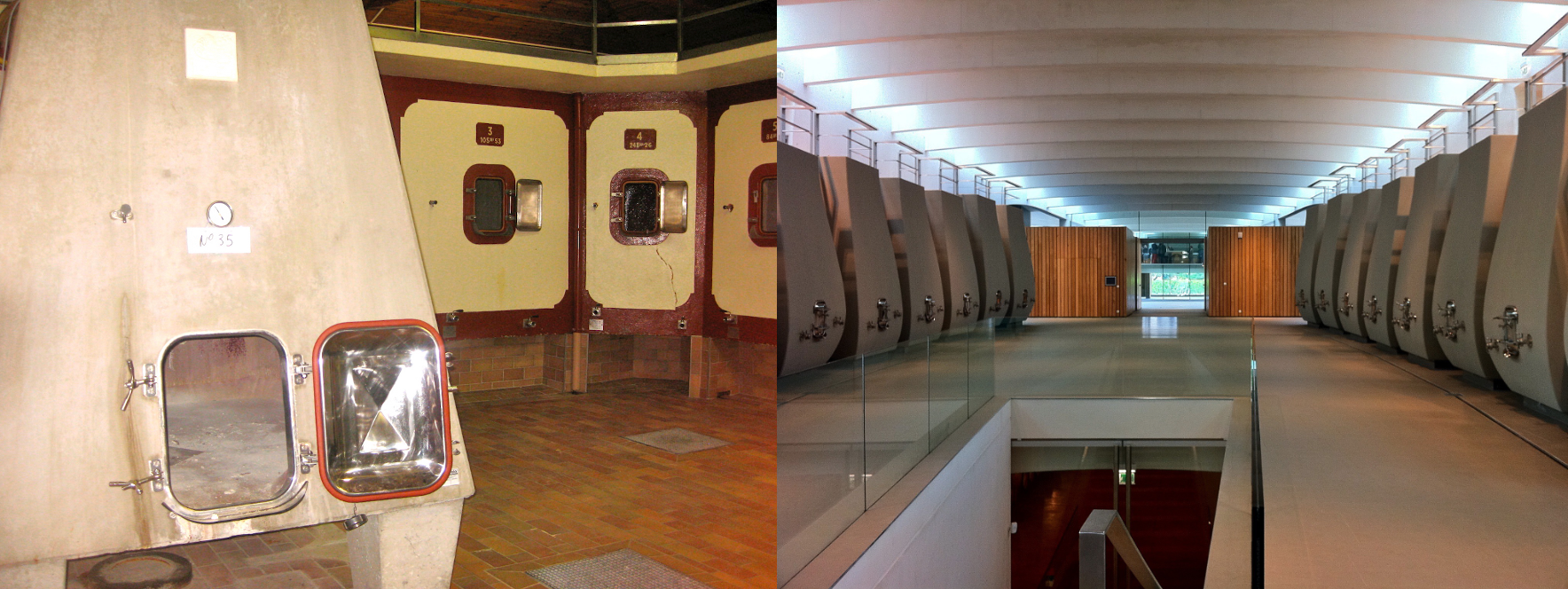
Château Beauregard and Château Petit Village across the road from each other in Pomerol, and now under the same ownership, have also embraced concrete. Sleek, dark brown, rectangular vats have been at Château Petit Village since 2007, designed with an opening large enough to easily practice gentle punching down. The cellar at Château Beauregard, opened in 2016, is a show case for the more adventurous and monumental design with spectacular pear shaped vats.
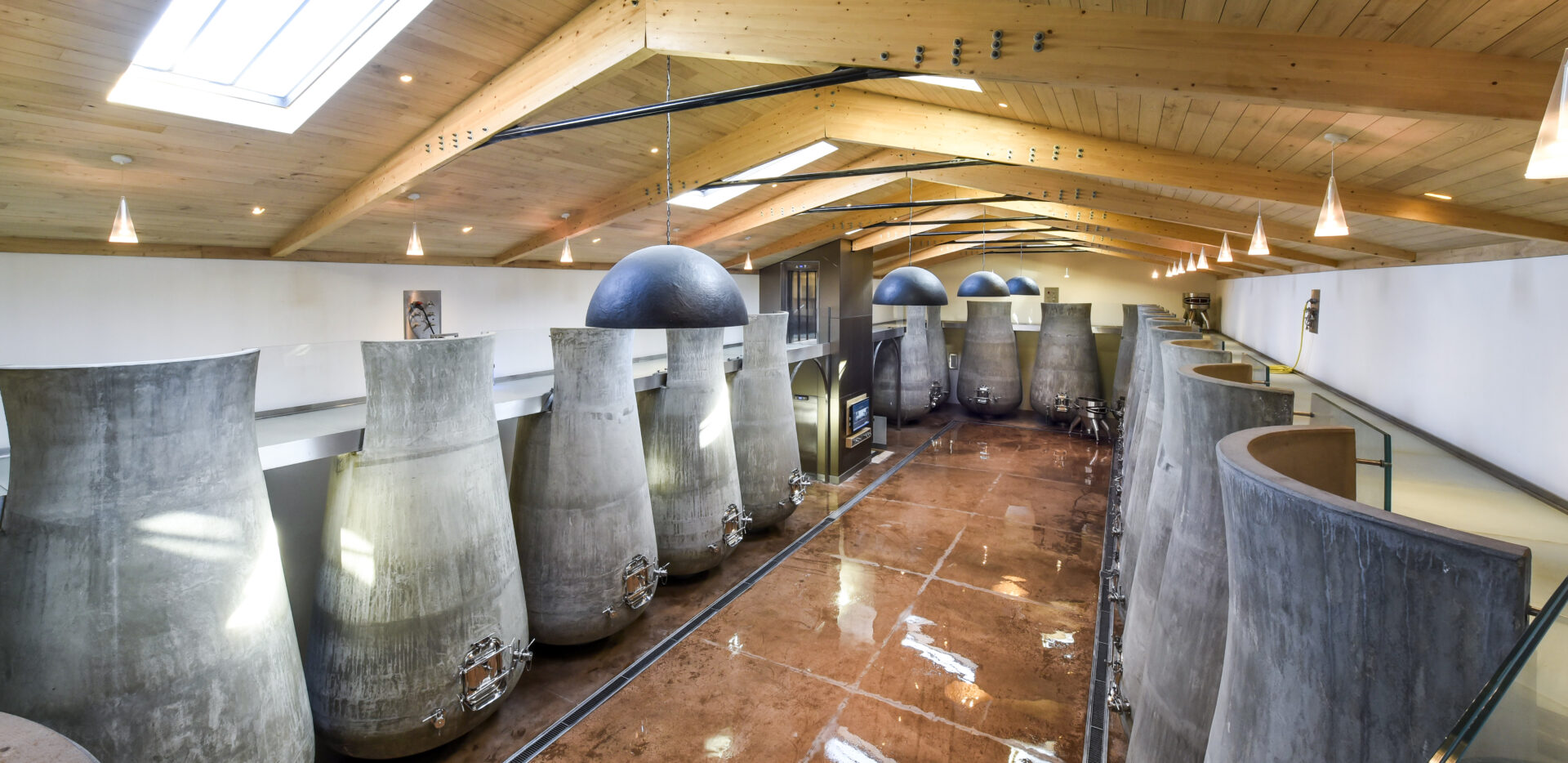
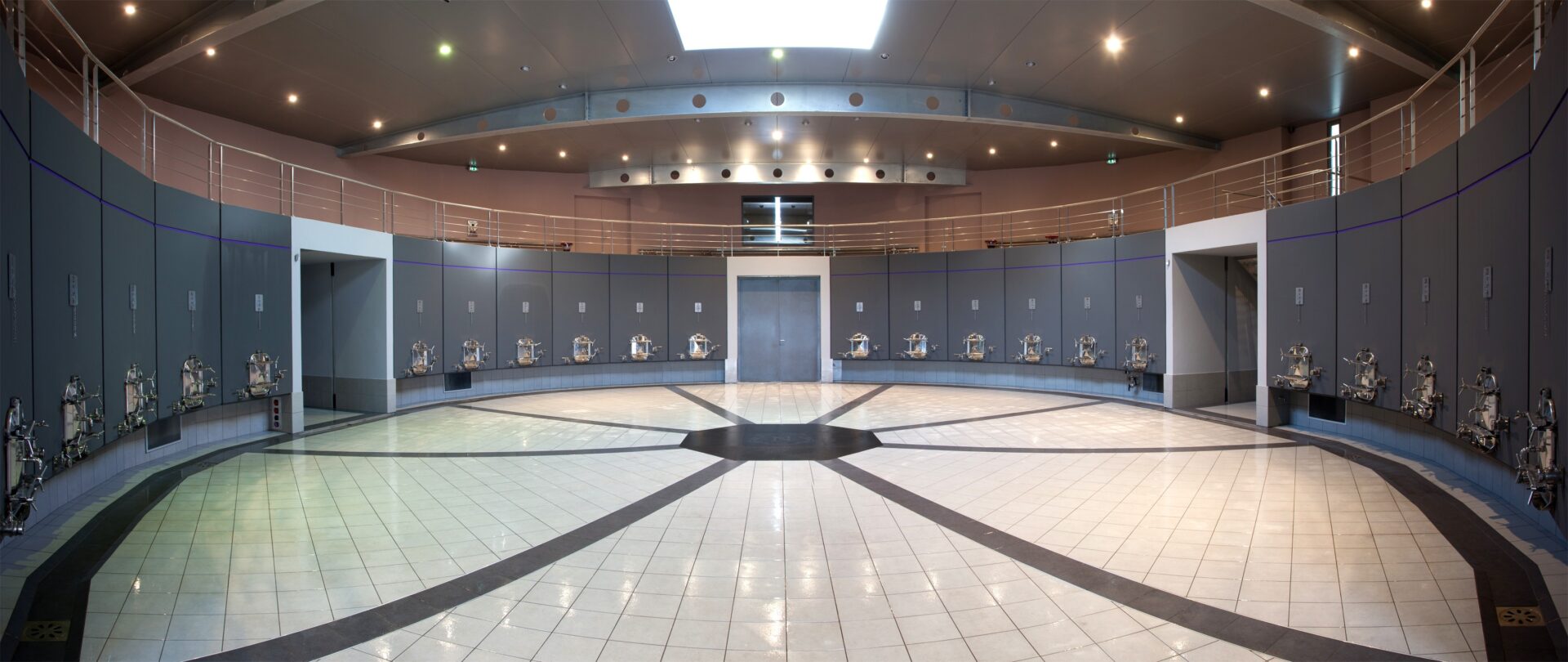
Other stunning concrete cellars on the right bank include La Conseillante where a semi-circle of square vats, each designed for a specific plot, line up around the cellar sporting the signature violet stripe.
A unique spin
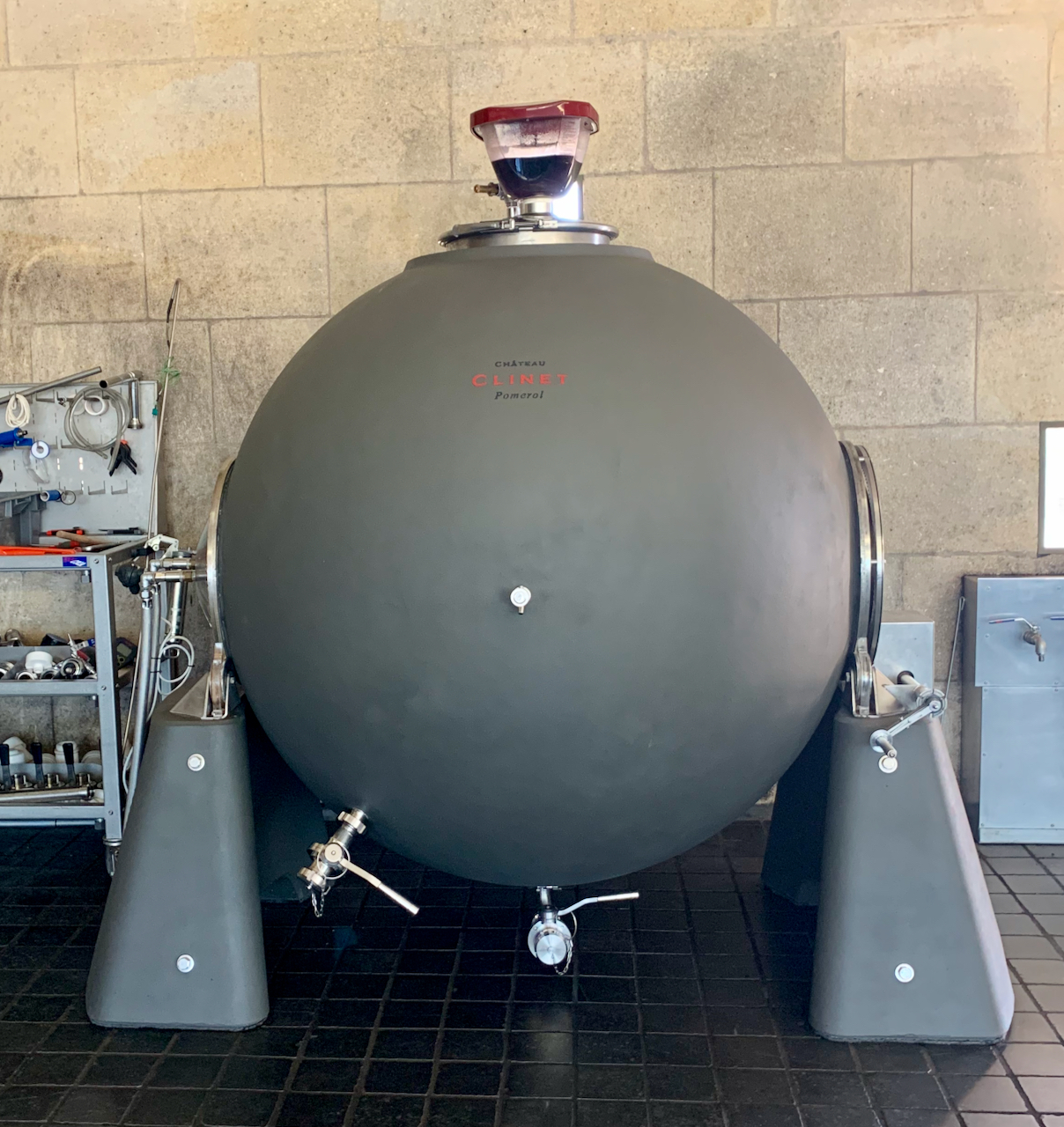
Alongside the gravity-fed stainless steel tanks at Chateau Clinet, in Pomerol there’s a surprising, round concrete vat. Used for integral fermentation, the vat spins on its axis creating a gentler extraction than pumping over or punching down.
Concrete is not the preserve of the right bank
Château Haut Bailly uses both concrete and stainless and has done for a long time. They replaced their square concrete vats when they built their new, semi-submerged domed HQE (High Quality Environment) cellar in the garden of the chateau. Both the new concrete and stainless tanks are tronconic, with double walls for insulation and range in size from 50-200 hectolitres to fit in with the plot by plot management.

A reminder of builder terminology, cement is the binder, concrete is the stronger finished product that often includes sand and or gravel. This has been interpreted in some château to bring the terroir into the tank – literally.
Château Pontet Canet is very rooted in its terroir, the first Médoc classified growth to be certified both biodynamic and organic in 2010. They introduced concrete vats into their impressive cellar in 2005 with sand and gravel from the vineyard incorporated into the concrete. Something they had already done in the ageing cellar since 2012 where 30 to 40 % of the wine is aged in impressive ‘Dolia’ concrete amphorae with local sand and gravel incorporated.

You’ll find two styles of concrete vats in the small cellar at Château La Ferrière in Margaux. The square ones used for fermentation are adapted to the plots and beautifully illustrated with the design of the label carved into the surface. Since 2015, small octagonal “cuves diamant” are used for ageing both here and at Château Haut-Bages Libéral in Pauillac. They are diamond shaped on the outside but oval, a horizontal egg shape, inside. The continual movement of the liquid inside keeps the fine lees in suspension bringing a creamy texture to the wine whilst preserving the fresh fruit that compliments barrel and amphorae ageing.


Oak
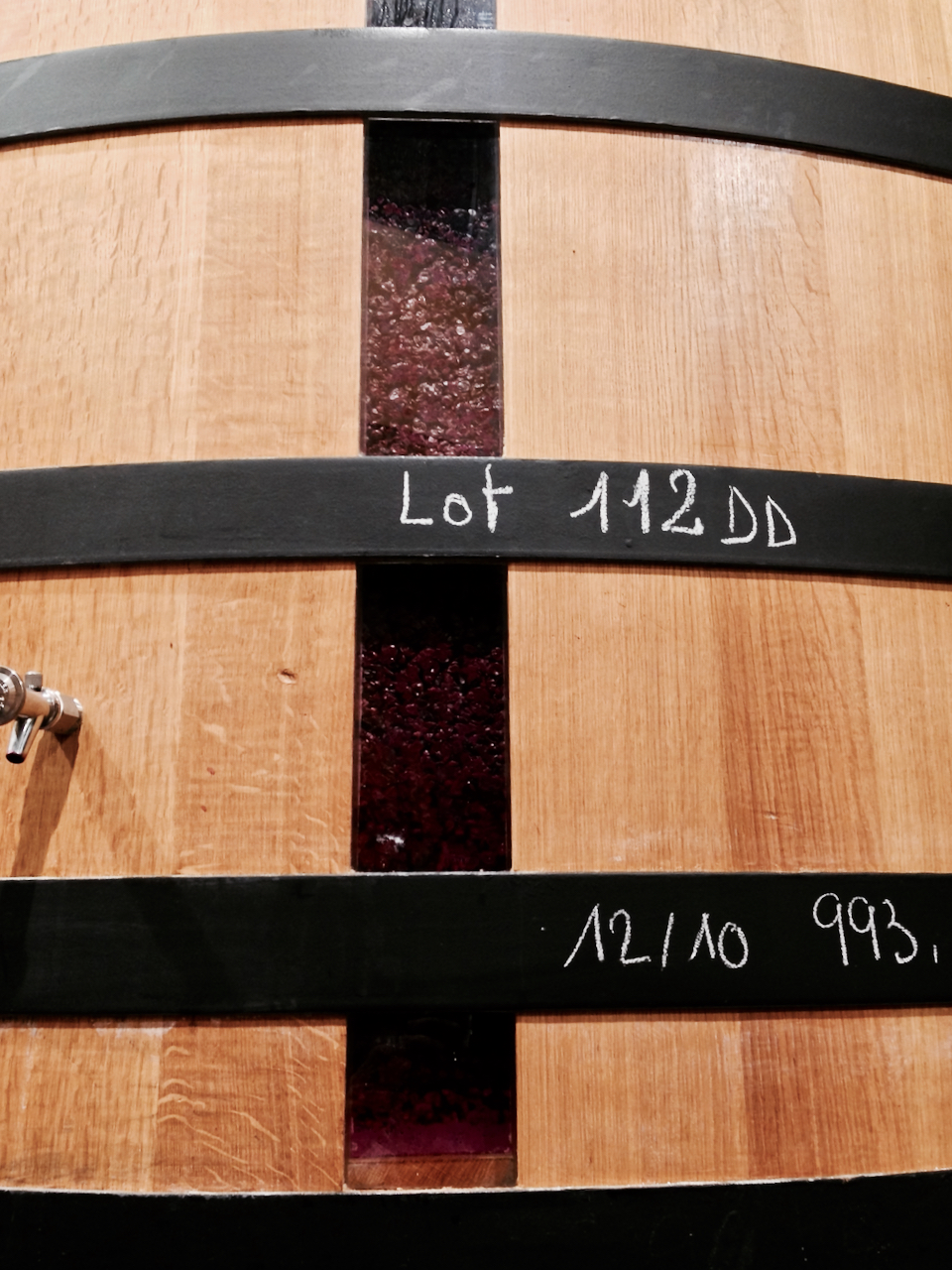
Expensive to purchase, install and maintain, oak vats have a lifespan of 20+ years, and it’s easy to see why winemakers love these majestic vats despite the labour needed to look after them. They need to be protected all year when not in use to prevent bacterial or fungal contamination, then needing to be ‘rehydrated’ to ensure they expand and become watertight again before harvest. Oak is porous allowing a gentle oxygen ingress during fermentation and when new, brings some oak influence to the wine, a lot less than barrels due to the larger size and after a few years, it fades becoming neutral. When Château Mouton Rothschild christened their new cellars with the 2012 vintage all the vats were new oak, to attenuate the oak influence they reduced the classic 100% new oak barrel aging down to the 70%. As the vats have aged the percentages has slowly risen back to the classic 100%.
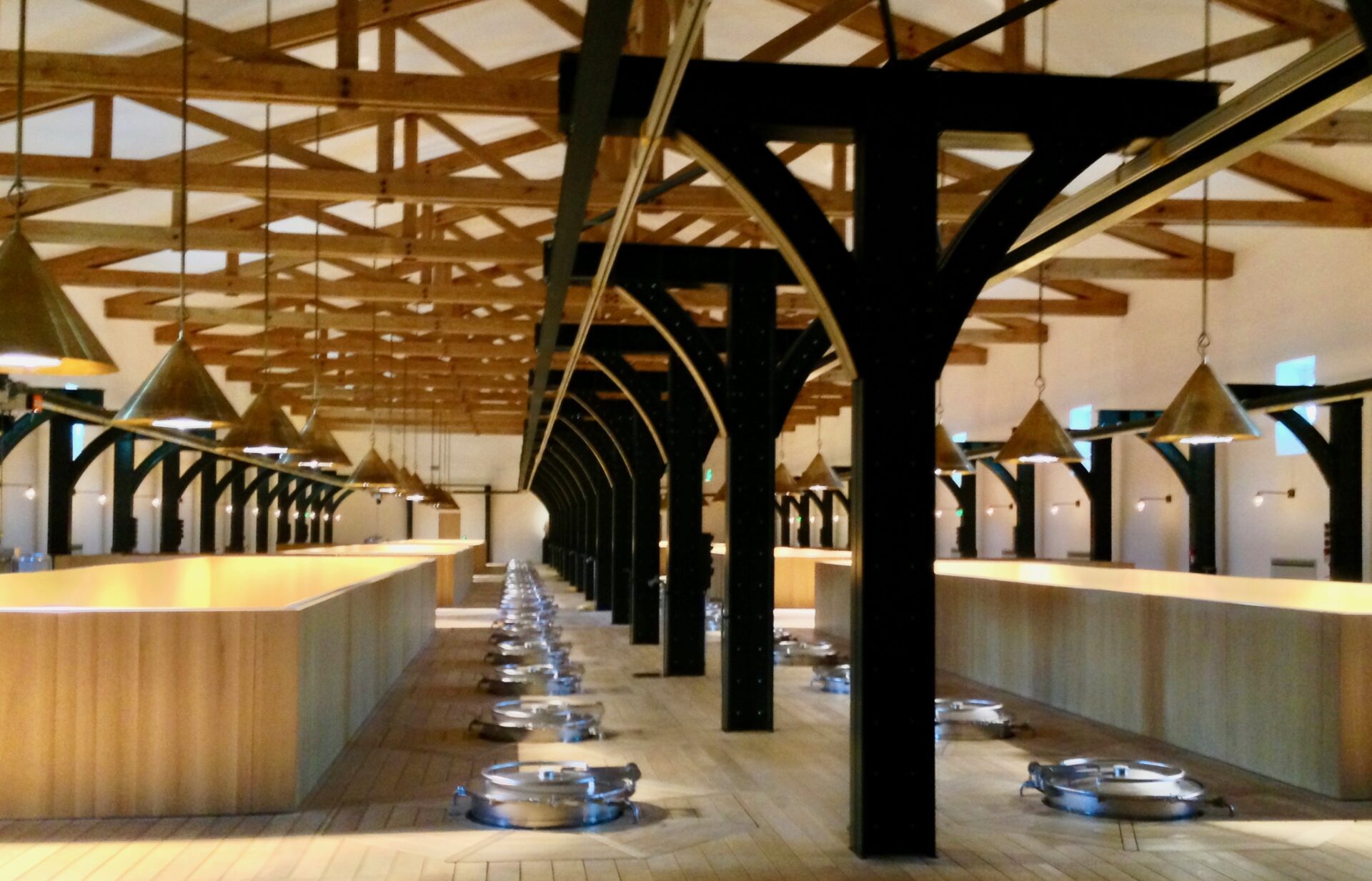
Transparency At first glance the vats seem classic, but they have a Plexiglas ‘window’ running down each replacing a single stave, so the wine maker can clearly see the fermentation process taking place. They also have built-in radiators to cool and warm the must as needed and there is a canny trap door in the base to allow the cap to be easily removed for pressing.
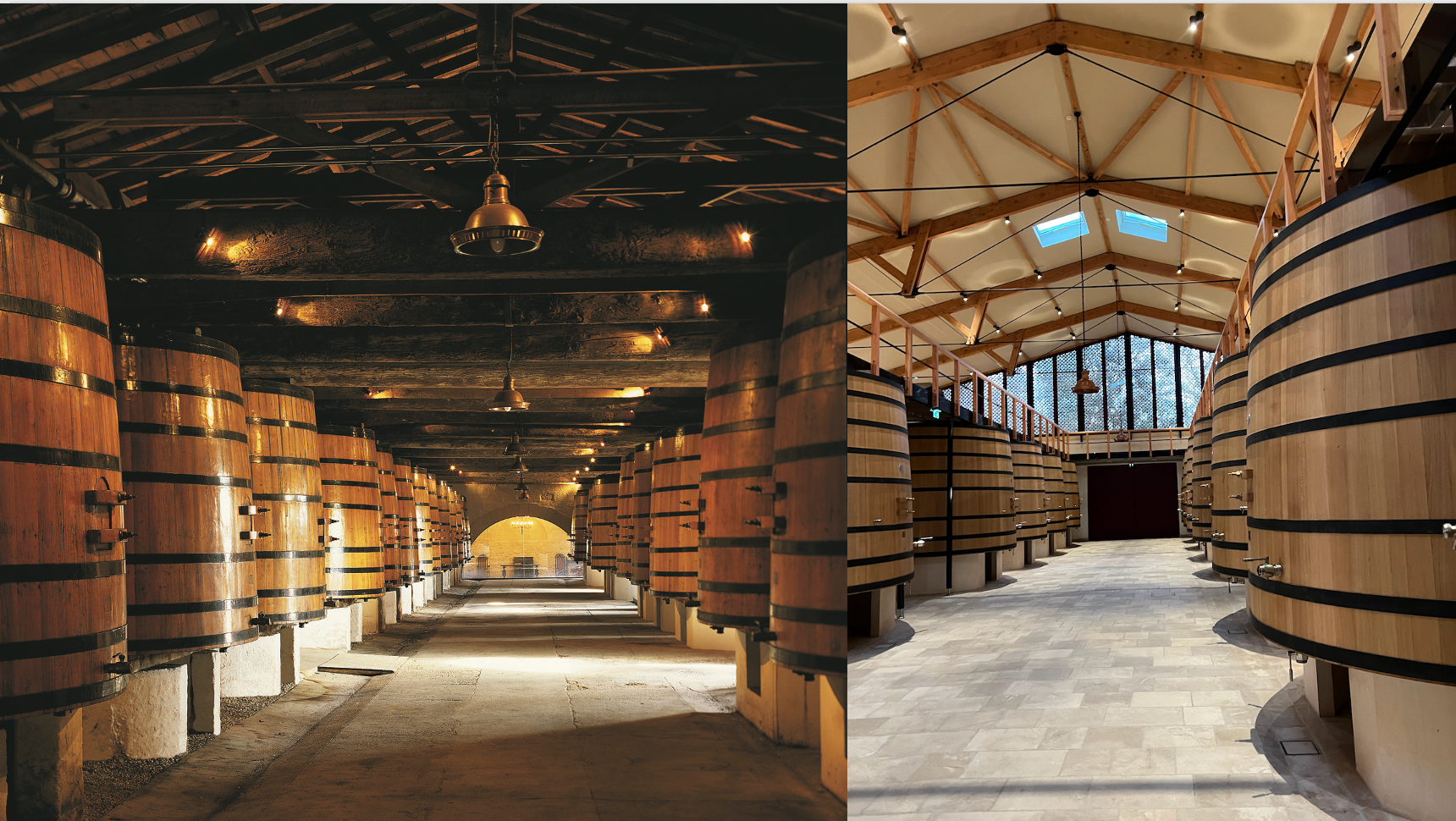
The iconic vat cellar of Château Langoa Barton, with the huge wooden fermentation tanks had remained unchanged for decades and was very much part of the image of the estate. There’s been a harmonious transition from old to new in the new cellar opened in 2022, where the wines of both Leoville and Langoa are made. It’s remained traditional by choice, because they believe tried and trusted methods work, but moving the cellar to use the natural slope for gravity-flow and creating more space to work comfortably amongst more vats.
All oak is not made equal
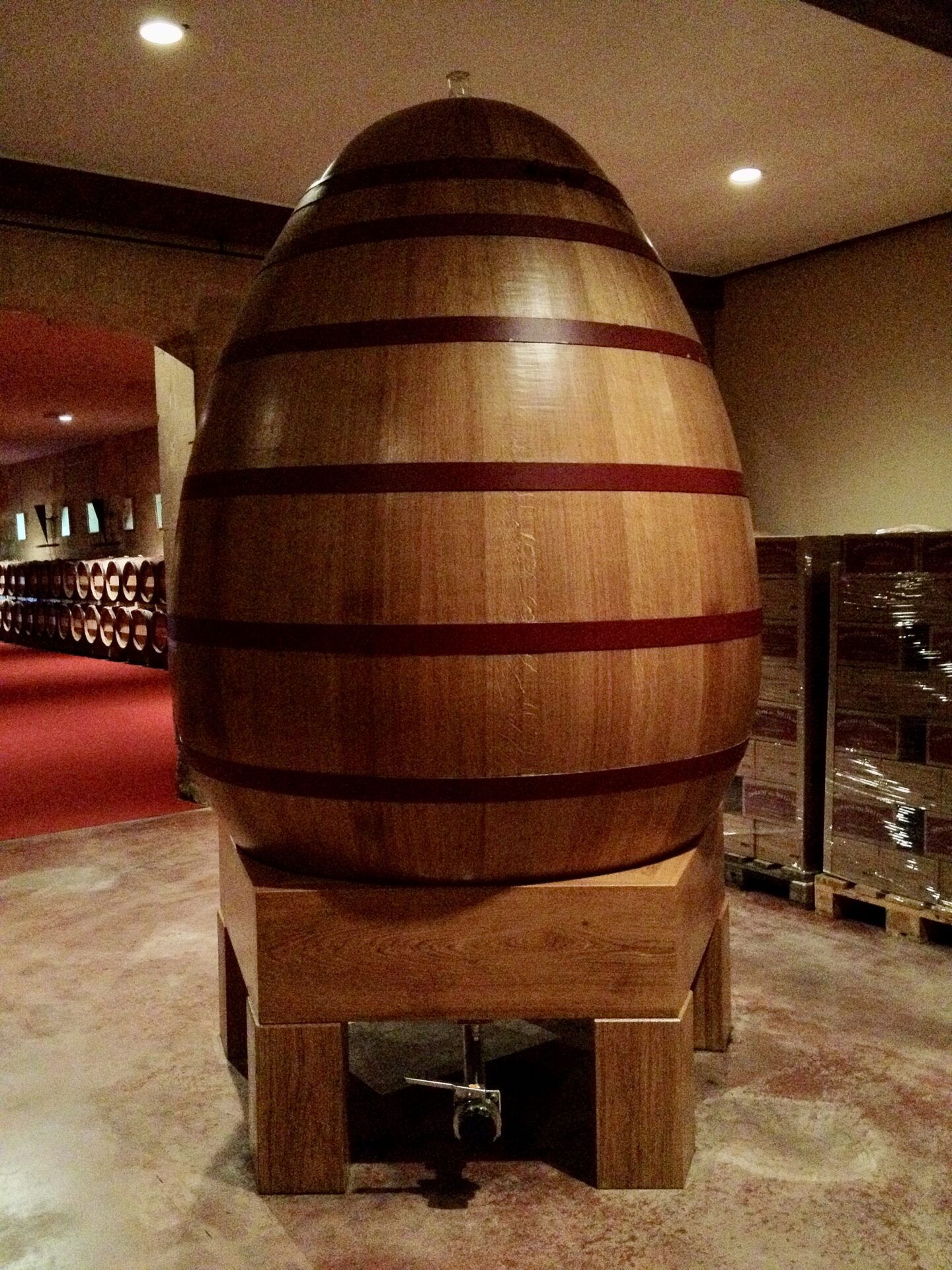
Just like concrete, wineries can adapt the size and shape of oak vats. Small to large barrels for integral fermentation, foudres, even eggs, the choice seems endless.
Stainless steel
There’s an increased emphasis on fruit expression across Bordeaux, responding to market demand for brighter fruit driven wines. Airtight stainless steel is completely neutral, easy to clean and to control temperature. Some claim the temperature moves a little too quickly, so needs a steady hand. As water conservation becomes a concern, cleaning is important and as a wine maker told me; 90% of work in the cellar is cleaning. Future cellar rats you have been warned!
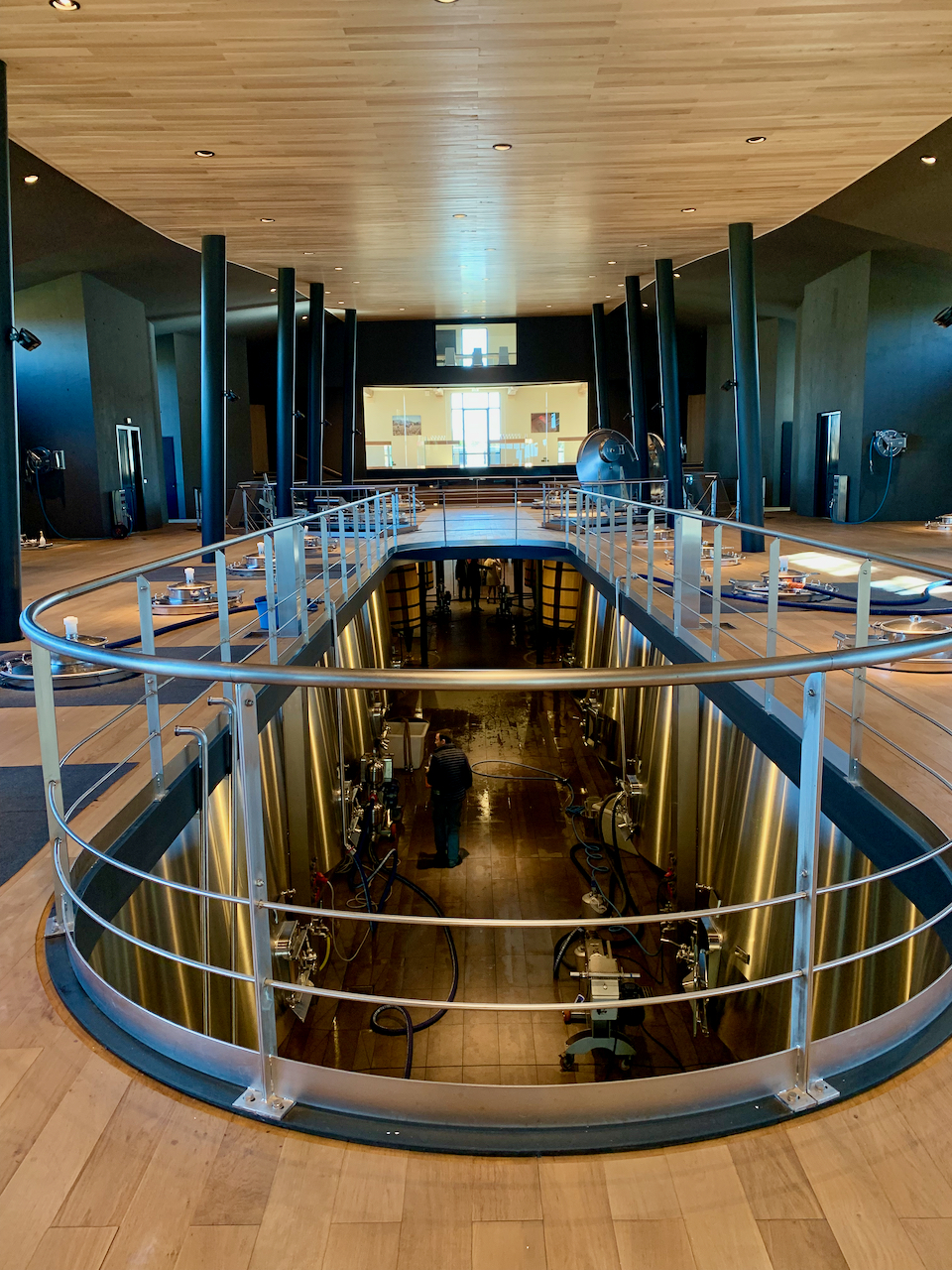
Château Haut Brion introduced Stainless steel vats in 1961, at the time accused bof turning their winery into a dairy. In 1983, the owners, the Dillon family, purchased their neighbour, Château La Mission Haut Brion. Wine maker Jean-Bernard Delmas designed unique doubled sided stainless steel vats for the new cellar in 1987. Each vat has two separate compartments or tanks, one over the other. The lower one slightly smaller. At the end of alcoholic fermentation, the free run wine runs from the top to bottom. The base of the upper vat is sloped allowing the cap or marc to easily slide down into a conveyor belt just below floor level moving to the press for the press wine. Simple, straightforward, safe and easy for the wine making staff. So successful was this design they replicated it at Château Haut Brion when they renovated in 1991. They are still in place although the cellars are currently under renovation so watch this space.
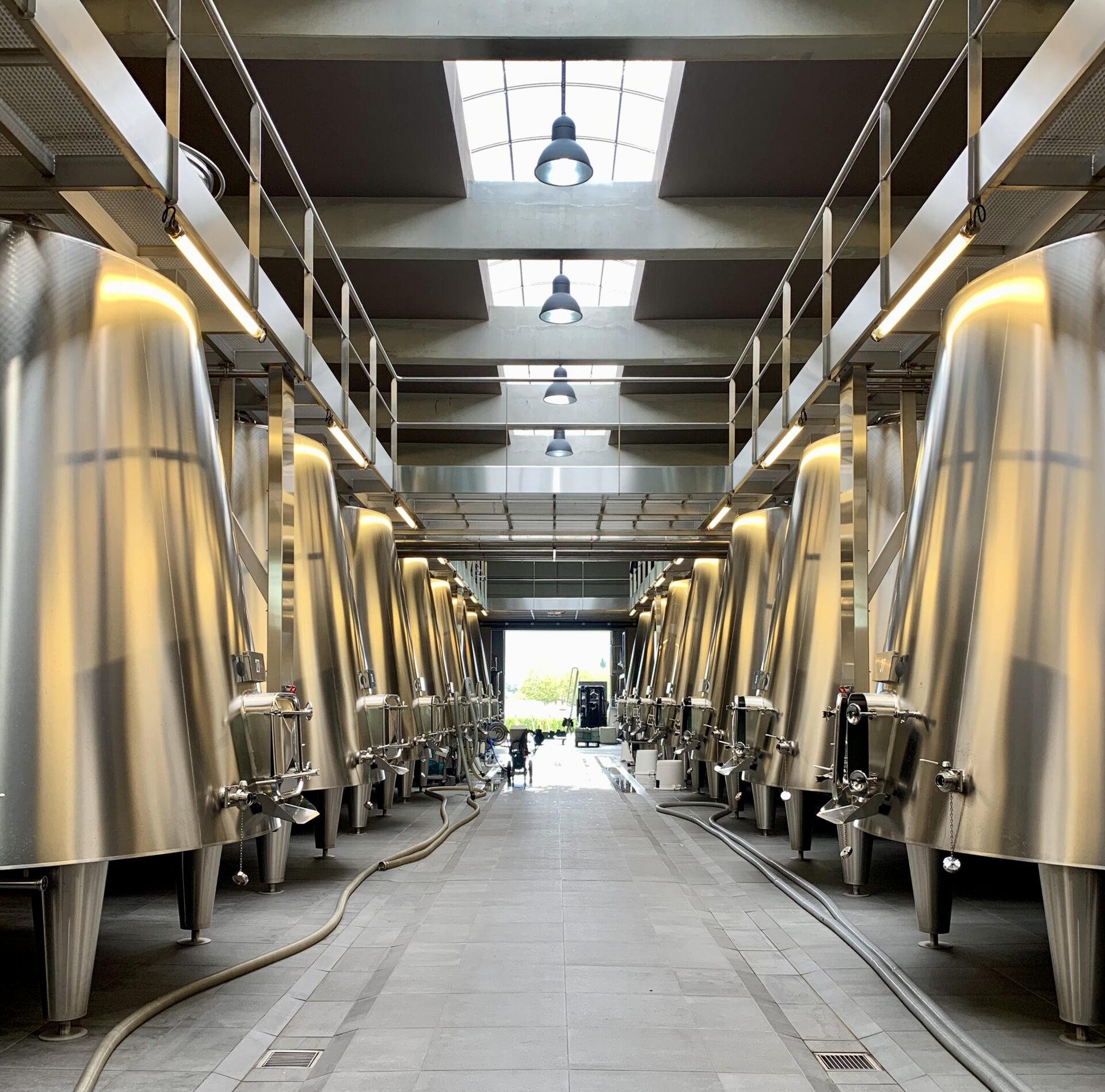
Many other famous Bordeaux names are 100% stainless steel fermented, Château Latour, Cos d’Estournel, and Palmer are all examples. At Château Lynch Bages, you can admire the huge ultra-modern stainless steel cellar right next to the perfectly preserved oak vats from the 1800s, designed by Pierre Skawinski to use gravity, before pumps had even been invented.

Château Margaux and Château Lafite use both oak and stainless vats and Lafite also has a small, very neat concrete cellar.

Château Cantenac Brown in Margaux considers concrete too carbon greedy, they used no cement at all in building the new 5,000m2 cellar. The different sized vats are all made of stainless steel, insulated to limit electricity usage for temperature control and with mirror-polished interiors that need less water for cleaning.
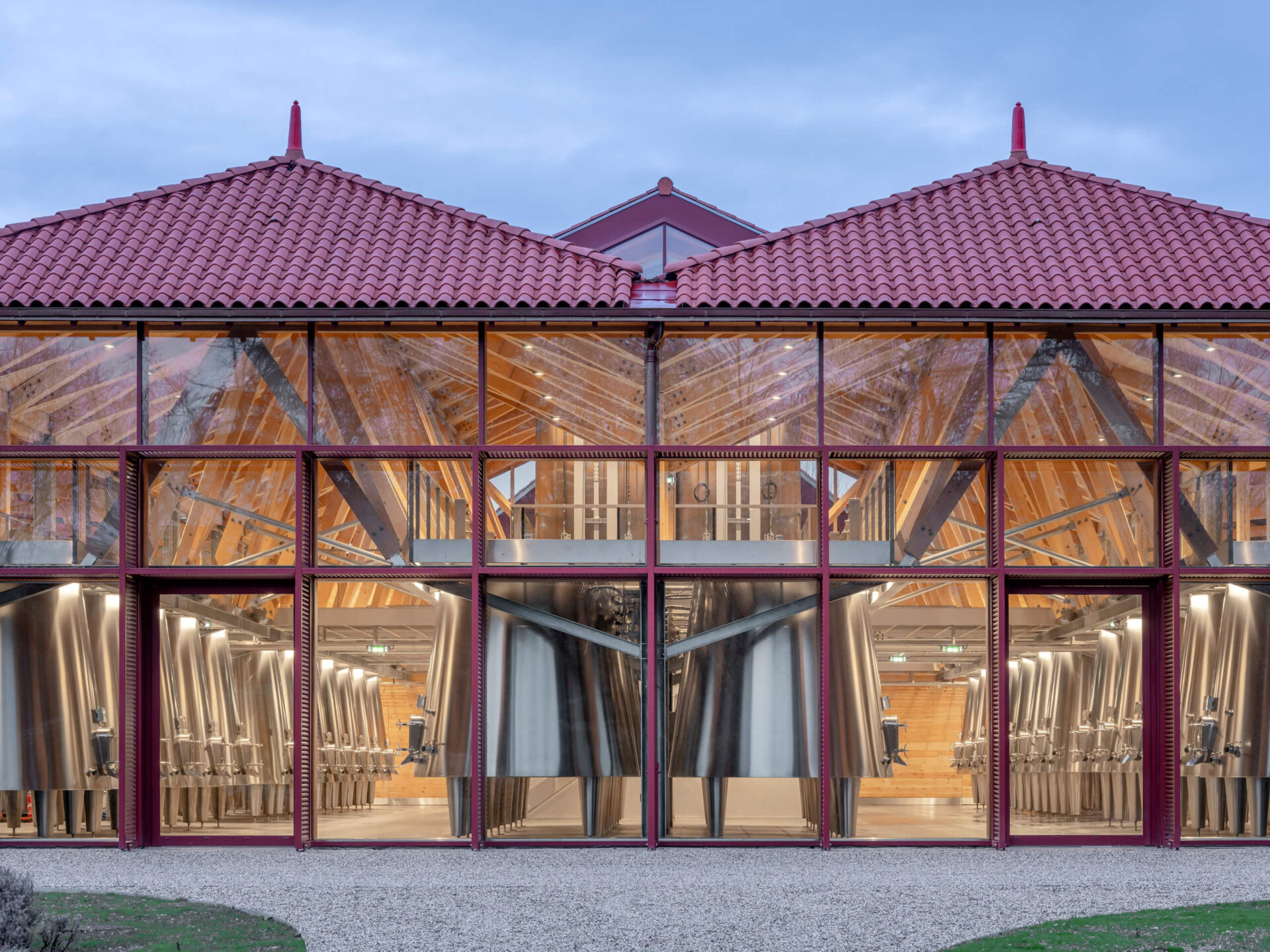
Château Langoa Barton uses a similar technology for their stainless steel blending tanks, lined with ‘Inox electropoli’ to repel and save water.
Inversion
The only limit to the size and shape of stainless steel vats seems to be imagination and, of course, budget! From straight sided to tronconic, copying the traditional shape of wooden vats. Now these shapes are being inverted.

There are two schools of thought. As wine is drained off for pumping over and extraction, vats with a wider base allow the cap to break up as it spreads out and falls to the bottom. You’d be surprise just how solid a cap can become during fermentation. This disaggregation allows a better reintegration when the juice is run back in. In the inverted tanks, the cap gets squeezed into the narrower bottom of the vat, especially during delestage (rack and return), creating a natural pressing from the weight of the grapes and more free run wine released.
I first saw these inverted stainless steel tanks on the right bank. One was tucked away in a corner of the cellars at Château Angelus as an experiment. As I said you’ll be surprised what you find when you look into the corners of cellars! It was a test drive for tanks installed at the then family property in Lalande de Pomerol, Château la Fleur de Bouard.
These inverted tanks are becoming more and more common in cellars across the region. I’ve spotted them in Château Beausejour Becot in Saint Emilion and Château La Garde and Les Carmes Haut Brion in Pessac Leognan, where they have both oak and stainless next to each other alternating inverted and upright – a space saving initiative perhaps? Look closely you’ll see some eggs/amphorae too – more below. Château Smith Haut Lafitte have taken these inverted stainless tanks to their new Cathiard Vineyard in Napa.

There’s something in the air
And just when you thought it couldn’t get any more bonkers, these inverted vats are now being suspended from the ceiling. Installed in 2011 at Château La Fleur de Bouard making the running off into the barrels below even easier.
The idea has now spread to the left bank with both the new cellars of Château Brannaire Ducru in Saint Julien and Château Grand Puy Ducasse in Pauillac suspending their new stainless vats. It certainly creates a wow factor. At Grand Puy Ducasse this has doubled the number of vats, in the historic cellars right on the water front of Pauillac.
Their other materials
The desire for a neutral container, allowing the full expression of the fruit, has seen the arrival of terracotta and ceramic amphorae and eggs, more often used for wine aging than wine making. Slightly more porous than concrete but less than oak, and with no oak aromas.
In the round.
Ovoid shapes allow a natural stirring of the lees by creating a vortex thats keeps the liquid moving, this applies to eggs, amphore and globes.

There’s also been an outbreak of small glass globes. Wineglobe originated in Bordeaux, used more for ageing than wine making although perfect for very small lots. They are completely neutral and airtight, no oak, no oxygen and the shape allows for the movement of the liquid. They look fragile and complicated , often wrapped in stretchy black jumpsuits to protect the wine from light. I’m hearing mixed enthusiasm so far following experiments. .
Plant starch and other polymers
I recently spotted flex-tank eggs used at Château Fayat in Pomerol, made from vegetable polymers that is perfectly in line with their sustainable philosophy. They reduce air ingress but not aroma loss. Technical director, Emeric Bosseret, is using them alongside barrels and stainless and even glass globes.

A material blend
This leaves wine makers with more decisions and choices. Square, round, tronconical, inverted, eggs, amphora, globes, this mix of materials, shapes and sizes offers a seemingly limitless choice to wine makers – as if they didn’t have enough decisions to make already.
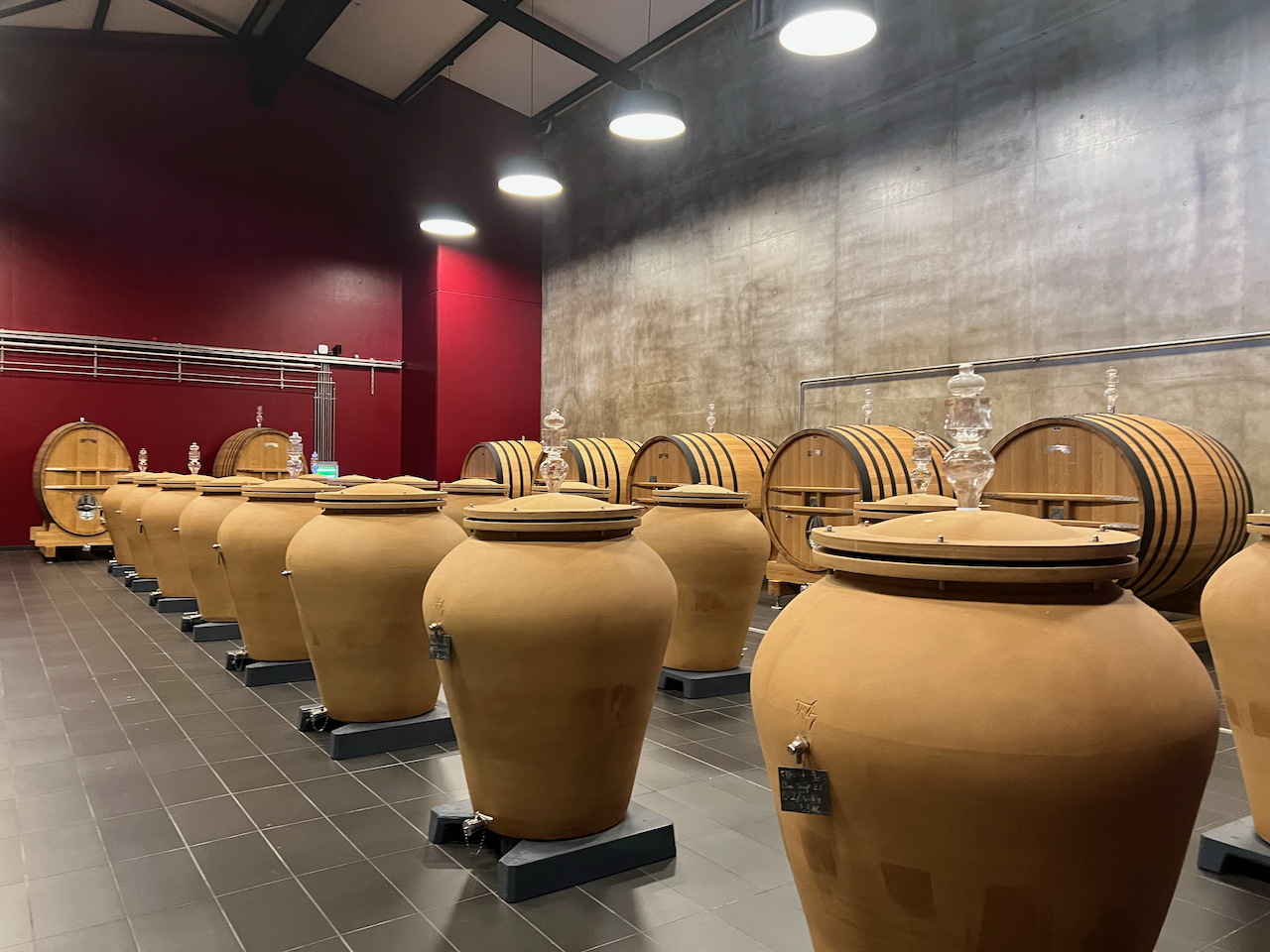
Different shapes also facilitate different wine making techniques. Integral fermentation, cold soak, dry ice, refrigeration, pumping over, punching down, rack and return, etc. The stainless steel lifts at Chateau Lynch Bages, Château Cos d’Estournel and the new cellars of Château Grand Puy Ducasse are in fact tanks designed to smoothly move the wine from the bottom of tanks to the top.
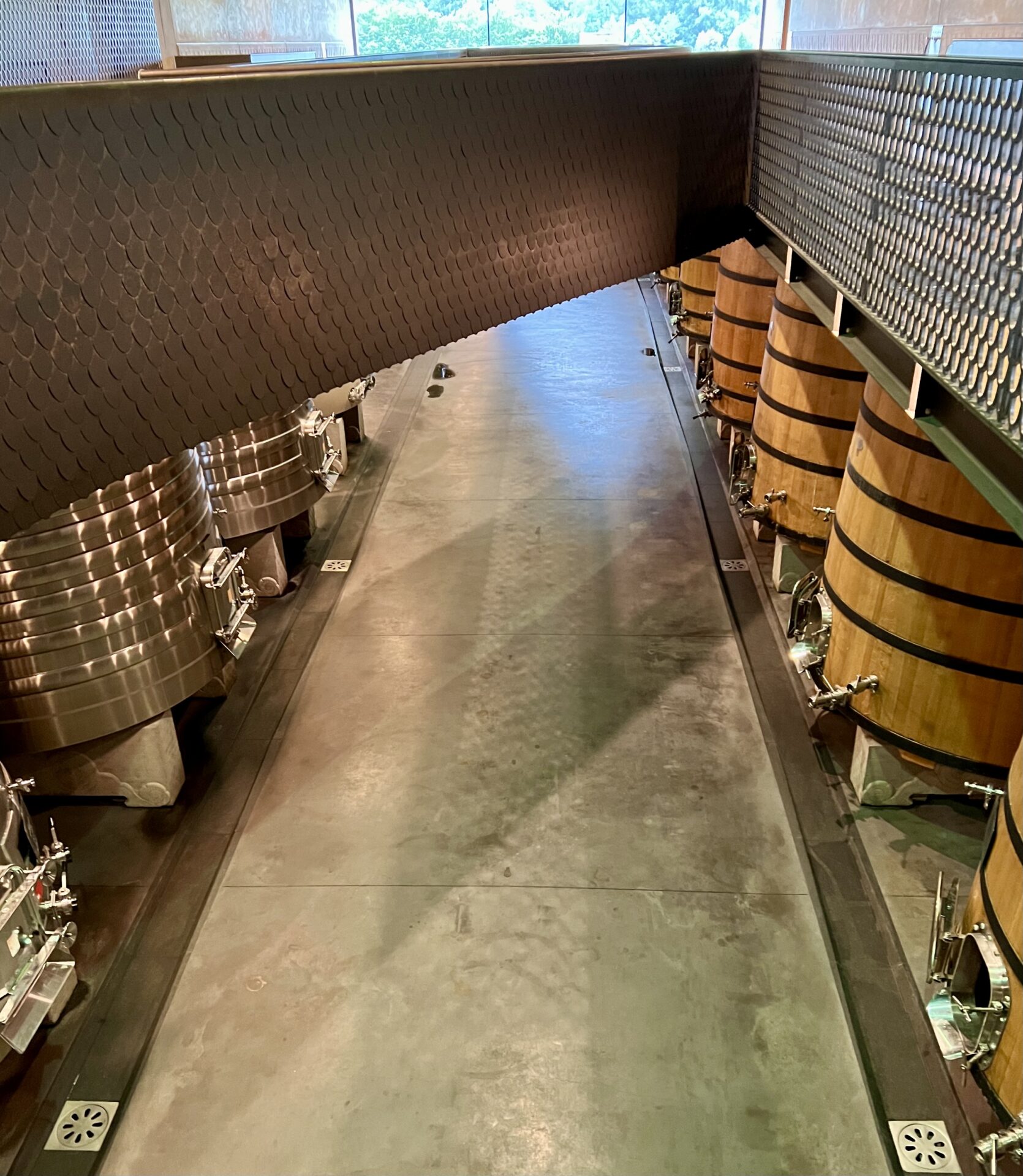

Decisions, decisions.
Size, shape and materials will all affect the finished product, but wineries aren’t limited to just one choice for wine making or for ageing. It’s not unusual to see a blend of three or more materials in a cellar. If each plot is producing berries with a distinctive taste and style, they can be kept separate but also vinified in different conditions/containers. The Bordeaux blend is no longer uniquely grape varieties but terroir, age of the vines but also the wine making and ageing vessels.

Château Pontet Canet is a perfect example, they use concrete, see above, alongside oak for both fermentation and ageing. There are three vat rooms, one oak and two concrete. Inaugurated in 2005, the Nicole cellar has 32, 80hl concrete vats. Since 2017, the Amphora cellar, uses concrete vats made with silica from the property’s gravel. Last year, their historical Skawinski gravity cellar, already ahead of its time when it was built in 1895, was redesigned. Keeping the historical feel, it’s still dedicated to oak but the traditional large wooden vats have been replaced by small, 40 hl oak eggs. Placed above semi-buried concrete vats, it’s also still using gravity.

Small but perfectly formed
If each material and each shape brings something different to the wine, diversifying vats is a perfect way to add complexity to a single variety vineyard. Château George 7 in Fronsac, is 100% Merlot and, given the 3 ha size of the vineyard, there’s little terroir variation across the property. Owner Sally Evans uses different vats to make different styles of wine for different tastes. Her Château George 7 undergoes integral fermenting in 500 litre French oak vats. (You can see the processes of spinning the large vats here.) A large oak ‘foudre’ of 3000l brings structure and micro-oxygenation, but less oak impact. Two Amphora, one in grès (stoneware) and the other terracotta both preserve purity and freshness of fruit and maintains the wine in movement. This gives flexibility to the blending creating differences between her Le Prince, Château George 7 and her soon to be released Royal Cuvée.

Artistic license
As well as wine making, the spectacular appeal of some of these cellars is definitely designed with visitors in mind. The wow factor is part of the growing tourism in Bordeaux.

From light shows reflecting back off the suspended vats at Château La Fleur de Bouard,concrete vats decorated by a different artist each vintage at Château Les Carmes Haut Brion transform the working cellar into an art gallery, a tradition started in 2016 by Ara Starck, the daughter of Philippe Starck who designed the avant-garde cellar. The concrete eggs at Château Larrivet Haut Brion are also used as a perfect canvas for artists to create upon and impress visitors.

The choice of vats goes beyond technical wine making, expressing the personality of the place through both the wine and through the design. and there’s no doubt the wow factor attracts visitors making for a memorable experience.
Better wine, better working conditions, more sustainable and more attractive, Bordeaux cellars have never been so much fun to make wine in and to visit.
Thanks for reading, to receive future posts directly to your in box please sign up here. You can learn more about Bordeaux with the new Green Edition of Bordeaux Bootcamp, and explore Wine and Wellness, with The Drinking Woman’s Diet or say hi here.