Five wellness habits to adopt in 2021.

It’s the dawn of a new year, when we look back (and what a year to look back on) and then look forward hopefully with some optimism that 2021 can only be better. Are you setting some New Year’s resolutions? If so here are some wine and wellness suggestions you might want to include. If you have any others please share in the comments below.

Make your New Year’s resolutions about what you will do rather than what you can’t or won’t. Research also shows micro-habits that slip into an existing routine are the easiest to build and to stick to. I’m working on the KISS principle; keep it simple stupid. I used this throughout The Drinking Woman’s Diet, the simpler it is the easier it is to stick to. 

Drink.

If you’re reading this, you’ve probably got the wine covered, but water? Set a goal of at least two litres of water a day.  To make it easy, choose three 75cl water bottles you enjoy looking at (yes I know that adds up to more than two litres), please avoid plastic. Fill them up in the morning with the aim of them being empty at the end of the day. It’s easier to keep track and more motivating when you can see the progress than promising yourself to refill a single bottle throughout the day.

Two water bottles to start your collection from The Drinking Women’s Diet and A Balanced Glass

Eat.

Put more plants on your plate. Be green; no, be all the colours of the rainbow. Plants feed the gut micro biome, keep us regular, fill us up and their polyphenols and phyto-chemicals work in mysterious ways to keep us healthy. The more colour the more polyphenols. Start simply by adding a bunch of greenery to your normal plate. Job done. If you can make some of them fermented and lace them with cold pressed oils, all the better.

More plants on your plate.

Sleep.

Give yourself a sleep opportunity of at least eight hours every night. Set an alarm for when to go to bed as well as when to get up. Don’t stress too much if you don’t sleep that long, everyone is different but, by allocating the time, it’s there if you need it. 
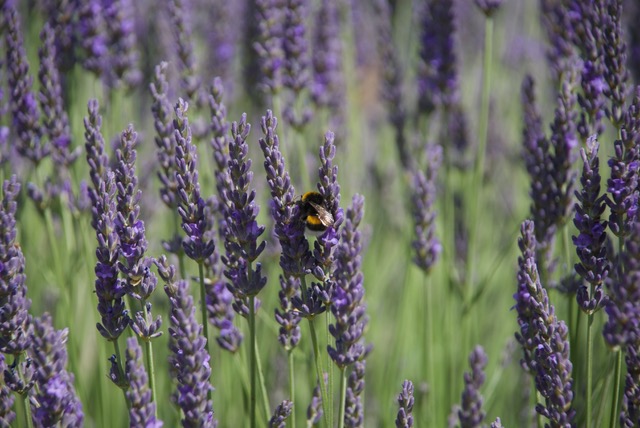
A whiff of lavender to send you off to sleep

Move.

Aim for 20 to 30 minutes of movement a day, at least five days a week. You don’t have to run a marathon but move; walk, swim, stretch, do an on-line class. Keep mobile. Start small, 10 minutes is better than nothing. Leave your running or walking shoes by the door so you trip over them. Still finding it hard? Make it a date with a friend, real or virtual, accountability works.
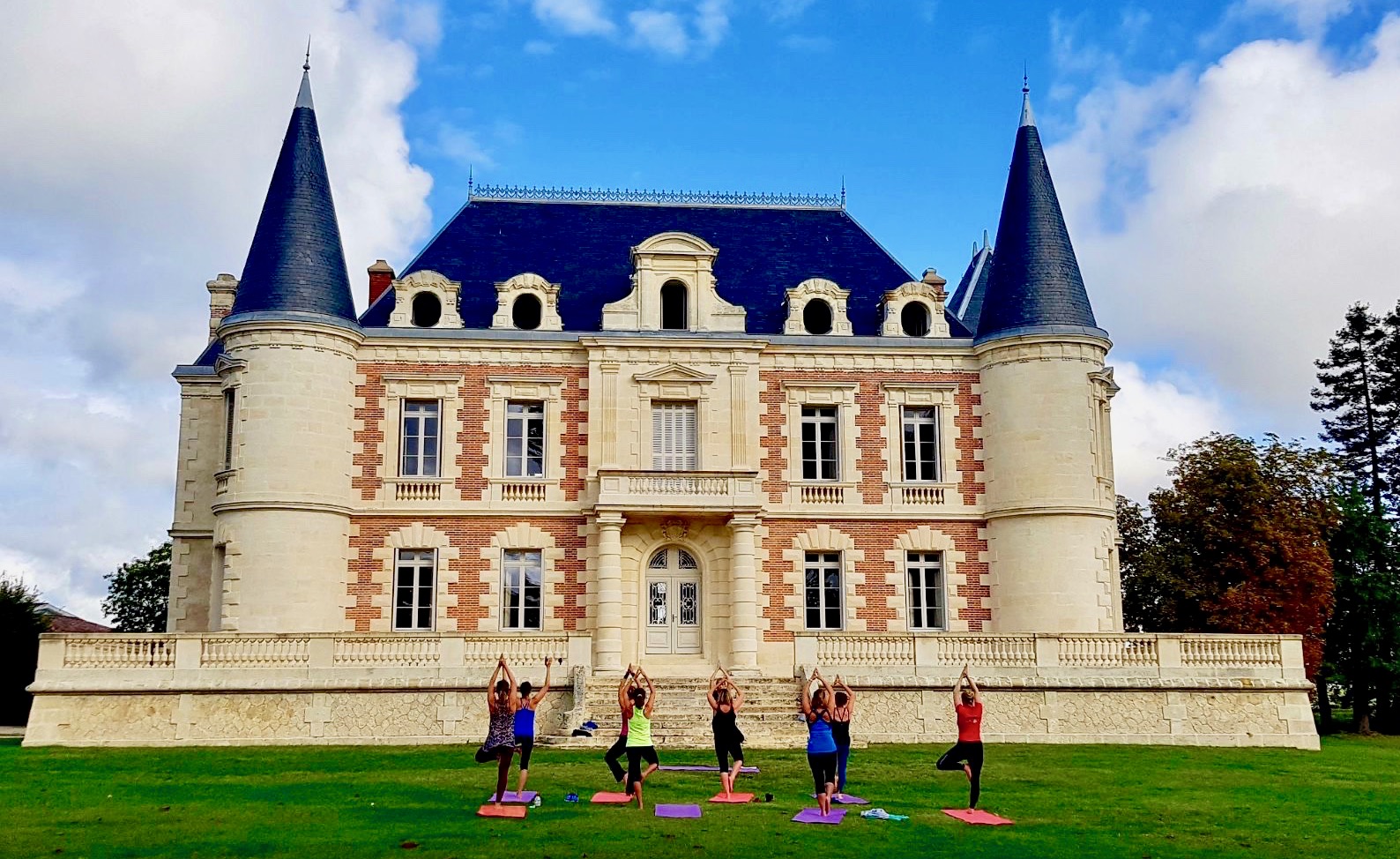
Yoga at Château Lamothe Bergeron – the best of both worlds.

Zone out.

Find time to relax and unwind. If meditation sounds a bit too much, try five minutes simply  deep breathing. There are some great apps to help. The breathing app by Eddie Stern is a really simple one. This could also be a mindful wine tasting. Winefullness. See, new years resolutions can be fun after all.

Happy New Year. 
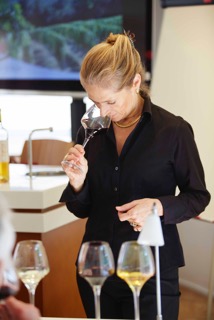
Winefulness


Want to know more?  If you have enjoyed this post,  sign up here  to receive future blog posts directly to your inbox. If you would like to learn more about Bordeaux, buy your copy of Bordeaux Bootcamphere, to learn more about Wine and Wellness, buy your copy of The Drinking Woman’s Diet here. 
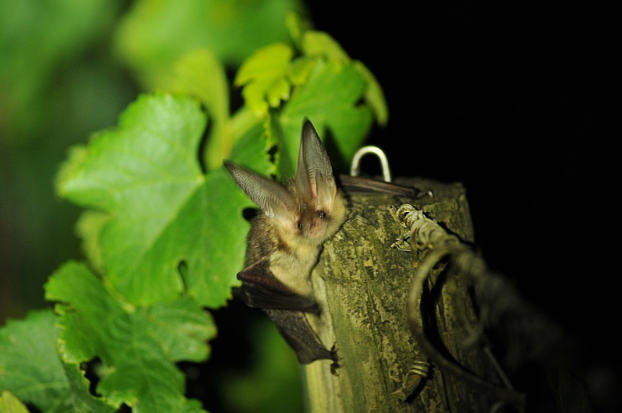
Bats, the unsung heroes of the Bordeaux vineyard.

The CIVB has set an ambitious target of all the vineyards of Bordeaux becoming engaged in an environmental certification (from sustainable to organic or biodynamic). Progress is being made; latest figures are at 65% up from just 35% in 2014.

To attain this goal, working with the neighbours is important. The actions of the neighbours can affect you, especially for operations such as sexual confusion, when insect pheromones are used to control moth populations. Cooperation with the natural world is important too. When we think of biodiversity in the vineyard we thing about the birds and the bees, now we’re looking at the bats. 

Natural born killers. 

Out of the 33 French bat species, 22 are present in the Gironde, of particular interest for grape growers are bats that feed on insects. 

Grape growers want them to eat moths. The European grapevine moth and grape berry moth (Eudemis and Cochylis) lay their eggs in vine flowers, and when they hatch, the caterpillars attack flowers and berries. They not only reduce yield also but encourage the bad type of botrytis or grey rot. 

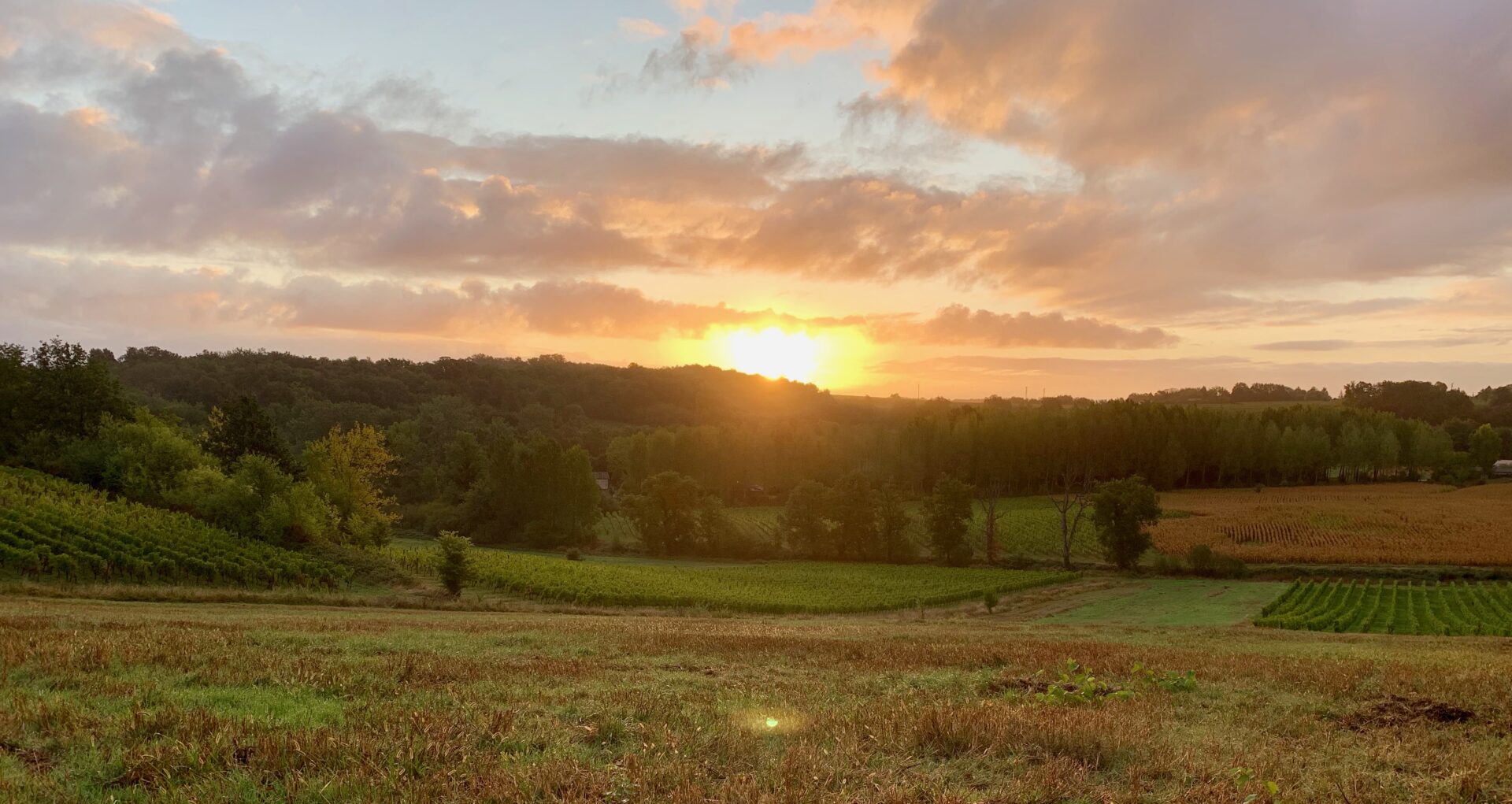
Sunset over the vines, the perfect time for bats to hunt moths and mosquitoes.

In a single evening, a bat can eat up to 2000 mosquitoes (not a problem for vines but definitely one for me) and 600 moths. Encouraging bats to fly around the vineyard at dusk is thought to be one of the best ways to keep the moth population under control. Dusk is when the moths are active, reproducing and laying eggs. If the bats eat them that means a reduction in the use of insecticides. 

The champion bats are the Common Pipistrelle, the smallest European bat that lives in buildings and woods and the Kuhl’s Pipistrelle that lives in the cracks in stonewall.  The larger, and easily recognisable, Grey Long-eared Bat also hunts insects in fields within a two km range from its home in woodland. In 2015, the Margaux appellation worked with the LPO, their wildlife inventory found 17 different species of bats in the appellation.

Research

A joint project by the French Bird Protection League (LPO), the CIVB, INRA Bordeaux and Elyomis, is assessing just how efficient these bats are and how to encourage these natural assistants.

They have developed an online bat observatory, an app and a geo-location system and the CIVB is releasing a technical notebook for wineries with practical tips for improving the animals’ habitat.

Making them at home

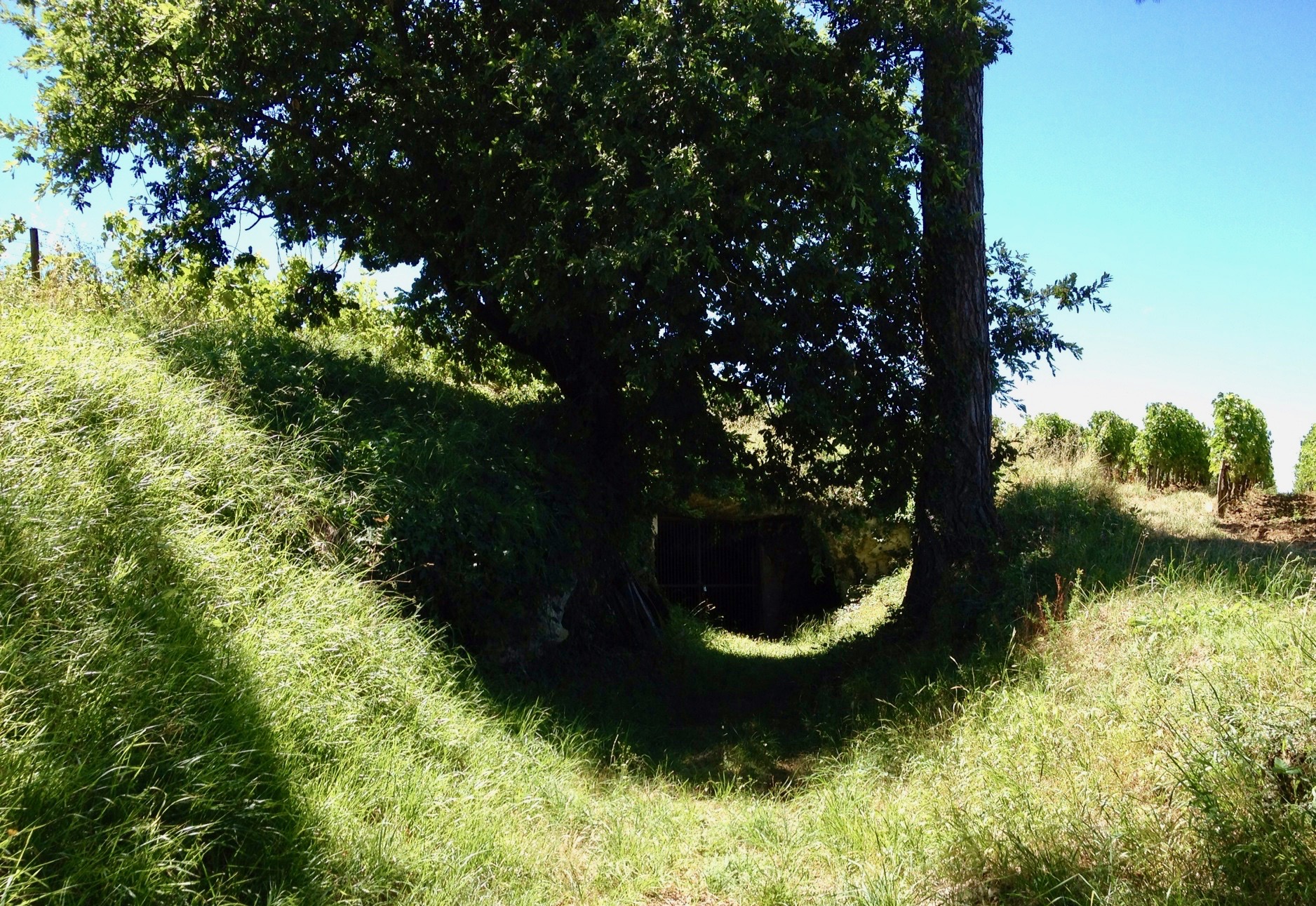
Bats need the right habitat. Saint Emilion and the satellites, the Côtes and parts of the Entre deux Mers are fortunate to have natural underground limestone caves, a perfect habitat.  

The limestone caves in the vines of Saint Emilion are perfect homes for bats.

Planting trees in hedgerows and amongst the vines develops natural biodiversity, important for shelter but also encouraging insect life. If we want the bats to stay we need to make sure they have insect food all year.

You can also build Bat houses, the Cadillac, Cotes de Bordeaux appellation has instructions for a DIY Bat box on its website for the wineries.

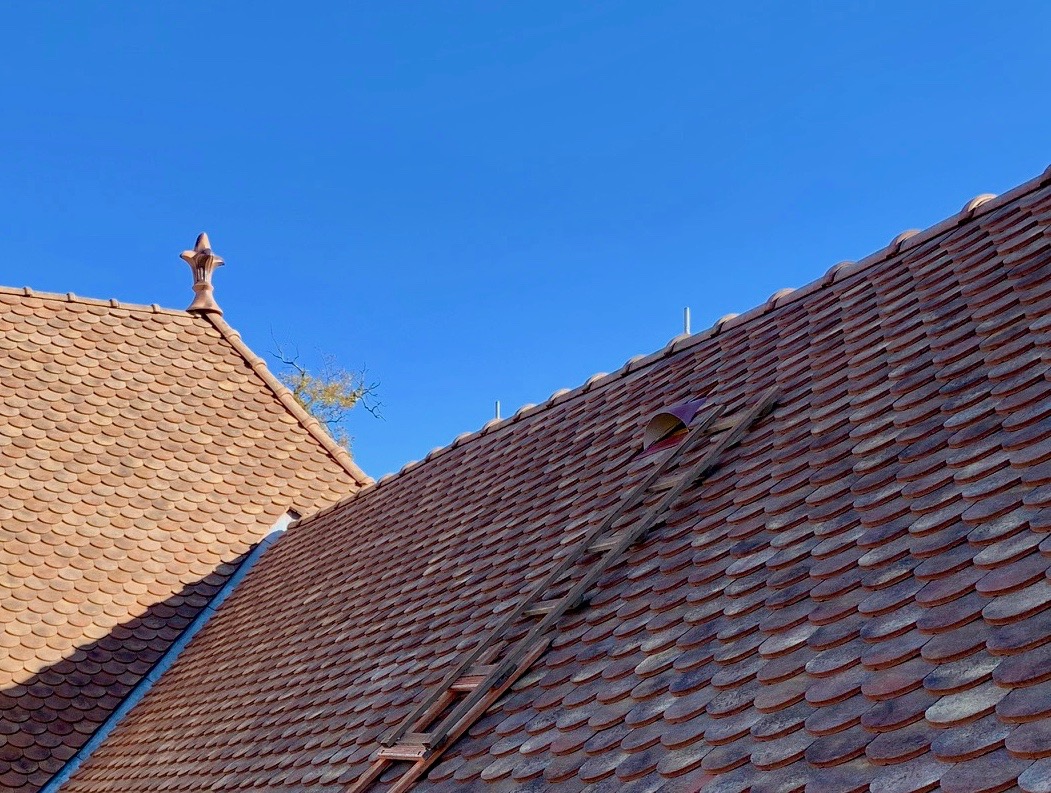
Installing special tiles on the roof of Chateau Bellefontaine to allow both batts and swallows to make themselves at home in the rafters.

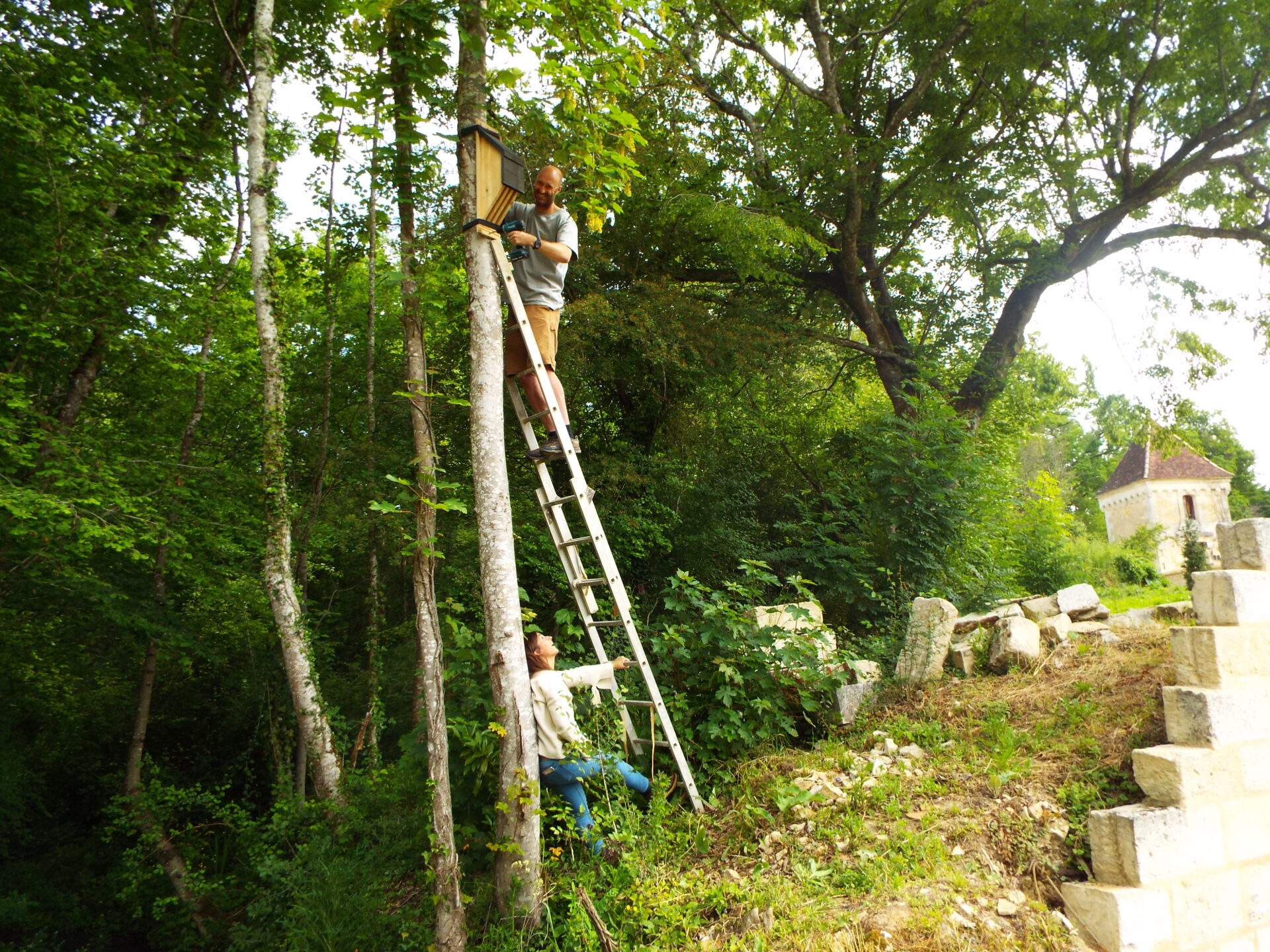
At Château Bellefontaine we have two types of bats ones that live in the belfry – well attic – and others in the woodland. To encourage them, working with the NGO HISA, we have installed special tiles in the new roofs so they can enter and leave, and we’ve built a ‘bat gite’ in the trees near the water, where the insects fly at night. 

HISA installing bat ‘gites’ in the trees around the pond at Château Bellefontaine.

We’re looking forward to our first houseguests, and I am looking forward to sitting out at sunset enjoying my aperitif without the company of mosquitoes. 

Want to know more?  If you have enjoyed this post,  sign up here  to receive future blog posts directly to your inbox. If you would like to learn more about Bordeaux, buy your copy of Bordeaux Bootcamp here, to learn more about Wine and Wellness, buy your copy of The Drinking Woman’s Diet here. 

Photo credit @Yohan Charbonnier LPO

Get On Bordeaux.

On Bordeaux is an eclectic collection of essays and articles on a subject close to my heart. It includes voices old and new, traditional and modern, classic and original, and offers a fascinating window onto the world of Bordeaux with a range of stories as diverse as the wines of the region. 

There are famous names, including Hugh Johnson, Nicholas Faith, Edmund Penning-Rowsell, David Peppercorn and Steven Spurrier, to name a few, alongside  the ‘more modern’ voices of Jane Anson, Joe Fattorini, James Lawther and Mathieu Chadronnier. 

It’s not a Bordeaux-British echo chamber; there are comparisons with Burgundy (very brave) a look at China, opinions from the US and an update on how ‘La Place de Bordeaux’ is becoming a trading platform for wines of the world. 

In her introduction, Jane Anson primes us that the writing covers three centuries (from 1833 to 2020), four continents and over 40 writers. Many pieces, especially the more ‘historic’ ones, are elegant examples of wine writing that are far removed from scores and endless lists of aromas. It explores and helps us understand and enjoy wine rather than analysing them to death. Charles Luddington, in his piece ‘The paradoxical rise of Claret’ written in 2013, talks of ‘Floral descriptions’ starting early in the 18th century with the rise of ‘politeness’. Perhaps a little more politeness wouldn’t go amiss right now? Not everything is gentle; the darker issues around the history, wars, times of penury and scandal show that the past was not always rosy. 

As well as original pieces, excerpts from other wine books open the door to further reading with some articles enjoying the same longevity as the best bottles of Bordeaux. 

As interesting and slightly wistful as some of the historic pieces are, it is the modern pieces that I loved most, pieces that buck the trend of analysing the wine to look behind it. It’s not all reverence either, with only the slightest hint of Bordeaux bashing, some writers just can’t resist. Most writers wear their expertise lightly, hardly an ego on show.

Divided into ten themes, from vintages to vineyards, stories of wars and bounders, history and the future, it’s hard to pick highlights, as there are so many. For Sauternes fans (that’ll be me), the Bill Blatch article alone is worth the book, especially the historic mention of a 1800s menu pairing Sauternes with spicy appetizers – something that we naively think of as a new idea. 

With such an illustrious crowd of writers it’s perhaps understandable that the focus is mainly on the great growths, but there is also to nod to the future perhaps most elegantly put by Peter Vinding-Diers in his piece – ‘Beware the Portuguese’. Joe Fattorini’s article about the 2008 vintage reminds us  just how much really goes into making, or breaking, a Bordeaux vintage.

There are some great quotes too; Fiona Beckett in ‘Bordeaux for lunch’ asks, “Maybe the Brits like Bordeaux so much because it goes with gravy and pastry?” I loved the comment by Michael Broadbent in ‘Why Bordeaux’ that he always ‘comes home’ to Bordeaux, which resonated particularly with me. When I am far from Bordeaux, opening a bottle always brings me reassuringly back home. 

The book signs off with a tribute to Michael Broadbent, to whom the book is dedicated, fondly remembered by Hugh Johnson. 

On Bordeaux is published by The Academie du Vin Library as ‘Tales of the Unexpected from the World’s Greatest Wine Region’ and it lives up to its tag line. As well as publishing new classics, the Academie also revives old ones and this tome is a perfect example of this mix of old and new wisdom. Take a look at their web site for more inspiration, it is the time of year for gifts after all, (sign up to the website for their special Christmas offer).  

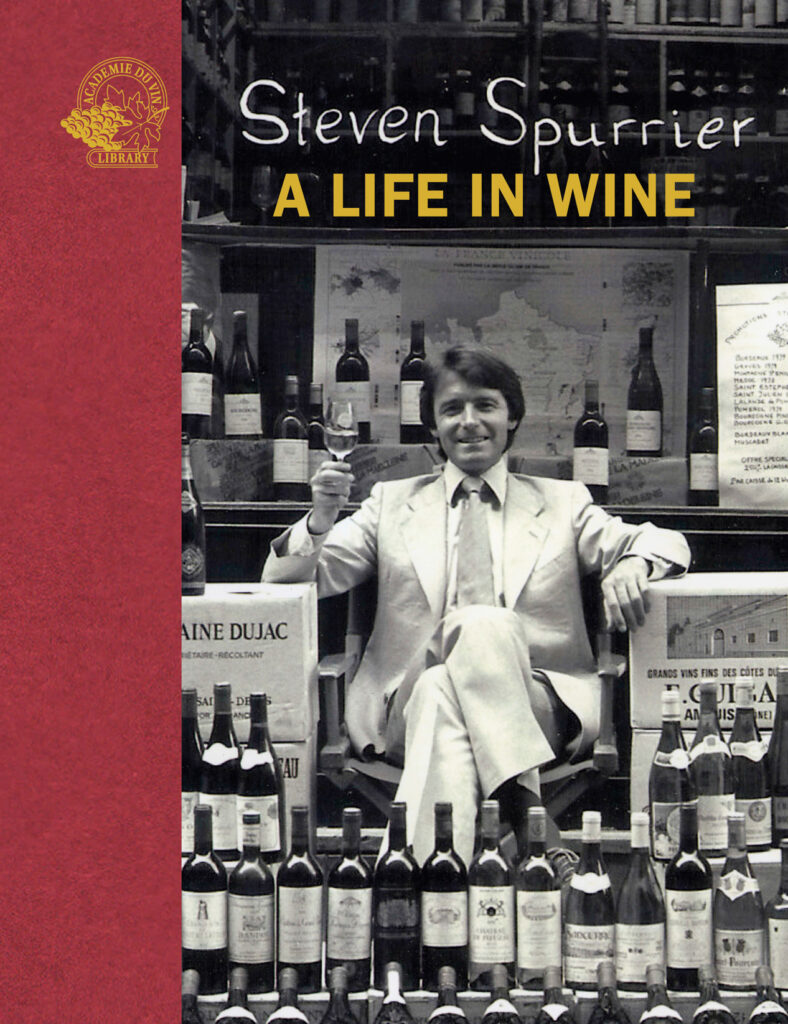
The Académie du Vin Library, founded by Steven Spurrier and friends, has a small list of publications, the credo being quality over quantity. Books are chosen to increase the pleasure the world of wine. Two of their latest books are a reissue of The Story of Wine by Hugh Johnson, first published in 1989, which I’m looking forward to re reading, and a  re edition of Steven Spurrier’s ‘A Life in Wine’. I reviewed this back in August 2018. If you didn’t read it then do so now, if you did – this version is worth another look as it is full of lovely new photos.

That’s Christmas sorted then. You’re welcome.

If you have enjoyed this post, please sign up here  to receive future blog posts directly to your in box. If you would like to learn more about Bordeaux, buy your copy of Bordeaux Bootcamp here, to learn more about Wine and Wellness, buy your copy of The Drinking Woman’s Diet here. 
Sauternes surprises. Two things you might not expect to find in Sauternes and Barsac.

Wine and Whisky.

There’s nothing new about finishing a whisky in an oak cask, using different provenances, sherry, port and yes, even Bordeaux. I’m particularly fond of a Sauternes finish. Glenmorangie Nectar d’Or was the first one I tasted, it is still delicious. The group LVMH owns both Glenmorangie and Château d’Yquem, which must come in handy when sourcing barrels. 
I also love Glenfiddich and was in Scotland for the unveiling of a Cérons finish whisky, using barrels from Château de Seuil. 

There’s about to be a new one on the block, a joint venture between a sweet wine producer from a nearby hill overlooking the river and an island whisky distillery. I’m sworn to secrecy for the moment but watch this space. 

But Gin?

Barrel aged gin is rare but can be found, (there’s a particularly delicious Bordeaux barrel aged negroni), but now there is a Sauternes finished gin, or Barsac to be precise. 

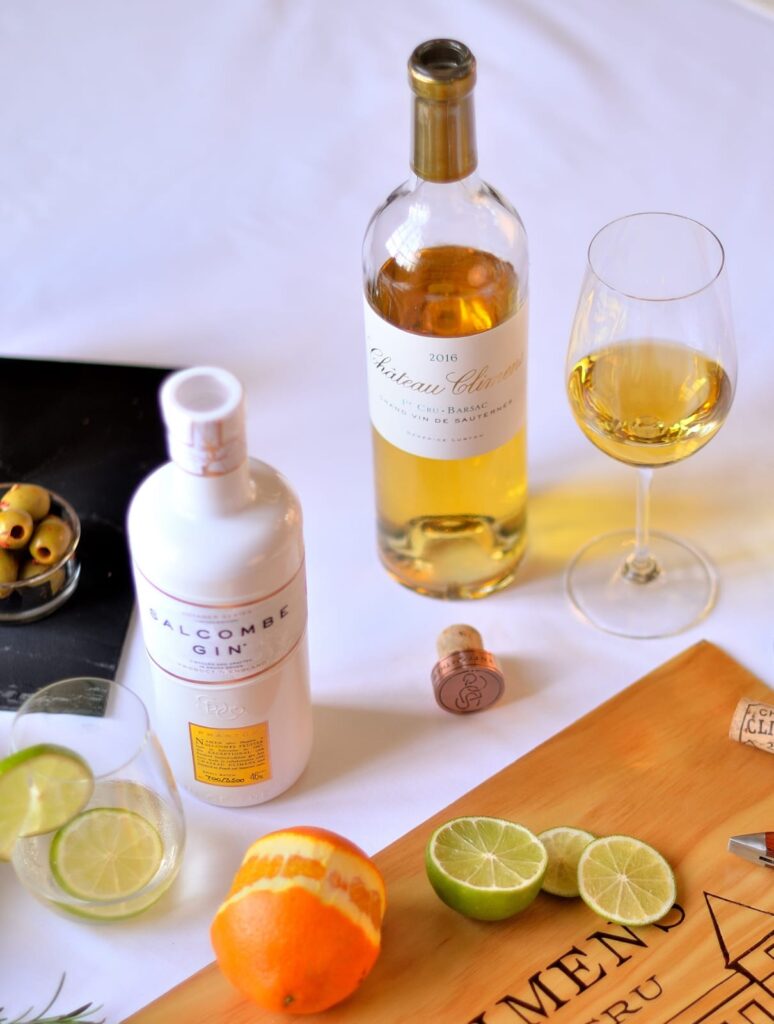
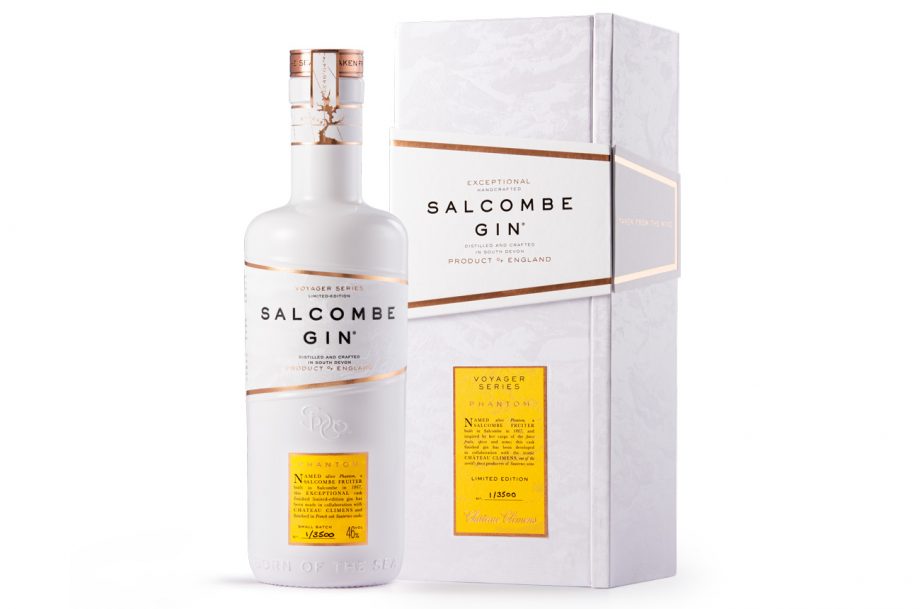
Château Climens and Salcombe Gin have joined forces to create Phantom. The name was inspired by a ghostly vision of the Chateau emerging from the famous morning mist on the first visit of Angus Lugsdin, to Château Climens. 

Angus is the creator of Salcombe Gin, from the Devon Coast in the South of England. Phantom is also the name of a 19th century boat that shipped botanicals for the gins to the port town of Salcombe. 

Photo credit Ferderic Nivelle, cellar master at Château Climens, clearly a man of many talents!

The gin is the sixth in the limited edition ‘Voyager series’, a range inspired and crafted by chefs and wine personalities.

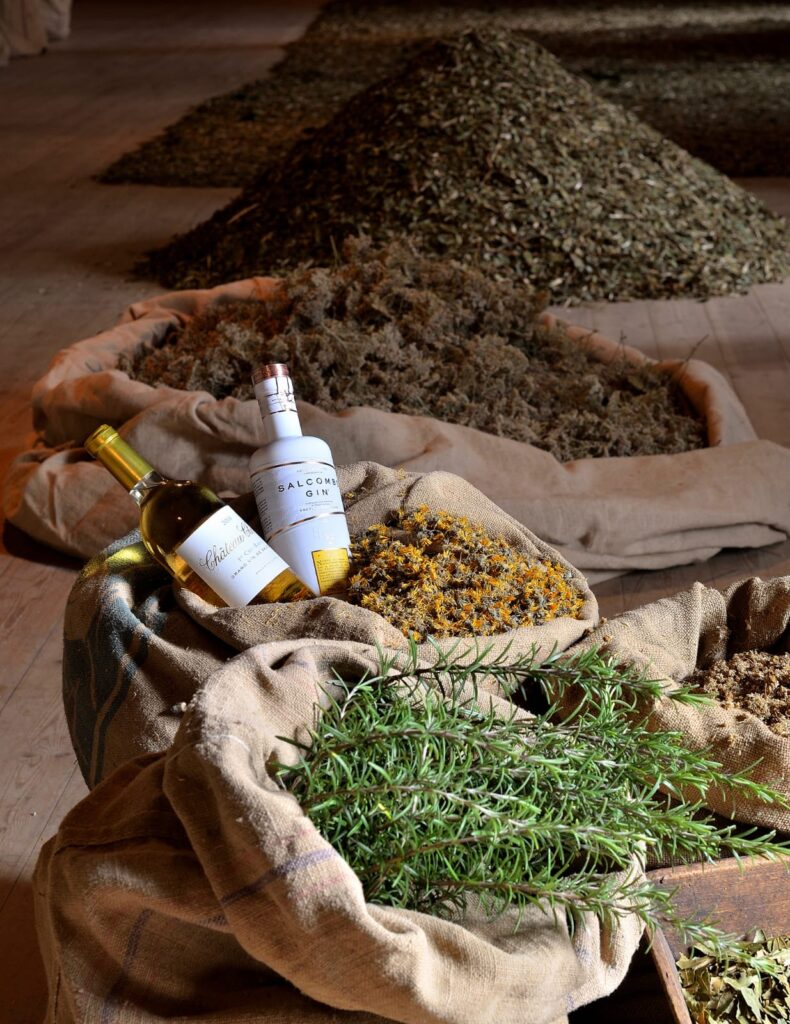
The uniqueness of this gin comes not only from ageing in Château Climens barrels that previous held the sweet wines of the property, but also from the botanicals used during distillation. Seven of the 16 botanicals used are from the vineyard. Owner wine maker Bérénice Lurton is passionate about the biodiversity of her estate. A biodynamic producer, she sources locally grown herbs to create her vine treatments. These herbs are dried in an attic above the fermentation cellar, which is also a venue for wine and yoga classes. 

Botanicals drying in La tisannerie of Château Climens. Photo credit Ferderic Nivelle

From these herbs, Bérénice and Angus along with cellar master Frédéric Nivelle, selected marigold flowers, fennel, nettle, cypress and laurel, and, after several trials added rose petals from the Chateau. Once distilled, the gin was aged for eight months in five barrels (or casks once we start talking about spirits) that previously held the 2015 or the 2016 vintages. 

Sadly I haven’t tasted it yet – but I’ll have a bottle waiting for me when I get back to Europe – I’ll let you know, but the finished gin is described (and I quote) as having: 

‘a decadent cask finish, mimicking the aromas and flavours of the wine: honeyed peaches, rose petals, cypress, lavender and orange blossom on the nose. Notes of apricots, jasmine, toasted oak, spices and caramelised orange peel follow on the palate. There is a fresh green savoury hint from the nettle and fennel making it light but enhancing the depth of flavour. The finish is acacia honey and cantaloupe melon, balanced with the minerality of fresh orange peel pith’. 

Serve Phantom with organe peel and tonic to bring out the citrus flavours the Climens barrels bring. Photo credit Ferderic Nivelle

They suggest serving it with orange peel and tonic, which makes sense given the citrus aromas of Climens – my mouth is watering. 

The elegant Phantom packaging.

The limited edition of 3,500 50 cl bottles are presented in an embossed white bottle with a copper stopper and packed in a matching white and copper box. It is almost Christmas. 

Or Coffee?

If you thought Gin and Barsac was an interesting pairing, what about Sauternes and coffee?  

Château Sigalas Rabaud, first growth of Sauternes, has been in the same family since 1863. The current owner wine maker, Laure de Lambert, is the sixth generation of the family at the helm. She’s not letting tradition stand in the way of innovation. 

The barrel cellar of Château Sigalas Rabaud, where the ageing of the coffee beans took place.

Alongside Simon Verger from the hotel and two Michelin star restaurant Haaitza in nearby Pyla and coffee specialist Yoann Bride from the Brûlerie Comtoise in the Jura, they have launched a unique project. It was a meeting of minds.

They have been experimenting since January, ageing raw coffee beans in barrels that previously held the classified growth Sauternes. 

From wine labels to
coffee labels – look familiar?

They left the green beans for eight, nine and ten weeks, rolling the barrels regularly to impregnate the grains with the floral and citrus notes characteristic of the ‘grand vin’. Finally they chose nine weeks as the ideal ageing period, then roasting it. The coffee is now for sale at the Brûlerie Comtoise but will be available at the Château too. They might even serve it at breakfast if you stay in one of their lovely guests rooms.

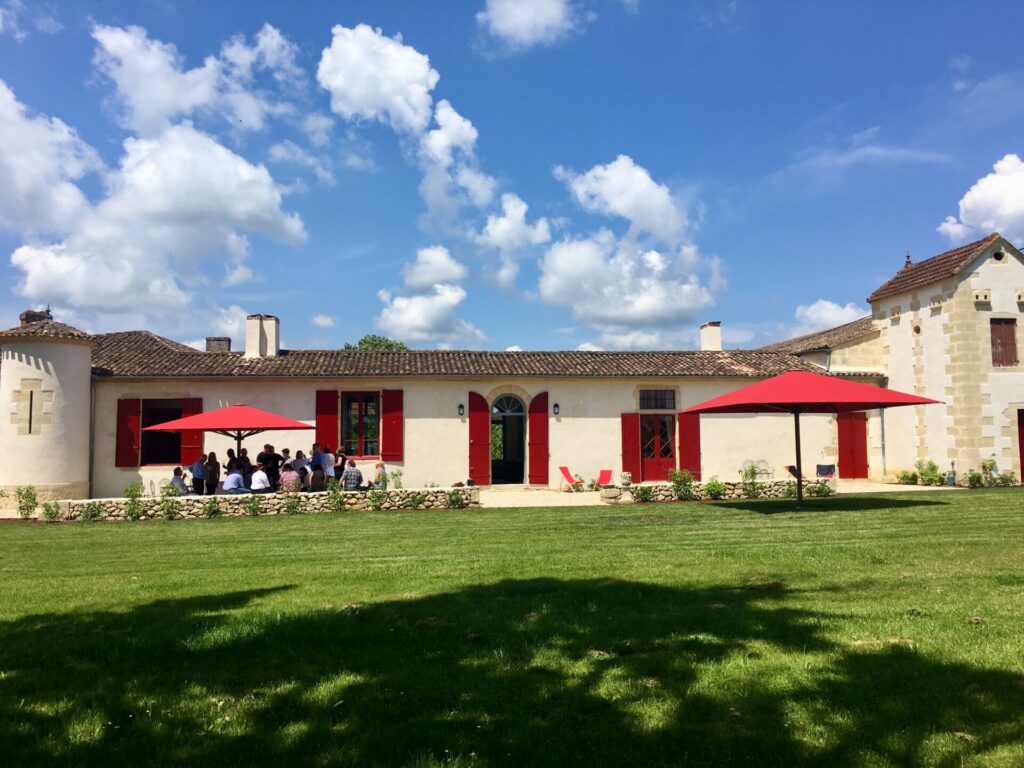
The terrace at Château Sigalas Rabaud in Sauternes

I can recommend sipping a coffee on the beautiful terrace of the property, overlooking the vines after tasting their wines.

If you have enjoyed this post, please sign up here  to receive future blog posts directly to your in box. If you would like to learn more about Bordeaux, buy your copy of Bordeaux Bootcamp here, to learn more about Wine and Wellness, buy your copy of The Drinking Woman’s Diet here.