Bordeaux Chartreuse

What’s a Chartreuse? No, not the green liqueur made by the Pères Chartreux monks in the mountains, I’m  talking about the beautiful Chartreuses – mini châteaux found in the vineyards of Bordeaux. These elegant homes date from late 17th through to 18th century and are typical of, although not restricted to, the Bordeaux region. They are a byword for an elegant style of bourgeois architecture.  

A religious association 

There is an association with the monasteries: the generic name of Grande-Chartreuse was given to many buildings owned by the Chartreux monks. The Chartrons, the waterfront area where the wine trade was concentrated, was built around a Chartreux community. 

It was thanks to the port activity in the 17th century that serious wealth arrived in Bordeaux. It was France’s largest port and exhibited this prosperity by building the beautiful waterfront of Bordeaux. The city remains one of Europe’s largest 18th-century architectural centres, (on a par with Saint-Petersburg), one of the reasons it was awarded UNESCO World Heritage status in 2007. 

A summer retreat 

The great and the good of Bordeaux built themselves these lovely Chartreuses as retreats to escape the summer heat of the city.  But they were not a retreat from the social scene, they were designed to entertain.

Traditionally symmetrical, built from the beautiful local limestone, they are usually on one level and slightly raised, with steps leading up to the entrance. They often feature a corniche above the doorway and other decorative elements along the façade. There may be a storied pavilion in the centre or one either end, but the impression remains one of a horizontal rather than a vertical building. The Chartreuse is often the visible side of a courtyard of farm buildings or wine cellars here in Bordeaux. 

The 18th century was the golden age of these buildings, the interiors were as decorative as the exteriors. Inside, a lateral corridor runs the length of the building with rooms opening off it, or salons may run one into another each side of a central salon or hall that traverses the property. Either way, there are always lovely perspectives through the building and, with large windows, their charming signature is one of light and elegance.

Evolution 

Chartreuse architecture evolved through the century. Columns were added to the façades; sometimes another storey was added, or pavilions or towers on the extremities. Large terraces and elegant staircases led down to gardens and parks often planted with rare species of trees brought in from the colonies by the negociants and traders who owned the properties. 

By the 19th century, these low buildings were being replaced by taller and often grander Palladian styles such as Chateau Margaux. The Chartreuse remained prestigious but were for the most part simpler and delightful manor houses that continue to represent the elegant style and taste of their owners and a certain French lifestyle. 

Today, many are still private residences, but some are open to visitors and even to guests. You too can experience the delights of this elegant Bordeaux way of life. Here are a few recommendations.

The Viticultural Chartreuse

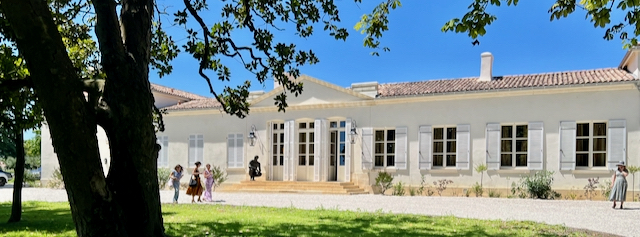
Château de Cérons, built at the end of the 17th century, has been listed  as an historical monument since 2008. It’s also a working vineyard producing delicious Cérons and Graves wines.

During the 18th century, it was the ‘holiday home’ of the  Marquis de Calvimont, a family already known for their wines. The family of architect Roger-Henry Expert also owned the property. Recipient of the Grand prix de Rome in 1912, he later designed the Normandie transatlantic liner and the Trocadéro fountains in Paris. He helped restore the  Château in the 1940s.  

Château de Cérons

Since 2012, it has been owned and run by Caroline and Xavier Perromat who are happy to share their passion for the chateau they are slowly renovating. It is open to the public for visits, tastings and lunches in the park, with a fabulous ‘son et lumière’ projected onto the walls of the 300 year old cellar. Visitors can also admire the surrounding biodiversity, all the way down to the banks of the Garonne River. The original interiors have remained intact over the years, with rare interior plaster reliefs of flowers, fruit, and shells that grace the walls of the central salon.
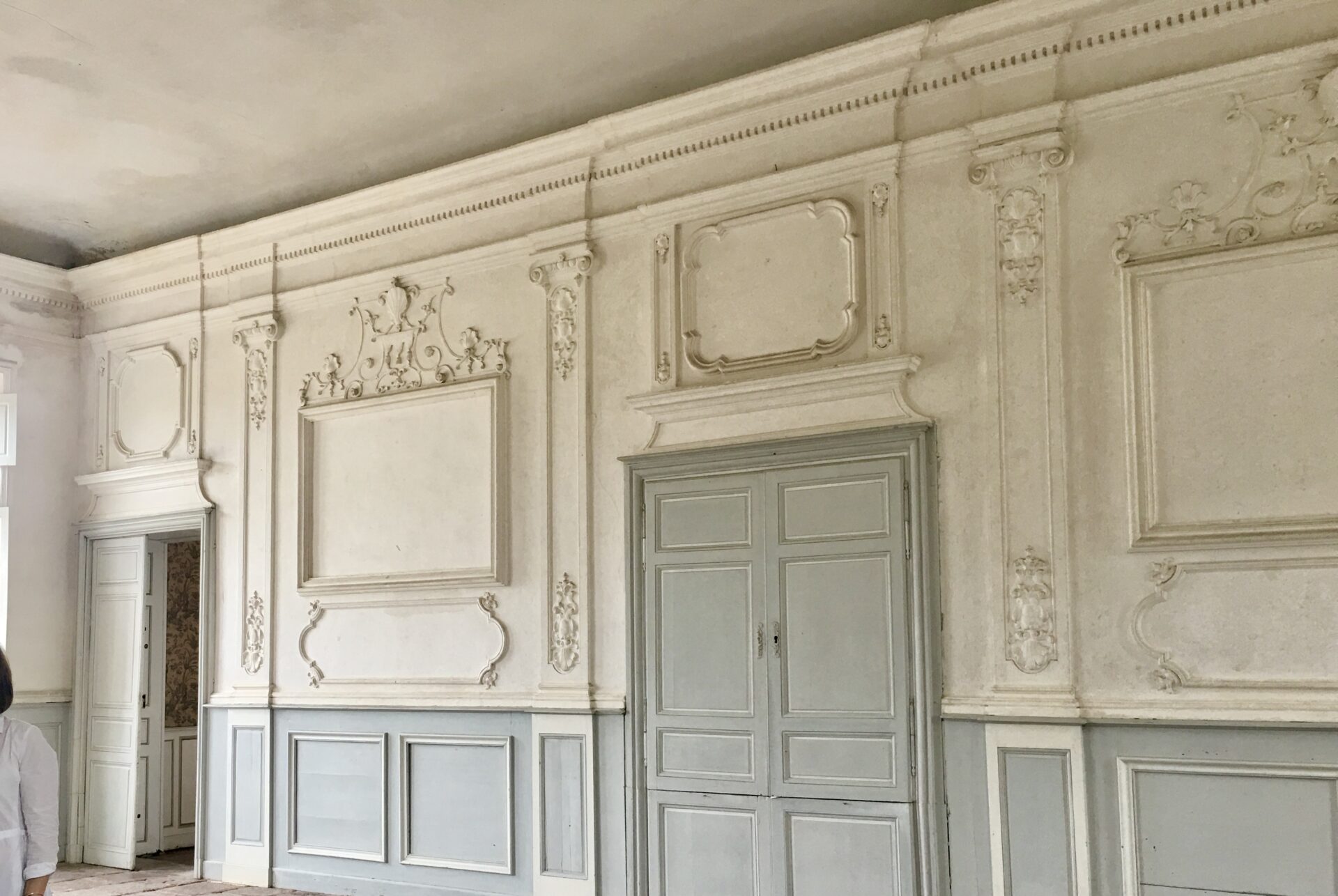
The unique and original interior decoration of Château de Cérons

Be a guest

The name chartreuse still resonates with guests, and the original sense of hospitality they were built for continues today, as several of these lovely properties have guest rooms or are available to privatise for exclusive use.

In the south, the beautiful 17th-century Chartreuse of Château Sigalas Rabaud, a First classified growth in Sauternes, has been home to the de Lambert des Granges family since 1863.
Château Sigalas Rabaud in Sauternes

Since 2006, it is under the management of sixth-generation Laure de Lambert Compeyrot. She has given the property a new lease of life by introducing a range of stunning new Sémillon wines and opening five beautiful en-suite guest rooms. The rooms, lounge and dining room have a family feel, an elegant mix of traditional, cosy and eclectic. Don’t miss the ‘shower in the tower’ in the Marie-Antoinette room, named after her grandmother. 

Although receiving guests is a new ‘metier’ for Laure, it’s rooted in her passion for the wines.‘You can invest a lot of money on marketing to try to sell wine, but when people come here, when they live with us and drink with us, it’s easier to share our wines.’ Guests can join her on the sunny terrace of the chateau for her favourite pairing, a glass of Sauternes with old Parmesan cheese, or enjoy a ‘sweet aperitif’ by the lap pool near the vines. 

What’s in a name?

A little further north in Pessac-Léognan, Chateau Le Pape recently changed its name to La Chartreuse de Haut Bailly, reinforcing the prestige attached to the name. The Wilmers family, owners of  neighbouring Grand Cru Classé Château Haut Bailly, purchased Le Pape in 2012. They spent three years renovating the property, opening their doors to guests in 2015. In keeping with traditional Chartreuse architecture, they reintroduced symmetry by adding a second pavilion. A large terrace now overlooks the landscaped gardens and swimming pool, and Parisian interior designer Patrice Terrin has created a haven for guests, with four charming en-suite bedrooms and one suite. Perfectly placed just half an hour from the city of Bordeaux, yet in the heart of the vineyards, La Chartreuse de Haut Bailly is an ideal central base to discover the Bordeaux vineyards.

The Chartreuse of Haut Bailly

Further north in Saint-Julien, is one of the most famous Chartreuse of Bordeaux, Chateau Beychevelle, known as the Versailles of the Médoc. Built in the classic Chartreuse style, a single story building with an ‘enfilade’ of rooms and towers at each end, it originally dated from 1565 and was rebuilt in its current style in 1757, a showcase for the status of its then owner, the Marquis de Brassier. It’s raised terrace has an elegant staircase leading down to the gardens and a view over the Gironde estuary. 
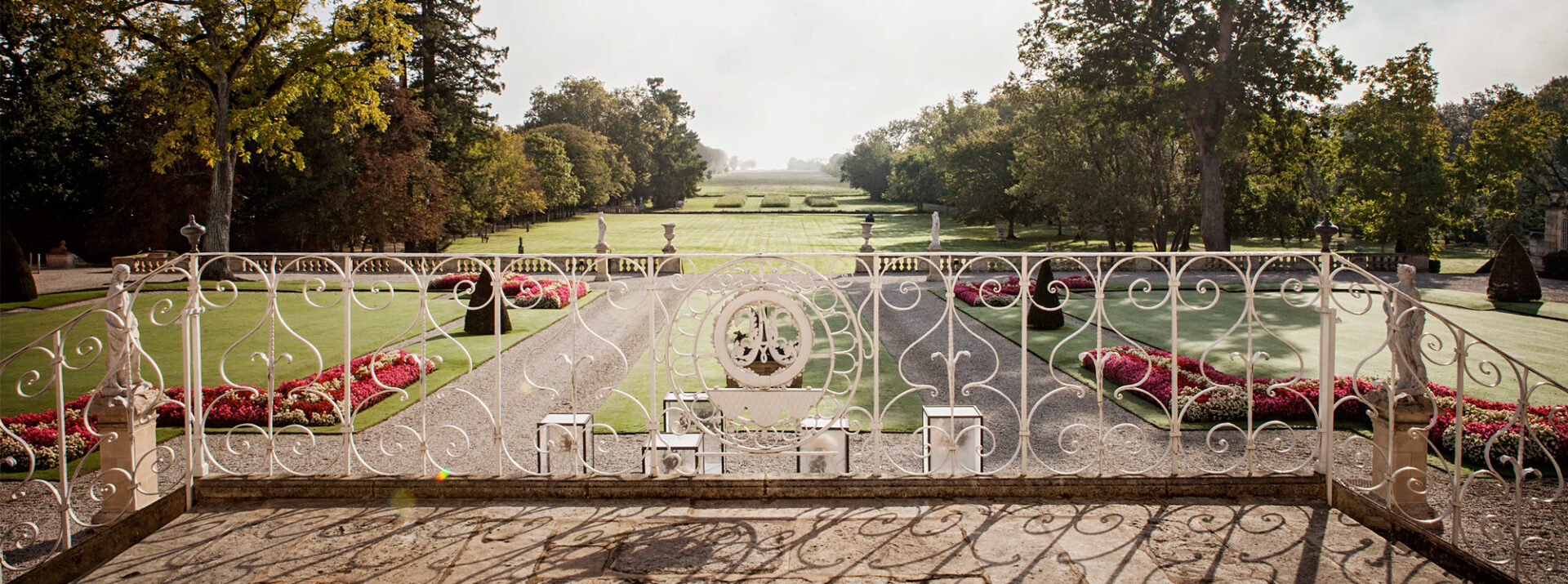
The stunning view across the the gardens to the Gironde Estuary from Château Beychevelle

Under the current owners, Grands Millésimes de France, part of the Castel and Suntory groups, this beautiful château has undergone extensive restoration. The 13 bedrooms and bathrooms are now as deluxe as the château is grand. Guests can dine and sleep in this 18th-century elegance.

The stunning and original interior decoration of chateau Beychevelle

Chateau Cos Estournel is famous for its unique oriental architecture, inspired by the frequent voyages of Louis Gaspard d’Estournel to Asia. His obsession for the Orient earned him the nickname of Maharajah of Saint-Estèphe. There was no house at Cos when he inherited in 1791, but instead of building a château to live in, he built an imposing cellar topped by pagodas. He made his home nearby at Chateau Pomys, an elegant chateau just a stone’s throw away that is now a hotel, La Maison d’Estournel.

La Maison d’Estournel, previously home to Louis Gaspard Estournel and known elegant hotel

Michel Reybier purchased Cos d’Estournel in 2000. He invested heavily in a stainless steel, gravity-fed cellar, underground barrel cellar and stunning vertical wine library, whilst safeguarding the original facade. He renovated the building that previously housed a museum transforming it into La Chartreuse de Cos d’Estournel. Reybier knows a thing or two about hospitality, he owns the Michel Reybier Hospitality group, a collection of luxury Reserve hotels. Presented as a ‘family home’, the six bedrooms and two suites, two swimming pools (indoors and out), hammam, beautiful salons and dining rooms area available for exclusive private rental. 

Inside La Chartreuse d’Estournel the owners residence at Cos d’Estournel

What’s New 

The big Chartreuse news, and the inspiration for this piece, is the opening this autumn of the newly renovated Chartreuse de Fonbadet.

The stunning and brand new Chatreuse de Fonbadet

The Peyronie family have been making wine in Pauillac since the 1700s, with past generations managing both Lafite and Mouton. In 1950, Robert Peyronie bought the 4ha Château Fonbadet, a property dating back to the 1820s and a Cru Bourgeois Supérieur in the original 1930s classification. Together with his son Pierre, they expanded the vineyard, including the 1.5ha Château Pauillac in 1971, a property that also traces its history back to the 19th century. Today, the two properties are grouped under Domaines Peyronie, covering 20ha across the appellation. 

Fourth-generation Pascale took over in 1991, having studied law and oenology. The law came in handy. Last year Pascale won a court case allowing her to continue using the name Château Pauillac for her wines, dspite objections from The Institut National de l’Origine et de la Qualité (INAO) and the Bordeaux Wine Council (CIVB), arguing the name was ‘misleading’. 
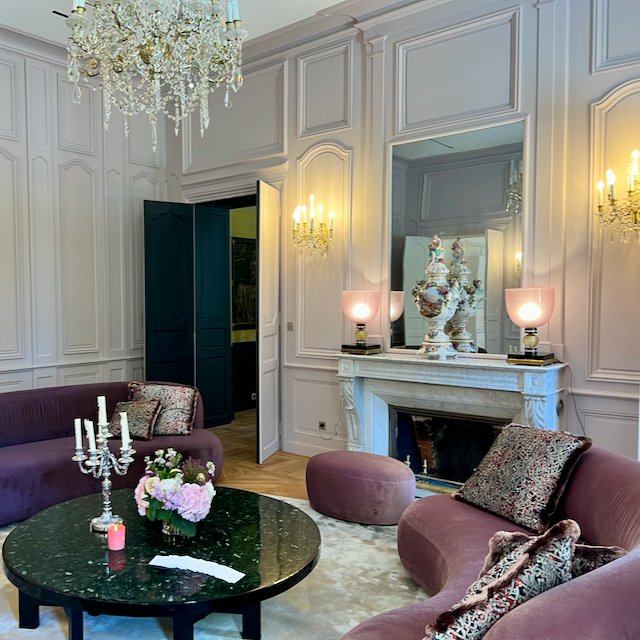
Inside the Chatreuse ppt Fonbadet

Her tenacity shows in her latest project: the transformation of her family home, Château Fonbadet, into a stunning five-bedroom ‘Chartreuse’. A renovation that brings together traditional architecture with the contemporary taste of its dynamic owner. Working with Bordeaux designer Marc Dauberte of Garance, they re-established the building’s symmetry by adding a second square ‘pavilion’ to one end, a design confirmed by an image she found on an old wine label.
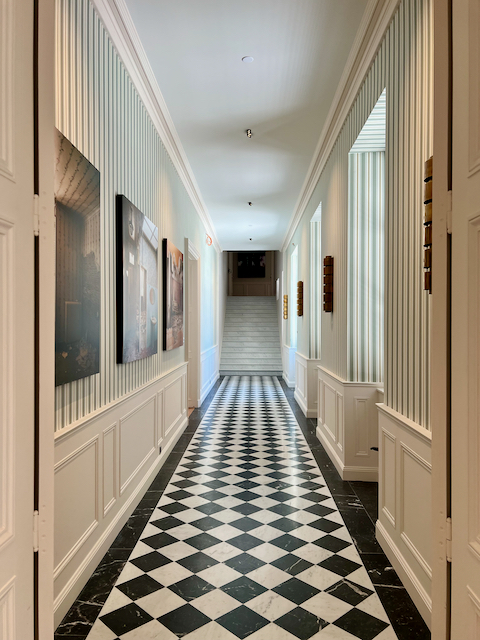
The stunning marble floored corridor

The property has been transformed, at no small expensive, into a spectacular private space with a spa room, suites featuring solid Carrara marble bathrooms and flooring, (no fewer than 48 tonnes of marble were used), and a park where contemporary sculptures are hidden amongst century-old trees. It’s a clever mix of classic Bordeaux style and ultra-modern luxury, with very feminine signature.  On the edge of the Village of Bages and close to the Pauillac waterfront, it’s a spectacular base from which to discover the northern Médoc. 

Living history 

From private residences to historical monuments and luxury accommodation, Les Chartreuses de Bordeaux remain a reference for a certain elegant Bordeaux lifestyle. These signature architectural jewels of the region survive from the past to thrive into the future thanks to the passionate and dedicated individuals that are bringing them back to life. 

If you enjoyed this post, please  sign up here  to receive future blog posts or share with a friend or colleague who might enjoy discovering Bordeaux. Learn more about the region with Bordeaux Bootcamp or explore Wine and Wellness, with  The Drinking Woman’s Diet  or just say hi  here.
Is Merlot the new Left Bank star?

Despite popular belief, red Bordeaux is not dominated by Cabernet Sauvignon, Merlot accounts for 66% of red vine plantings, a figure that has remained steady and is even creeping up.

Merlot and Climate Change 

You could be forgiven for thinking that, with climate change, Merlot would be in decline; after all, it thrives on cooler soils and in cooler climates. But climate change isn’t only about warming; it’s about climate chaos and uncertainty. How does Merlot fit in? 

The Bordeaux Merlot Profile 

Merlot is not without its problems. Early budding and flowering make it sensitive to frost, its thinner skins make it more susceptible to mildew, a major headache in recent Bordeaux vintages. Unlike the thicker-skinned Cabernet, it has a short picking window, going rapidly from underripe to overripe.

Historical 

Until the 1970s, Bordeaux was dominated by white wines. It took the 1956 frost to change the planting profile. Many vines hit by frost were in the Entre-Deux-Mers, the large expanse of vines between the Garonne and Dordogne rivers. Replanting took a while, this was post-war, with little available cash for investment. By the 1970s, many white vines had been replaced with red. 

Traumatised growers, on the advice of agricultural consultants, were enthusiastic about more frost-resistant Cabernet, which was planted on many cooler, clay-dominated terroirs. It took time to work out that Merlot that thrived here. The early-budding frost risk was worth taking if you wanted to pick ripe berries rather than austere, green Cabs. Merlot won.

This is now working in Bordeaux’s favour. Despite popular belief, Bordeaux does listen to what consumers want, and it seems they want brighter, fresher, fruit driven wines. Welcome Merlot. 

Expert opinion 

On a recent Les Quatre Saisons du Vin’ podcast, Eric Boissenot, wine consultant to the great and the good of the Left bank, denied that Merlot, with its tenancy for alcohol levels to shoot up in warmer climates, is now relegated to the past. Even in the hot 2022 vintage he saw some fabulous Merlots, as he did in 2010, 2016, 2020. Picking date is key, ‘If picked early enough, you can achieve ripeness without the high alcohol’. He even claimed Merlot can retain better acidity than Cabernet Sauvignon – , if picked at the right time. In cooler conditions it ripens quickly with no lingering vegetal aromas. 

Left bank – right bank 

The received wisdom that Bordeaux is neatly divided into Left and Right Banks by terroir and grape varieties is an over simplification, but one that helps wine lovers get a grip on the region. It’s a little more complicated, a lot more interesting and constantly evolving. 

Why the stereotype ?

Merlot thrives on cooler clay and limestone soils that dominate the Right Bank, whereas the warmer Left Bank Gravel allows the thicker skinned Cabernet Sauvignon to ripen. This division by terroir was key in Bordeaux’s cool maritime climate where Cabernet traditionally struggled to ripen on cooler terroir and in cooler vintages. But appellations are large, terroir is diverse and grape growers are spending more time and money understanding their soils and adapting planting to ever-smaller, more precise plots across their vineyards. 

The hidden Merlot of the left bank

Merlot accounts for 48% of plantings across the eight appellations of the Médoc. The most westerly appellation, Listrac has 65%; the northerly Médoc appellation follows at 55%; Moulis 52%; Haut Médoc 50%; Saint Estèphe 43%; Margaux 34% and Pauillac and Saint Julien 32%. (That’s it for the stats – wine geeks you’re welcome;)

The gravel on the cooler soils of the western side of the Médoc peninsula, is often older Pyrenean gravel, smaller, sometimes pinker than the bigger, bolder, lighter Gunzian gravels to the east. There’s also more clay and limestone. This, combined with a slightly higher elevation, Listrac is at 45m compared to Margaux’s 20m, and the proximately of the pine forest to the west (a barrier between the stunning Atlantic sand dunes and the vines) creates a cooling microclimate. To the north, cool sea breezes cross the Médoc appellation and the tempering effect of the two bodies of water that give the peninsula its name ‘In Media Aquae’  (between the waters), also keep things cool and dries vines in damper vintages. 

White Médoc

The arrival of the new White Medoc appellation this year brings into focus these patches of cooler terroir, where we find mainly Sauvignon Blanc. White vines are still a tiny percentage of Médoc plantings (less than half a percent), but they have history. There are around 40 white labels from the Medoc currently sold as Bordeaux Blanc – watch this space with the 2025 vintage

Blends

In the land of blends, it’s easier to find 100% Merlot than 100% Cabernet. Merlot is versatile and lends itself to experimentation, being at the heart of wine making innovation during the right bank garage wine movement of the 80s and 90s. 

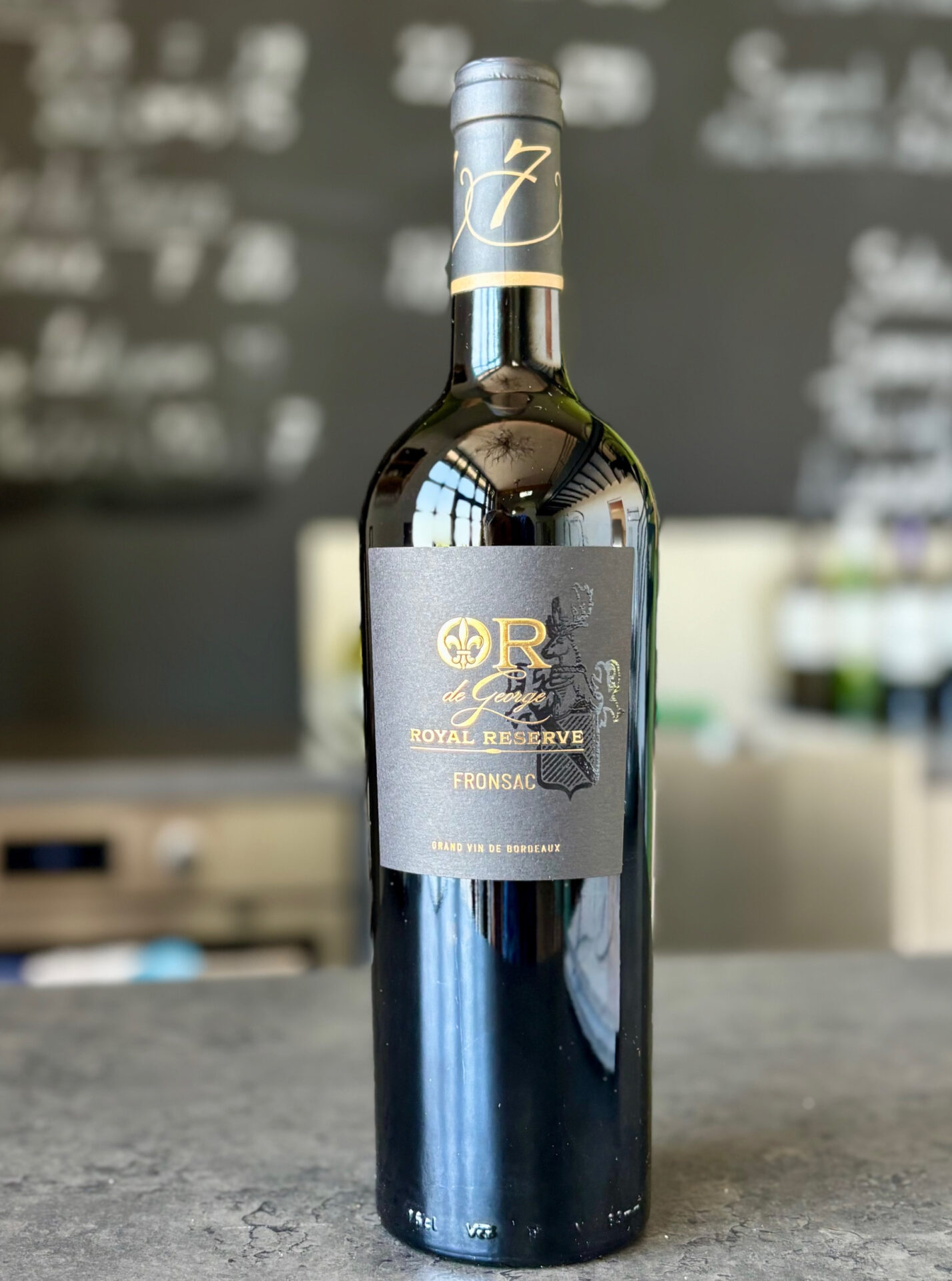
Sally Evans, who has uniquely Merlot red grapes planted in her Fronsac vineyard, Château George 7, is a perfect example. This year, she introduced a third 100% Merlot, Or de George, Royal Reserve. Different wine making techniques and ageing materials, rather than the grape variety, differentiate between her wines, with Or de George made and aged in 3000l oak ‘foudres’. 

Or de George, the news 100% Merlot from Château George 7 in Fronsac

Left bank Merlot 

This year, two new prestigious 100% Merlot wines from the left bank shine a light on the variety, challenging the ‘idée reçue’ that excellent Merlot is restricted to the Right Bank. 

Margaux Merlot

 Margaux is known for its luscious wines, and Merlot is no stranger to the blends. The120-ha Château Lascombes, (with 10 ha in Haut Médoc) has always had a high percentage of Merlot in its blend. 

Acquired by the American Lawrence family in 2022, they brought in Axel Heinz as winemaker and director in early 2023. It’s a return to his roots, his mother is Bordelaise, and he studied oenology at Bordeaux University, working in several properties here before moving to Italy. The ambition of the new management is to raise the estate’s quality and reputation to a ‘super second’ status alongside neighbours, Château Palmer and Château Rauzan Segla. 

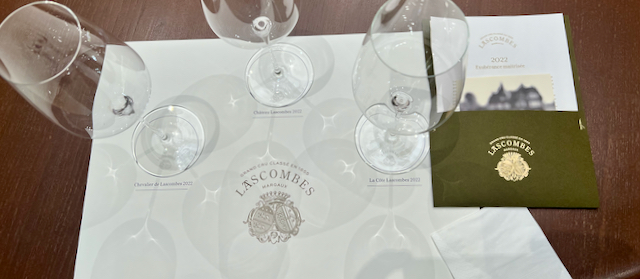
The line up from Château Lascombes, including the new 100% Merlot La Côte Lascombes

An in-depth soil analysis of their plots spread across the appellation will guide them in raising the percentage of Cabernet Sauvignon in the Grand Vin, sourced from gravel plots at the heart of the 1855-classified vineyard. They will continue to produce their second wine, Chevalier de Lascombes, that traditionally has a higher percentage of Merlot. (68% Merlot in the 2022 we tasted compared to 67% of Cabernet Sauvignon in the Grand Vin.) 

La Côte 

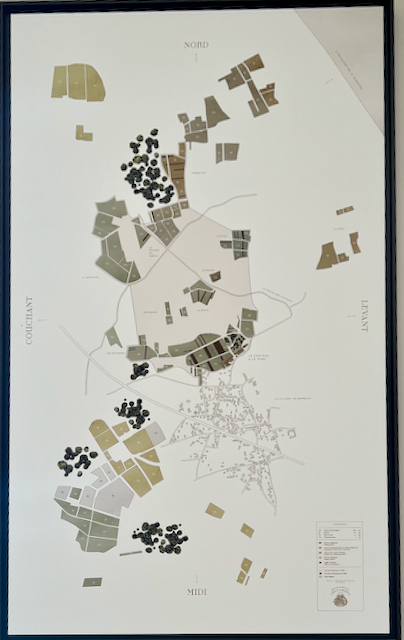
This analysis identified a plot to the east of the appellation, towards the Gironde estuary, dominated by blue clay over limestone, called La Côte. Just 20m above sea level, it is planted with 60-year-old Merlot. The 2022 vintage was already in barrel but not yet blended when Heinz arrived. He was impressed with the wine, finding it a true ‘Médocaine Merlot’ with minerality and acidity. Although some of this Merlot would traditionally have gone into the estate wine, he felt it was shame to blend it. He has history with Merlot, creating the famous Masseto at Ornellaia. 

The map of the Château Lascombes vineyard with plots across the Margaux appellation

Upwardly mobile 

Creating a Merlot cuvée fits nicely with their objective of emphasising the role of Cabernet in the Grand Vin of Château Lascombes. Heinz likes the idea of increasing the diversity of the estate’s top-range offerings, adding another quality product rather than expanding into second or third wines.

The 100% Merlot ‘La Cote Lascombes’ launches with the 2022 vintage, priced at around $200 compared to the Grand Vin at around $100. Although twice the price, the idea is not to overshadow the Grand Vin, but to create excitement around the name and their new philosophy. although it may not be produced every vintage, they wanted to wait for a few vintages to see if the plot could reliably deliver quality. The small production of 20,000 bottles (small for Lascombes that is) will be hand-sold to collectors and selected outlets. They want to know where these bottles are going. Released now in the US, it will be available in Europe in September.

Tasting the Château Lascombes Range

Moulis Merlot 

On the cooler western edge of the Peninsula in Moulis-en-Médoc, Arjen Pen, co-owner and winemaker at Château Branas Grand Poujeaux, has long been proud of the diversity of terroir on the property. He drives visitors through the vines in his Land Rover to discover the differences in the 25 plots spread across their 25ha of this small, 600 ha appellation. Each plot is vinified and aged separately before coming together in the blend, allowing a precise match between wine and barrel. 

Discovering the plots of Château Branas Grand Poujeaux in Moulis

Arjen has long been impressed with the Merlot from a 1.7ha plot called Marpaout. In 2019, they dug a 5m pit to better understand the terroir. Given the quality of the Merlot they expected clay, but they found a terroir with a very ‘Pomerol signature’. 4m of gravel and ‘crasse de fer’ (the famous iron oxide found in Pomerol) sitting on deep clay red and blue clay and limestone. The plot is 25m above sea level on the Grand Poujeaux Plateau, the highest vineyard on the Médoc’s Terrace 3. It also benefits from its location, 35km from the Atlantic coast and 5km from the estuary, contributing to the cooler micro climate. 

The property has worked with Hubert de Bouard, of Château Angelus fame, as a consultant, since 2012. Arjen also has Right Bank credentials, having previously run Château Richelieu in Fronsac. They were both excited about creating a 100% Merlot. 

In 2022, the Marpaout plot was harvested early in one morning, optically sorted and fermented in 60hl wooden vats after a cold soak. Malolactic fermentation and 12 months’ ageing took place in just four new barrels from four different coopers. After blending, the wine spent another 12 months in a single 750l Amphora, where the constant movement, or ‘micro stirring, of the lees integrated the tannins of wine and barrel and preserved the freshness. 

The plot gave its name to the wine, ‘a very Burgundian approach’, according to Arjen. Only 900 bottles and 50 magnums of the 2022 will be released, each delivered in its own individual wooden cases at a retail bottle price above Left Bank first growths but not quite on a par with top tier Pomerol. 

Pefectly packaged 

Arjen wanted the packaging to reflect the terroir but also their sustainable approach. The label, a stunning artistic interpretation of the terroir, and the brochure included with each case are printed on paper made from recycled yeast residue. The bottles are light and the case made of local pine. 

Perfectly and sustainably packaged Marpaout from Château Branas Grand Poujeaux in Moulis

Recent tasting against famous Merlots have reassured Arjen not only of the wine’s quality, but also of its future.

A Sideways look

Is Merlot  finally getting overs it’s ‘Sideways’ legacy? There’s still an ABM (Anything But Merlot) hangover from the infamous film, with (often American) guests writing off a visit to the Right Bank, wanting to concentrate on the Left Bank because they don’t rate Merlot. I politely remind them that some of most expensive wines of Bordeaux are Merlot-led or 100% Merlot. Petrus and Le Pin anyone? Now there are two more stunning examples of Merlot to share with them, even if they don’t make it to the Right Bank. 


If you enjoyed this post, please  sign up here  to receive future blog posts or share with a friend or colleague who might enjoy discovering Bordeaux. Learn more about the region with Bordeaux Bootcamp book, and explore Wine and Wellness, with  The Drinking Woman’s Diet  or just say hi  here.
Summer sipping from Bordeaux

A quick post with some fun sipping suggestions to put you in the mood for summer, although this glorious weather might’ve beaten me to it! 

Small is beautiful 

Two portable options for Bordeaux on the go this summer

Yes Bordeaux Can 

French Can Can is a range of rosé red and white AOC Bordeaux in  25cl ‘canettes’ or cans. Retailing at €4. The rosé is 80% Malbec, 20% Cabernet Sauvignon ; the Bordeaux Blanc 50% Muscadelle, 40% Sauvignon Blanc, 10% Sémillon ; and the red 70% Merlot, 20% Petit Verdot and 10% Cabernet-Sauvignon. Made by Vignobles Raguenot at their Château de Tortes in Blaye Côtes de Bordeaux, where they also make Crémant, and 0% alcohol ‘Tip Top’ alongside the classic range.  

Kick up your heels this summer

Baby Bonnet 

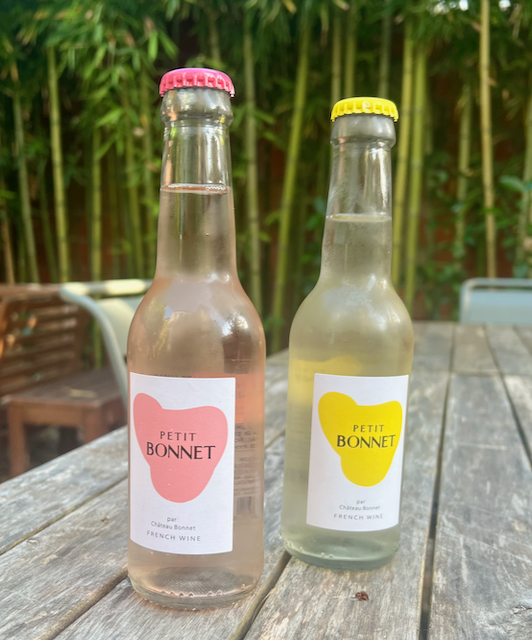
Mini 25cl bottles with a cap inspired by beer bottles, but much cuter, with bright pink and sunny yellow crown caps and labels that capture the summer vibe. An elegant and delicious addition to any picnic from Château Bonnet in the Entre-deux-Mers. A modern take on a Bordeaux classic.


Petit Bonnet on the move

Blanc de Noirs 

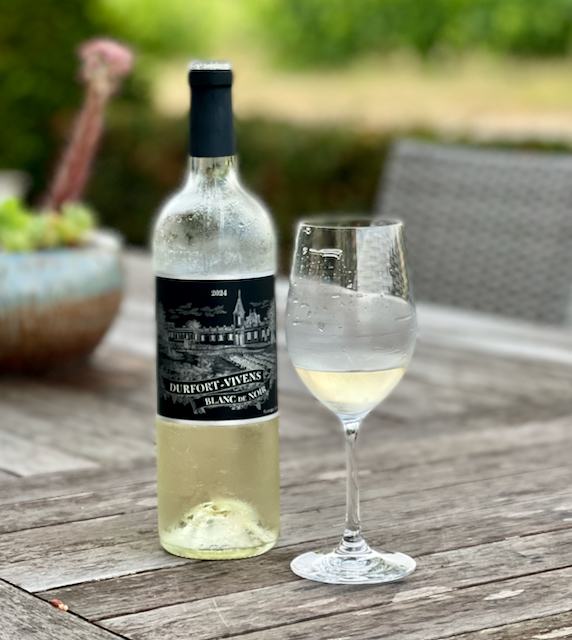
I suggested  two ‘blanc de noirs’ in last year’s summer round up, from Chateau de la Dauphine and Chateau Paloumey. I’ve found another one to add to the list. This Blanc de Noirs is from Château Dufort Vivens classified growth in Margaux. It’s an unusual blend of 50% Cabernet Franc and 50% Muscadelle and, as such, of course it’s a Vin de France. Organic and biodynamic, as you’d expect from this dedicated to biodynamics and agroforestry.  

Blanc de noirs from Margaux

Red, red, red 

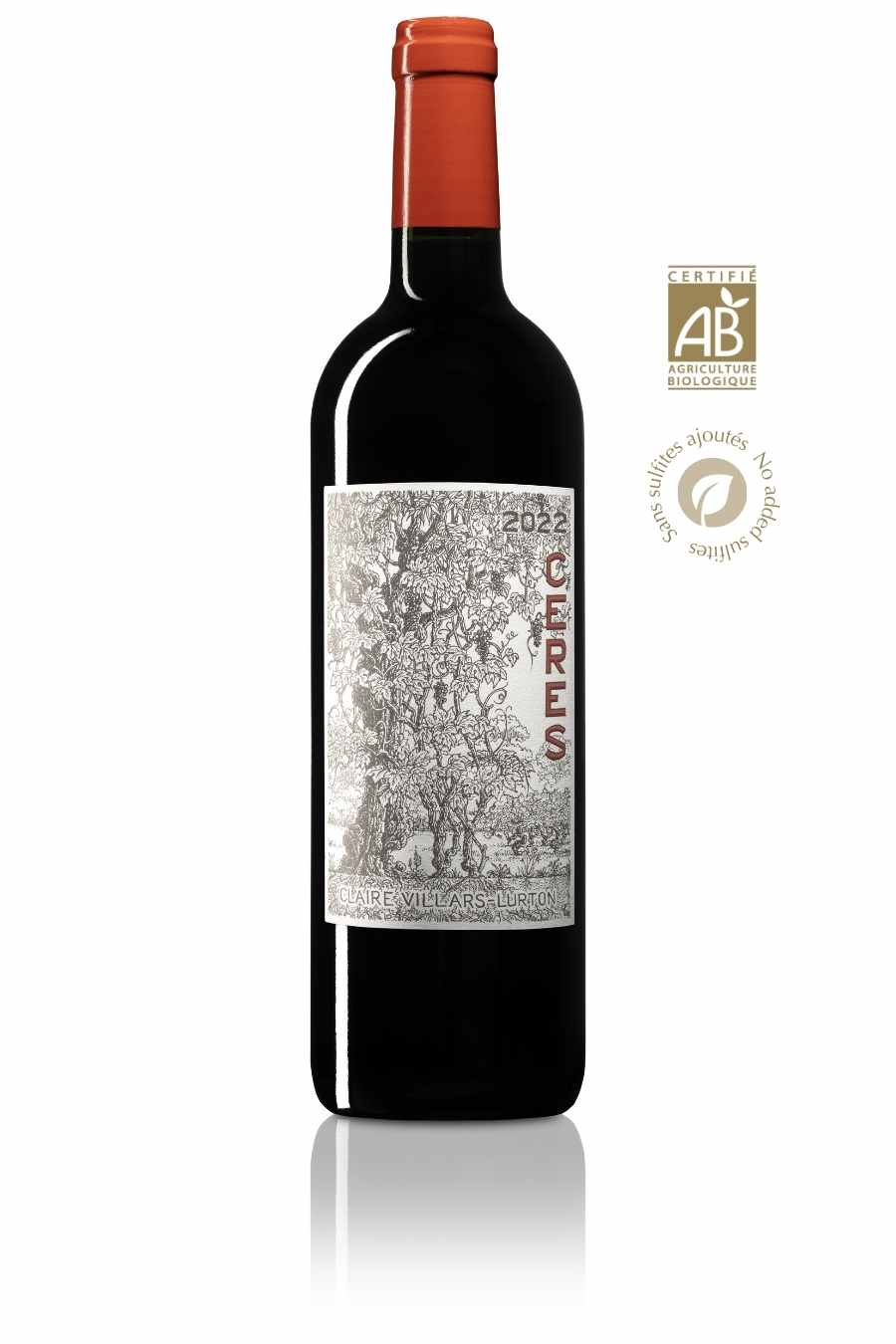
I discovered the blanc de noirs above at Château Haut Bages Liberale in Pauillac. The owners of the two properties are spouses, so they’re keeping it in the family. Château Haut Bages Libérale is also an excellent source of rosé from an 8ha plot of Haut-Médoc vines. From this same plot, owner-wine maker Claire Villars Lurton produces a 100% Merlot with no added sulphites. Bright and fruity, this one is to drink now, slightly chilled, it’s perfect for summer. Certified organic and managed in agroecology it’s called CERES after the Roman goddess of agriculture and fertility, The gorgeous label (I do love a good label) is signed by landscape artist François Houtin, and shows an ancient vine climbing up an old ash tree. 

A naturel red from Haut Bages Liberale

Sweet 

Another no-added-sulphur wine, in a completely different style: 

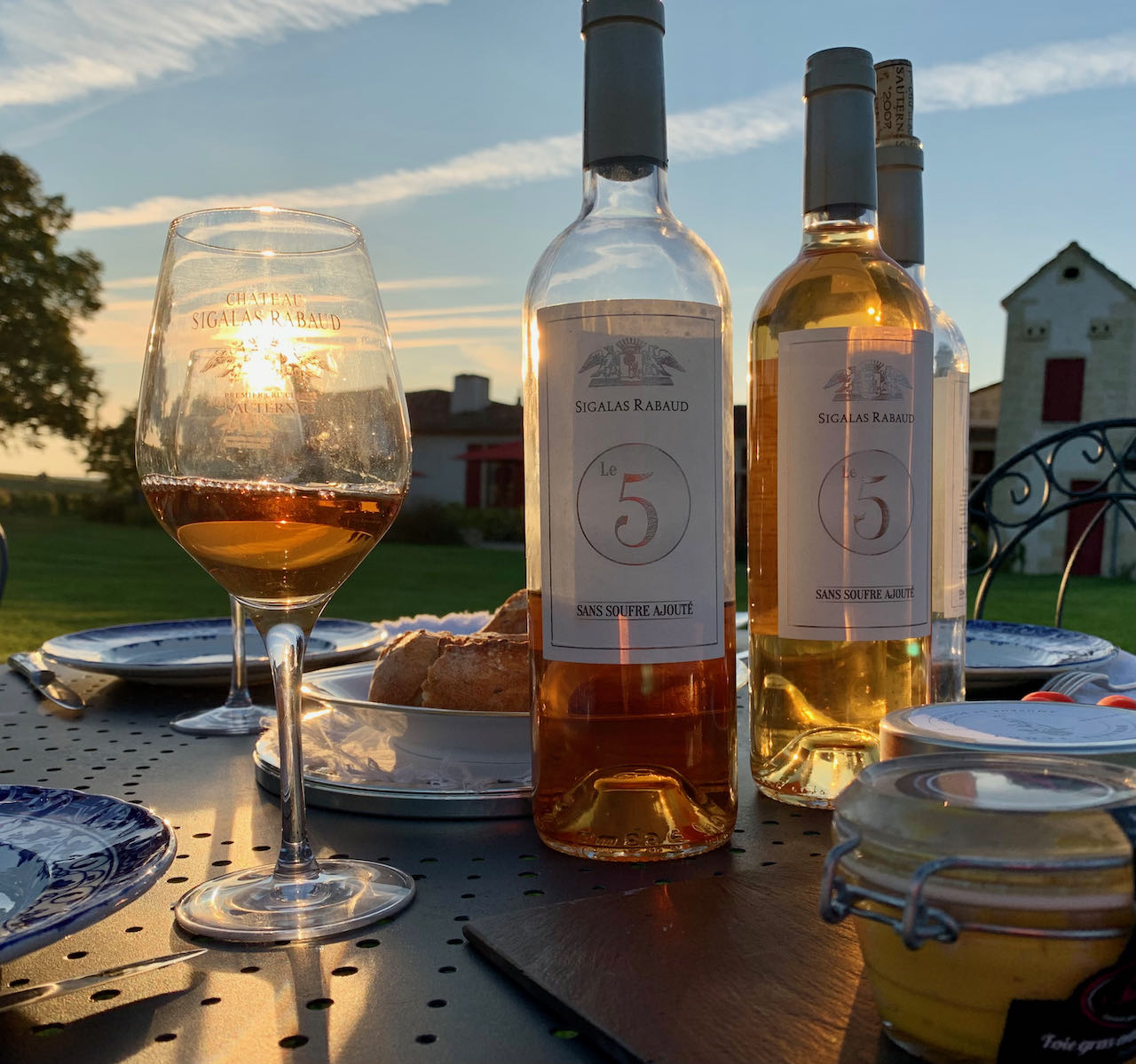
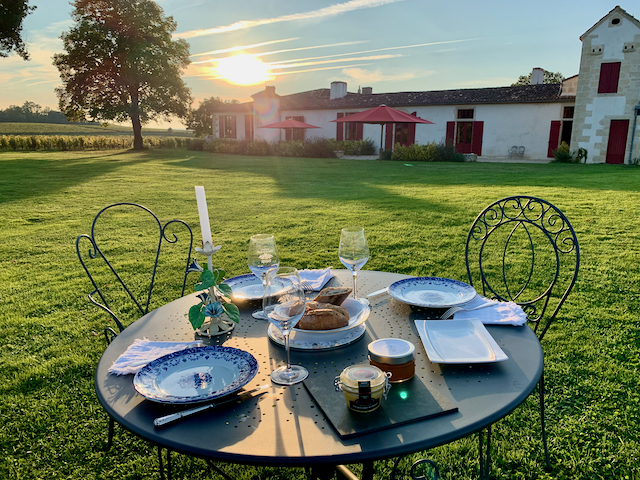
Le 5 from Château Sigalas Rabaud, classified growth of Sauternes. A semi-sweet, deliciously fruity wine, perfect as an apéritif. Owner-winemaker, Laure de Lambert serves it with a couple of ice cubes and a twist of orange peel. The perfect Bordeaux cocktail. 

Keepping in sweet and sulphur free at Château Sigalas Rabaud

Rosé 

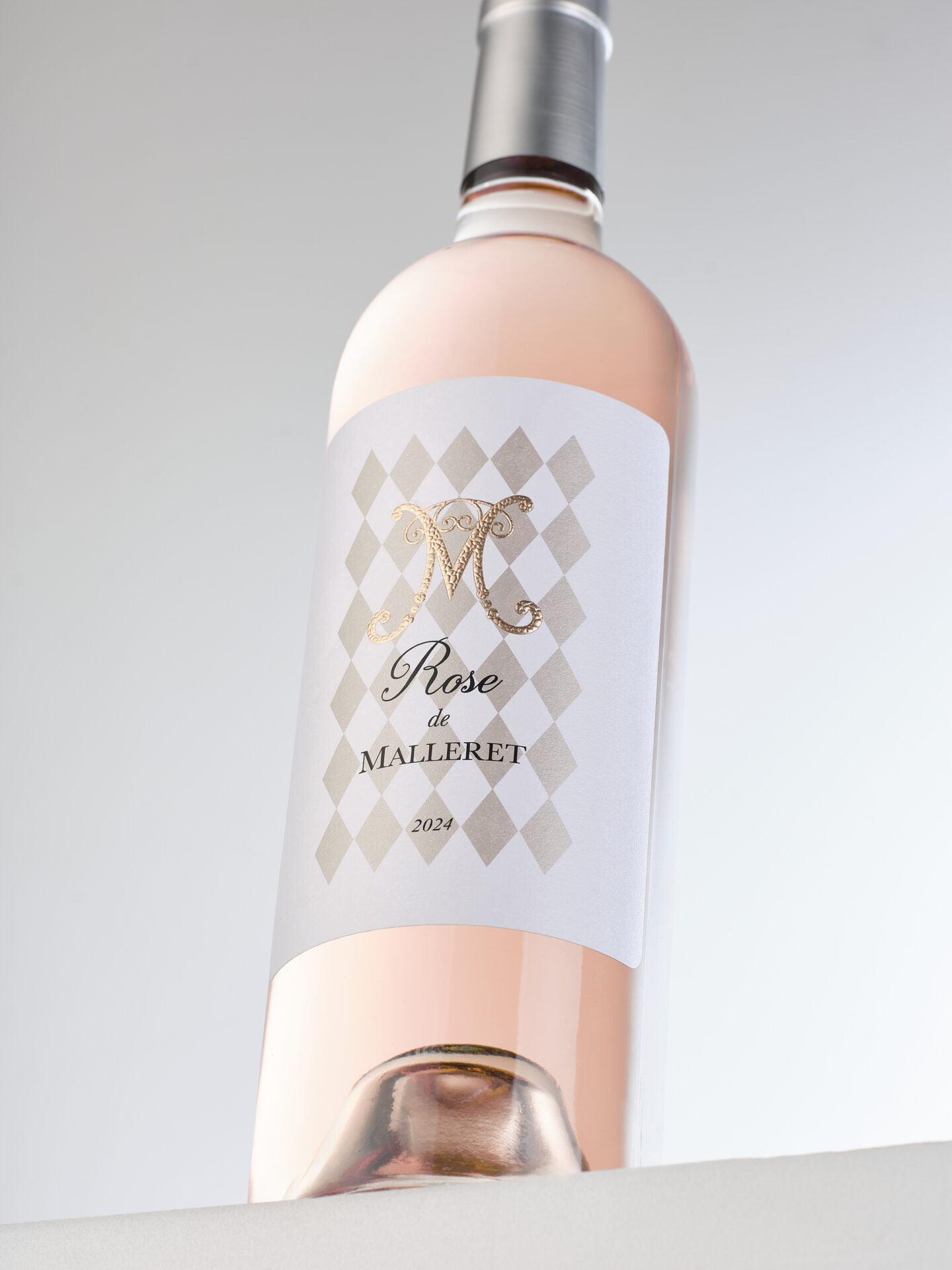
Another Left Bank rosé to add to your summer collection is the Rosé from Château de Malleret.This Cru Bourgeois Exceptionnel in Haut-Médoc also produces a delicious white alongside it’s classic reds, including a tiny production of Margaux. The 2024 Rosé is an original blend of 50% Petit Verdot and 50% Cabernet Sauvignon.

A light an bright new rosé from Château Malleret

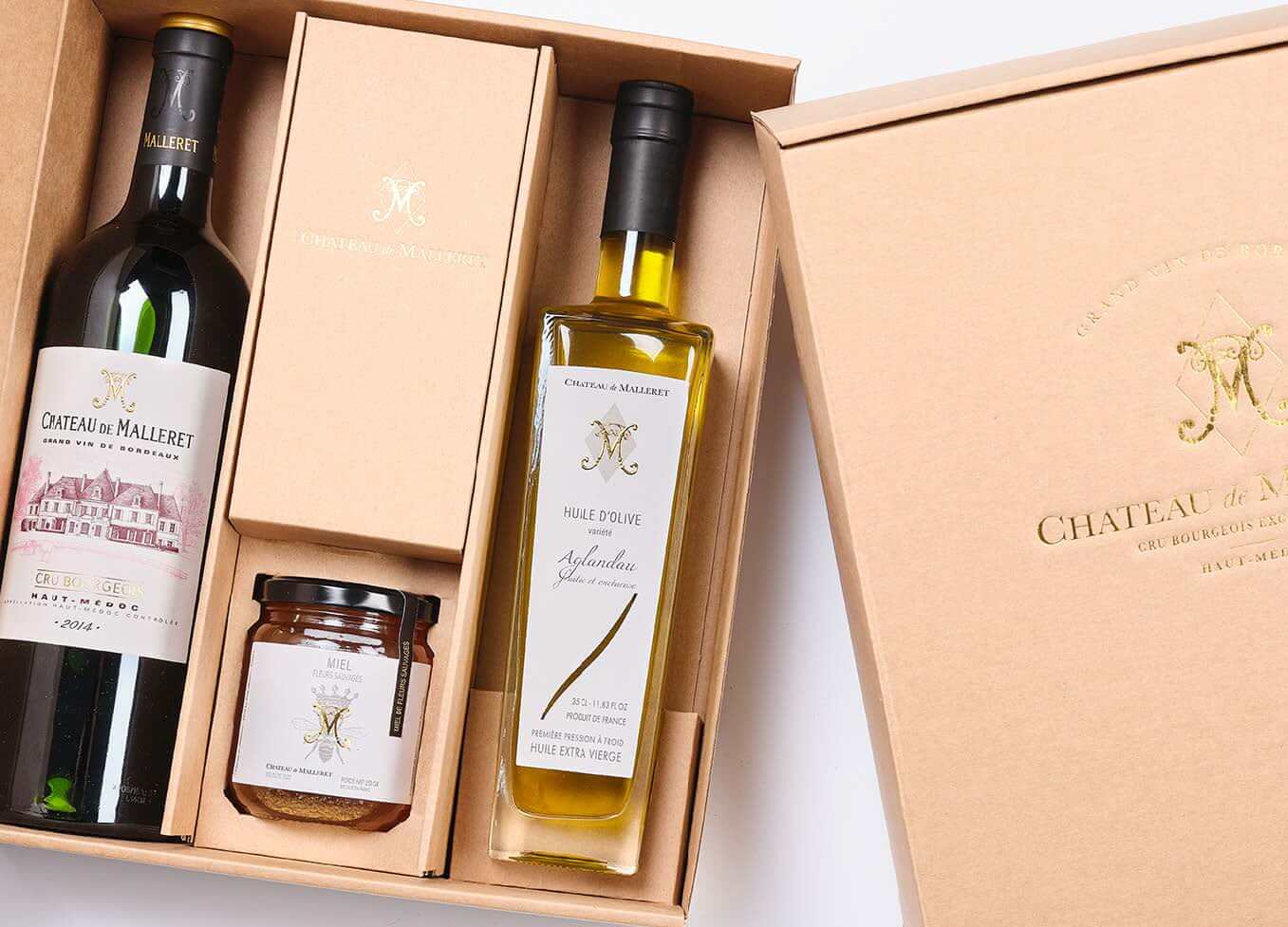
If you’re calling in – and you really should the cellars are stunning – pick up some olive oil made from their own Olive trees. In true Bordeaux style, it’s a blend of Aglandau and Clermontaise Olives with a touch of Cayon and of course, it’s vintage.


Wine, olive oil and honey all Château de Malleret

A sparkling Summer  

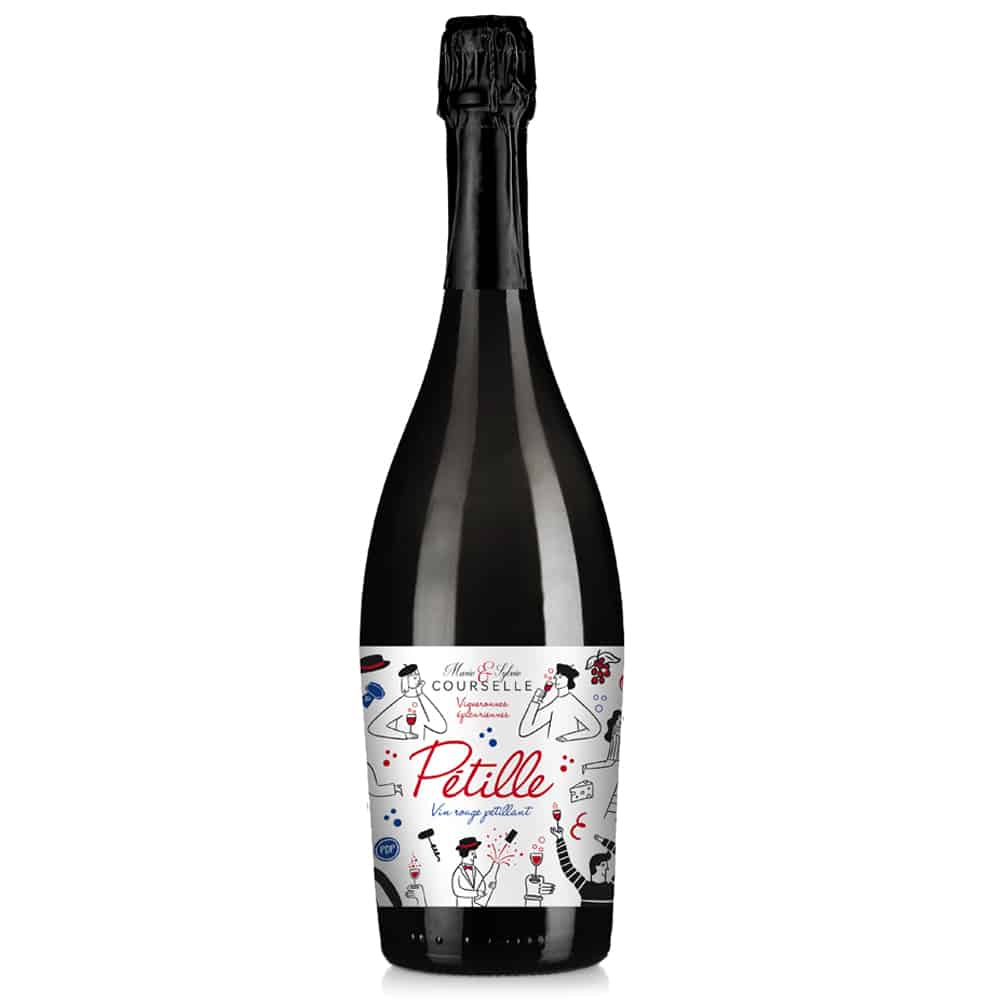
Crémant, of course (my new favourite is the Blanc de Blancs from Château Bauduc – I’m very fickle)  but here’s one with a difference. The ever-inventive Courselle sisters at Château Thieuley have an original summer red (part of their wide range). I’m already a fan of their Crémant de Bordeaux and their Petille, a sparkling 100% Merlot red, is made using the same ‘méthode traditionnelle’. Sold as Vin de France Rouge Petillant, it’s aged on its lees in bottle for 12 months. Bordeaux’s answer to Lambrusco? Perhaps – but drier. Slightly chilled, it’ll add an original sparkle to your summer. As far as I know, it’s the first (only?) red ‘méthode tradtionelle’ made in Bordeaux’.  

Ca Petille Red

Half Juice, half wine

Yet another innovation from Marie and Sylvie Courselle responds to the demand for lower-alcohol wines. Tendre Sauvage is 100% Sauvignac, a cross between Sauvignon, Riesling and Vitis, resistant to Mildew and Oidium, reducing the need for treatments and their carbon footprint. Just 8 %, alcohol, but 45 g/L residual sugar, as they use cold to halt the fermentation. Slightly sweet, fruity and fun, the packaging is a nod to their Sauvage range.

A low alcohol version of Sauvage for summer

Boxed in

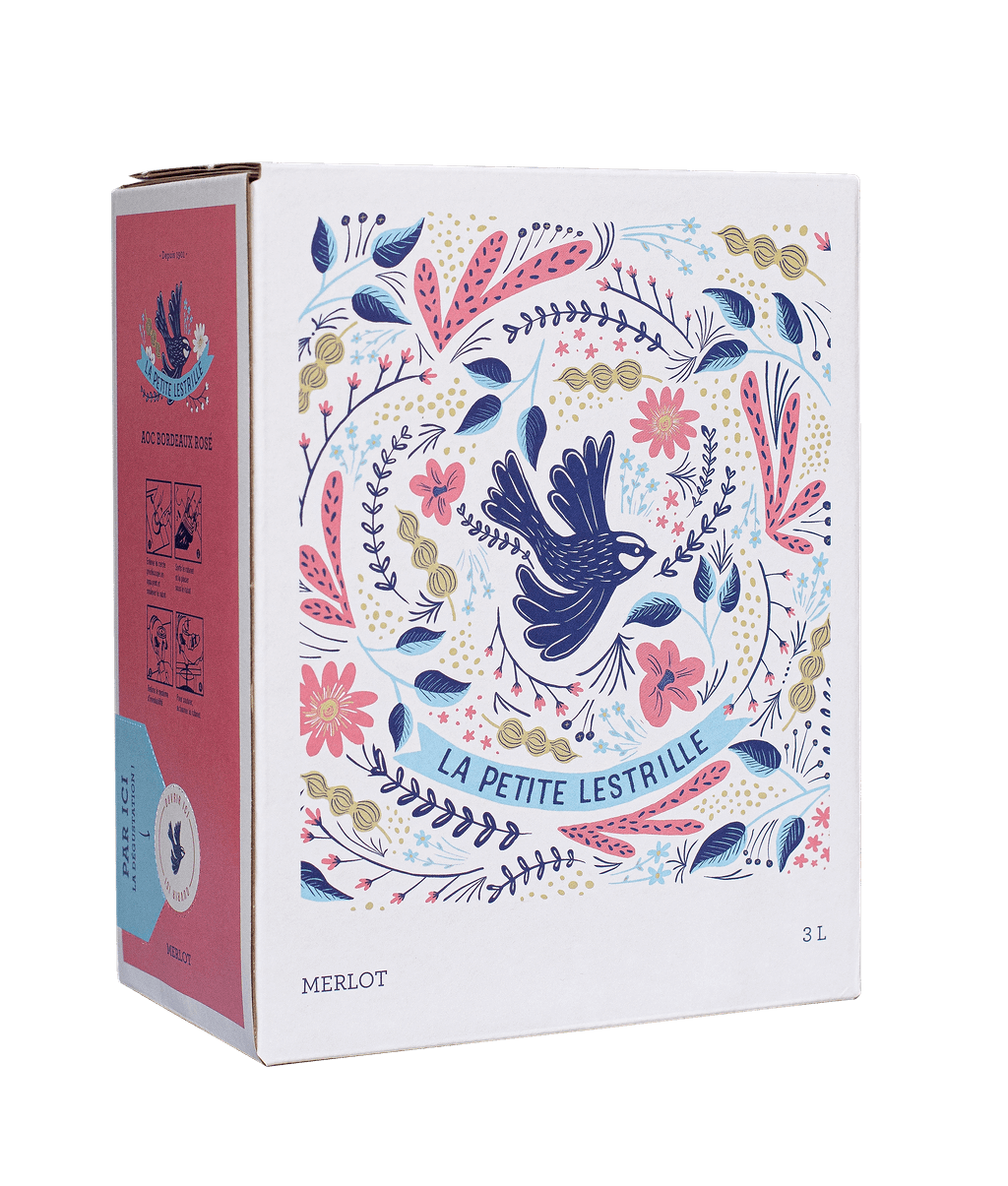
I do love a box of chilled rosé on tap in my fridge for the summer, light to transport, with a low carbon footprint and convenient to pour. My favourite BIB Rosé remains La Petite Lestrille from Chateau Lestrille in the Entre-deux-Mers. The 2L boxes have a summery design that perfectly reflects the eco-credentials of the estate. 

BIB rosé from Château Lestrille – a summer staple

Cheers to a beautiful summer – do let me know what Bordeaux you’re drinking. 

Thanks for reading, please feel free to share with anyone who might be interested in learning more about Bordeaux. Sign up here to receive future posts directly to your in box.  . You can learn more about Bordeaux with the new Green Edition of Bordeaux Bootcamp, and explore Wine and Wellness, with  The Drinking Woman’s Diet   or say hi  here.

And as you’re asking, that’s a picture of the Atlantic Ocean off the Médoc coast.