California with an Italian Accent 

California with an Italian Accent 

I’ve recently returned from California wine country, ostensibly to research Bordeaux wine makers who have invested there. I came across a little known gem that of course, dear readers, I’m happy to share with you.

If you think of Napa, you probably think of Cabernet. Big bold Cabernets have put Napa on the map, 78% of Napa vineyards are planted with red varieties and of that, 51% is planted with Cabernet Sauvignon. 

Of course, there’s more to Napa than Cabernet, there’s over 30 different varieties in all. But Sangiovese? There’s very little, less than a half of 1% of the plantings. As Claire Tooley brilliantly outlined in her Decanter article last year, it’s a surprisingly low percentage given the role Italians played in the history of Californian wine.

Sangiovese is the ‘noble’, versatile grape of Chianti and Brunello, characterised by fresh acidity as well as the more powerful Brunello di Montalcino and as part of “Super Tuscan” blends. In Napa, its expression tends to be more powerful than in Chianti. Its fresh acidity and lower-alcohol levels could become more and more interesting with increasing temperatures. These lighter, brighter wines and chillable reds retain their acidity even in heat spikes.
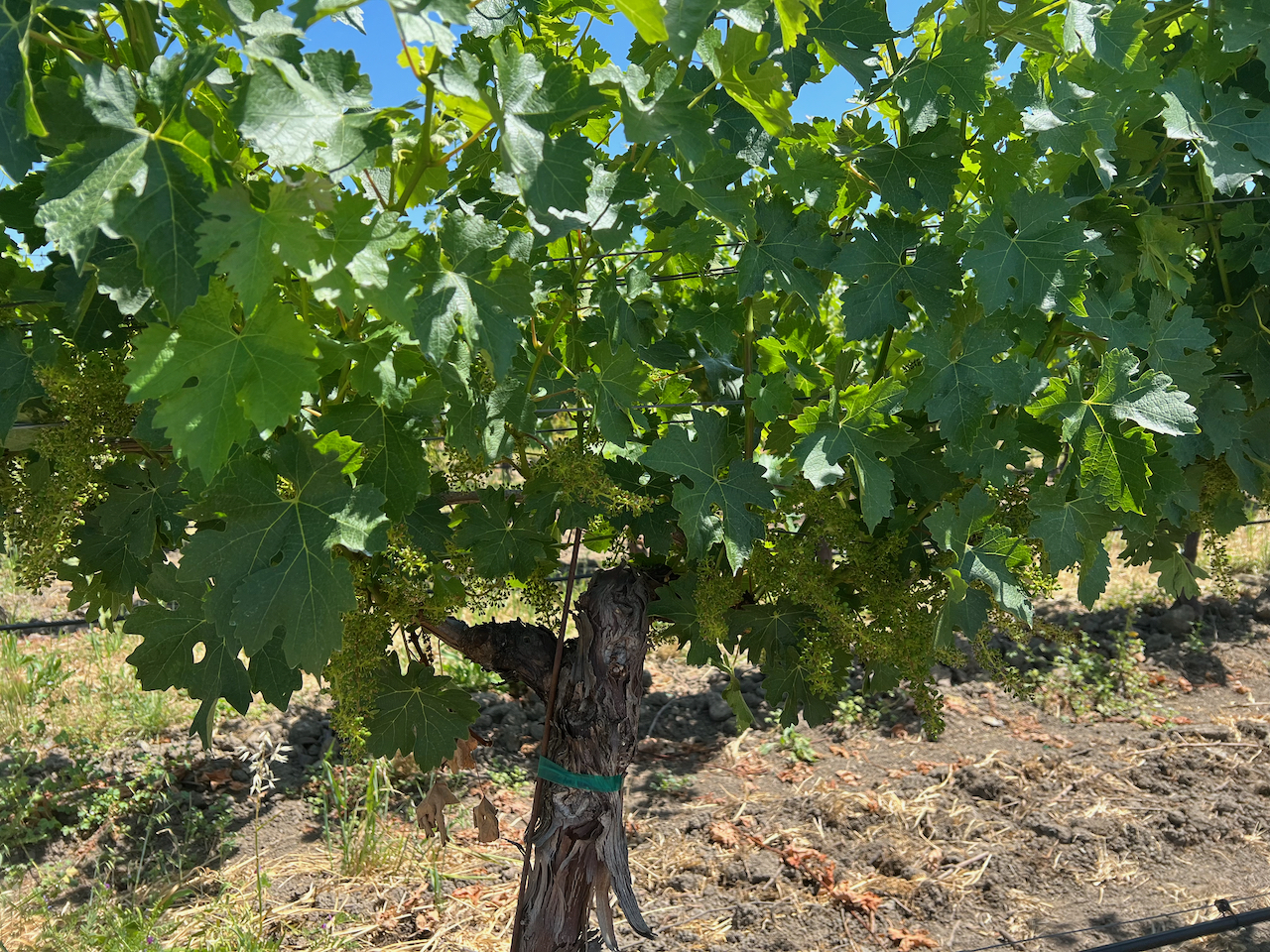
Villa Ragazzi Cabernet in flower this June

Little Italy 

In the 1980s, Michaela Rodeno and her late husband, Gregory visited Italy to trace Greg’s Italian roots. Gregory was a lawyer and Michaela was already making waves in Napa as VP Marketing for Domaine Chandon. It was Greg’s Piemonte ancestry that inspired them to try and plant some Italian grape varieties back in Napa. 

The Rodeno Clone

Initially, they tried to find some Nebbiolo budwood but to no avail. Luckily they stumbled upon an excellent, if undocumented, Sangiovese clone in a post-Prohibition vineyard. It thrived and the Rodeno Vineyards became home to the first Sangiovese grapes in the Napa Valley.  
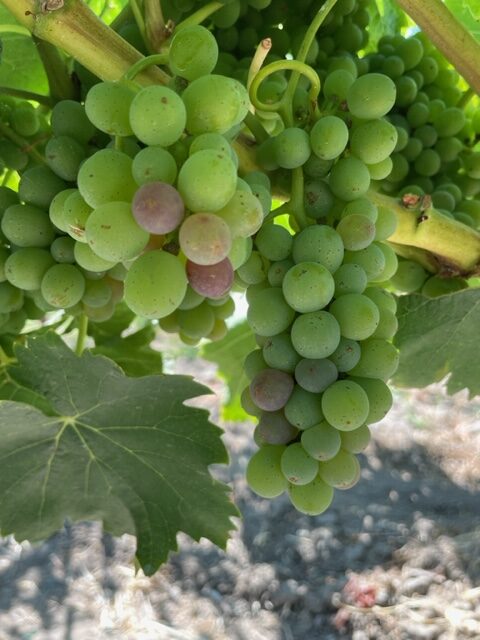
Sangiovese at the start of veraison late July 2023 after cool, wet spring.

Wine sense

Michaela is one of my Napa Heroines. In 1990, with Julie Johnson, she created Women for Wine Sense (WWS) to counter the anti-alcohol lobby with the premise that through education, a better understanding of wine leads to more responsible consumption. WWS now has a network of 10 chapters through the US and their charitable arm sponsors wine education for women in the industry.

Micheala Rodeno and the Rosato di Sangiovese from Villa Ragazzi

Michaela Greg arrived in Napa in the 70s, the early days of the Napa wine renaissance. Michaela knew little about wine except that she loved it, following her junior exchange year at Bordeaux University of all places. Her Masters in French literature allowed her to teach at Davis for a while and then Napa College. She had wine makers in her class and was a part time tour guide at Beaulieu so it was only a matter of time until she joined the wine world. 

When she read about a French company investing in Napa she thought she could be useful – she was. She became the second full time employee of Domaine Chandon. The rest is Napa history, as her ‘accidental career’ in wine lead her from Domaine Chandon to CEO of St. Supéry – both major players in Napa.

Villa Ragazzi was named after their children, who still lend a hand. Their first vintage was produced on a rocky hillside, from scrawny-looking but healthy vines. The wine was made in the family barn, with the help of friends and with a borrowed portable stemmer-crusher. It remained unfiltered as they couldn’t find a filter to borrow. It was aged in used French oak barrels and, eventually hand bottled and labelled with Charles Thomas as Villa Ragazzi’s original (volunteer) winemaker. Familiar Napa names such as Celia Welch, Nate Weis, Melissa Apter all lent a hand as, back then, unskilled main d’oeuvre. Today Bob Pepi continues to vinify. 

After the 1998 vintage, the vines were hit by phylloxera, but all was not lost. They rescued cuttings and created their Rodeno clone, all the Villa Ragazzi Sangiovese wines have since been made from that same clone.
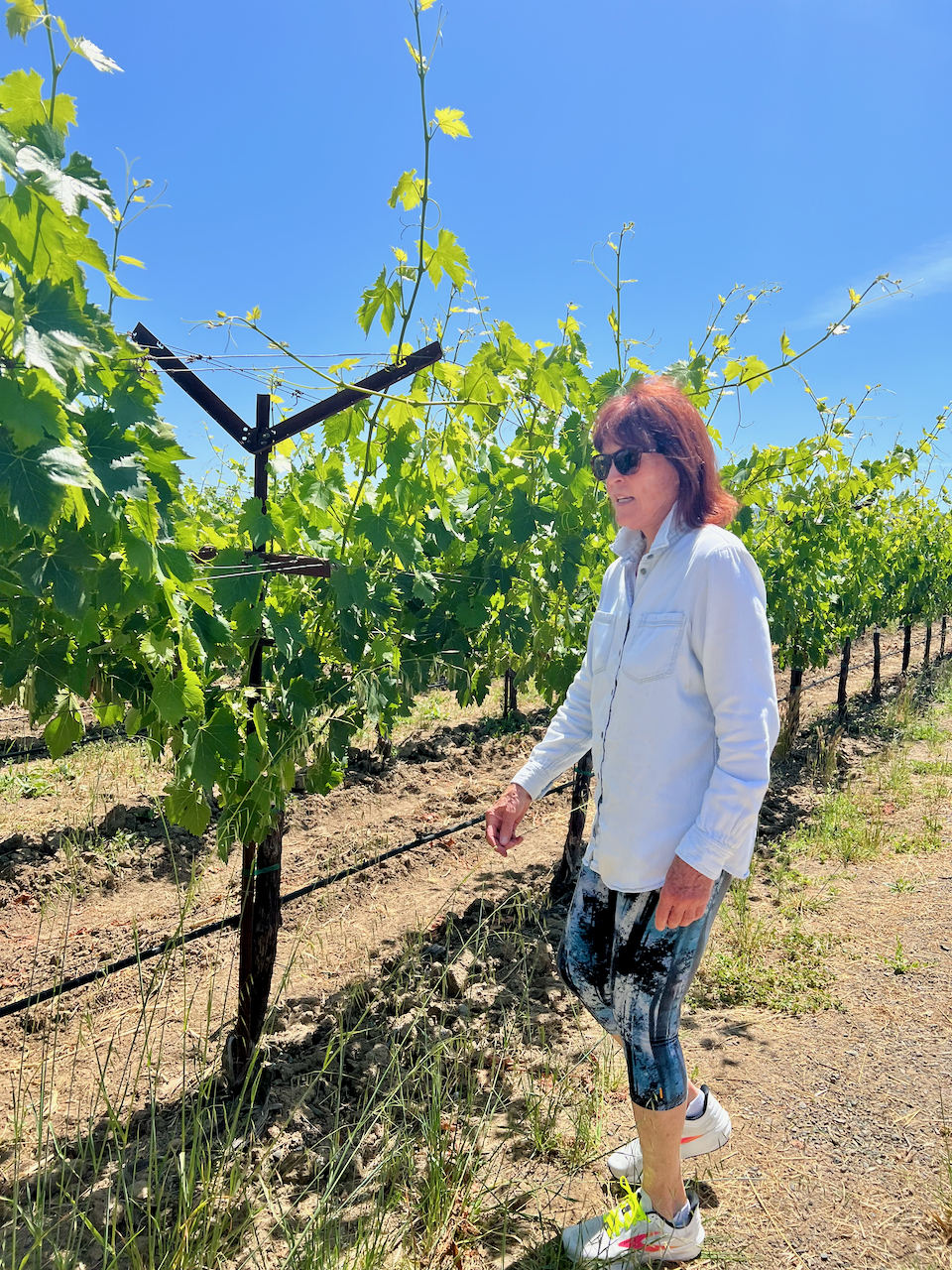
Michaela in the vines of Villa Ragazzi

Ten years after replanting in Oakville, they had enough grapes to start making wine again. The clone is important, but so is microclimate and viticulture. The Ragazzi yields are low, the vines mature slowly on the well-drained soils and the small berries maintain the signature fresh acidity of Sangiovese. 

Villa Ragazzi is focused on protecting the fragile Napa environment. Although they don’t advertise any green credentials on their labels, they are certified Fish Friendly Farming. They use compost, cover crops and low to no till farming to improve soils and lightweight, and whenever possible, recycled bottles and natural corks all helping reduce their carbon footprint  

Range 

As well as their full bodied, 100% Napa Sangiovese, the freshness of the variety lends itself to rosé. Their Rosato di Sangiovese has the classic crisp acidity of the  variety. The grapes are picked early to produce a pale dry rosé wine with just 11.4% alcohol. 
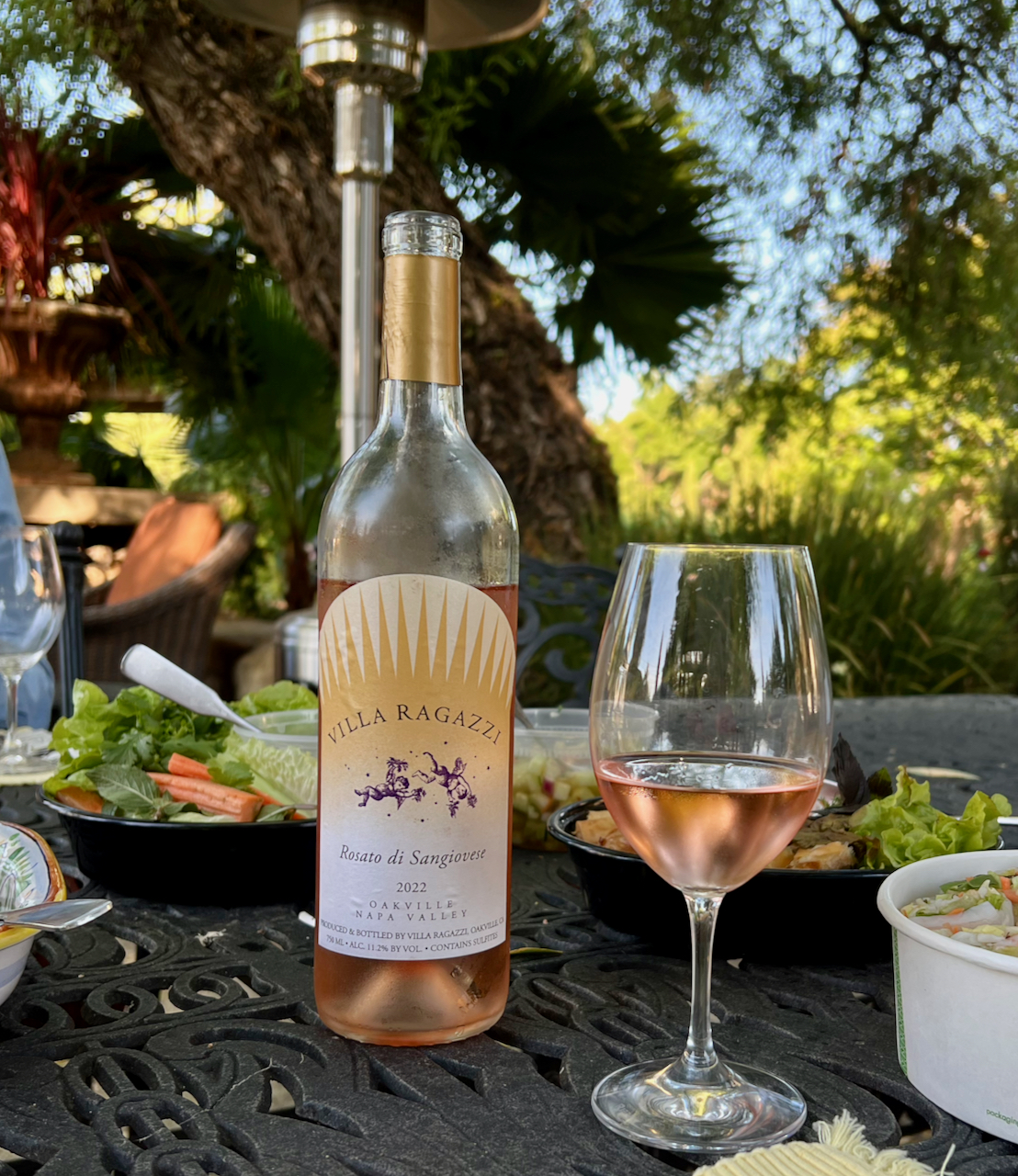
Perfect summer drinking from first hand experience

Their top wine Faraona is their take on a super Tuscan. It’s a Sangiovese, Cabernet Sauvignon blend thatchanges every year depending on how the wines marry. Cabernet has been as high as 25% without overwhelming the Sangiovese, and as low as 8% (2018).
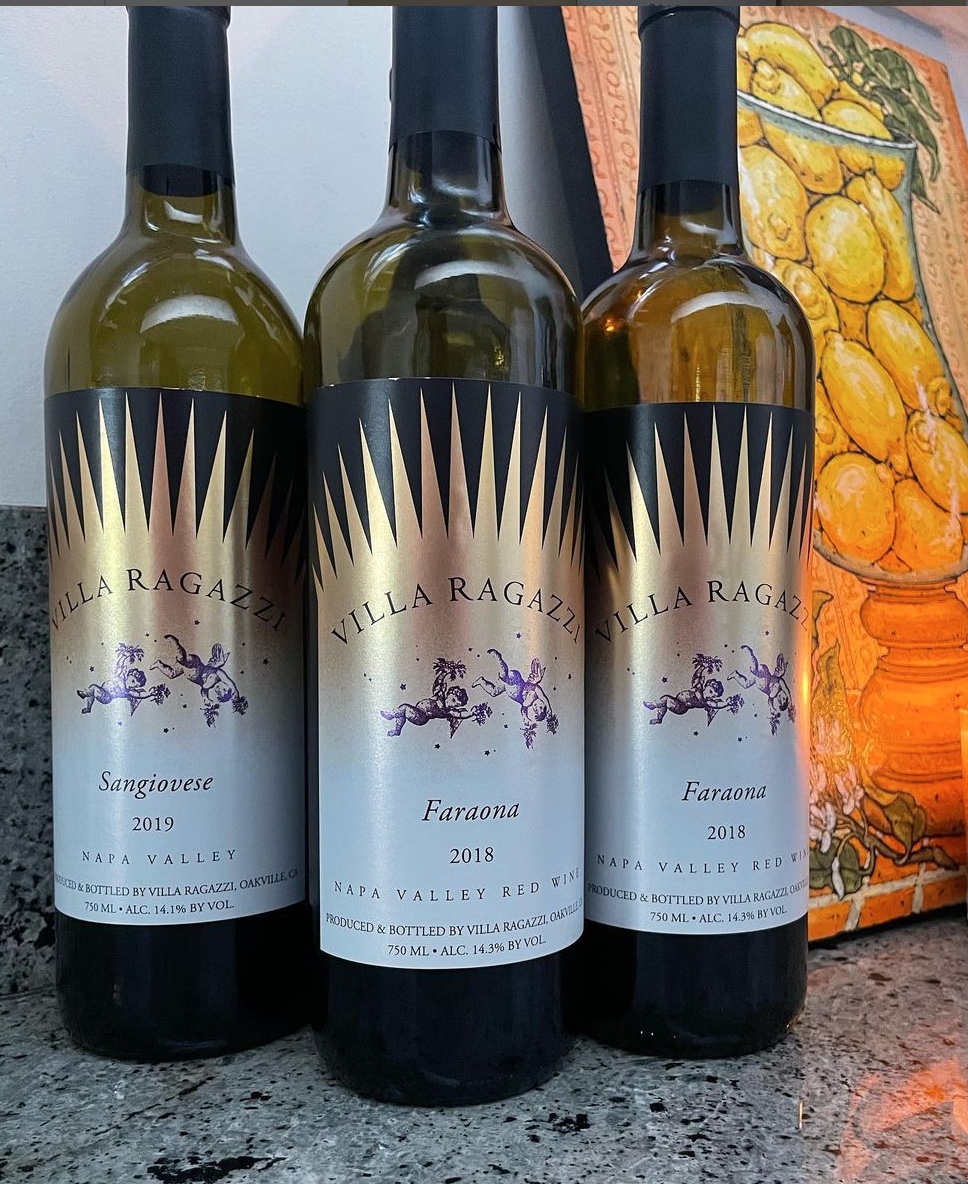
Faraona and the Sangiovese from Villa Ragazzi

They produce around 40 cases a year of this wine, aged for French oak for 15 months, has more weight and a darker colour but is still dominated by the Sangiovese character.  

Rating   

I’m not the only who rates their wine, as early as 1993, Piero Antinori himself described their Sangiovese to be one of the very best expressions of the grape from around the world at the time. The Villa Ragazzi 2012 Sangiovese was served at the Obama family’s final White House state dinner for guests of honour Italian prime minister Matteo Renzi and his wife. 

Californian, but with an Italian accent.
 

Learn more about Bordeaux, with Bordeaux Bootcamp and cultivate your healthy passion for wine with the  Daily Detox webinar,  The Drinking Woman’s Diet  book or 7 weeks to a Liver friendly Lifestyle. 

Napa, it’s personal ….

From Guest contributor Clare Tooley.

Blogs are meant to be personal but I have a feeling this one should probably come with a health warning: ‘DANGER, winelover falls head over heels’. My brief encounter with the Napa has left me a little breathless and greatly inspired. It has provoked an emotional response which I express here, warts and all, in the knowledge that I will return to the hard facts, figures and entirely serious analysis MW-style all too soon.
This therefore, is but a snapshot of visits I made over a desperately short 3 days. Thanks to the overwhelming generosity of the people I met during my visits, I have a full notebook of study facts for which I am extremely grateful. The impressions below are snippets of my thoughts as I left the valley and record the visits in the order in which I made them.
I live and work in a very beautiful wine region, on the banks of Bordeaux’s Dordogne river. And although I never take it for granted, often finding myself stopping the car on my way to work to take photos of the vineyards (I have literally 100s of them), you would have thought I would be used to beauty. Napa however, got me; hook, line and sinker. It had me at its ‘WELCOME’ sign.

Welcome

A total coup de foudre. How could it not. It was entirely irresistible in its autumn majesty.

Flamingo Tree

Flamingo trees, vineyards burning bejewelled – no real fires thank goodness despite the tinderbox dryness, but row after row of incandescent ruby, pumpkin orange, saffron yellow and luminous gold. My jaded jetlagged eyes were irradiated by the glory – no photo could ever have done the colours justice.
I began at Spottswoode, welcomed by Beth Novak Milliken in the early evening dusk, a haven of gentle homeland hospitality. I patted beautiful dogs and watched them chasing squirrels up a tree. I met Aron and Landon, level-headed winemakers, immensely calm in the face of my incessant questions. Their pursuit of balance is evident in everything they said and in the wines themselves. And so fundamentally modest – 100 points recently awarded from Parker was the very last thing I learnt about the 2010 Spottswoode Estate Cabernet Sauvignon, not the first. How immensely thoughtful to allow me to discover the wine for myself, enjoy its inherent freshness, velvety tannins stretched taught across it black fruited spice and piquant vanilla core, before letting on that Bob happened to rather like it too!

The following morning saw me framed at Raymond. This is indeed a winery experience like no other.

Raymond Vineyards frames.

Visceral, playful, not exactly shocking, quite, but distracting to old European eyes in its labyrinth of sensual rooms. The herb garden introductory walk is a stroke of genius. I wandered past trapeze-swinging mannequins, space-suited wannabe winemakers, dog kennels for the beloved pooch, red velvet saloon and leopard skin print carpets, barrel libraries and crystal chandeliers, glass in hand tasting immensely seductive, sweet-kernelled 2012 wines  from the St Helena, Rutherford and flagship Generations blend. Well, you try explaining it!! And isn’t that entirely the point; Raymond is all about you, your pleasure, your enjoyment, your fun, just as it is all about Jean-Charles Boisset and his vision. Mutual joie de vivre, mutual gratification, mutual respect.

All that hedonism drove me up the tree-lined avenue to Opus One. Back to Bordeaux? Yes and no. Queenbee-hive like attracting and welcoming swarms of visitors, I was one of at least 50 in the 2 hours I spent there. The experience here is one of supreme elegance, smooth as silk, both opulent and restrained, both grounded and ethereal, and the 2007 and 2010 vintage wines I so enjoyed and respected there, reflect their surroundings perfectly. As David Pearson says, Opus started with no canvas, no estate, no vineyard. It was therefore entirely up to the owners to be free to chase an ideal, it still is, and though now grounded in land and beautiful bricks, there is a feeling that it has arrived exactly where it was heading. How philosophically brilliant, what a feat of grand vision, but no less than to be expected from such men as its founding fathers Robert Mondavi and Baron Philip de Rothschild.

I climbed the mountain to Chappellet as evening fell once again. The view from the vineyards overlooking the lake, drawing the eye to Mount St Helena at sunset is nothing short of soul food.

Chappellet Sunset

There is peace to be found here. This is a place of kindness and beautifully concentrated, layered wines, sweet spice and pure fruit. I love the Chenin Blanc story, planted and made for Molly despite taking up prime valuable Cabernet Sauvignon territory. It embodies the concept of ‘Do it because you love it, create because you can, but whatever you do, do it well, do it beautifully’. I ended the day with the Pritchard’s Hill Cabernet Sauvignon 2009 which was savoury and lightly sweet-spiced, beautifully balanced and so very young and graceful still.

My last day took me to Inglenook. This is a place full of benign ghosts; I found it an overwhelmingly emotional experience. My host, the ultimate ‘raconteur’, Harold, took me on a 3-hour epic journey through time. I was spellbound by the passionate history of land gained, lost and regained, a name misplaced and now reinstated, a quality always inherent yet in need of rediscovery – a haunting tale. There is history here; families honoured, the past treasured. There is an exquisite eye for detail – just look next time at the wording on the cork of Edizione Pennino. There is power here, breath-catching and slightly overwhelming. I imagine that is exactly the feeling I would have if I met its owner, Francis Ford Coppola. The Blancaneaux is a powerful knock-out, Rubicon is a revelation, ‘a wine to talk back to’ as Harold neatly put it, engendering both dialogue and awed silence.

Inglenook wines

Talking of silence, then there was Bond – oh my, Bond. The line-up here literally left me speechless. The wines floored me in their complexity at first, then had me gabbling at my host Chris, grasping at stilted vocabulary to define, explore, explain, analyse, express. The wines resonate. So yes, this was special for me. Eyrie-like, private, a magical recess of rolling valley vineyards – Melbury, Quella, St Eden, Vecina and Pluribus – eclectic, evocative, powerful characters, profoundly pure expressions of fruit, seamless and timeless tannins. One is gentle, one explosive, one insanely opulent, one utterly charming the other vibrantly headstrong. Gabbling and grasping as I said …
I left the Napa believing that what I had tasted and seen was winemaking reflecting total ownership. Land, climate, soil, water, varietal, all the elements of that hallowed ‘terroir’ word are honoured here, but there are no slaves to it. This is no European stewardship, this is the land of the free. It strikes me that the Napa is doing exactly what it wants to do. I was expecting some emulation, I was expecting to recognise profiles, enjoy the ‘l’hommage a’, compare to elsewhere, but what I experienced was total individuality. What I tasted was intensely personal, owned, defined, motivated by the pursuit of ephemeral old world excellence, but transcending any formula and going well beyond the established benchmarks. And it’s refreshingly, not just about the wines and their owners. It’s about you as well, your personal experience is important. The privilege of visiting and tasting is reciprocated in the Napa. What I know for sure is that the places I visited and the wines I tasted are wines to fall in love with, they are special and the rest of the world needs to know more about them.

Follow Clare on twitter @ClareT_y

More close links between Bordeaux and California

Vinexpo seems a way away now a couple of months down the road but a reminder recently arrived on my doorstep.
One of the pleasures of Vinexpo is to be able to taste wines from all over the world and California was well represented for a region whose wines are under represented in the French market place. The Napa Valley Vintners had not just a great stand but also ran a fascinating seminar presenting the results of their research into the reality of climate change in Napa and its effects on winemaking practises. Not that anyone dared say they were climate change deniers but there was definitely an undercurrent that wine style was affected a lot more by agricultural and wine making practise than by any inherent change in the climate. Not dissimilar from what we hear from a lot of producers here in Europe. we have more in common than it would seem.
Yes there is some rising in temperature but nowhere nearly sufficient to explain the rise in sugar levels over the same period, so global warming cannot be blamed for the rise in alcohol levels to such dizzying heights as we are seeing in many regions and not uniquely California.
These high levels of sugar and hence alcohol are explained much more by agricultural decisions, from trellising to planting densities and the all-important picking date. This trend is a response to market demand, despite what some of us more traditional consumers from the old world might think, there is a huge demand for wines with lots of fruit and high alcohol levels in many markets, not least the USA and of course the power points awarded by some critics that can make or break the market for these wines. What producer wouldn’t respond to such market pressure?
Please will the consumers out there that prefer ‘drinkability’ stand up and make themselves heard so producers will respond to their legitimate demands too?

The reason this was brought back to mind was a wonderful surprise from friends at Ponzo vineyard.

Not from Napa but nearby Sonoma, Phil and Barbara Ponzo grow grapes in the beautiful Russian River. They supply several local wine makers for their single vineyard wines; Nickel and Nickle, and Hawley amongst others.
I met them thanks to the dynamic Susan Graf, stylist to all the lady winemakers of Sonoma County. As well as a full time job as a style icon Susan helps run the Healdsburg Food Pantry charity and mutual friends, Jim and Sally Newsome, bid on a wine tour with me and brought along their fellow wine growers the Ponzos to discover how we grow our grapes in Bordeaux in a viticultural ‘compare and contrast’ week.

The Newsomes and the Ponzos at a tasting lunch in the new dining room
at Château Troplong Mondot

After a week of sipping Bordeaux with them the tables have turned, a case of their wines has arrived for me and it’s my turn to taste some of their Sonoma wines – tasting notes to follow when I surface!

A line up of Ponzo single vineyard wines ready for tasting

Cabernet and Chocolate

The Cabernets from Napa are just like the wonderful women who hosted us for the Wine Entre Femme symposium last weekend: Big, Bold and Beautiful!
It has been said, especially by Europeans, that these wines are difficult to match with food but I beg to differ – they are the perfect match for chocolate and I’m not the only one to think so.
Included at lunch in the spectacular cellars of Harlan Estate, hosted by Vineyard Manager Mary Hall Maher, were a selection of chocolates from local St Helena Chocolatier Woodhouse in their characteristic Tiffany blue boxes.
Jane Balentine had the same idea after an amazing Lobster Feed in the cellars at William Cole Vineyards. Chocolate cupcakes and dainty chocolate drops were on the menu.
Could chocolate and Cabernet be the perfect Valentine match?

Woodhouse chocolates – there’s more to Napa than Cabernet

Pearly whites

So I have been tasting all these wonderful Napa Cabernets all weekend but these big young wines don’t do much for my sparkling smile.
So following the advice of my Californian counterparts I tried the new wine wipes www.winewipes.com. Rubbed on your teeth they have a rather revolting flavour of bicarbonate but it’s a small price to pay for a beautiful smile. Stock up now for the April primeur tastings.

Lipstick on my wine glass

Tasting with Reidel glass expert Sylvie Laly in Napa this morning I learnt how to remove those stuborn lipstick stains from the rims of those lovely crystal glasses. Wipe them with a wet wipe before popping them in your glass washer. Easy!

Round three of Wine Entre Femmes

2010 is the third year of the collaboration between women wine makers and marketers in Bordeaux and Napa. 2008 saw the Bordelaises invited to Napa to discover their wine making and marketing secrets of success. 2009 was the return match hosted in Bordeaux and this year Bordeaux is going back. However things have changed : women wine makers from around the world will be joining us from Argentina, South Africa, Japan, Switzerland and Turkey.
Members of the trade and the press are invited to sample these wines from over 45 different women wine makers want to know more contact wineentrefemme@comcast.net