Wine tourism to the rescue ? 

A week in Bordeaux with global wine tourism leaders was the most uplifting time I’ve spent with wine industry professionals for a while. Despite current pressures on the industry, the atmosphere was optimistic, with a joint sense of purpose around positive actions wineries can take. Good to know that despite the current morose climate, wine is not a lost cause. 

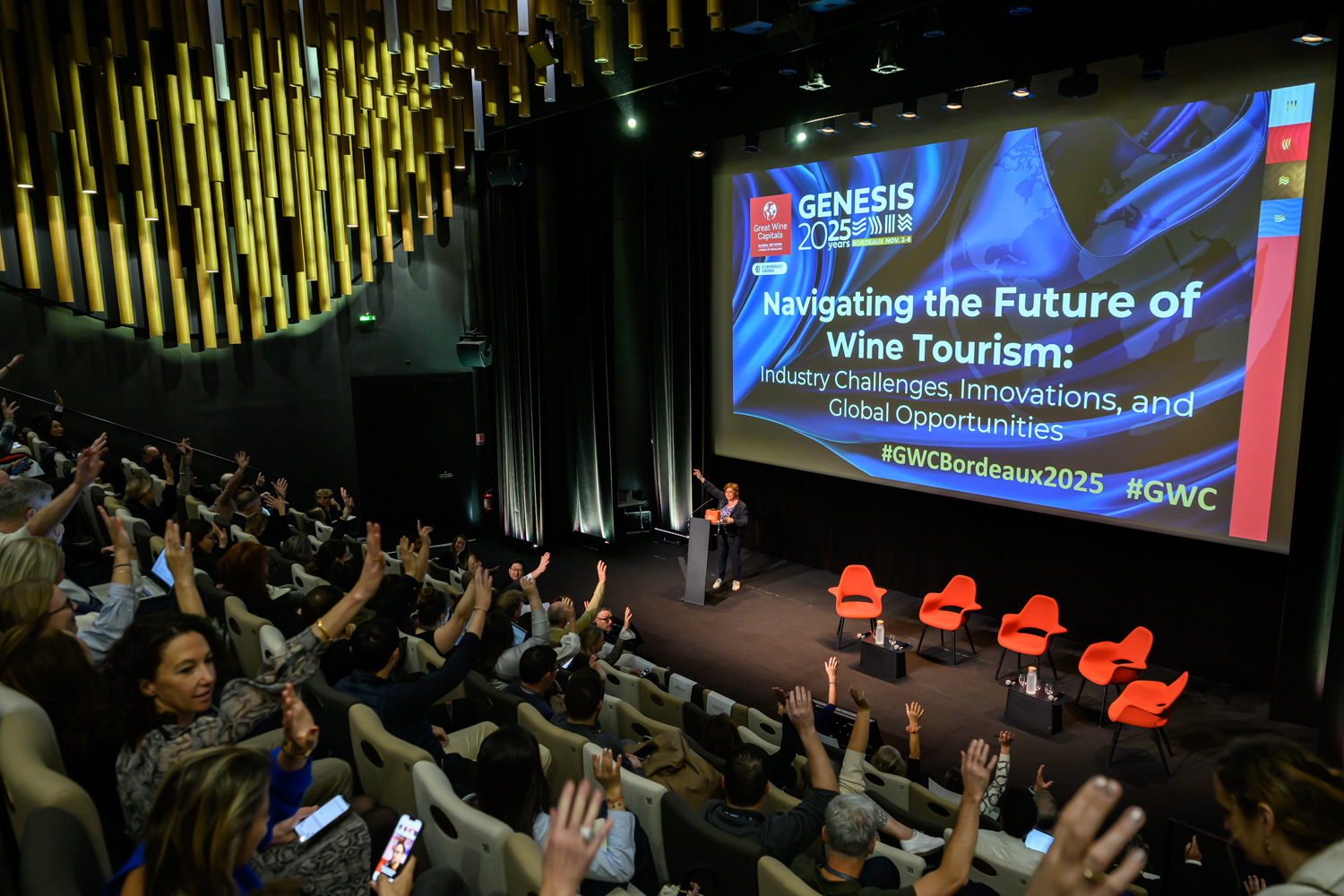
Bordeaux was the venue for the 25th-anniversary celebrations of Great Wine Capitals (GWC).The initiative started here at the Bordeaux Chamber of Commerce, with The Best Of Wine Tourism competition launched to highlight and reward wine tourism initiatives. Today, the network includes 11 wine cities worldwide:  Adelaide South Australia, Bilbao/Rioja Spain, Hawkes Bay New Zealand, Lausanne Switzerland, Mayence/Rheinhessen Germany, Mendoza Argentina, Porto Portugal, San Francisco/Napa Valley USA, Valparaiso/Casablanca Valley Chile and Verona Italy. 

All together 

The week brought together wineries and tourism professionals from these regions to share initiatives and experiences. Technical visits across Bordeaux from the Médoc to Sauternes and Saint-Émilion, showcased different approaches, with dinners and lunches in properties, a tasting of wine from the 11 member regions in the stunning Bassin des Lumières and a day of presentations and discussions in the amphitheater of la Cite du Vin. 

From doom and gloom

Listening to the opening overview of the global wine industry by Rodolphe Lameyse, CEO of Vinexposium, was painful. His data showed global wine sales slumping dramatically compared to beer and spirits. Stocks are still blocking pipelines, the high cost of money is leading to ‘just-in-time’ stock management, banks are withdrawing support and tariffs and other economic uncertainties are leading to delayed payments.  So far, so depressingly familiar. He did highlight some areas of growth, white over red, corners of Asia and perhaps a slight uptick in parts of Europe. His  conclusion that ‘the invisible hand of the market’ is reducing and reorientating production, leading to fewer producers and consolidation, was not great news for most of the audience.

To a ray of sunshine 

Brigitte Bloch, President of Bordeaux Tourism and Congress and Vice-President of the Wine Tourism Centre at Atout France, raised spirits with a French and largely Bordeaux perspective. Tourism contributes between 3% and 8% to the French economy (depending on definition and measurement). Wine is a major attraction: one in two visitors associates wine with France (I’d love to know what the others had in mind) and one in three cited wine as a motivation to come visit. 

France welcomes 12 million wine tourists a year, of whom almost half are international; and they spent 5.4 billion euros, of which 1.8 billion goes directly to wineries. It’s an important revenue for rural economies. Research (see below) shows wine tourism numbers are rising in Europe, although less so overseas, with google searches up 20% a year. 

The future of wine tourism is bright

As well as congratulating and promoting the winners for the excellence of their wine tourism initiatives, the GWC finances education and collaborates in research. Dr. Gergely Szolnoki, Professor of Market Research at Geisenheim University, presented the first 2025 Global Wine Tourism Report, produced with UN Tourism, the OIV, the Great Wine Capitals Global Network, and WineTourism.com. 

The data 

Two-thirds of the wineries interviewed reported wine tourism was a profit centre, generating around 25% of total winery revenue (including on-site sales). Although the core audience remains 45–65 years, younger traveller numbers (25–44) are growing and they are focused on education, sustainability and gastronomy – all things that wineries do very well. This is an opportunity to reach a generation losing interest in wine.

Good times 

Not every wine tourist is a wine expert – nor wants to be. 80% of winery visitors come as part of a holiday; they just want to have a good time with family and friends. But they are potential new wine consumers, and wine needs more of those. Cellar and/or vineyard tours and tastings are still the main offer, but this is no longer enough to seduce this population, who want authentic experiences, personal connection and culinary, eco-friendly and nature-based experiences. 

If the price is right

A GWC research grant recipient, Magalie Dubois, Assistant Professor at the Burgundy School of Business in Dijon, used a “pay what you want” option in Bordeaux, Lausanne and Napa to discover just how much visitors are prepared to pay for these experiences. Her conclusions show most European wineries aren’t charging enough, with guests happily paying more than 15% above the fixed fee in Europe, although less than requested in Napa.  She encouraged wineries to run their own pricing experiments to understand the real value of the experiences they offer.

Wine and Wellness 

Felicity Carter, Founder of Drinks Insider, approached the thorny topic of wine consumption and health in her inimitable way. Questions around safe alcohol consumption and the growth of the wellness sector are contributing to declining alcohol consumption among all generations. She highlighted the challenges currently facing the image of alcohol, thanks to the temperance movement. Using the example of the brilliant scratch cards by Drink Wise Australia (see below) to illustrate how the industry can and should work together.

Panel experience.

Which bring me neatly to why I was there, I was moderating a panel of four innovators rising to these challenges. Simon Strahan, CEO of Drinkwise, joined Caroline Decoster from the La Maison Cardinale, Saint-Émilion Grand Cru Classé; Kim Thorpe, co-owner of Black Barn Vineyards in Hawke’s Bay, New Zealand; and Paulo Medina, head of Grape Ideas, the tourism arm of  Sogrape, the largest Portuguese wine company, home to such famous names as Sandeman and Mateus Rosé.

Their consensus was that wineries must join the “experience economy”: consumers want connection, not consumption. From his experience at Saatchi and Saatchi, Thorpe was ruthless in his message that innovation is vital – adding on a picnic to a wine tour and tasting just won’t cut it. He shared how wine is no longer the unique priority of the wine tourism business at Black Barn: they define themselves as ‘experts at giving people a good time’, with 17 luxury lodges, and a full summer events season, attracting a different audience and encouraging longer stays. 

Can wine tourism save the wine industry? Perhaps not, but it can certainly help as I found out at the Great WIne Capitals AGM in Bordeaux.

Decoster also advocates an original approach, simplifying the often inaccessible language and experience of wine, through music, ‘les arts de la table’ and virtual reality, an initiative that won the Gold Best of Wine Tourism Award for 2026.

Tourism is becoming economically sustainable outside of wine sales. Medina explained as the B2C arm of the wine company, wine sales are not their prime motivation for  Grape Ideas, the tourism activity is financially independent from product sales. The attraction is the combination of the past and future, from in their ancient cellars in Porto to self-guided biodiversity treks through their vineyards in the Douro. 
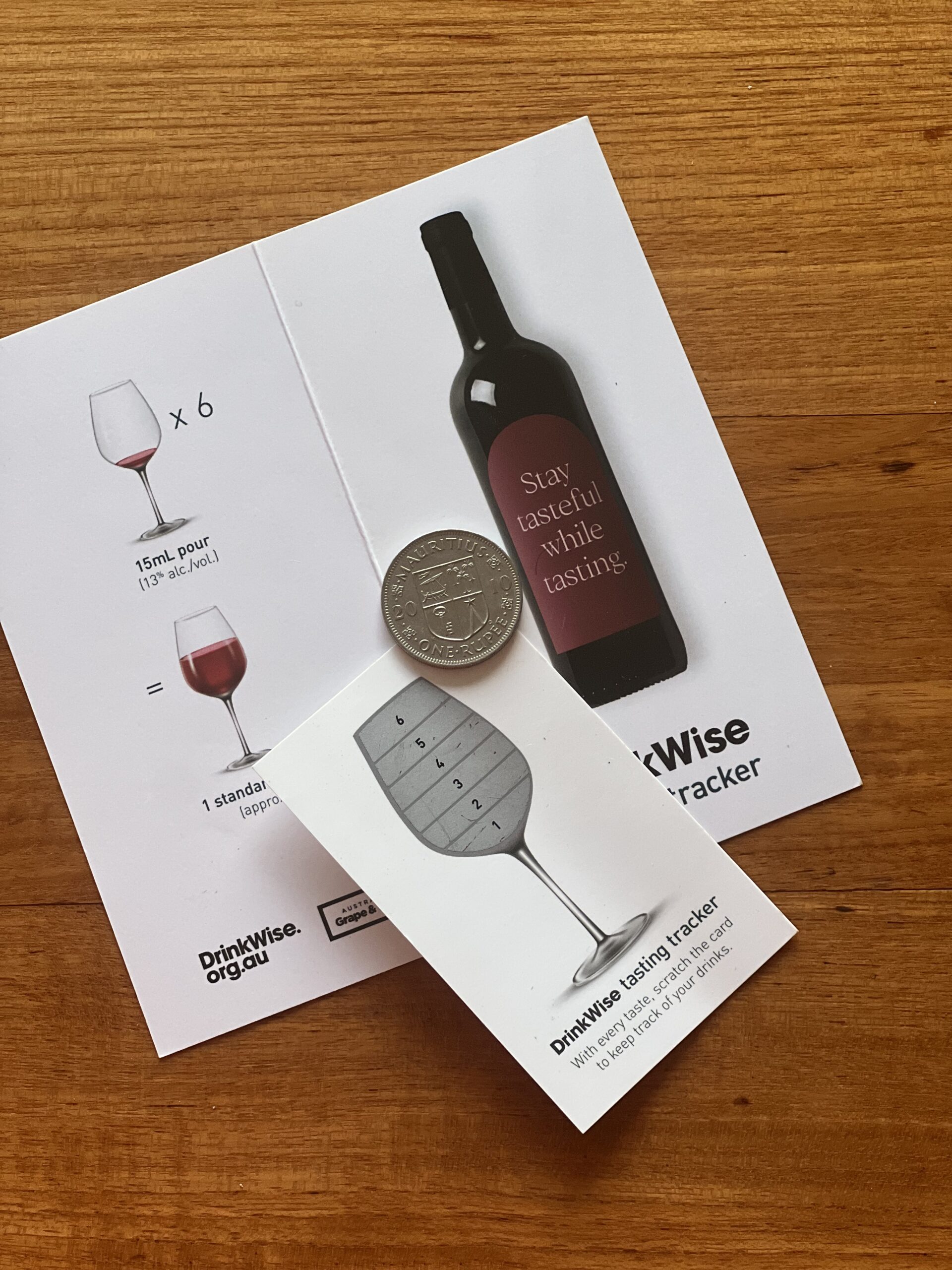
The clever Drinkwise Scratch cards

Which brings us full circle to Strahan at Drink Wise, and Felicity’s warnings of neo-prohibition movement. Their whole-community approach includes government, industry, media, sports – in fact, anyone who contributes to the responsible consumption of alcohol. Embracing this healthier approach to drinking makes the wine industry more accessible to a broader and a younger audience. 

Can wine tourism save the wine business?  

Not alone, but it can help – it’s no longer a net marketing cost but can supplement revenue, creating closer bonds with customers, seducing new clients, reinforcing brand recognition and allowing winemakers to understand exactly what their consumers are looking for and how much they’re prepared to pay for it.

The outlook is good. 
Half of wineries interviewed in the research plan further investment; most anticipate growth and see wine tourism as a resilience tool. Despite what nay-sayers would have us believe, it appears people still love wine and the lifestyle. They want experiences, not just product, and are prepared to pay for them. The challenge for wine professionals is to create innovative and accessible – and give people a good time – which might be better value for everyone that we thought. 

Go visit a vineyard! 

The Best of Vineyards to visit: if you need inspiration for future trips, the winners of the Gold Best of Wine Tourism 2026 awards, one from each ‘Capital’, were announced on the last evening of the conference: 

Thanks for reading,  sign up here to receive future posts directly to your inbox and do share with anyone interested in discovering more about Bordeaux.  Read the new Green Edition of Bordeaux Bootcamp, and explore Wine and Wellness, with  The Drinking Woman’s Diet . 
I also share my healthy passion for Bordeaux (and more) in other wine publications and with online classes. Contact me here to learn more or just say hi.

How will your eco-friendly wine be delivered in 2021?

The vineyard seems the obvious place to start talking about sustainable wine. There are numerous eco-certifications for wine across the world from sustainable through organic to biodynamic and the number of producers signing up keeps growing. 65% of Bordeaux surface area is currently under one of the many certifications and the region has set itself the goal of 100%. There are more than six different environmental certifications used in Bordeaux alone, a wealth of choice that may confuse the consumer rather than helping them make a choice. The subject of another blog perhaps? 

And then what? 

Sustainability doesn’t stop in the field. The first Carbon Assessment of the Bordeaux wine industry in 2013, found that 840,000 tonnes equivalent CO2 were produced from three principle sources:

• 36% = input materials (plastic, glass, winemaking products, etc.

• 20.5% = transport 

• 13.2% = energy

In the 2018, the same assessment showed some progress; a 9% reduction in greenhouse gas emissions down to 770,000 tonnes eq. CO2, and this despite both strong export activity and continued investments in wine quality, including energy-greedy temperature control. 

Progress continues, new figures should be out in the next couple of months. 

This conclusion is industry wide; a carbon emissions audit by Jackson Family Wines found glass bottles made-up 18% of their total carbon footprint, with other packaging such as cartons and corks bringing the total to 24%, and transport accounting for 16% of the total. 

Knowing the status quo means progress can be measured and priorities targeted. Inputs are the biggest culprit, and transitioning to eco-friendly farming methods encourages a reduction, but transport is close behind. Inputs and transport are inextricably linked.

For or against glass?

Transport’s carbon footprint is linked to packaging, the heavier the goods, the higher the cost in CO2. Interestingly, weight doesn’t seem to make much difference to the actual cost of shipping a palette. Perhaps that needs to change? 

Bottle weight seems an obvious place to start. The lightest glass bottles (for still wine) are around 400g but can go up to 1,500g. There has been a move away from really heavy bottles in recent years, in Bordeaux and elsewhere. Bottles became lighter with a less deep punt and thinner, lighter glass. Based on the principle that the container represents the contents, they seem to have gone the way of the trophy or ‘garage wines’. These wine makers often adopted a heavier bottle as a sign of quality or at least power. Elegance in wines now seems to be trending more than power. 

Lighter glass in sparkling wines is more challenging, especially in bottle fermented traditional method wines where a minimum of 800g is needed to ensure the bottle withstands the pressure. 

As well as transport there is the cost to produce glass and to dispose of it.  

Glass has a big advantage of being recyclable and even reusable although wine bottles rarely are. Traditionally they were, I can remember bottles refilled with ‘cooking’ sherry from a barrel at our local off licence as a child and in Bordeaux 30 years ago, I could go into the local Carrefour with my own bottles and fill them up from a self service tap in the shop. You can still go to some local cooperatives in Bordeaux and fill up your own bottles, or more often your ‘cubi’ (plastic container). 

Currently about 70% of glass is recycled. White glass is a more complicated to recycle, but as over 85% of Bordeaux is red and most of the dry whites are bottle in coloured glass, recycled glass is an option. 

The other advantage is closure. Natural cork is considered a carbon sink, so decreasing the carbon footprint of the choice of a wine bottle.

What’s the alternative? 

Glass has the huge advantage of being neutral, not interactive with wine, this is important for wines that will age, perhaps less so for wines that will e drunk more quickly? 

BIB

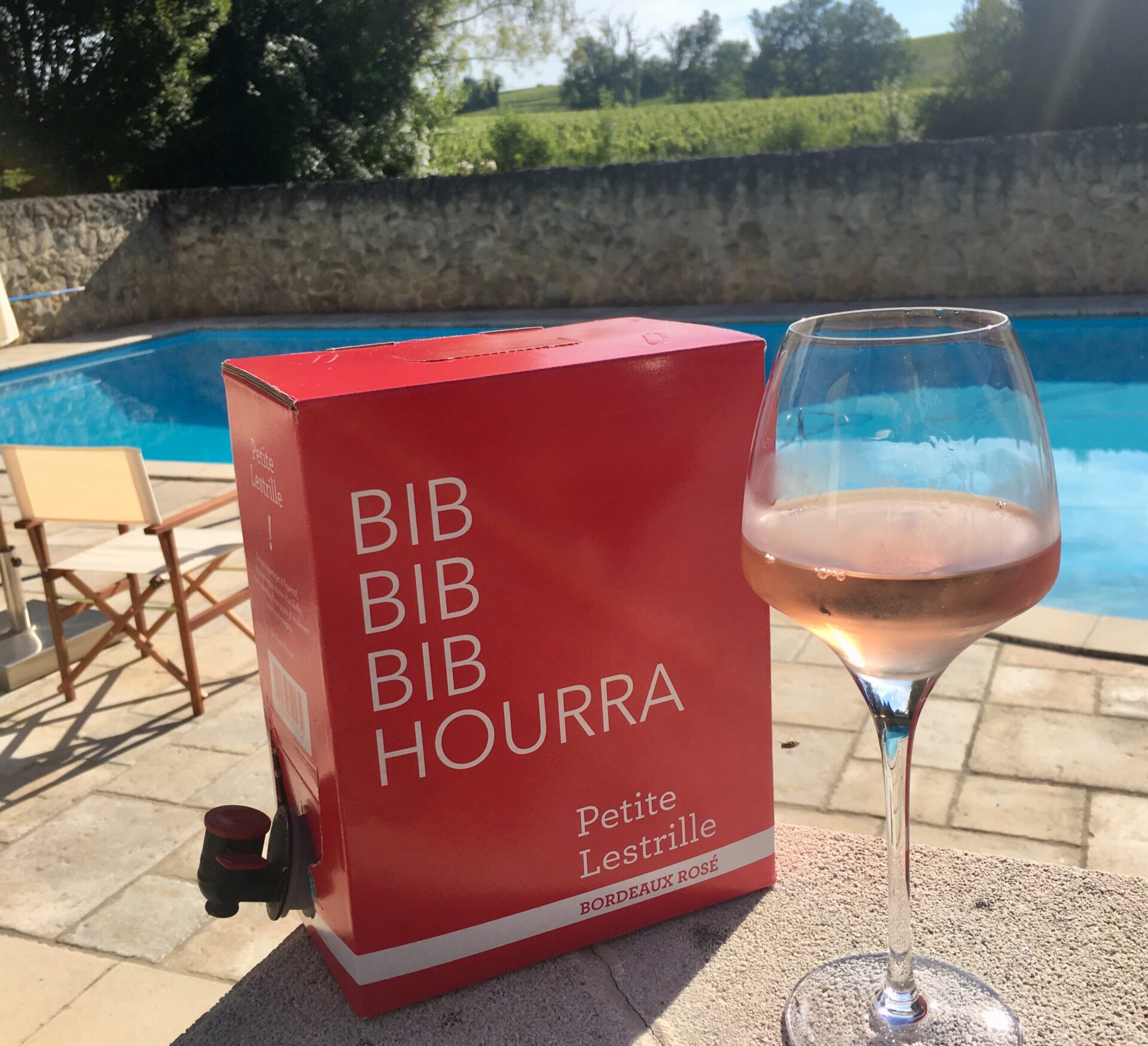
BIB (Bag in Box) are lighter to transport and easy to use. I always have a BIB of Lestrille rosé in my fridge in the summer. Over 60% of Bordeaux wine is Appellation Bordeaux and Bordeaux Supérieur, reds, whites and rosés. These are affordable wines, designed to quaff rather than age and perfect for a BIB. As more and more quality wines find their way into boxes, this light, airtight way of buying and serving wine is losing its cheap image.  

A BIB of Rosé – essential summer equipment

BIBs have a plastic liner that shrinks with each serving, protecting the wine from oxygen but it does mean recycling is more complicated than glass as components have to be separated out. 

Plastic bottles.

It’s an image problem here as well, although it’s common practice to bottle wines in small plastic bottles for airlines, due to reducing weight, so it can be done.  There is a question mark over the interaction of some plastic with wine, alcohol is a solvent and may affect plasticisers leaching them into the wine. It’s worth looking for companies that use BPA free plastics such as PET, which also does not contain phthalates as plasticisers.

Kegs

Refillable Kegs aren’t only for beer, wine can be shipped in kegs too, see previous post. It’s a demand that is strong from bars and restaurants in USA serving wine by the glass or carafes. Château de Bonhoste in the Entre deux Mers was a Bordeaux pioneer. 

And more.
There are also pouches, tins or tetra packs. Château Léoube Rosé is now available in cans, proving once again that quality can go hand in hand with innovative packaging. Aimed at a single serving ‘picnic’ consumer it is easy to use, lighter than glass, 75% recycled aluminium and recyclable. The test run sold out last summer proving perceptions are changing. 

I’m not aware of any Bordeaux wines in cans or tetra packs but would love to hear from you if you do. Please let me know.

Where to bottle? 

Up until the 1970s, most vineyards would sell wine in barrels to Bordeaux negociants (merchant houses) who would barrel age, blend and bottle. This still happens, about 40% of Bordeaux wine is currently bottled by negociants. 

Before this, wine would be shipped in barrels and bottled at destination. When you are in Bordeaux visit the Musée du Vin et du Négoce, here you can see old bottles from the top vineyards with labels stating they were bottled anywhere from London to Germany. A gentleman ‘of a certain age’ on a recent wine tour, explained how, working at the Hyde Park Hotel in London as a boy, he filled bottles of Bordeaux classified growths in the cellars under the hotel to serve to guests. 

Now less than 5% of Bordeaux is shipped this way, mainly to far-flung destinations such as Canada, where the Carbon footprint reduction would be relevant, but also Belgium where the market is price sensitive. There may well be an increase of bulk exports to the USA to avoid the 25% Trump tax too.

Other regions embrace this though, all the Yellow Tail sold in Europe is bulk shipped from Australia and bottled in the UK, given the distance they estimate it reduces CO2 emissions by 40%. 

Do bottles have to be round? 

Shipping round bottles in cases means shipping a lot of empty space, so do bottles have to be round? Square bottles in spirits are common, but sadly this comes at the cost of heavier glass to ensure glass is moulded into corners. 

Which leads us back to plastic, Banrock Station (A great Wine Capitals Wine tourism winner), started supplying the UK supermarket chain Co-Op in 2020 with flat, 100% recycled PET, BPA and plasticiser free bottles. They are not only lighter than glass but take up 40% less space. The wine is bulk shipped from Australia and bottled at Accolade Park, the company’s giant bottling facility in Bristol Avonmouth in collaboration with Garçon Wines.

It’s a gift.

Packaging doesn’t stop at the container. If you were lucky enough to receive a gift of Champagne over the holidays you’ll know what I’m talking about. See below a video sent by a friend who enjoyed this delicious Veuve Cliquot at Christmas. Champagne houses are brilliant at designing fabulous gift packages and although impressed he questioned the use of packaging. The bottle needs to be protected and if it’s a gift the presentation has to be special. Having said that, in 2015, Veuve Cliquot did launch a gift package made from recycled grape skins.

Packaging, part of the experience or a waste of money?

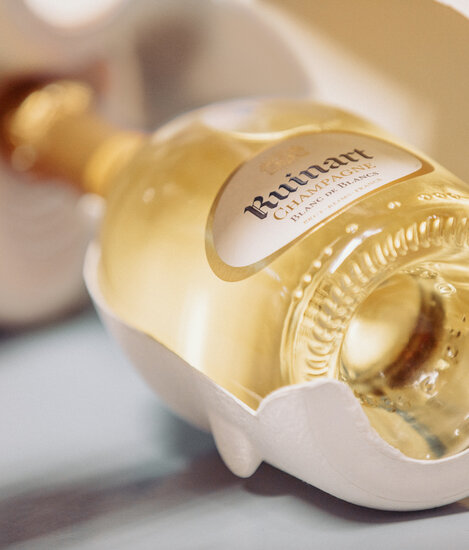
Ruinart have released a more eco friendly gift packaging.  Made from 100 % cellulose fibre, it is 100% recyclable, nine times lighter and takes up no extra space as it is moulded to the form of the bottle. 

The eco friendly gift packaging from Ruinart

The textured design is a nod towards ‘Les Crayeres’, the chalk cellars underneath Reims where the Champagne is aged and to the tradition of French sommeliers wrapping a bottle in a white napkin. There is still the sense of opening a gift. 

Attention to detail

Created by brilliant British paper maker James Cropper the sleeve will last three months in a fridge (not in mine!) and 3 hours in an ice bucket. 

Ruinart have been working on eco packaging for a while. Already in 2015, they reduced packaging weight by 50% and removed the plastic wrapping saving over 200 tonnes of paper and 26 tonnes of plastic.

The case for cases.

Wooden cases can be design driven toon see here at Château Clinet

The choice of wooden cases versus cardboard raises both weight and recycling issues. Wooden cases are seen as prestigious but are difficult to recycle, although a quick social media browse will show lots of up cycling ideas from storage space and planters to bicycle baskets. 

If you can’t recycle, upcycle.

Many restaurants and retailers prefer cardboard due to issues of storage space and recycling. Cardboard cases can be prestigious too. Château Brown offered clients the choice of a new cardboard case, printed with biodegradable ink, for their 2019 primeur campaign following a CIVB audit that found they used 18 tonnes of wood. Cardboard is not only lighter, uses 40% less energy to produce and is easier to recycle but can be delivered flat, which means less space so less delivery lorries on the road. 

The chic new eco friendly cardboard case from Château Brown

Château d’Arcole in Saint Emilion takes their sustainable philosophy through to packaging too. Their wine is organic, bottled in light glass with 100% recyclable aluminium capsules dyed with natural ink. The label is made from recycled paper as is the flat case, (less wasted space) which uses no glue and is therefore 100% recyclable.

Following through, sustainable wine in sustainable packaging, Château d’Arcole, Organic Saint Emilion Grand Cru

How are those round fragile bottles protected in the cases? Clever lightweight innovations include the Clinker plastic free moulding and Veuve Clicquot returning to the traditional use of a straw sleeve rather than moulded Styrofoam.

I’ve only scratched the surface here, we haven’t got all day, but you can begin to see the choices are multiple and made all along the process. The devil is in the detail but sustainability forces creativity and creativity can reinforce sustainability.  

Want to read more?  Please  sign up here  to receive future blog posts directly to your inbox. If you would like to read more about Bordeaux, you can buy your copy of Bordeaux Bootcamp here, to learn more about Wine and Wellness, you can buy a copy of The Drinking Woman’s Diet here. 

Château Soutard – At your service

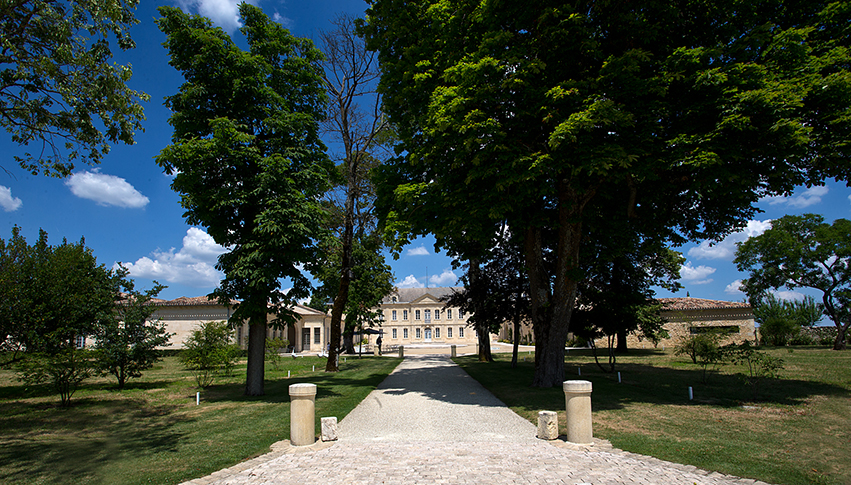
Château Soutard, Classified Growth of Saint Emilion, has undergone a complete renovation and renewal since its acquisition by French Insurance company l’AG2R La Mondiale in 2006. L’AG2R were no strangers to wine, or to Saint Emilion, as they already owned and managed Château Larmande Grand Cru Classé and Château Grand Faurie La Rose Saint Emilion Grand Cru near by. In 2009 they added neighbouring Château Cadet-Piola to their collection, now fully integrated into Soutard as of the 2012 classification. Château Larmande and Grand Cru Grand Faurie La Rose maintain their independence, each being made in their own wine cellars. The total holdings add up to 60ha of which Château Soutard represents half at 30 ha.

The Beautiful Château Soutard, Grand Cru Classé of Saint Emilion
Photo Credit Tom Fletch

Two Best of Bordeaux Wine Tourism awards have justly compensated the dedication of the new team in bringing Château Soutard back to the elegance, deserving of its classified status. The first, in 2012, was for the architecture – hardly surprising given the beautiful gravity fed cellars created by architect Fabien Pédelaborde. As well as being an efficient working cellar, it is a showcase for both the history of the property and the unique limestone terroir of the plateau of Saint Emilion on which the vineyard is situated.

Their latest award was for Wine Tourism Services, highlighting how they have put this newly renovated facility to excellent use, opening it up to visitors in so many ways.

The view from the guest rooms in the château. Photo Credit Tom Fletch

In addition to the cellars, they have now transformed the 18th century Chateau at the very heart of the estate, offering a complete range of wine tourism from accommodation in the four suites of the Chateau to seminars and weddings in the cellars and intimate cooking classes. This is in addition to the 3 guest rooms they already had in Château Grande Faurie Larose.

They offer walk-in tours, no reservation needed (11 am and 4pm in French, 2pm in English), as well as private tours by reservation with a Corvin on hand to taste older vintages by the glass from the private cellars of the Château.

You can take a more relaxed and informal approach to discovering Château Soutard. Being so close to the centre of Saint Emilion, many people call in just to visit the boutique. It’s worth a visit; the chic French country theme includes an eclectic range of wine related gifts for all ages (the crossbow that fires corks is a particular favourite) including their own porcelain collection. Shoppers often stay on for a glass of wine and a plate of charcuterie or cheeses on the terrace in front of the château, or take a picnic hamper to enjoy in the parkland surrounding the château.

Lunch at the Château

If, after that glass of wine, the short walk back to town is too much, they rent out bicycles to discover the vineyard and surrounding area or you can walk it off with one of the especially designed walking tours through the vines.

These tours are specifically designed for wine enthusiasts who want to learn more about the vineyard. The cellars may be impressive, and many visitors will stop there, but what happens in the vineyard is what really determines the quality of the grapes and therefore the quality of the wines. The tour explains the agriculture behind the grapes and the annual calendar that dictates the many tasks throughout the year necessary to ensure a quality crop. Visitors also learn about the grape varietals, the influence of the climate and how the vineyard manager monitors it with their own weather station and how he uses this information in his viticultural decisions. Inspired to learn more? Careful what you wish for, you can even participate in the harvest and work in the cellar if you fancy getting your hands dirty.

There is a nature trail specifically designed for children too, they love to discover the biodiversity of the site; the other flora and fauna found in the vineyard including a good bug guide – known in-house as the ”who eats whom” tour. The children’s guide includes an illustrated map with drawings to colour in, the same pictures that they can find at information points throughout the vineyard, keeping them busy while their parents visit the cellars and taste the wine.

All these services add up to over 18 000 guests across the three vineyards, from business seminars to romantic weddings and gastronomic dinners to children’s trails; anything is possible at Château Soutard.

The cellars at Château Soutard – technical and practical. Photo Credit C. Goussard

It’s no secret that Château Soutard is focussing its quality efforts on the next classification with a clear ambition to become one of the 1er Grand Crus Classés of Saint Emilion. If they are as successful in their objective as they are at wine tourism – this is one to watch.


The original of this article was posted on the Great Wine capitals Blog.

On your bike at Château Marquis de Terme.

Chateau Marquis de Terme walked away with the top award for the Global Gold Best Of Wine Tourism in Bordeaux at the end of 2016. Their original ‘Best Of’ win was for Innovation in Wine Tourism. They have really embraced wine tourism since their renovation with the arrival of director Ludovic David in 2009. They have an open door policy with receptions rooms for groups and different tours including food and wine tastings for wine tourists.

Château Marquis de Terme

Vineyards are pretty adaptable at catering to the interest of the visitors. Subjects include the history of the property, as most Bordeaux vineyards have a long and fascinating story to tell, wine making, barrel ageing and of course the tasting.

The actual vineyards, the fields of vines, don’t always get a look in. In recent years the role of terroir, the responsibility of the winemakers to look after it in an ecologically sound way and the management of this terroir in a plot-by-plot fashion (precision viticulture) is at the heart of wine making. The emphasis is all about growing as perfect a grape as possible and getting it safely to the wine cellar so the wine maker can then work his or her magic on the best possible raw material.

To do so, the matching of the varietal to the soil is all-important. The terroir of the left bank, where Margaux is situated, is usually described as gravel, compared to the clay and limestone soils of the right bank around Saint Emilion for example. But there is so much more to it than this. To understand the variations in the soil that can make all the difference to wine you need to get out there and take a closer look.

Welcome to Marquis de Terme for their unique ampelography tour. This unique tour was the deciding factor for their winning the Best of Wine Tourism award to innovation. Ampelography is the branch of botany specifically about the identification and classification of vines. Château Marquis de Terme is perfectly situated at the heart of the Margaux appellation, a classified growth of 1855 surrounded by other classified growths. The plots belonging to the vineyard are spread throughout the appellation over four different types of soil; gravels of different dimensions and clay, each identified thanks to precise soil analysis. Each type of soil is deemed best suited to one of the four different varietals that make up the blend of the chateau wines.

After all, blending is one of the signatures of Bordeaux. These Bordeaux blends are always mentioned during the tastings but why we blend in Bordeaux rather than creating mono varietal wines is not always made clear. If you really want to understand this, there is no better way than to go into these plots of vineyard and see for yourself.

On your bike!

On your bike then! Reflecting their environmental values, demonstrated by their ecological certification, these tours are conducted by a guide leading you across the vineyards of Margaux on bicycles. It’s a great way to understand the appellation as a whole and not just Chateau Marquis de Terme. Margaux is the largest of the ‘village’ appellations of the Medoc, known for the complexity of its terroir. Up close you will really see how different viticultural techniques are adapted to each plot, from pruning to harvesting dates, aiming to producing the best grapes possible.

Back at the chateau, wine making is explained, a tour of the cellars showing how the characteristics cultivated on each of the plots you visited are preserved through precision wine making and barrel ageing. And after all that pedalling you will have worked up a thirst for the tasting.

The original of this article was posted on the Great Wine Capitals Best of Wine Tourism Blog 

Chateau Feely – sustainable wine tourism

Chateau Feely’s award of the Gold Best of Wine Tourism for accommodation is a victory for the small guys. Many of the winners of these awards are the grand and prestigious Châteaux of Bordeaux, their awards are well deserved for the excellence of their service and prestigious offerings, but Chateau Feely is different.

Wine tourism is at its heart, hand in hand with their passionate and more serious message of eco-responsibility. The property is also in the Dordogne, to the east of the vineyards of Saint Emilion, in the lesser known Saussignac region of Bergerac. It’s worth a trip this beautiful area that benefits from similar soils to Saint Emilion and is perched on the rolling hillsides above the Dordogne River.

The vines at Château Feely

The Château is a one-stop shop for all things wine tourism: tasting, teaching, staying, touring – you name it these people pull out all the stops to share their passion. ‘They’ are Sean and Caro, a very international couple. Caro is of Irish origin, her grandmother was French descended from one of the 14 merchant families of Galway who left France in the 1300s to import wine. Sean’s grandfather was a wine maker in the Cape where they met through a shared passion for wine. They left The Cape for Ireland and on a holiday to France fell in love with the vineyards of Bergerac – easy to do. They hatched a plan to move there and after five years of saving they left their jobs in IT and finance to rescue Chateau Freely from liquidation in 2005.

Sean and Caro Feely
Sean and Caro Feely

Their objective was to bring back this historic vineyard, with cellars dating from 1737 and some walls dating as far back as 700 AD, to a healthy working vineyard.

Mission accomplished; through a lot of investment in time, money and effort Chateau Feely is now an organic and biodynamic vineyard. Determined to make a difference they have farmed organically from the get go, as of the vintage 2009 their wines are certified organic and certified biodynamic since 2011. They have succeeded in bringing a dream to reality.

The vineyard is farmed organically but eco sensitivity is integrated into all the activities on site, including the sustainable accommodation. The organic theme runs right through the property.

They have been welcoming guests to the property since 2007 and now have two self-catering options on the vineyard, each housing 4 guests: The Cottage and the Wine Lodge, a rather new world feeling right there in the name.

What does sustainable accommodation mean for them? Both are ecologically constructed using organic paint, natural wood fibre insulation (with poplar panelling on the ceilings). The Wine Cottage’s thick stonewalls date back to the 1700’s – that’s traditional insulation!

Rainwater is captured from the roofs to use on the gardens and farm, electricity is economised by naturally drying linen and towels on a line, and there’s a heat pump for water and the low energy under-floor heating. The eco-friendly design includes overhanging roofs in the wine lodge and tasting room for natural temperature management, light wells in the corridors to avoid using lights during the day with sensors on lights. Solar panels are planned for the barn roof – it’s an on going process.

There’s no doubt you are close to nature here and the stunning views across the organic vineyards from the terrace is a guarantee that there are no pesticides, herbicides or systemic fungicides in the air. Guests are invited to contribute to the movement with ecological cleaning products provided, recycling compartments and instructions on how to contribute fruit & veg waste to the compost heap.

What goes around comes around, if you stay for a picnic or for lunch in the tasting room, you will taste organic, local products including veggies grown in and amongst the vines. Or you could just stroll into the herb garden or the orchard and help yourself.

Organic eggs for breakfast? Chickens in the vegetable garden of the Château

But ecological doesn’t have to be rustic – no hair shirts and sandals here! It’s luxurious, with a 12m saltwater pool, allergy free cushions and organic duvets, pillows and sheets, wireless speakers, wifi and fully equipped kitchens.

One of the guest bedrooms at Château Feely

Caro is a passionate advocate for eco friendly living and shares this passion with guests through education and writing. Guests staying in the gite were always asking for help understanding what is going on in the vineyards so she started giving classes on French wine and it grew from there. Now as a Certified WSET provider, she runs certification courses on the estate, wine tours, vineyard walks including offering free visits to school and college groups explaining how organic works and it’s importance. The walking tours they offer are particularly popular as in Saussignac 60% of the growers are organic.

There is also wine and food pairing lunches, wine tours to neighbouring vineyards and even photography, painting and cooking classes – did they forget anything?

What does the future hold? Unsurprisingly they have plans including offering an ecological setting for seminars and team meetings, particularly apt for companies with an eco agenda and green focus. Wine and food pairing is also on the agenda using food from Feely farm in partnership with a local chef.

If you can’t make it to Chateau Feely yourself Caro also shares her passion for living lightly on the earth through her writing. Her books ‘Grape Expectations’ and ‘Saving our Skins’ recount their adventures in wine land and the third book in the series ‘Glass Half Full’ has just been published.

The original of this post is on the Great Wine Capitals Blog.


Chateau Coutet Saint Emilion Grand Cru – An environmental history.


Chateau Coutet is right at the heart of the historical centre of Saint Emilion, part of the classification from 1955-85, it is surrounded by other classified growths on the south and south-westerly facing limestone slopes and plateau of the appellation.

Château Coutet at the heart of Saint Emilion

An historical vineyard in so many ways, the preservation of the natural environment that this history has allowed is what earned the property its Great Wine Capitals award for sustainability.

Chateau Coutet has been a family run property since the 14th century and after 400 years of ownership by the David Beaulieu family, four generations now live at the vineyard.

The property has always been organic. It may have been certified organic in 2012 but they have never used herbicides, pesticides or insecticides at the property. The result is that, as well as quality in the vineyards, there is a unique flora and fauna with rare wild tulips (Tulipa Radii Roman and Tulipa Sylvestri) alongside spring orchids and gladioli.
Whatever time of year you visit the property, the family will be happy to share this unique flora with you. Maintaining this biodiversity is one of their priorities, thanks to old oak groves amongst the vines.

The flora amongst the vines of Château Coutet
The wild tulips amongst the vines of Château Coutet

It’s not just flora; the woods and ponds are home to rare tritons, salamanders and fresh water prawns, all of which you may be lucky enough to see as part of the tour when you visit as well as ducks, geese and a rather possessive gander.

Saint Emilion is known for its history and was classified a UNESCO heritage site in 1999, some of the reasons for this can be found at Chateau Coutet.

At the heart of Saint Emilion limestone slopes
On the Saint Emilion limestone slopes

Hidden in the woods at the heart of the estate is a unique Archaeological site: a vaulted well dating back to the Merovingian period (5th-8th century). Built over the spring and under a 17th tower, it was discovered 9 years ago, when flooding over the vines and the memories of a grandmother lead to the discovery of the old silted up retention and drainage ditches. It took volunteers four years to clear the area.

The hidden spring
The hidden spring

Close by, crossing the 16ha vineyard, is a Gallo roman road leading from Dordogne waterfront to the town of Saint Emilion; it is still used by walkers and joggers today.

There is more recent history; the chateau has a chapel dating from 1840 consecrated by an envoy of the Pope in 1892.

This history goes deep into the vineyard too, including the varietals. 60% of the vineyard is planted in Merlot most of which is the historical and rare Merlot à queue rouge (red stemmed merlot) maintained thanks to massal selection within the vineyard. Complemented by cabernet franc, cabernet sauvignon there is also, more unusually, 7 % of Pressac (the local Malbec). Horses are used to plough the most delicate plots.

Horses plough between the vines

This long and fascinating history is reflected in the launch of a new cuvee this year, inspired by finding of a bottle of 1750 Château Coutet buried under the mud floor of the cellar under the chateau. The unique bottle was sealed by a glass emery stopper in the shape of a heart – leading to lots of romantic speculation on its origin.

Adrien David was so inspired by the find that he decided to re-edit this bottle thanks to the work of a craftsman 100 miles away, who made wooden moulds of the original bottle. The first wine to be bottled in this unique bottle will be the 2014 vintage. Previously there has only been one wine produced at the vineyard, no second wine, so this cuvee is something new for them; a small production of only 200 bottles, selected from plots of 90 and 70 year old vines, worked using horses rather than tractors and using historical techniques of wooden fermentation vats, selecting by hand, crushing by foot,

The original bottle and wine press in the cellars of Château Coutet

But they are not just looking to the past; on the contrary they are making this unique chemical free environment available for research, including solar powered weed control. They have made the land available to the agronomy school of Bordeaux that is studying its micro bacteriology.

From horses to solar powered robots, it’s a true marriage of the old and the new.

So if this inspires you to visit, either for the history, the unique biodiversity, or of course the wine, you’re in luck. They are open to the public all year round and have been since 2013. The family offers two visits including one for the fitter and more adventurous guests that covers a walk not just through the vineyards but also the woods including the fauna, flora and the history. Of course, there is a well deserved tasting at the end of the hike.

Come and taste.
Come and taste.

The original of this blog post was featured of the Great Wine Capitals Blog.


Innovation at Chateau de Reignac

Yves and Stephanie Vatelot have been innovating at Chateau de Reignac since they purchased property in 1990, so it came as no surprise that the Chateau was awarded the best of Wine Tourism award for Innovation for 2016. As an engineer and entrepreneur, innovation is in Yves Vatelot’s DNA, he made his fortune with the ‘epilady’ that some of our readers may know well.

There is a clear hierarchy to the wines of Bordeaux, thanks to the famous classifications from the 1800s and early 1900s established Bordeaux’s reputation but there is also a hierarchy within the 62 different appellations that make up the region.
The Bordeaux appellation is at once the largest and most humble of the appellations of the region and Chateau de Reignac is firmly at its heart. Their red wines are under the Bordeaux Supérieur label, which requires a slightly lower yield and a longer ageing period.

So why Château Reignac? Well as always, it’s all about the place in Bordeaux: the ‘Terroir’. Situated almost at the point of the Entre deux Mers close to the confluence of the Garonne and Dordogne rivers, the highest outcrops of Reignac’s vineyards are strewn with pebbles brought by these rivers over millions of years. This deep quaternary gravel similar to that found in the Medoc and Graves, is key in Bordeaux’s cool Atlantic climate. The warmth reflecting off the gravel helps the grapes, especially the Cabernet Sauvignon, to reach perfect and consistent ripeness. Other plots of the vineyard are dominated by the Limestone and Clay soils associated with the top vineyards of Saint Emilion where Merlot and Cabernet Franc flourish on these cooler soils. So the potential was here, the range of terroir that shows the range of soils that Bordeaux does best.
Investing in such a region for an innovator offered a myriad of possibilities but also challenges, the Vatelots rose to this challenge with gusto, and it has paid off.
The property now produces 4 wines, the Grand Vin de Chateau de Reignac, the second wine Chateau de Reignac their top cuvée Balthus, produced from a small parcel of Old Merlot, and more recently a dry white.

Choosing Michel Rolland as a consultant was a daring move but they applied his ideas and the resulting Grand Vin de Reignac regularly shines at blind tastings outclassing wines that are sometimes 10 times the price. He seems proud of his tag line Grand Cru Non Classé.

These were the heady days when the garage wine movement in Bordeaux was all about the innovation in the cellar: low yields, severe selection of berries, cold maceration, integral fermentation, techniques that are now well integrated into, if perhaps toned down, to Bordeaux winemaking thanks to innovators like Michel Roland and de Reignac, amongst others, who dared to be different.
Today innovation is all about what’s happening out in the vines and de Reignac is right there, using the latest agronomical and pedological studies and techniques. Biodiversity is a buzzword in viticulture and the layout of the 150 ha of the property contributes to this, just 70 are under vine, the remainder being forest and a lake large enough for an enthusiastic client to land his seaplane on during a recent visit. If you need any reassurance that they take their eco credentials seriously – check out the sustainable pencil used for tasting notes, plant it and seeds embedding in the tip will flower for you!

Next to the Chateau is the beautiful greenhouse, built by Gustave Eiffel, and the new aroma garden where 200 plants, sharing the typical aromas of red and white wines, have been planted. After a visit to the winery and the barrel cellar, a tour of this garden allows guests to get their sense of smell well honed before the tasting. This brings to life, in a very relaxed way, the part of wine tasting that many find the most challenging.

Reignac greenhouse
The Greenhouse at Chateau de Reignac

The garden has been such a success that many guests stay here for a picnic lunch under the trees with a picnic basket prepared by the property accompanied by their wines, of course and it was this garden that clinched the 2016 Best of Wine Tourism prize for ‘Innovation et discovery »

Lunch in the garden?

I first visited de Reignac just after the launch of Balthus in 2002. Named after their youngest son, it had been crowned the most expensive Bordeaux Supérieur on the market and was enjoying great success in the US. I was with a group from the American wine trade, keen to learn more about this phenomenon and we were not disappointed. The tasting room is in the 16th century pigeon tower, renovated in 1998 it includes a circular tasting table built around a dramatic pulley system that lowers the bottles selected for blind tasting from an upstairs room, already innovative in it’s approach to welcoming visitors.

Inside the Tasting Tower

The proximity to the water was the inspiration behind a new experience. “The Secrets of a Wine in a Day” starts in Bordeaux where a minibus takes guests to visit local barrel maker Boutes, then, after a full visit of Chateau de Reignac including the aroma garden and a tasting they enjoy a lunch in the gardens before returning back to Bordeaux by cruising up the Garonne river. This new experience is available for small groups from May until October.

Chateau de Reignac continues on its path of innovation in wine making, grape growing communication and tourism. In one single property they dispel several myths that surround Bordeaux: they offer excellent wines at affordable prices with a warm and innovative welcome in 5 languages. If you can’t get to visit the property to experience it for yourself, you can join them via social media, but I recommend you try – seaplane trip anyone?

Follow the guide(s)

Just to prove I’m not completely Bordeaux centric, I’m happy to recommend a couple of guides that, although they include Bordeaux, also reach further afield.

The first is the AWE (Association of Wine Educators) 100 AWEsome Wines. Selected by AWE members for their quality and value, the wines are all available in the UK market. The 90 odd members of the association teach trade and enthusiastic amateurs throughout the year which puts them  in a unique position to taste and gauge the reaction of their students to a wide range of wines. This guide represents some of their favorites.

The AWEsome wine guide

The guide is organised by price bracket and includes tasting notes and stockists for wines from 15 countries and around 35 different grape varieties. Yes, there are a few Bordeaux but interestingly not in the most expensive category. You can download the guide as a PDF here.

If you want to visit the wine regions for yourself download the 2015 Best of Wine Tourism guide. It features all the winners of the annual competition run by the Great Wine Capitals. This global network of eight cities at the centre of renowned wine regions was created in 1999 with the aim of encouraging travel, education and business  between the  wine regions of Bilbao & Rioja, Bordeaux, Cape Town & Cape Winelands, Mainz & Rheinhessen, Mendoza, Porto, San Francisco |& Napa Valley, Valparaìso and the Casablanca Valley.

The 2015 edition of the Best of Wine Tourism

The ‘Best Of Wine Tourism’ Awards is an annual contest for wineries in each member city and wine region, including categories from art and culture to accommodation and sustainable wine tourism. Over 465 properties have received an award since it’s inception.

It’s not just about patting each other on the back; wineries from the different regions learn from each other about the best ways to respond to a growing demand in the dynamic, diverse and competitive sector of wine tourism. For those of you who still labour under the misconception that Bordeaux has a closed door policy at its wineries and Chateaux, there are 19 Bordeaux winners in this years guide including places to stay, eat, drink (of course) and learn.

And the Bordeaux best of Winners

You can down load the guide here or e mail bestof@bordeaux.cci.fr for a paper version.

Bon voyage!

Women in Wine Tourism.

As owner of the high-end Wine Tour Company Decanter Tours, one of the few full service wine tour operators with extensive experience working in the wine industry, Mary Dardenne couldn’t help noticing that most of the key players in this dynamic and growing sector, whether in accommodation, transportation, restaurants or wineries were women.

Following a wine fuelled lunch in Bordeaux between 8 girl friends, all, like Mary, key players in the industry; she created The Women in Wine Tourism association in 2009.  There were formal trade organisations in existence such as the Great Wine Capitals, Destination Vignobles and Vignobles et Chais en Bordelais but the objective was to create an informal and complementary association that covered all aspects of wine tourism.

Where it all began
Where it all began

This group is now, 4 years later, a dynamic networking association for the wine tourism industry including Chateaux, interprofessionnal organisations, hotels and restaurants from Bordeaux to Cognac and Burgundy.  Mary’s unique access to contacts in the industry across France has grown the association to 120 members with over 250 likes on the Facebook page and an active following on Twitter.

The monthly meetings, usually over lunch and a glass or two of wine, bring together between 30 and 50 members giving them an opportunity to talk about their various initiatives, discuss their challenges and successes and share ideas on how to continue growing in this relatively new sector. Informal, fun and supportive, the group has encouraged members to work together promoting their activities and creating joint projects.

Ready for lunch at Chateau Troplong Mondot.

These lunches are not only a forum for sharing and networking but also an opportunity to try new restaurants and discover new initiatives in chateaux as diverse as a restaurant and accommodation at Les Belles Perdrix at Chateau Troplong Mondot, conference and reception facilities at Chateau Marquis de Terme and a village centre boutique at Château Lestrille, to name a few. The group also participates in industry events such as Bordeaux Fête le Vin (26-29th June this year) and test-drives new initiatives such as the Bordeaux Wine Trip app.

Bordeaux Fête le Vin

It also provides a forum for new comers to the industry to meet market leaders in an informal, supportive and fun environment and learn from the experts in this growing field. If you want to know more contact Mary marydardenne@decantertours.com