When a property has ‘Comtesse’ in its name, chances are there’s a woman, or three, in the back-story. Château Pichon Longueville Comtesse de Lalande, carries a long name and comes with an equally long history, a history shared with the ‘other Pichon’ across the road.
Pierre de Rauzan founded the two properties as a single estate in 1689. A wine merchant, he also owned the ‘noble house of Gassies’ in Margaux, (the two classified growths Rauzan Segla and Rauzan Gassies still carry his name), and he was the manager of both Chateau Latour and Chateau Margaux.
In the 1690s he bought ’40 gravelly plots’ in Pauillac around Latour, known as l’Enclos Rauzan or le Domaine de Bader. In 1692, upon his death, his daughter, Therese, inherited the property. In 1694 she married Jacques de Pichon Longueville, starting the wine career of the Pichon family. The property became Château Pichon Longueville. As well as becoming the owner of a famous chateau, Jacques de Pichon Longueville was also elected as the first President of the Bordeaux Parliament.
The property was effectively run by women for several generations. After Therese, her daughter in law Germaine de Lajus took over, and in turn, her daughter in law Marie Branda de Terrefort. The husbands were all too busy being politicians.
Baron Joseph de Pichon Longueville inherited Pichon Lalande when he was just 19 years old; he managed the property himself, until his death at 90 years old in 1850. Thanks to the new Napoleonic laws, upon Joseph’s death, the property was divided between their five children: two sons and three daughters.
Only one son survived, the Baron Raoul Pichon de Longueville. He inherited his brothers’ share and the estate became known as Château Pichon Longueville du Baron de Pichon de Longueville (quite a mouthful). In 1851 Baron Raoul commissioned the imposing château that remains to this day.

One of the sisters, Virginie, took over the management of the three sisters’ share. Her sister Sophie was an artist in Paris who, having had her heart broken, gave up her art, became a nun, and left her share of the chateau to the management of her sister. Sophie died in 1858.
The vineyard was run as a single property until the death of Raoul ten years later and the entire estate was classified as a second grand Cru Classé in the 1855 classification. Each property retained the classification when they separated.
La Comtesse.
Virginie was married to the Count Henri de Lalande, she named her part of the estate, Château Pichon Longueville Comtesse de Lalande, joining her maiden and married names together. A double-barrelled chateau name, to distinguish it from her brother’s property now run by her cousin, another Raoul. Do keep up at the back!
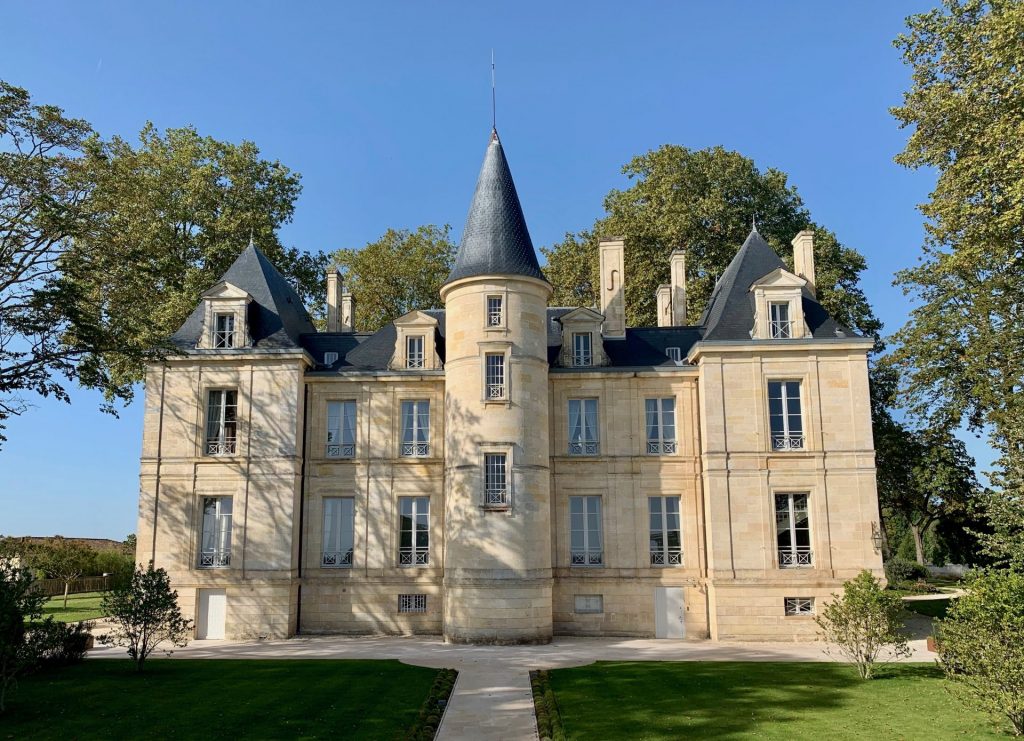
Virginie was already living in the Medoc. In 1841, she had commissioned the architect Duphot to build a residence on her land, inspired by her home, the Hotel de Lalande in Bordeaux. as the Chateau was built amongst the vines of Château Latour, rumours suggested the land was a gift from her supposed lover, the owner of neighbouring Latour. Less romantically, records show she already owned the land and built the property long before her husband died after which the alleged affair took place.
The chateau still stands today, surrounded by the vines of chateau Latour, facing the brother’s property on the opposite side of the D12 ‘La Route des château’. An elegant entrance to the Pauillac appellation.
Locally the two properties are now referred to as Pichon Baron and Pichon Comtesse. Pichon Baron has sensibly redesigned its label, web site and communication highlighting the more accessible name.
Neither property remains in the family however, the two estates followed different but parallel trajectories; Pichon Baron remained in the Pichon Longueville family until 1933 when it was sold to another Bordeaux family, the Bouteillers who, in turn, sold it to Axa Millésimes in 1987.
Virginie died without a direct heir, leaving the Château Pichon Comtesse to another woman, her niece who also happened to be married to a Comte Lalande – nothing like keeping things in the family. These were the last Lalande owners of Pichon Comtesse. They had two daughters and five grandchildren, who sold the property in 1925 to the Miailhe brothers, Edouard and Louis, also later co-owners of Château Palmer in Margaux.
La Générale.
In 1978, Pichon Comtesse once again came under the ownership and management of a woman, Edouard’s daughter May Eliane de Lencquesaing.
Mme de Lencquesaing was known as ‘La Generale’ partly thanks to her military husband, General de Lencquesaing, holder of the legion d’honneur, but also because she was a force to be reckoned with.
Her previous life didn’t immediately prepare her for a career in wine. As a military wife, she lived in the US, where she gave English lessons to foreign officers’ children. Politically active, she was an elected politician in Northern France and in 1962, after Algerian independence, she welcomed refugees into her Parisian home.
Like Virginie before her, she was unusual in her decision to live in the chateau upon inheriting it. This was a time when chateau owners would leave the day to day running of their properties in the hands of estate managers whilst living in Bordeaux or Paris.
The property had not been lived in since Virginie’s death in 1882, with the furniture still hidden in the attics from the occupation in the second World War. As well as the house, the cellars needed attention too; Mme de Lenquesaing worked closely with oenology pioneers Jean-Ribereau Gayon and Emile Penaud (who consulted for the property) to redesign the estate.
In 1981 she increased the underground cellar and in 1983 she created the beautiful orangery and terrace that still overlooks the vines and château of Latour. This became the home of her treasured glass collection that she shared with visitors to the estate.
She worked closely with her team to build the Comtesse team spirit, building on-site housing, giving medals to staff for long service (perhaps a nod to her military past) and organising Christmas trees and gifts for the children of the property.
Under her management, the quality of the wine improved dramatically (Parker rated the 1982 with his the coveted 100 points) and she increased the property from 40 to over 80 hectares.
In the early 80s, she also became a passionate ambassador for Bordeaux wines, travelling around the world with the UGC (Union des Grands Crus) and, as the grand chancellor of the Academie de vin de Bordeaux, she was instrumental in creating and encouraging a cultural link between wine and the arts.
Her husband died in 1990 but that didn’t stop her. In 1997, she purchased Cru Bourgeois Chateau Bernadotte in the Haut Médoc and in 2003, Glenelly Estate in Stellenbosch.
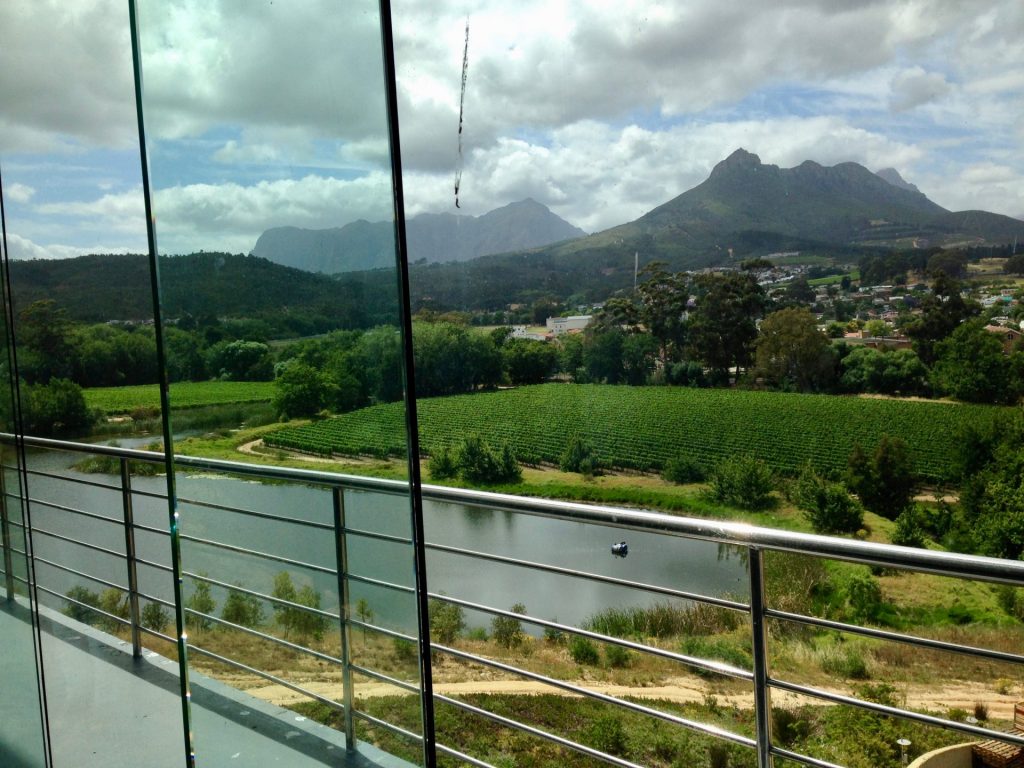
In January 2007 May-Eliane de Lencquesaing sold Pichon Lalande to Rouzaud family, owners of Roederer Champagne, and moved to South Africa, opening a new winery there in 2009.

Chateau Pichon Longueville Comtesse de Lalande has traditionally been known as a feminine wine, because of the name, the role of women in its history but also because of the high percentage of Merlot (35%) for a classified property of Pauillac, a traditionally Cabernet driven appellation.
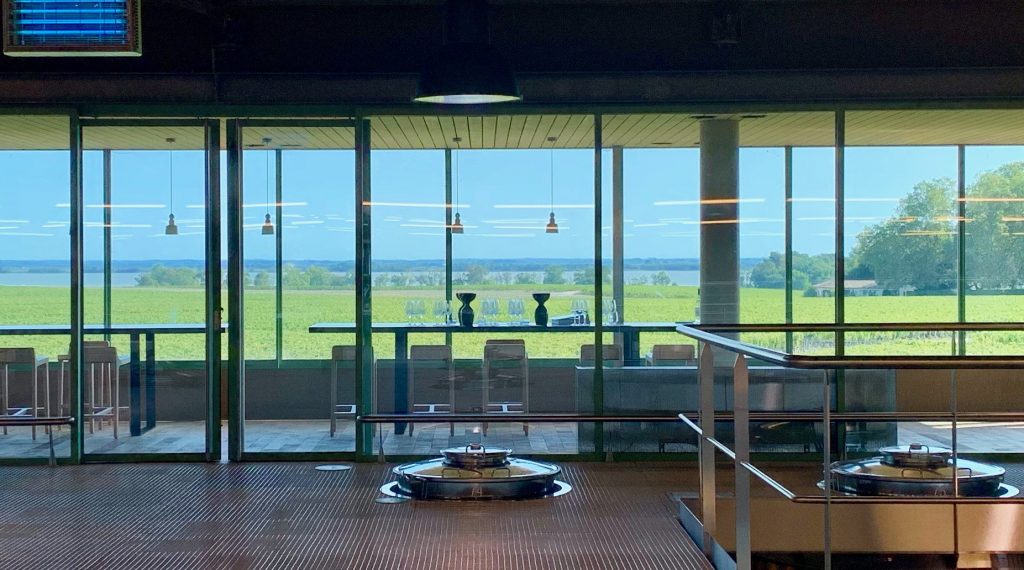
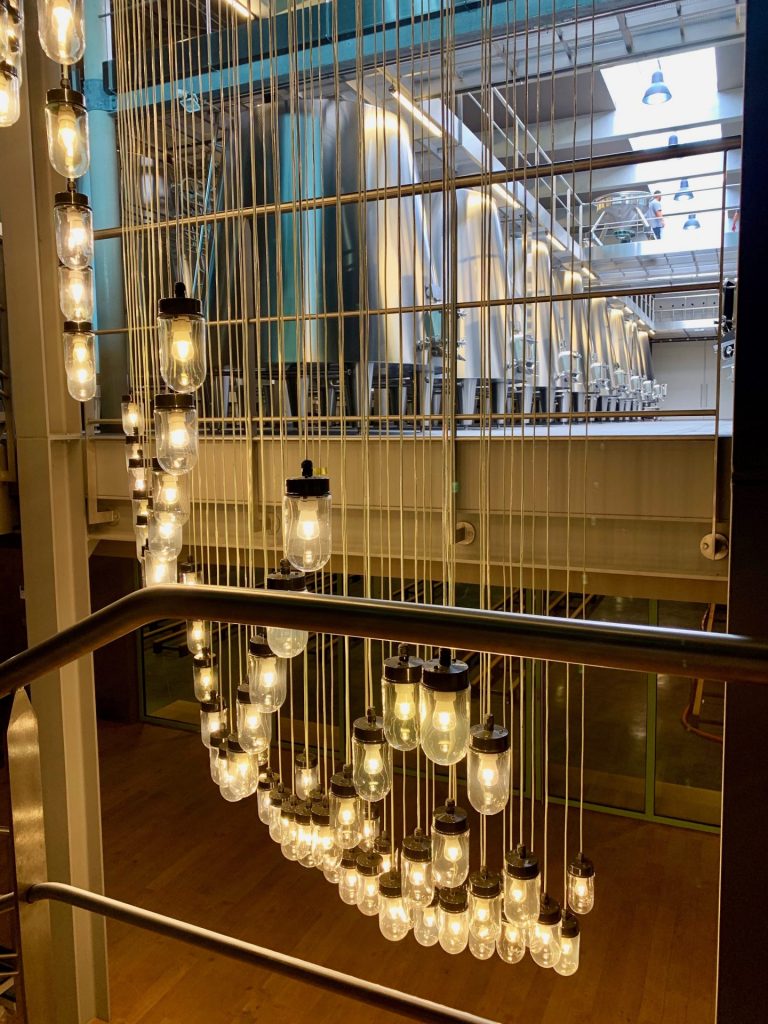
Renovations under the Rouzaud ownership have created a spectacular, triple tiered, gravity fed cellar, allowing a plot-by-plot vinification, and a gentle extraction aiming to preserve the feminine signature of the wine.
The vineyard has also been restructured, planted in a more traditional Pauillac blend of 65 % Cabernet Sauvignon, just 25% Merlot, 7% Cabernet Franc and 3% Petit Verdot.

It is still in touch with its feminine side; since the 2017 vintage the labels have changed slightly, the second wine is now labelled Pichon Comtesse Reserve (rather than previous la Reserve de la Comtesse), once again, putting the Comtesse first.
If you have enjoyed this post please sign up here to receive future blog posts directly to your in box.
If you would like to learn more about Bordeaux and its history, you can buy your copy of Bordeaux Bootcamp here.