Bordeaux brandstorming.

As Bordeaux presents the 2018 to the world this week, I take a look at how the identities of some of the Chateau ‘Brands’ continue to evolve.

Visiting the Châteaux in Bordeaux you can’t help but notice the increasing number of vats in the cellars and their decreasing size. This directly reflects the more precise parcel (or plot) divisions within the vineyards. Alongside new, more precise, selection techniques at harvest, this gives winemakers a larger palette of wines to work from to create their blends. Second wines are nothing new, third wines are now more common but this proliferation of labels from individual properties poses the problem of how to differentiate between them in the eye of the consumer.

How can winemakers create new products and grow their brand whilst maintaining brand recognition and without creating confusion or alienating established clients, both trade and consumer? It’s not always easy.

Take the Rothschild brand. How many times have consumers been confused about the mention of Rothschild on a label? Outside of the kissing cousins of Lafite and Mouton in Pauillac, both branches of the family have a range of other labels from outside these iconic vineyards. Mouton Cadet is the largest and most famous but the Saga,  Réserves and Légende ranges from the Lafite stable are growing and that’s without looking at their ranges from the Languedoc and further afield. Is Rothschild perceived as a brand or is it a signature guaranteeing a level of quality? I know from experience that many clients are proudly buying into the dream when they bring out a bottle with a Rothschild signature.

Labels change, with properties tweaking the design over the years. Mouton is famous for changing artists with every vintage, but here I’m talking about more subtle changes in labels. Why change? They could be looking for a more modern appearance to attract a different market, it could be a change of ownership or a change in wine making style.

An example close to home is Chateau Guiraud; the maritime history of the Narby family was the inspiration for the use of the dolphin on the label. The second wine being called Le Dauphin (also French for the ‘King in waiting’). Under the new ownership of Peugeot this has been replaced with a Plantagenet lion, a reference to the Alienor of Aquitaine but not too estranged from the carmakers’ logo.

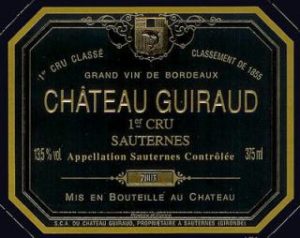
                       The New Guiraud Label

and the old

The name itself might pose a problem. In export markets a pronounceable name is important and a non-threatening name helps when ordering from a wine list. This could be one of the reasons why the second wine of Chateau Haut Brion was changed from Château Bahans Haut Brion to Le Clarence de Haut Brion with the release of the 2007 vintage. Not only a new label but also presented in the unique Haut Brion shaped bottle, reinforcing the brand recognition.

The La Clarence de Haut Brion     bottle launched in 2007

Similarly the second wine of Château Lynch Bages called Haut Bages Averous had very little in its name to suggest a link to its famous big brother. It was changed to Echo de Lynch Bages in 2008.

Keeping it simple at Château Lynch Bages

Chateau Haut Bailly has just redesigned their labels keeping the design in line with the very classic image of the estate. The chateau introduced their second wine in 1967 under the label La Parde de Haut-Bailly. After 50 years it has been rechristened simply Haut-Bailly.II for the release of the 2018 vintage.

Their third label, known as “Pessac-Léognan” since 1987, is now labelled simply with the HB initials of the property. All three labels have a unifying clear, modern and elegant brand identity, very much reflecting the style of the wines and the chateau.

The new Haut Bailly labels

Other properties take a less classic approach, Philippe Raoux purchased Chateau D’Arsac, Cru Bourgeois of Margaux in 1986 and he has been innovating (and renovating) ever since. He shares his passion for contemporary art throughout the chateau, cellars and vines adding a new major contemporary piece of art every year since 1992.

The chateau itself is a work of art; the fire-damaged roof has been replaced with a glass tiles letting light down through the centre. The uninitiated might think a girder was left  by the work men leaning against the building, but no, it is another work of art now so intimately connected with the property that it graces the labels.

The chateau already produced three wines, Chateau d’Arsac appellation Margaux, Le Monteil d’Arsac appellation Haut Médoc, (the property has vines on both appellations) and a white Bordeaux. He also produces a wine makers collection – handing over part of his grapes and a corner of the cellar every year to a visiting wine maker.

The new Kid from d’Arsac

The 2018 vintage sees the arrival of Raoux’s new baby: Le Kid d’Arsac. This is a second label from the Margaux appellation and true to his artistic and slightly irreverent style the label is a hand drawing of the big brother’s label featuring the iconic chateau outline and the infamous girder.

Not having enough wine to supply demand might sound like a nice problem to have, but frustrating, especially in a small and prestigious appellation such as Pomerol. Chateau Clinet faces such a problem, unsurprising really, given the success of their wines under the dynamic Ronan Laborde. In 2009 he repeated the 100 Parker point achievement of in 1989 by the previous owners (could this be a series – we are now in 2019?).

How to satisfy demand without diluting the brand and, more importantly, the quality? As well as Le Grand Vin, Chateau Clinet traditionally produced a second wine Fleur de Clinet. Improvements in the vineyard saw more grapes destined for the Grand Vin, reducing production of the second wine, yet the demand was there, what to do?

The answer was to create BY Clinet with a different philosophy to a classic second wine, sourcing grapes from selected growers (including Clinet) across the classic Pomerol terroir. The wine is made by the Clinet team with aging in second-fill bar­rels putting an emphasis on freshness. The presentation is distinctly different, with a painting by the American artist Gordon Hopkins gracing the label – so no confusion there.

The first vintage of By Clinet label with its very distinctive label.

Ronan already introduced the notion of a Clinet brand in 2009 launching Ronan By Clinet. Here the same wine making team (he keeps them busy) produces a more accessible, Merlot driven wine, from grapes purchased from other vineyards on the right bank appellations of Castillon-Cotes de Bordeaux, Bourg-Cotes de Bordeaux and Bordeaux. The result is a Bordeaux AOC with a Pomerol feel.  In 2012 he added a Bordeaux dry white to the brand with grapes selected from vineyards in the Entre Deux Mers. Now he has added his Pur’Cab Bordeaux, a 50:50 Cabernet Franc and Cabernet Sauvignon blend, a change in tack from his usual Merlot signature.  It’s a tiny production, just 1 000 cases, so far only available in 2015 and 2016 vintages.

So successful have these brands become they have outgrown the original wine cellar at the Château. Ronan and his team now make these wines in their ultra modern wine cellar, opened in time for the 2015 vintage, a stone’s throw from where the Grand Vin is still produced at the Chateau.

The latest news is that Château Clinet will add to their ‘Clinet Collection’ towards the end of the year, re releasing the Second Vin, La Fleur de Clinet with a tiny production of the 2016 vintage. Sneak preview of the label project below – you heard it here first!

The project for the new Fleur de Clinet label – watch this space.

If you enjoyed this post you might enjoy A New crop of Labels and the update on Les Griffons Label here .  To receive future blog posts directly to your in box please sign up here.


Is Wine Tourism changing the face of Bordeaux?

Amongst the many misconceptions about Bordeaux is the notion that the doors to the cellars are closed to visitors. As you’ll know, if you follow this blog, this is no longer so. According to the Bordeaux Tourist office, 5,8 million tourists visited the city of Bordeaux over the past 12 months, a record, and of course most of them venture out to the vineyards.

Wineries are constantly updating and renovating their cellars to adapt to the latest wine making technology, but it’s not just winemaking that motivates the new designs. With wine tourism growing in the region, adapting to visitors is now a priority and the visitors experience and the image of the property is up there with the technical winemaking when it comes to design decisions.

The new glass Château Pedesclaux

 Architect Jean-Michel Wilmotte has brought the 18th century Château Pedesclaux very much into the 21st century. Completed in 2014, the impressive ultra-modern glass cellar has 58 double-compartment conical tanks gravity-fed stainless steel vats that correspond to the new plot-by-plot organisation of the vineyards and refrigerated rooms allow not just prepping for cold soak but allowing time to manage the influx of grapes. So far so technical, but the modern take is not just in the wine cellar. The traditional château is surrounded by a glass ‘box’ extending to each side, allowing room for a tasting room encompassing the old pigeon tower on one side and offices with a view over the estuary on the other.

The old Pigeonnier inside the new gallery-tasting room.

Further South in the heart of the village of Margaux, Chateau Marquis d’Alesme, is being redesigned with the visitor experience at the heart of the project. This is a feminine story as well as an international one. The owner, Nathalie, from the Franco-Chinese Perrodo family has trusted Marjolaine de Connick with the wine making. The architectural project has been handed to Fabien Pedelaborde working alongside local craftsman using excellent materials to create an Asian fusion cellar. The visitor experience will start in new buildings that include a bistro serving not just wine but coffee.

 Work in progress on the new Château Marquis d'Alesme reception buildings.
Work in progress on the new Château Marquis d’Alesme reception buildings.

The Asian zen feeling of the cellars continues through the project of a series of 6 sensory gardens including a children’s maze which will open in May 2016.

Some of the 'zen' cloud detailing from the new cellar.
Some of the ‘zen’ cloud detailing from the new cellar.

 But it’s not just about visiting cellars and tasting wine, visitors also need a place to stay.  Château Haut Bailly has been a pioneer of wine tourism for many years. As well as the classic wine tourism they also cater to the corporate visitor with a fully equipped audio visual conference room. In 2012 they acquired neighbouring Chateau Le Pape.

Chateau Le Pape
Chateau Le Pape

As well as producing a red Pesac-Leognan wine, the Château lent itself perfectly to the creation of a guesthouse. Three years of renovation included adding on a second tower, giving a beautiful symmetry to the classical chartreuse, surrounded by lovely gardens overlooked by the terrace and pool. The luxurious rooms start at €250. The central location and proximity to Bordeaux make this a great base from which to discover all the other open doors in Bordeaux.


An urban vineyard

Pessac Léognan is at once one of the oldest and one of the youngest of the Bordeaux appellations.

One of the youngest as it was officially created in 1987 and yet the oldest as it encompasses what was known as ‘Les Graves de Bordeaux’ the ‘cradle ‘ of fine Bordeaux wine making as we know it today.  Vine cultivation here dates back to about the 1st century and, unsurprisingly, it has seen a series of booms and busts during its history. Looking at the architecture of some of the properties (Chateau Olivier for example) you can see they enjoyed huge prosperity in the Middle Ages thanks to the marriage of Eleanor of Aquitaine to Henry Plantagenet (soon to be Henry II) of England who brought the region under the English crown in her dowry.

Chateau Olivier dates from the middle ages

Pessac-Léognan is to the North of the Graves and the two appellations together (as they were pre 1987) cover almost 4 000ha running 60 kilometres from Bordeaux in the North to south of Langon surrounding the Sauternes and Barsac appellations. 240 wine makers produce about 20 million bottles in Graves and about 9 million in Pessac Léognan. The classification of Graves in the 1950’s predates creation of the Pessac Léognan appellation, which is now where all 16 classified Chateau are situated.  These represent in white and red about 20% of the volume of production of the appellation.

Well established since the middle ages the Graves made their claim to fame in the 17th century notably thanks to the dynamism of Arnaud de Pontac, (The third of that name) and owner of Chateau Haut Brion. The only red 1st growth of 1855 not to be from the Medoc, although 12 Sauternes 1 Barsacs were also classed 1er. In what was probably the first act of direct wine marketing, he sent his son to London after the great fire in 1666 to open the first French wine bar (well tavern) ‘the Pontac’s Head’. Who said that Bordeaux was behind the marketing curve?

Chateau Haut Brion and its park, hidden in the suburbs of Bordeaux

London was the market leader for Bordeaux wines then (and remained so until the Chinese over took them in 2010). By selling their wines directly to clients in the city Haut Brion established the popularity of The New French Claret with this wealthy and influential clientele.

It was a new style of wine; using longer on-skin fermentation in larger barrels, topping up to prevent oxidation and protection from fungal and micro bacterial contamination by the use of sulphur, a practise introduced by the Dutch (the Bordelais still use a ‘Dutch match’ of sulphur in the barrels today between rackings to ‘disinfect’ them). This created a style of wine that has more in common with what we know as Bordeaux today rather than the ‘Clairet’ previously sold out of Bordeaux. This lighter wine would go off rapidly in the summer heat despite its high acidity. These wines were so popular with Northern Europe that in the 14th century this light Clairet (or rosé) dominated representing about 80% of the production in the region.

Racking the barrels of wine during aging

This period of boom lead to the ‘Vins de Graves’ dominating the English market for quality wines until the end of the 18th century. Being so close to, and in some cases in, the city of Bordeaux, these vines were on hand for the great and the good of Bordeaux. The vines were planted on outcrops of gravelly soils that were unsuitable for any other agriculture but gave strength to the wine. They reached the very walls of the city up until the 19th century. A law that prevented wine being imported from further up river until all the local stocks had been sold also helped their success. This success, unsurprisingly, lead to increased planting away from the city walls further south as far as Langon.

However in more recent times the locality has proved a challenge; the proximity of the city and its urban sprawl has seen competition for the vineyards. In the crisis after WW1 and again in the 50’s and the 70’s, crises related to both global economic factors (post war depression, exodus from the land) as well as local conditions (frosts of 1956) meant that urban pressure from the city resulted in many properties being sold for redevelopment rather than remaining under vines.

Happily some survived and have become urban vineyards, it is surprising now to see the green oasis of vines amongst the suburbs of the city that are Chateau Haut Brion, La Mission Haut Brion, Pape Clement and Haut Brana in Pessac – along side the university buildings and Chateau Luchey Halde and Pique Caillou in Merignac (better known to international visitors for the Bordeaux airport). See the map here.

The history of one of these properties, Chateau Luchey Halde, reflects that of the region, just like the appellation it is one of the oldest and the newest at the same time.  Although the history of vines at the property dates back to roman times the property was completely replanted by the current owners, ENITA de Bordeaux (a government agricultural agency) in 1999. It was saved from the urban sprawl having been a military training ground close to the airport for 80 years.  Being reinstated as a vineyard, it is now also an agricultural school and as such benefits from the latest research and technology in vine growing and wine making on it’s 22 ha of the 29ha that are under vine.

This urban pressure, along with a desire to re-establish an idea of ancient Northern Graves terroir was one of the reasons for the creation of the Pessac Léognan appellation. Despite it being a bit of a mouthful, named after 2 of the 9 communes or villages in the appellation, it seems to be working. Since it’s creation on 9th September 1987 over 1 000 ha of vines have been replanted in Pessac Léognan. Also encouraging was the launch earlier this year of the ‘Schéma de cohérence territoriale (Scot) which officially ‘designated’ almost 50 000 hectares in 93 ‘communes’ in and around the city, including 25 000 ha of vines, as protected from urban development, both commercial and residential. When you consider that the total vineyard of the 62 Bordeaux appellations covers just over 113 000ha – it’s reassuring.

The current terroir of Pessac Leognan

But it’s not all bad, the proximately to Bordeaux is also helpful, creating a warmer microclimate encouraging early ripening; these vines are usually the first to be harvested.

It’s also an advantage for visitors – no need to worry about drinking and driving if you want to visit and taste, several chateaux are within walking distance of Bordeaux’s new tramway. This could be useful on the weekend 6/7 December, the Pessac Léognan open days. However I encourage you to venture out further than the city limits if you can.  Use the Route des Vins de Graves that includes all the Graves appellations and covers not just the Chateau but also other activities including accommodation in the region.

Chateau Haut Bailly
Chateau Haut Bailly
Where you will be able to taste the delicious West Coast Burgers

I would also recommend a visit to Chateau Haut Bailly in Léognan during the weekend. As well as a cellar visit and wine tasting you can sample the excellent burgers from the West Coast food truck and enjoy live jazz music on Saturday afternoon. Burgers and Bordeaux – bon appetite!


Dining in and out of town.

Saint Julien is a prestigious appellation but it is one of the smallest in the Medoc and the village itself is tiny. It already has a lovely restaurant, appropriately called Le Saint Julien, however, should you want a less formal dining experience there is now a new roadside restaurant called Chez Mémé. It has been open for about a year now, and is the lunch spot for all the local winemakers. It is run by Didier and Nadege, both of who are well known having worked in wine and hospitality in Bordeaux for years. Their warm welcome and the excellent value for money (3 course daily menu for €15) explain the success they now enjoy. As they are open from nine to five, Monday to Thursday and nine to four as well as the evening on Friday and Saturday, you can even call in for breakfast or a coffee between tastings. Be warned it’s best to book ahead.

Chez Mémé
Chez Mémé

On an altogether bigger scale, on the right bank, Chateau La Dominique, Grand Cru of Saint Emilion, has just opened a roof-top restaurant ‘La Terrasse Rouge’ overlooking the vines of the chateau and neighbouring Pomerol. Run by the team from popular Brasserie Bordelaise in Bordeaux you can see them at work in the open kitchen and bar. The atmosphere is very much a brasserie and the food is simple, generous and classic french. They too are open as of 9.30 for a vigneron breakfast of cold cuts and fresh bread – the perfect way to set you up for a morning of tasting. The large terrace is built over the impressive new barrel and fermentation cellars of the chateau and is decorated with thousands of red glass pebbles, designed to look like the top of a vat in fermentation.

La Terrasse Rouge
La Terrasse Rouge – don’t fall in!

When you are in town try  Garopapilles the brand new wine shop and restaurant just opened by chef Tanguy Laviale. Tanguy knows all about wine and about food; he was previously the private chef at classified growth Chateau Haut Bailly in Pessac Leognan. It’s a great concept; open at lunchtime Tuesday through Friday, and evenings on Thursday and Friday. At other times they make the small (20 covers) restaurant  available for small private groups for hands on food and wine tasting events, either with his sommelier who selects the wines for the shop or bring your own wines (it’s already a favorite haunt of the wine trade).  You walk through the wine shop into the restaurant with its open kitchen and small private terrace (where they grow their own herbs too).

Seasonal fare from Tanguy Laviale

The lunchtime menu of the day is created from whatever appeals to Tanguy in the market that morning. His cuisine is a wonderful expression of classic local ingredients with his own personal twist, accompanied by friendly service and a great wine selection, not just from Bordeaux. Evenings offer a 5-course menu. Check on line or follow on Facebook for more information about his themed tasting evenings.

Garopapilles
Garopapilles


Romantic Bordeaux

Bordeaux is a pretty romantic place, see Get Wed with Wine , and Saint Valentine’s day would be the perfect time to find out. There are no end of wonderful restaurants and romantic hotels to choose from in the region, however you could celebrate with your loved one in the romantic setting of a Bordeaux Chateau. Two properties from opposite banks are opening their doors for an intimate evening on the 14th of February.

Jérôme Cadillat, the chef at Château Troplong Mondot, classified growth of Saint Emilion is offering a fireside dinner menu accompanied by champagne and amour de Mondot – a special bottling of the second wine of the property for the occasion. You can prolong the romantic atmosphere by staying over in one of their lovely guest rooms or cottage in the vines.

The Cottage in the vines of Chateau Troplong Mondot
On the left bank Chateau Haut Bailly, whose wonderful dining room is usually only available for private groups is opening up with tables of 2 dotted through the beautiful salons of the Chateau. Their innovative Chef, Tanguy Laviale, has created a 5 course menu accompanied by champagne and 3 different wines from this Classified growth of Pessac-Leognan.

The beautiful Chateau Haut Bailly


If you cannot make it over here, you could always order a bottle of the most romantic Bordeaux wine : Chateau Calon Segur. This 3rd growth of Saint Estephe will probably be flying of the shelves in the run up to the big night. The heart on the label makes it easily recognisable, created by the property’s owner the Marquis de Segur, who, despite owing Chateau Latour and Chateau Lafite at the time always said his heart lay with Calon Segur and drew a heart around the name just to prove it.

Vines on vacation

14th July, Bastille Day and it’s time for staff from the Bordeaux château to go on holiday before coming back to prepare for the upcoming harvest.
Touring the vineyards of Bordeaux this week with guests from Hong Kong, there are clear signs of an early harvest on its way. Throughout Bordeaux winemakers are estimating about 3 weeks advance on the usual season and château workers are taking their holidays earlier to be back before the end of August to prepare for a harvest which could start mid September for the reds.
Veraison is clearly on the way in some area see the photos of La Tour and La Mission Haut Brion, which is always ahead of the other vineyards of Bordeaux thanks to its location in the Bordeaux suburbs giving a warmer micro climate.

Veraison at Château Latour this week
Veraison at la Mission Haut Brion this week

An early season does not mean it has all been kindness however. Parts of the plateau of Sauternes were hit by a hailstorm late April.
The Plateau of Margaux was also hit by a hailstorm early June going right through the Rauzan section of the appellation causing considerable damage.
On the Margaux plateau some areas have suffered badly from the very dry and, in particular the very hot, conditions on the last weekend of June have given some of the grapes ‘sun burn’ and in some places, as below where the grapes are exposed to direct sunlight along the edges of plots, grapes have completely desiccated. Showing how important canopy management and leave stripping (or lack of it) is in these atypical vintages.

A touch of sun burn on grapes at Château Haut Bailly
after the hot weekend sun late June

Desiccated grapes on the vines of Château La Mission Haut Brion,
these vines on the edge of the parcel are in the direct sunshine where
they are not shaded by neighbouring vines.

It is a year where the relatively new techniques of optical selection and tribaie will be put to good use;
Rain in the last 24 hours, however light, was a welcome relief .The vine-workers might be looking forward to sun for their holidays as of this weekend but the vines would welcome some water. Looking at the weather forecast the vines might have to wait another few days.
Not all the château close for the holidays, more and more properties throughout the whole of the region remain open to visitors for the summer as wine tourism takes a firm hold in Bordeaux. I would recommend booking ahead however to avoid disappointment.
Happy holidays!

Why is wine red ?

Well of course you know the answer and you probably know the answers to most of the other 99 questions in the l’Atelier du Vin’s new book.
I found it in the great shop at Château Haut Bailly. It’s a very basic but fun guide to wine and you can practise your wine French/English as between David Cobbold and Sébastien Durand-Viel its completely bilingual – careful though not always an exact translation but adapted to suit a French or anglo-saxon audience. I’m curious as why when talking about malbec Cahors is mentioned in French and Argentina in English – Cahors wines export – don’t they?
Has anyone really tried wine sediment on toast ? (see p36)

Château Haut Bailly – more than just a winery

Château Haut Bailly has always practised an open door policy – I have already mentioned their great shop and their innovative picnics in the grounds in previous posts
They are now opening their doors a little wider welcoming guests to their new conference facilities
A new conference room adds the final touch to a offer that allows corporate guests to work in the elegant surroundings of a classified growth. Coffee in the château, work in the fully equipped conference room and lunch or dinner in the converted cellar for up to 50 in meeting format or 60 in conference– what better way inspire your team?

Down to serious business

SO MANY CHATEAUX, Not enough weekends ……..

Spring is definitely allowing Bordeaux château to open up their doors
This weekend was the open door weekend in Saint Emilion, and next weekend is the turn of the Côtes de Bourg. Everything from treasure hunts to car rallies and tastings to fashion shows you name it to discover the vineyard on the other side of the estuary.
However do not despair if you’re not free on those dates – every Saturday in May Chateau Carbonnieux and Chateau Haut-Bailly, both classified growths of Pessac Leognan, will join forces for a ‘bicolore visit’ with the white wines of Château Carbonnieux, and the reds Château Haut-Bailly.
If you have time for lunch – call ahead and reserve a picnic hamper (including wine of course) prepared by local restaurant Le Pistou, and enjoy the lawns of the properties. Book ahead with on 05.56.64.75.11/visites@chateau-haut-bailly.com

If the weather doesn’t hold or you don’t fancy a ‘déjeuner sur l’herbe’ Le Pistou is running a special bicolcore menu for the month.


copyright Château Haut Bailly

Bordeaux at Mosimanns

Mosimanns, the private dining club in Knightsbridge has had a Bordeaux week.

Wednesday Bordeaux Blonde presented to the winner and finalists of the IWSC independent retailer competition and Friday Alexander Van Beek and Veronique Sanders hosted a Château Giscours and Château Haut Bailly tasting dinner there.
Mr Mosimann even has his own Bordeaux label !