Bordeaux is keeping it sweet

No not another post about Sauternes. On the contrary, as Sauternes producers are at pains to explain why their wines should not be limited to the dessert trolly, Bordeaux red wine producers seem keen to serve their wines with something sweet. They are sharing their new favorite food and wine pairings, not only in the tasting room, but also in their kitchens. Château kitchens are often as stunning as the tasting room, improving your culinary skills in a chateau kitchen is a behind the scenes treat.
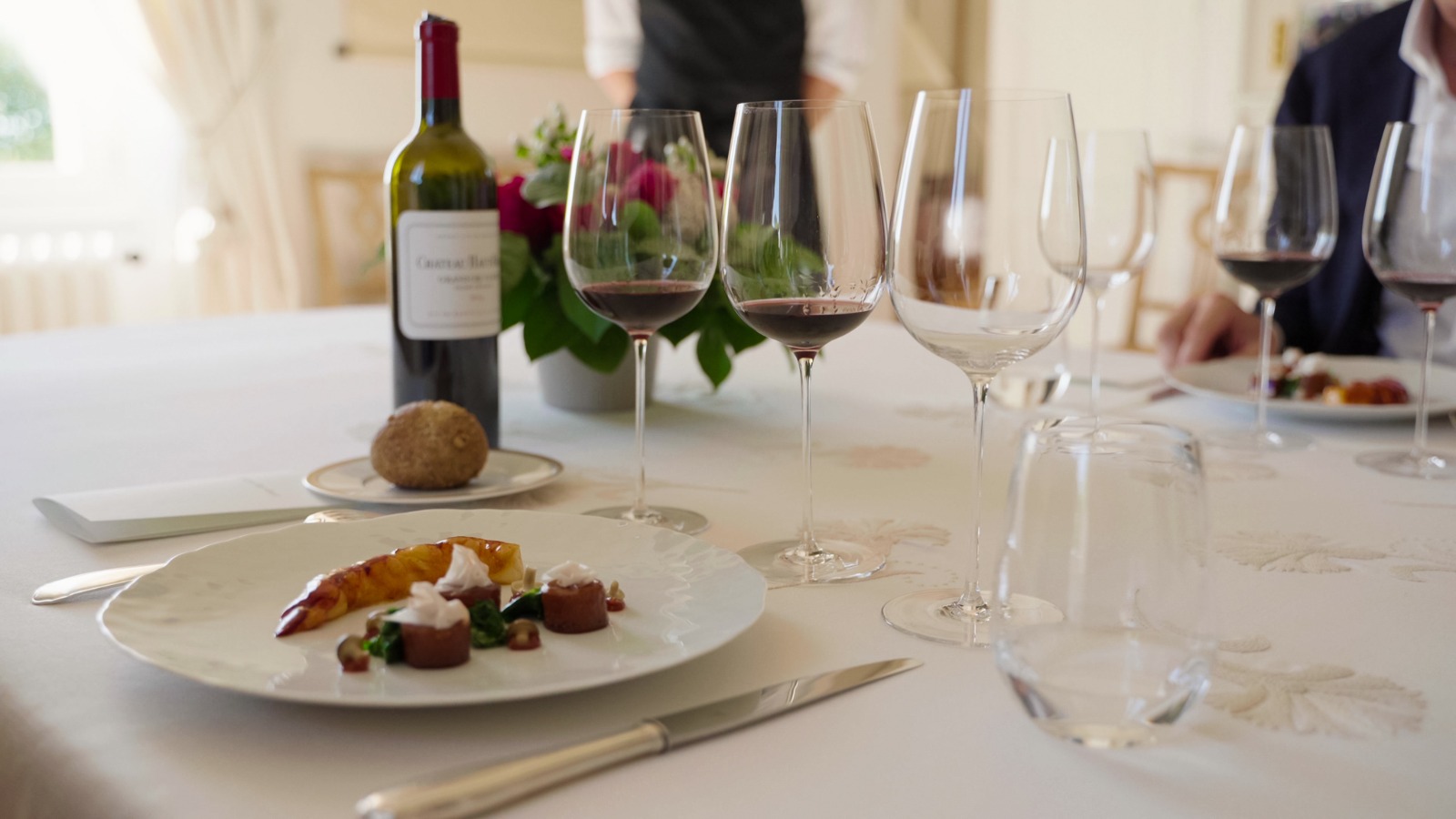
Table Privée at Château Haut Bailly

Château Haut Bailly in Pessac Léognan is the pioneer of the ‘Table Privée’ concept, opening up the private dining room of the chateau in 2009. Now, their L’ Atelier Cuisine takes you into the chateau kitchens to share how to make the famous Bordeaux cannelés and savoury gougères (even if they are a Burgundy speciality). 

If you’ve eaten all the caneles buy a souvenir copper mould to make some back home

Château Phelan Ségur in Saint Estèphe also has a sweet tooth. At their Tea Time in the Médoc, in-house chef Jean-Luc Beaufils shares the secrets of  making macarons, chocolate truffles, and canelés and then, experiments pairing them with the uniquely red wines of the property.
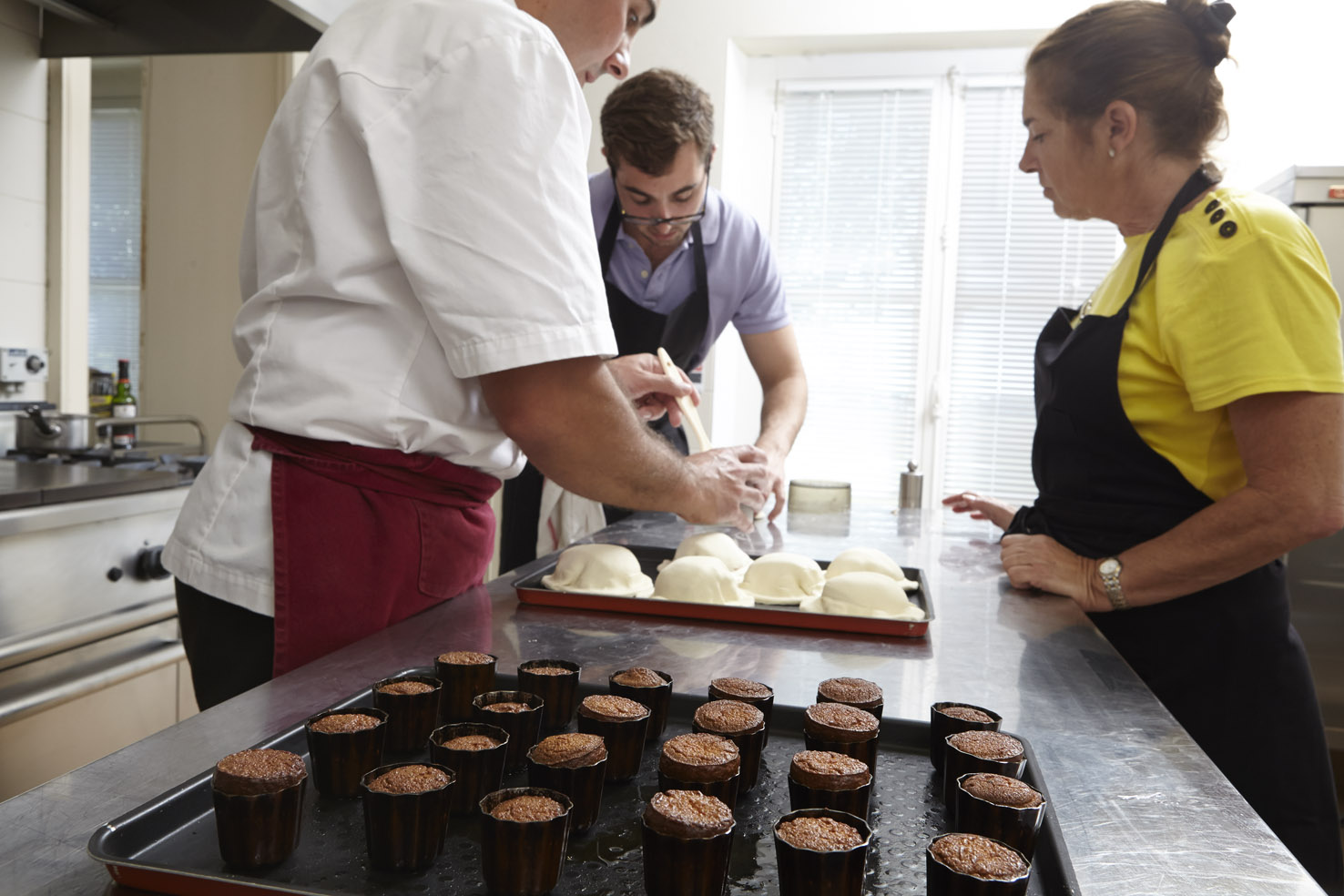
Canelés at Château Phelan segur

Sweet and savoury  

Medoc Macaron specialist Sophie Mevel of O Delices in Cussac-Fort-Medoc works with two neighbouring chateaux, Chateau Kirwan in Margaux Chateau Gruaud Larose in Saint Julien to teach guests how to master these colourful iconic French treats. Choose sweet and or savoury versions, then taste your creations with the wines from the property and take the rest home to treat the family. 
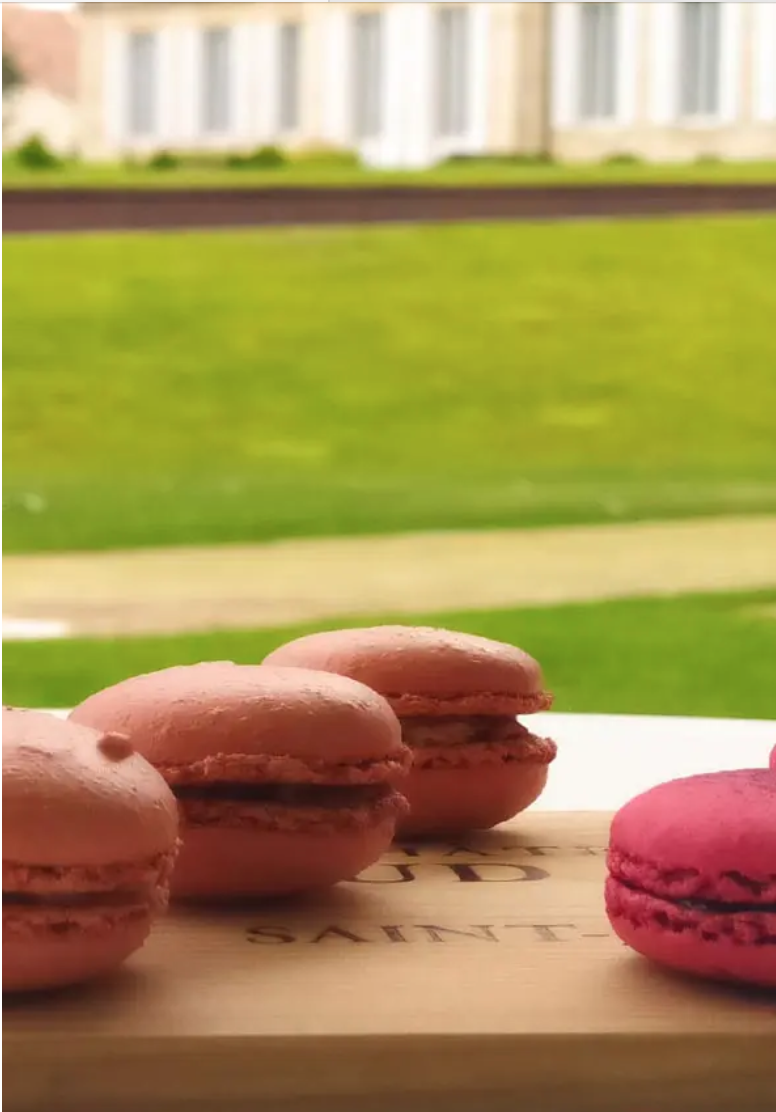
Macarons and Saint Julien at château Gruaud Larose

Wine and Chocolate 

For me, red wine and chocolate is a match made in heaven, but it takes a little thought and expertise to get it right. There’s a lot of similarity between wine and chocolate, in the notion of origin, terroir and production, but also in tasting. Acidity, astringency, tannins, bitterness, sweetness, richness (fattiness?) will all feel familiar to wine and chocolate tasters

Bordeaux Master chocolatier, Ferreira Hasnaâ works closely with chateaux across the region to create single origin, exclusive chocolates matching aromas and textures to the wines of the properties. Château Léoville Poyferré in Saint Julien and Château Marquis de Terme and Château Dauzac in Margaux all offer her  ‘Accords Parfaits©’ experiences.

Wine in chocolate 

In 2019, Hasnaâ turned the tables and launched the ‘Instant à Bordeaux’ collection integrating wine into her chocolates. She created a series of chocolate ganache made with wines from four grands crus classés (Château Leoville Poyferré in Saint Julien, Château Marquis de Terme in Margaux, Château Pedesclaux in Pauillac and Château Le Crock in Saint Estèphe). 

In October 2020 she added the appellation Moulis with Château Poujeaux and in 2021, launched  the “Rive droite” right bank collection with Château Toulouse Lautrec Malromé for Bordeaux, Château de La Dauphine for Fronsac, Chateau Bellegrave for Pomerol, Château de la Grave for Cotes de Bourg and Château Palais Cardinal for Saint Emilion. It’s a great way of comparing the personalities of the different wines and yes, you really can taste the differences.  
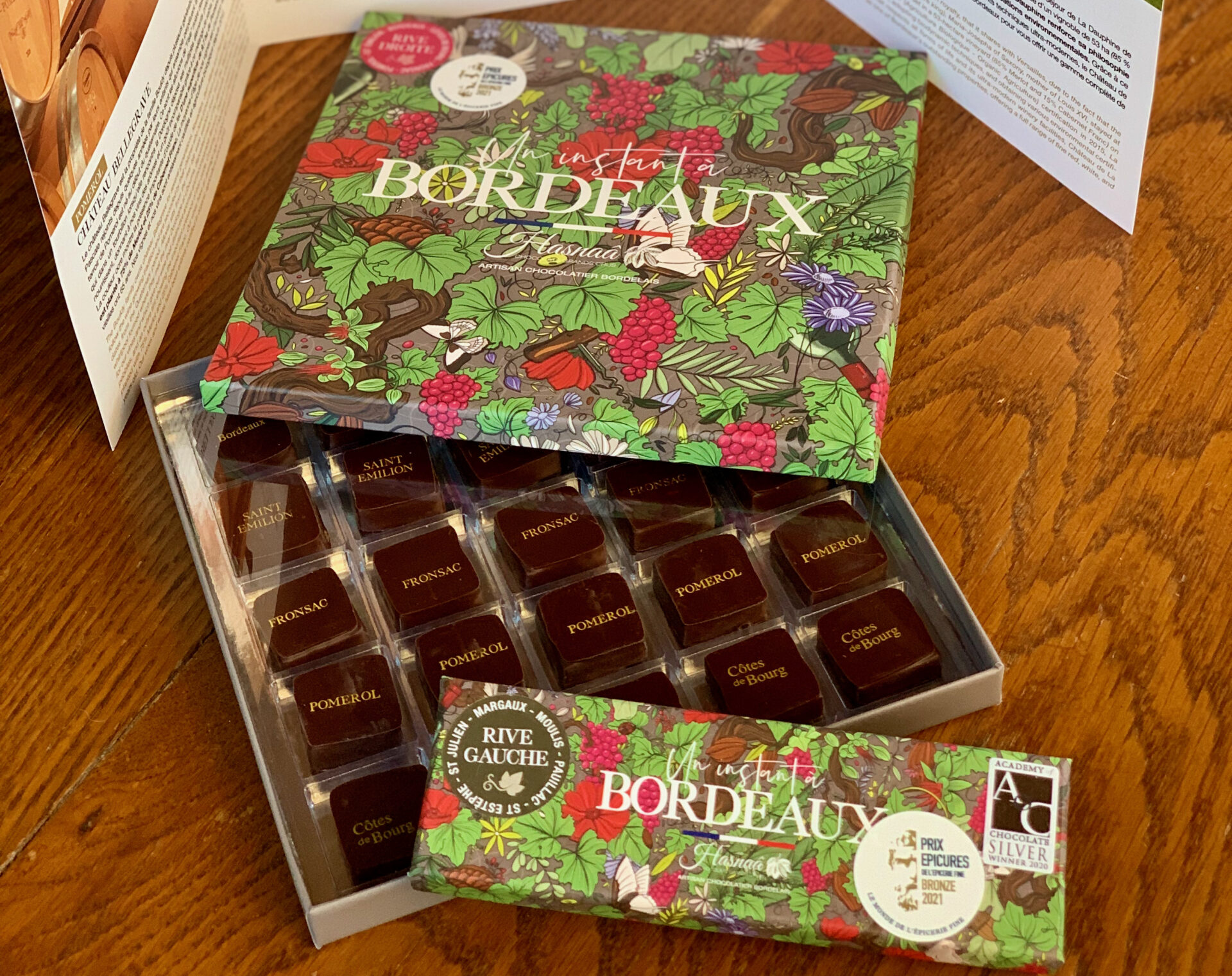
Working with Hasnaâ, Château Kirwan has taken chocolate and wine paring a  step further, introducing tasters to bean to bar chocolate-making. Explaining harvesting, breaking the pods, fermentation, torrefaction, and of course tasting. It highlights the similarities between chocolate and wine-making, terroir, history, and attention to detail, amongst others. 

At Château Angludet in Margaux, when Daisy Sichel has finished driving guests around the vines of her family vineyard in the electric golf cart, she serves them a signature chocolate fondant. It was created by patisserie chef Clarisse Argout, specifically to pair with a glass of Château Angludet and served on ‘La Terrasse Fleurie’ of the chateau.
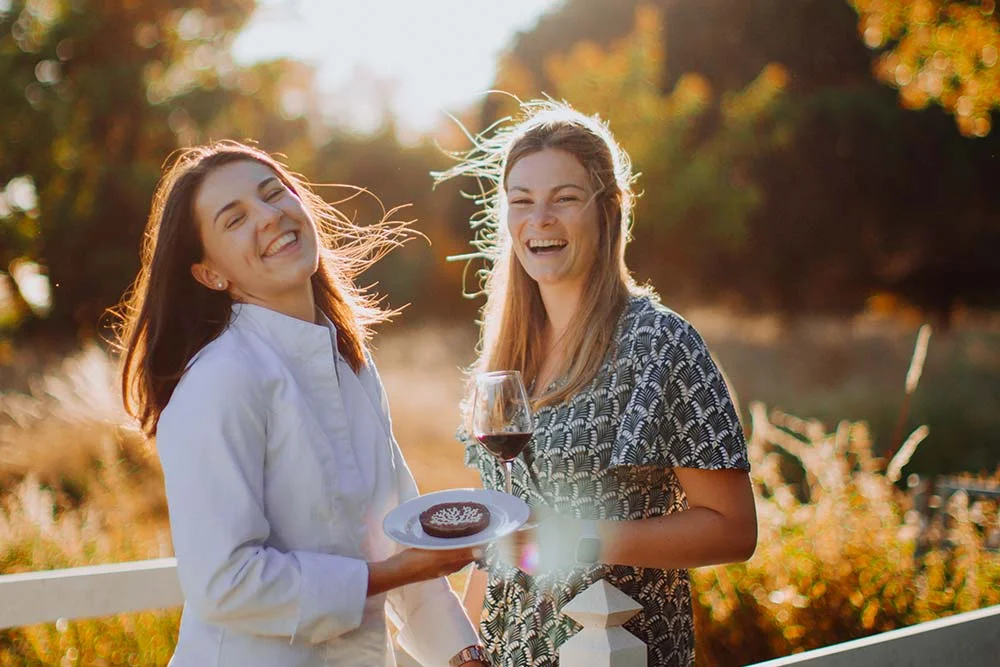
Clarisse and Daisy, chocolate and wine

Unique, wine friendly chocolate is also on the menu at Château Haut Bailly thanks to Chocolaterie Saunion. You can find the closely guarded secret recipe (I think there’s pine nuts and caramel in, along with other goodies), beautifully packaged, when you dine at la Table Privée or in the chateau boutique. 
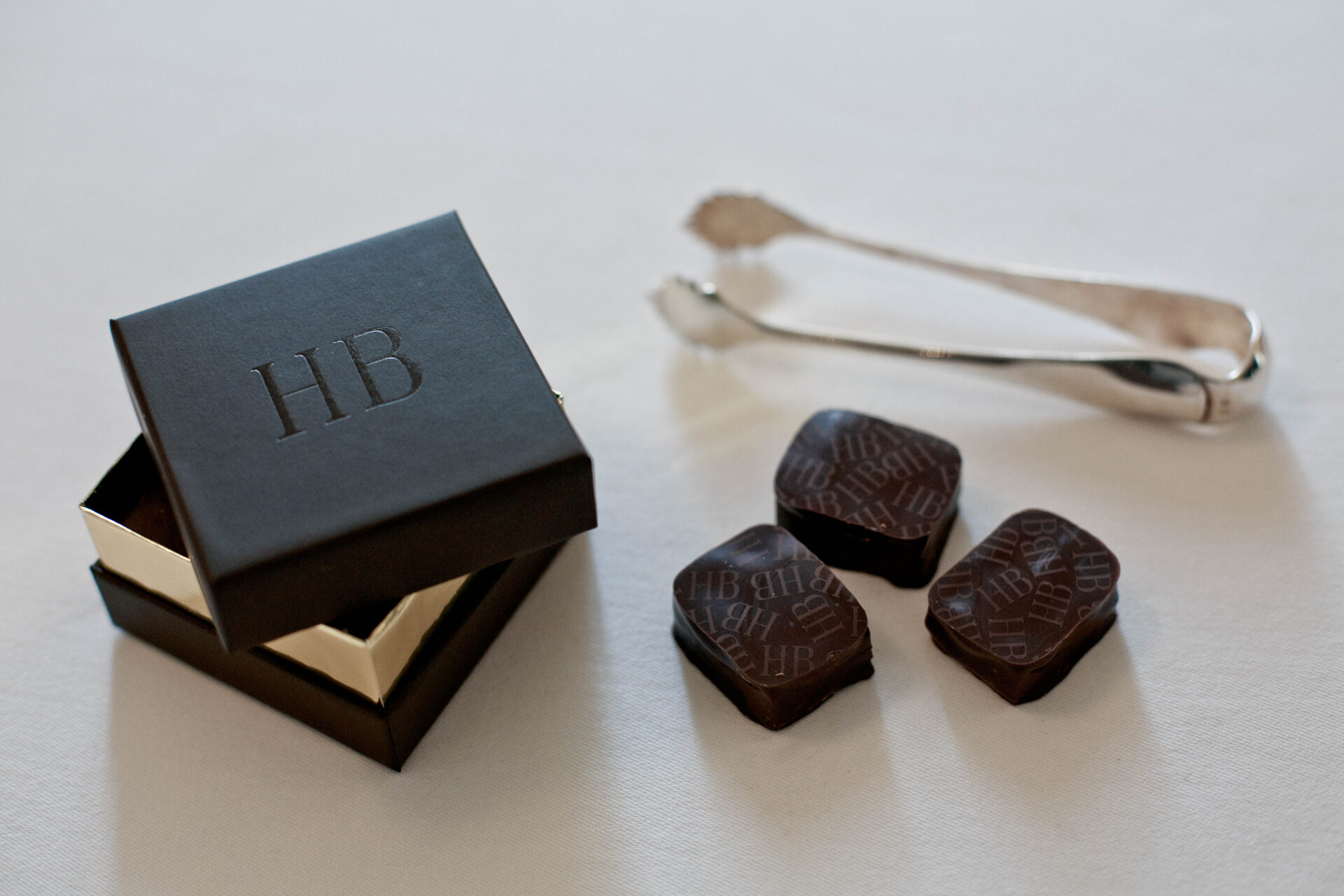
The secret Saunion recipe at Château Haut Bailly

Saunion chocolates also pair with wine at La Table de Nathalie, the very cool restaurant at Château Marquis d’Alesme. The chocolate selection takes you on a journey around the world from Tanzania to Venezuela, all the while sitting in their sunny herb garden.
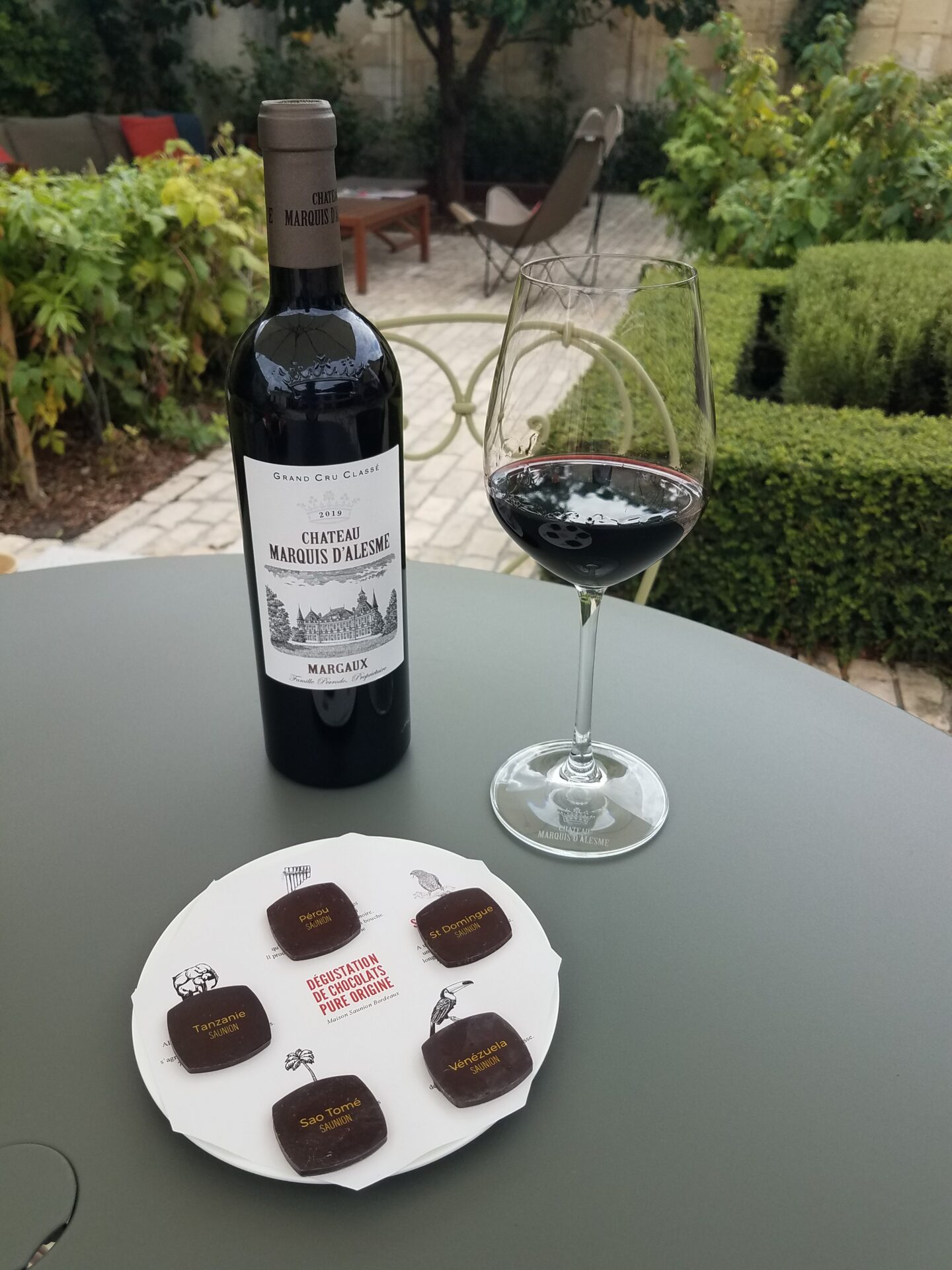
Around the world in five chocolates with Saunion at Chateau Marquis d’Alesme

The right bank has their chocolates too. After training with Saunion in Bordeaux, Maëlig opened her own chocolate shop in Saint Emilion. She  works with Château Fleur de Lisse on their chocolate and wine tastings where they compare and contrast the processes of wine and chocolate making, from terroir to blends and tasting. You’ll taste 100% pure origin chocolate and three original Maëlig creations alongside three wines from the Vignobles Jade range. You’ll also find her chocolates at Château Grand Corbin, here you can compare whether left back or right bank pair best with chocolate thanks to the tasting for wines from their cellars and those of Château Cantemerle in Haut Médoc.
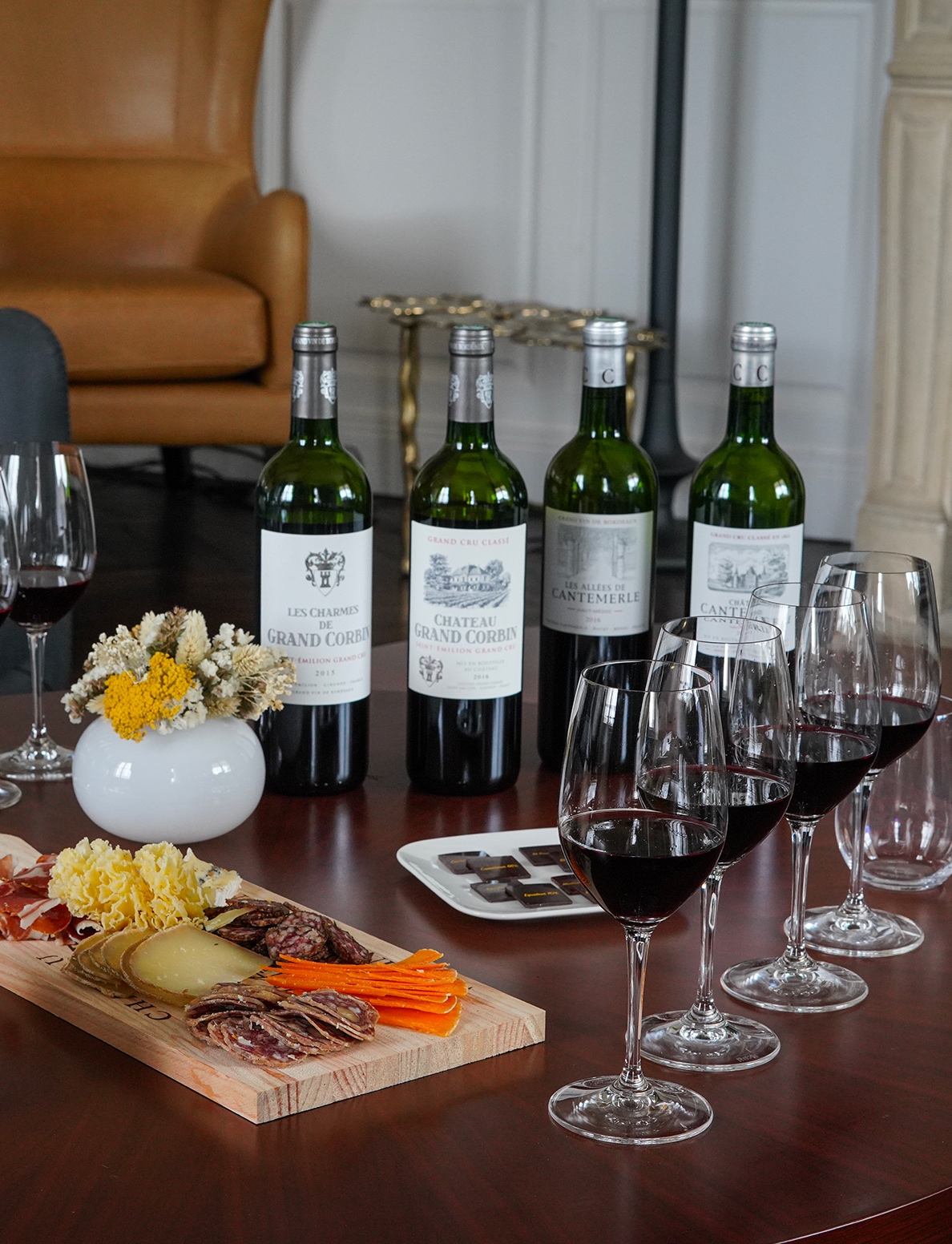
Left bank, right bank, sweet and savory at Château Grand Corbin.

Back to Sauternes 

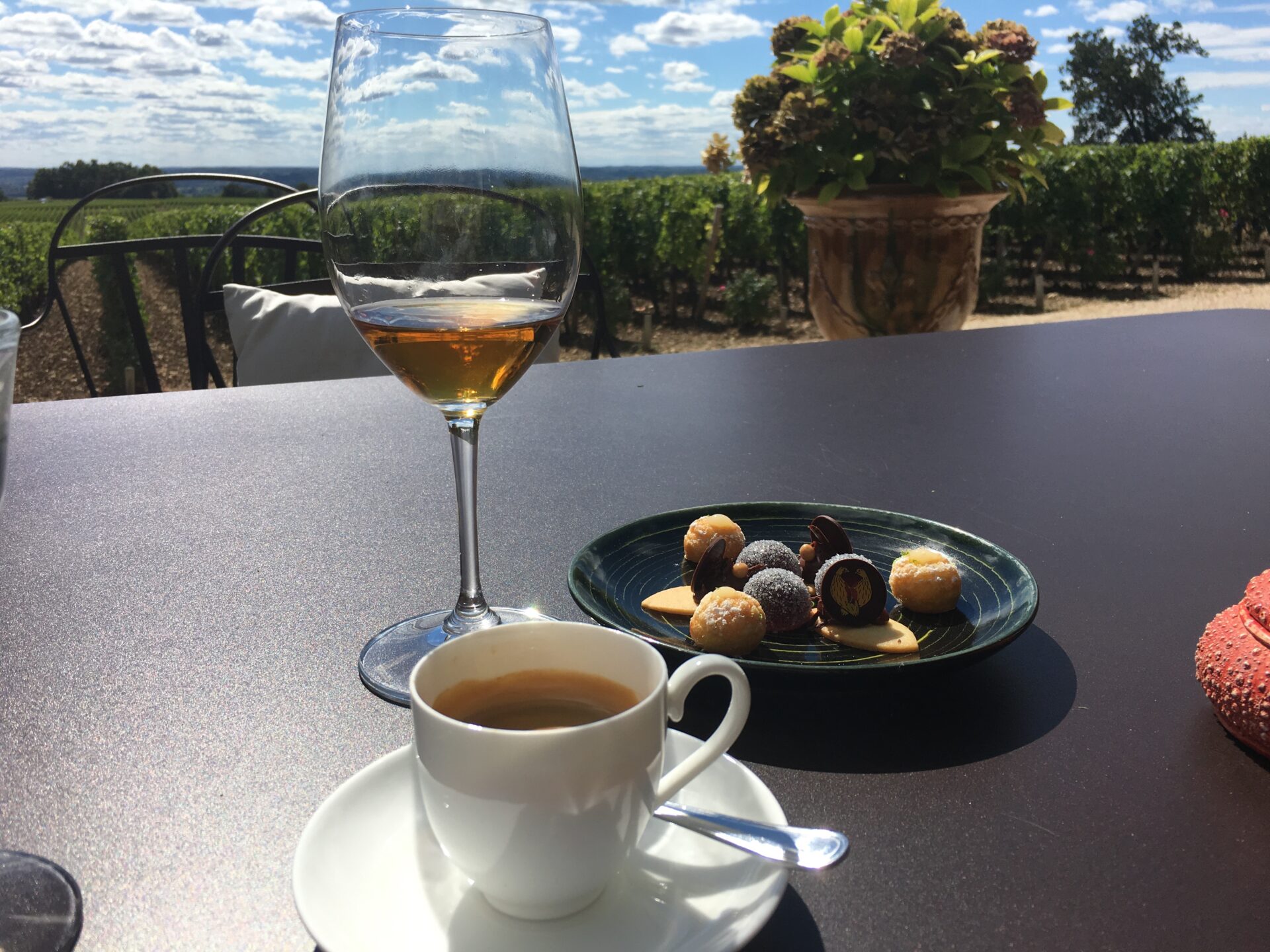
A coffee to go with all those, chocolates?  On the terrace of Château Sigalas Rabaud in Sauternes, sip on their exclusive coffee made from beans aged in Sauternes barrels. You knew I couldn’t stay away.
If you enjoyed this, please sign up to receive future posts directly to you in box. You can learn more about Bordeaux basics, with Bordeaux Bootcamp and cultivate your healthy passion for wine with the  Daily Detox webinar,  The Drinking Woman’s Diet  book or 7 weeks to a Liver friendly Lifestyle. 

California with an Italian Accent 

California with an Italian Accent 

I’ve recently returned from California wine country, ostensibly to research Bordeaux wine makers who have invested there. I came across a little known gem that of course, dear readers, I’m happy to share with you.

If you think of Napa, you probably think of Cabernet. Big bold Cabernets have put Napa on the map, 78% of Napa vineyards are planted with red varieties and of that, 51% is planted with Cabernet Sauvignon. 

Of course, there’s more to Napa than Cabernet, there’s over 30 different varieties in all. But Sangiovese? There’s very little, less than a half of 1% of the plantings. As Claire Tooley brilliantly outlined in her Decanter article last year, it’s a surprisingly low percentage given the role Italians played in the history of Californian wine.

Sangiovese is the ‘noble’, versatile grape of Chianti and Brunello, characterised by fresh acidity as well as the more powerful Brunello di Montalcino and as part of “Super Tuscan” blends. In Napa, its expression tends to be more powerful than in Chianti. Its fresh acidity and lower-alcohol levels could become more and more interesting with increasing temperatures. These lighter, brighter wines and chillable reds retain their acidity even in heat spikes.

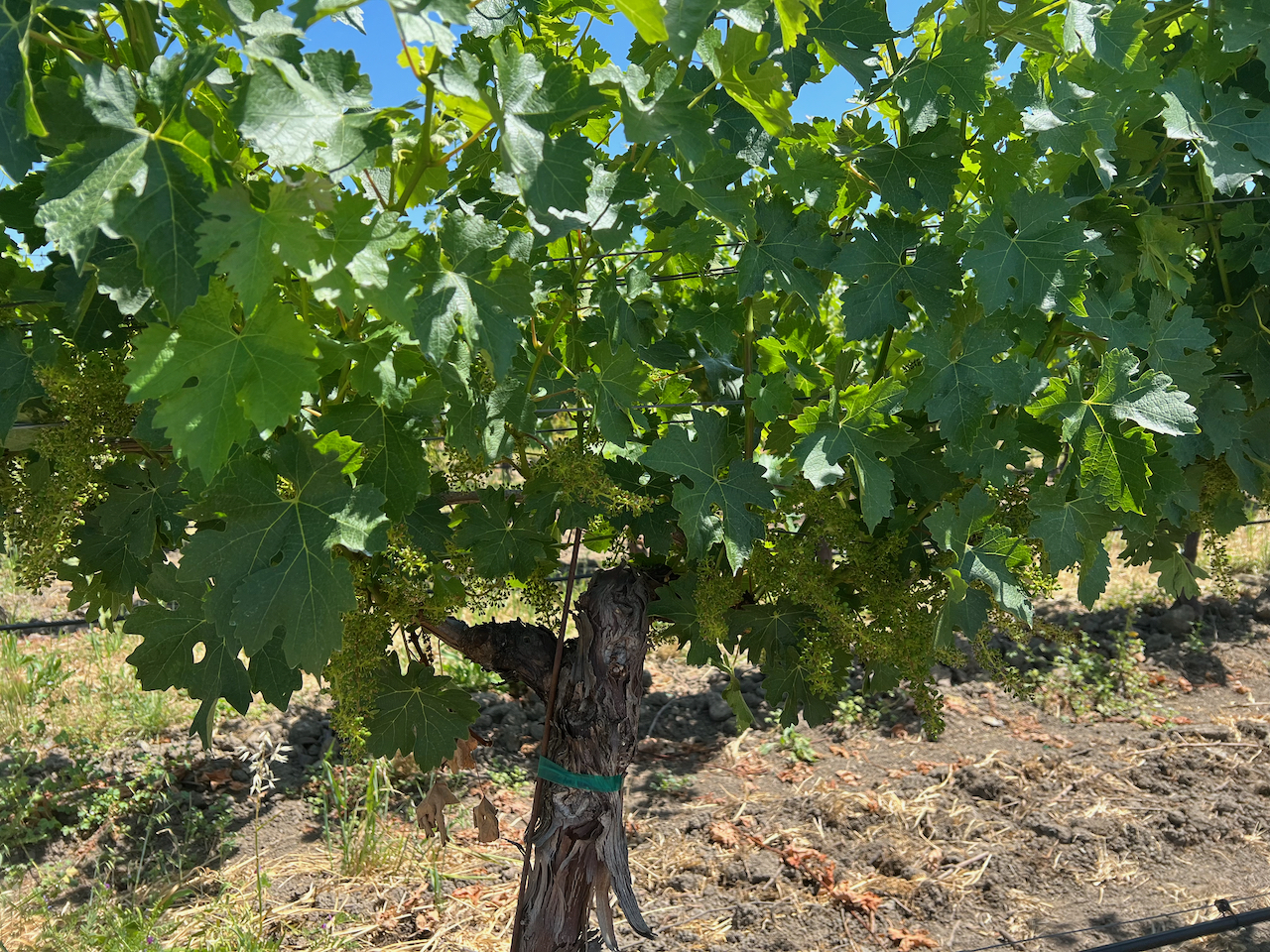
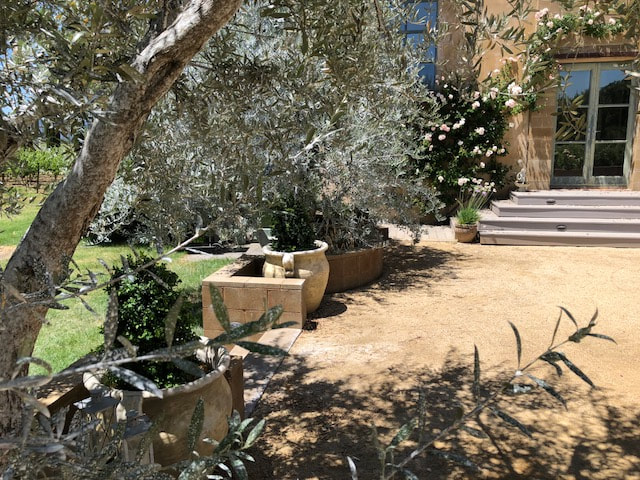
Villa Ragazzi Cabernet in flower this June

Little Italy 

In the 1980s, Michaela Rodeno and her late husband, Gregory visited Italy to trace Greg’s Italian roots. Gregory was a lawyer and Michaela was already making waves in Napa as VP Marketing for Domaine Chandon. It was Greg’s Piemonte ancestry that inspired them to try and plant some Italian grape varieties back in Napa. 

The Rodeno Clone

Initially, they tried to find some Nebbiolo budwood but to no avail. Luckily they stumbled upon an excellent, if undocumented, Sangiovese clone in a post-Prohibition vineyard. It thrived and the Rodeno Vineyards became home to the first Sangiovese grapes in the Napa Valley.  

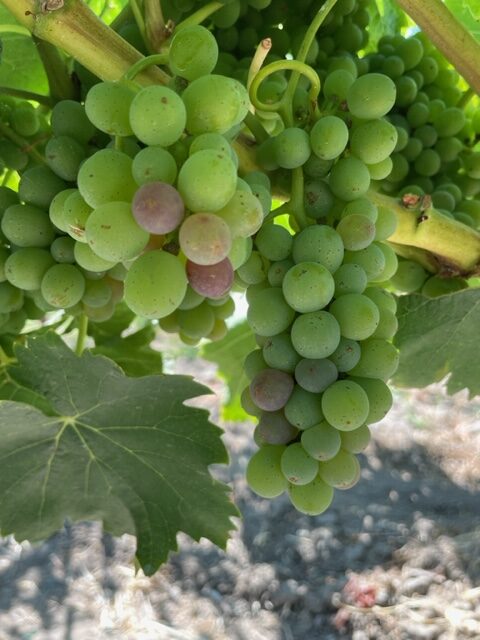
Sangiovese at the start of veraison late July 2023 after cool, wet spring.

Wine sense

Michaela is one of my Napa Heroines. In 1990, with Julie Johnson, she created Women for Wine Sense (WWS) to counter the anti-alcohol lobby with the premise that through education, a better understanding of wine leads to more responsible consumption. WWS now has a network of 10 chapters through the US and their charitable arm sponsors wine education for women in the industry.

Micheala Rodeno and the Rosato di Sangiovese from Villa Ragazzi

Michaela Greg arrived in Napa in the 70s, the early days of the Napa wine renaissance. Michaela knew little about wine except that she loved it, following her junior exchange year at Bordeaux University of all places. Her Masters in French literature allowed her to teach at Davis for a while and then Napa College. She had wine makers in her class and was a part time tour guide at Beaulieu so it was only a matter of time until she joined the wine world. 

When she read about a French company investing in Napa she thought she could be useful – she was. She became the second full time employee of Domaine Chandon. The rest is Napa history, as her ‘accidental career’ in wine lead her from Domaine Chandon to CEO of St. Supéry – both major players in Napa.

Villa Ragazzi was named after their children, who still lend a hand. Their first vintage was produced on a rocky hillside, from scrawny-looking but healthy vines. The wine was made in the family barn, with the help of friends and with a borrowed portable stemmer-crusher. It remained unfiltered as they couldn’t find a filter to borrow. It was aged in used French oak barrels and, eventually hand bottled and labelled with Charles Thomas as Villa Ragazzi’s original (volunteer) winemaker. Familiar Napa names such as Celia Welch, Nate Weis, Melissa Apter all lent a hand as, back then, unskilled main d’oeuvre. Today Bob Pepi continues to vinify. 

After the 1998 vintage, the vines were hit by phylloxera, but all was not lost. They rescued cuttings and created their Rodeno clone, all the Villa Ragazzi Sangiovese wines have since been made from that same clone.

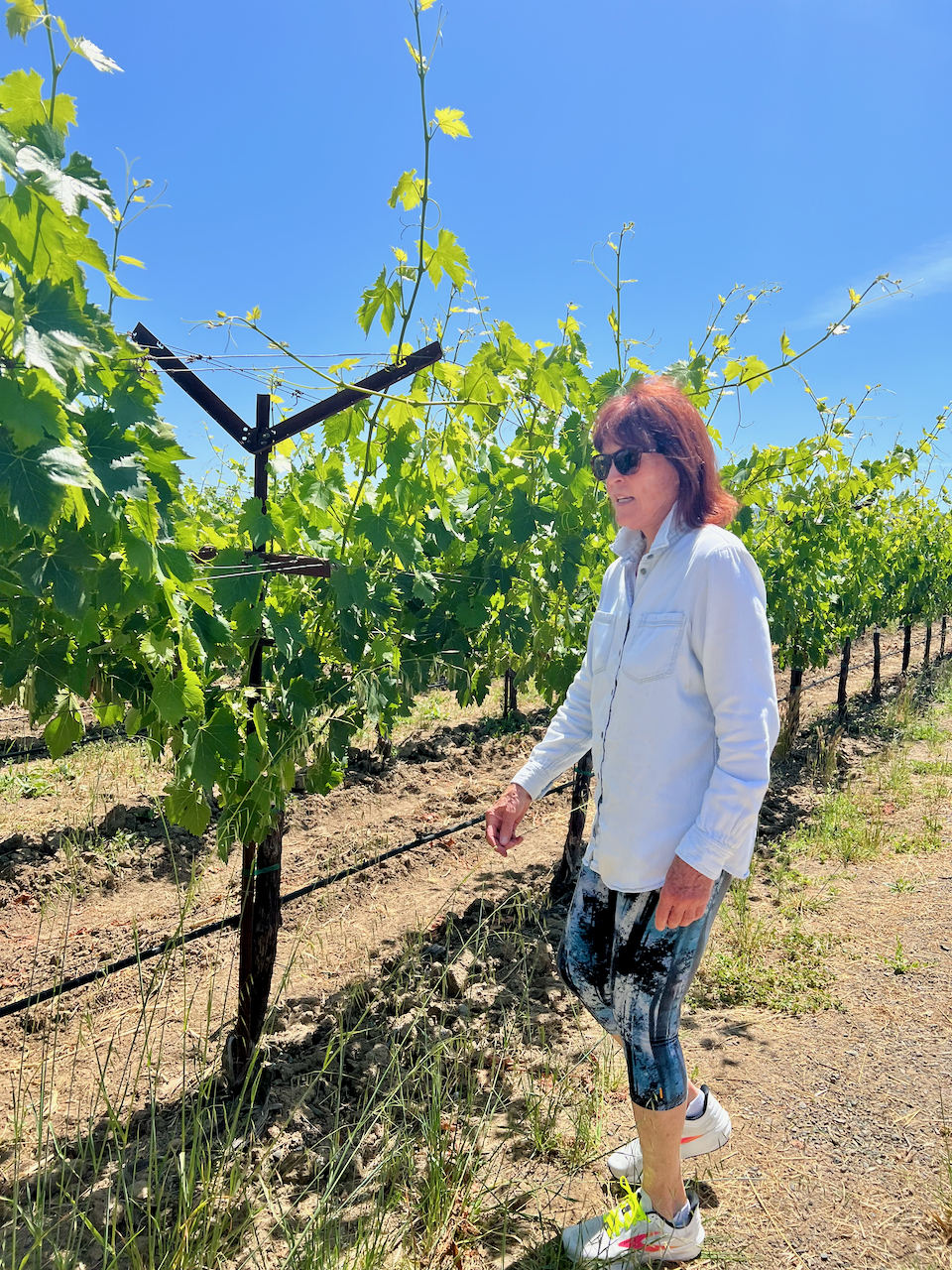
Michaela in the vines of Villa Ragazzi

Ten years after replanting in Oakville, they had enough grapes to start making wine again. The clone is important, but so is microclimate and viticulture. The Ragazzi yields are low, the vines mature slowly on the well-drained soils and the small berries maintain the signature fresh acidity of Sangiovese. 

Villa Ragazzi is focused on protecting the fragile Napa environment. Although they don’t advertise any green credentials on their labels, they are certified Fish Friendly Farming. They use compost, cover crops and low to no till farming to improve soils and lightweight, and whenever possible, recycled bottles and natural corks all helping reduce their carbon footprint  

Range 

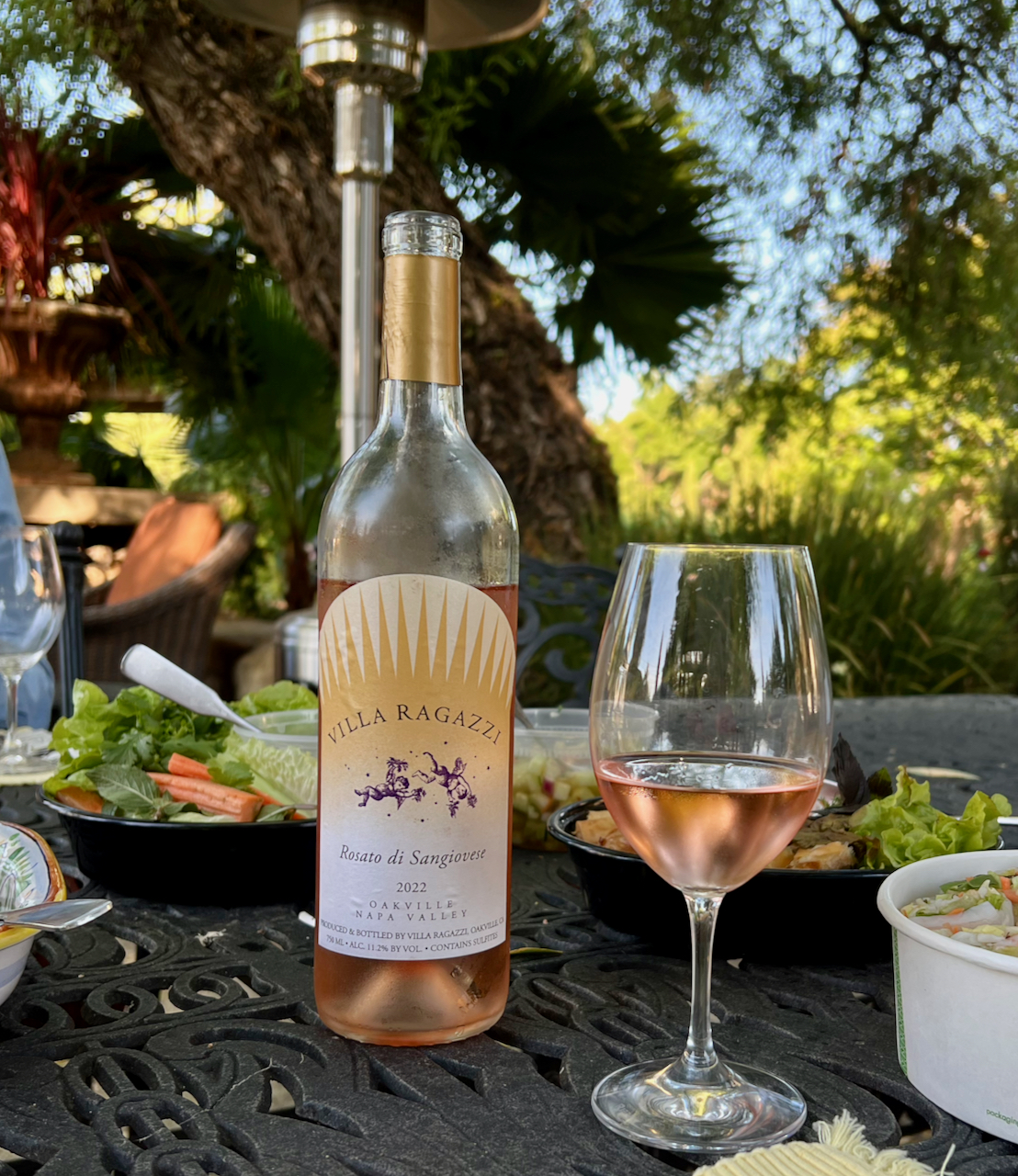
As well as their full bodied, 100% Napa Sangiovese, the freshness of the variety lends itself to rosé. Their Rosato di Sangiovese has the classic crisp acidity of the  variety. The grapes are picked early to produce a pale dry rosé wine with just 11.4% alcohol. 

Perfect summer drinking from first hand experience

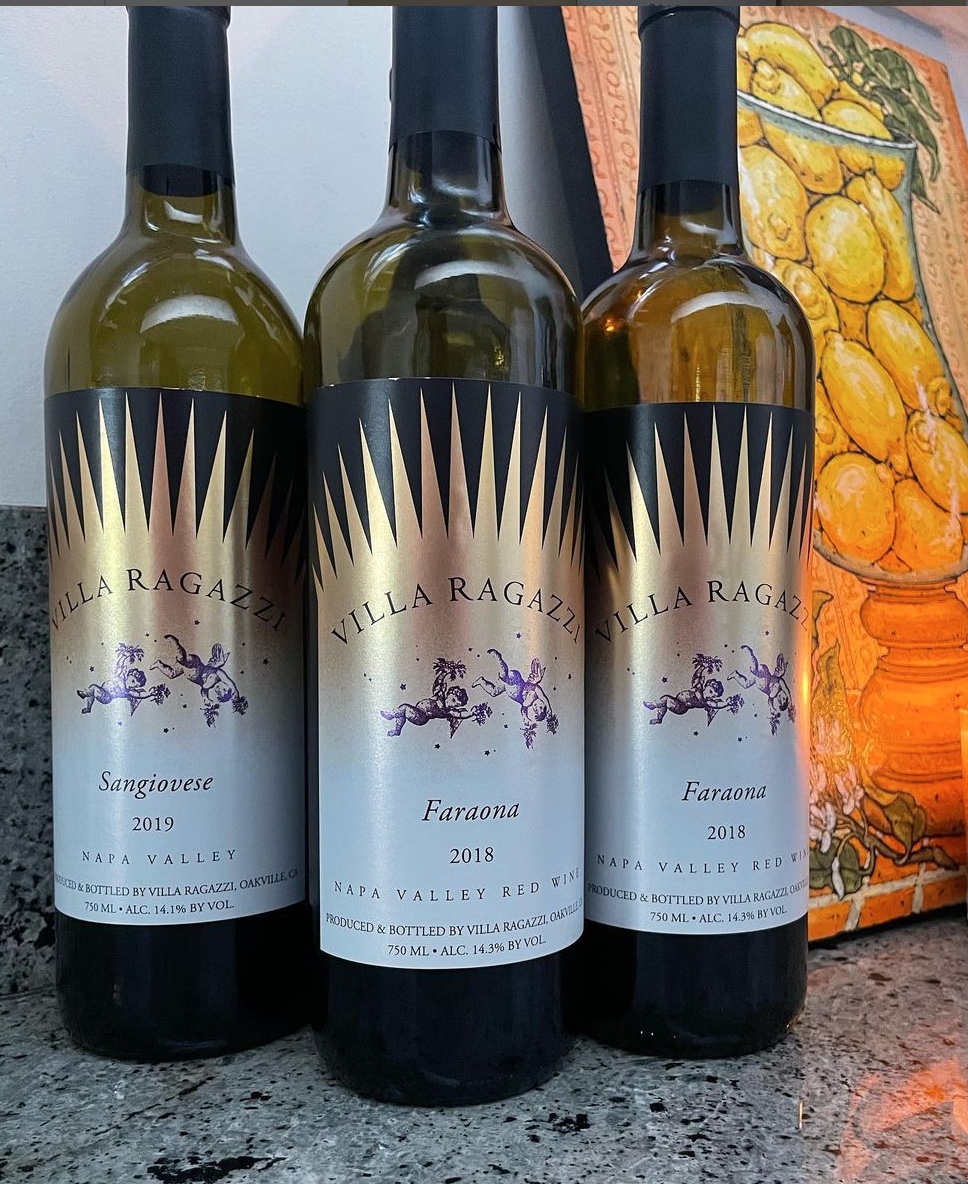
Their top wine Faraona is their take on a super Tuscan. It’s a Sangiovese, Cabernet Sauvignon blend thatchanges every year depending on how the wines marry. Cabernet has been as high as 25% without overwhelming the Sangiovese, and as low as 8% (2018).

Faraona and the Sangiovese from Villa Ragazzi

They produce around 40 cases a year of this wine, aged for French oak for 15 months, has more weight and a darker colour but is still dominated by the Sangiovese character.  

Rating   

I’m not the only who rates their wine, as early as 1993, Piero Antinori himself described their Sangiovese to be one of the very best expressions of the grape from around the world at the time. The Villa Ragazzi 2012 Sangiovese was served at the Obama family’s final White House state dinner for guests of honour Italian prime minister Matteo Renzi and his wife. 

Californian, but with an Italian accent.


Learn more about Bordeaux, with Bordeaux Bootcamp and cultivate your healthy passion for wine with the  Daily Detox webinar,  The Drinking Woman’s Diet  book or 7 weeks to a Liver friendly Lifestyle.