Tropical Takamaka

Can you make wine on a subtropical island? Back in Mauritius I find out that yes you can. 

Oxenham is a familiar name to Mauritians. The family has been importing and yes, making wine here, for four generations. In the 1930s they imported raisins, soaking and fermenting them to make wine and in the 1960s, they turned to fermenting imported grape must. Today, they continue to be one of the island’s biggest players, importing wines from all over the world both in bulk and in bottle.

Third generation Oenologist Alexander Oxenham has branched out on his own.

I first met Alexander in Bordeaux, when he joined a Bordeaux educator programme in 2007, and then again in 2011 when he was busy experimenting with fermentation in the cellar of his home. But it wasn’t grapes he was fermenting.

Wine but not as we know it

In 2015, he built the Takamaka winery. Named after an endemic tree, it’s high up in the cooler centre of the island, near the sacred Hindu lake, Ganga Talao, where giant statues of Shiva welcome pilgrims.

The Mauritius Lychee

Grapes don’t really suit the Mauritian climate, lychees however thrive. Chinese in origin,  they do so well here there’s a variety called Mauritius. The fruits are small with a bright pink peel or shell, very aromatic and with a high proportion of flesh to nut. 

Also known as Litchis, they were introduced to the island in the 1700s  by the botanist Jean-François Charpentier of Cossigny de Palma when he created an estate from plants collected during his travels across Asia. 

The Takamaka lychees are grown on 50 year old trees in orchards to the North of the island. Just like grapes, Alexander controls for ripeness (sugar levels), acidity and aromatic intensity before they are hand-picked. Harvest is November to December, when you’ll see the fruits for sale on roadside stalls across the island. Everyone seems to have a tree in their garden, protected by netting from the voracious fruit bats.

Peeling the lychees in the tiny winery

Laborious

Once in the winery, the fruit is selected, peeled and pitted by hand. A labour intensive job. The pitted flesh is then frozen. As winery capacity is limited, this allows production to be spread throughout the year and makes juice extraction easier. Freezing breaks down cell structure and eliminates the need for added enzymes. Fermentation takes place in small stainless steel tanks, using selected yeasts, then some wines are selected for barrel aging in small American and French oak barrels. 
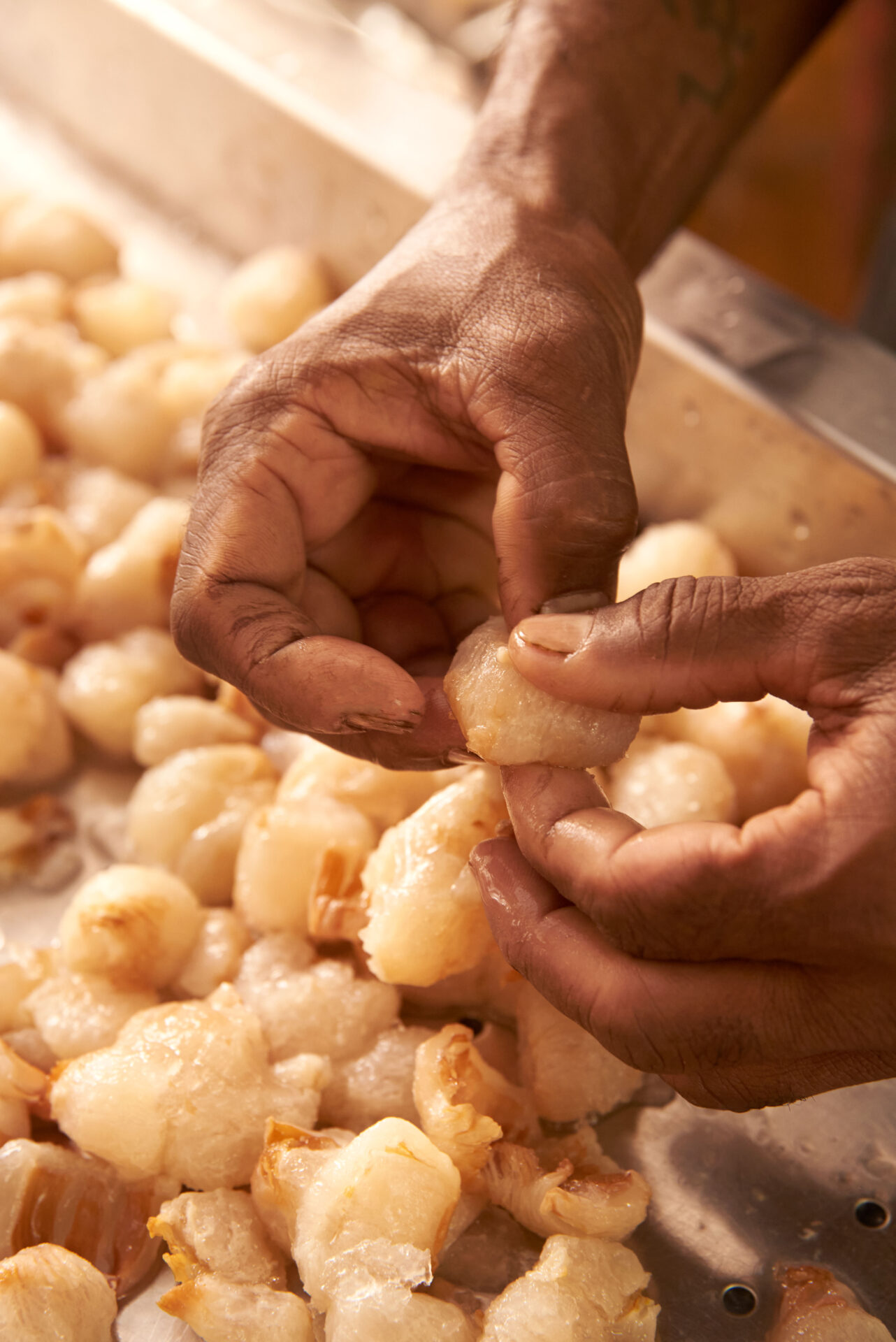
Hand pitting Lychees

The boutique winery is designed to be sustainable, they recuperate rain water for cleaning and all effluent is recycled into the gardens. Bottles sold on the island are returnable, washed and reused. 

Visitor experience

As well as wine making, the winery is open to visitors. Pre Covid they were welcoming over 8000 visitors a year, with 95% of sales going to tourists. Numbers are slowly creeping up as Mauritius welcomes visitors again.

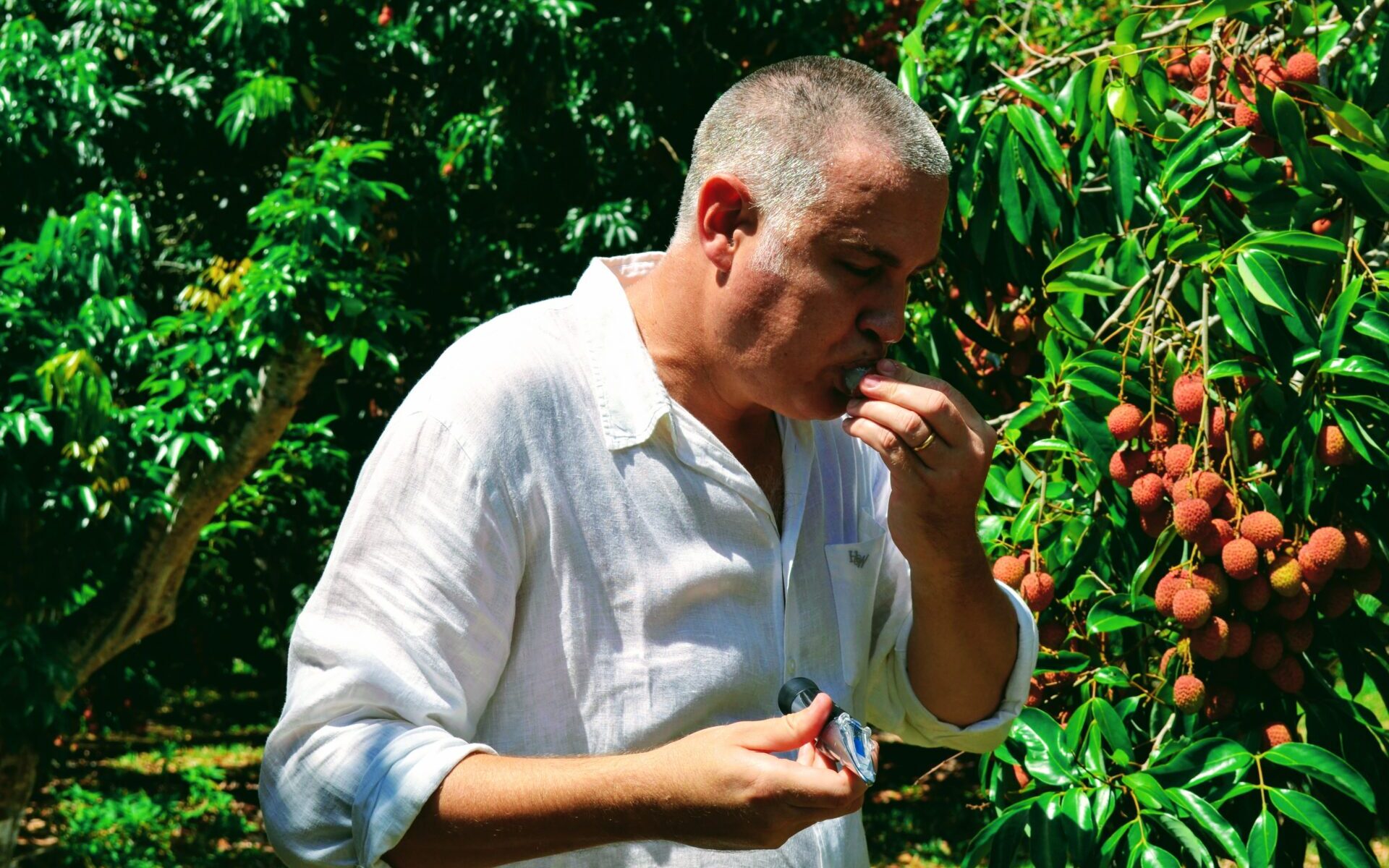
Alexander Oxenham tastes the wines with guests at the winery

The winery offers tours and of course tastings. A video shares the process and guests can stay for lunch on the terrace to have fun pairing the wines with food.

The wines, like the fruit, are very aromatic, they have a hint of muscat and rose petals with a slight bitterness on the finish, especially those aged in oak, that makes pairing with local food really interesting.

Despite being a micro winery, Alexander has created a range of dry to sweet wines. At the entry level is the white Aquarel demi sec and the light rosé Aperichy. Bottled in screw cap, they are both perfect chilled down as an aperitif. The Aquarel won a Bronze medal in the London Wine competition and the Rosé looks and smells just like the lychee fruit.

Tanara is a barrel aged dry white whilst Eclipse and Icône are sweet ‘moelleux’ wines with the Icône barrel aged giving it more staying power and bitter orange notes which work well with local spicy food. 

The Takamaka range

Local colour 

During lock down, islanders rediscovered a lot of local products that were often reserved for visitors. Takamaka is no exception, you’ll now find it championed across the island in hotels and restaurants, by sommeliers proud to surprise guests with an exotic local product. 
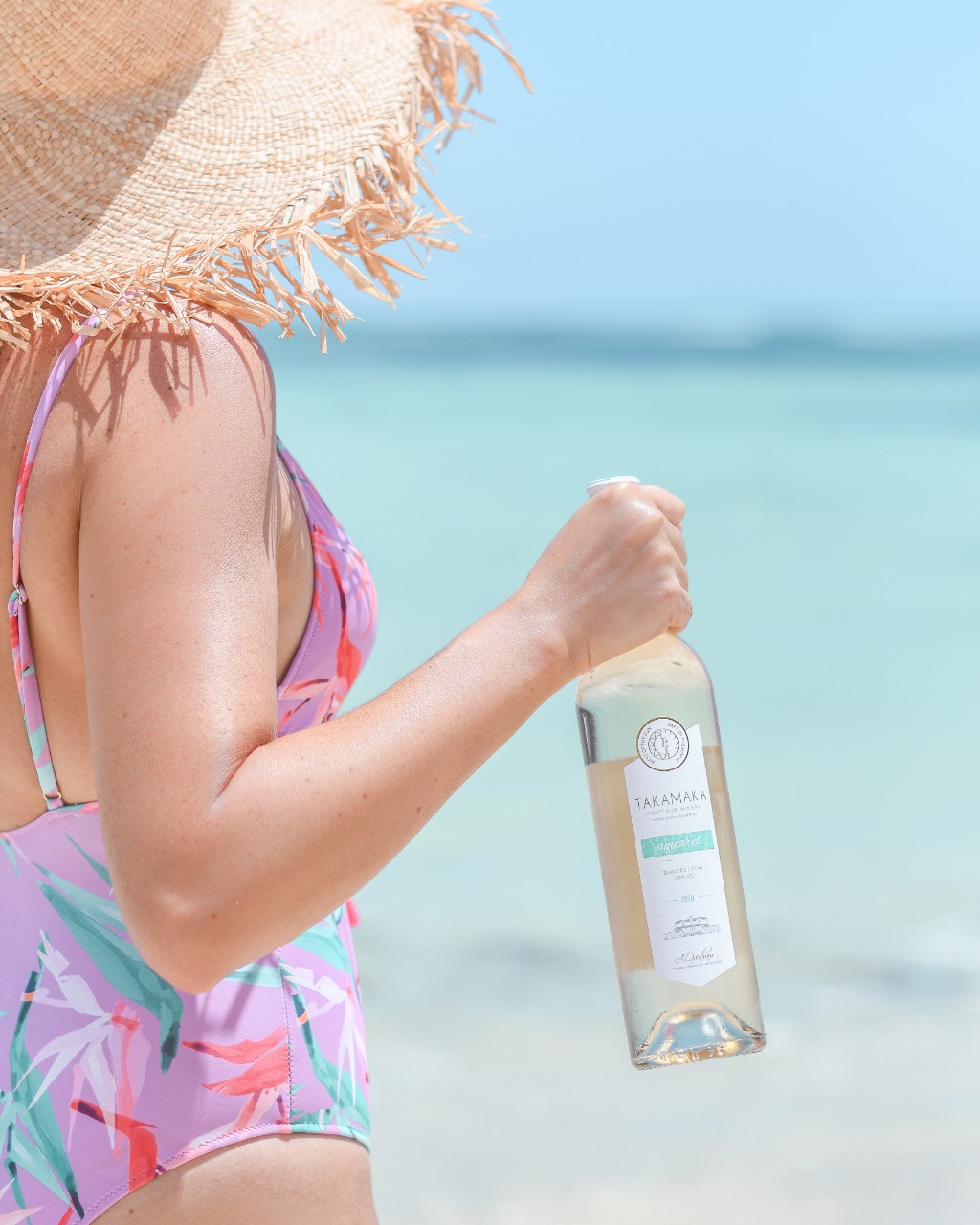
Takamaka Rosé on the beach – don’t mind if I do!

 Please sign up here to receive future blog posts delivered directly to your inbox. 

To learn more about Bordeaux, you can buy Bordeaux Bootcamp here, to learn more about Wine and Wellness read The Drinking Woman’s Diet here or join the new online course ‘7 weeks to a liver friendly lifestyle’.

Historically Sustainable 

What does sustainability mean for a wine merchant? Britain’s oldest wine and spirits merchant, Berry Brothers and Rudd is in a unique position to use its 300 year history to champion sustainability. This historic advantage includes longstanding relationships with their suppliers, many also family owned, who are themselves tackling sustainability. 

The current Chair, Lizzy Rudd, a third-generation family member has made sustainability a priority with ambitious goals. As outlined in the 2021 sustainability report, they aim for a zero carbon footprint and to be plastic free by 2030. They are weeks away from posting this year’s report, updating on their progress. I talked to Adam Holden, who works with Lizzy putting these sustainability goals into action.

Carbon Footprint 

Berrys has been reporting  on their carbon footprint since 2018, dividing it into three scopes, vehicles and buildings under their direct control, electricity generation and then everything else!

Number one is pretty straightforward, as well as converting their own small fleet of delivery trucks to electric (90% electric by 2025), they are also subcontracting to partners converting to electric. 

Number two is being addressed through investment in solar panels in their Basingstoke premises, which will soon generate more than enough power for their needs there. Electricity for their London premises is sourced via renewable suppliers. 

Number three is where it gets interesting and challenging as it represents the largest part of CO2 emissions. On average 95% is from the supply chain, and within this, glass bottles are the biggest culprit. Glass production counts for 42% of their total carbon footprint. As a fine wine merchant, moving away from glass isn’t going  to happen any time soon. What can be done? 

Clear Cut 

Glass is both reusable and recyclable, but sadly most glass is still not recycled. To get to net zero there needs to be change in the global glass industry. A daunting challenge for one company but R & D news on decarbonisation of the glass industry is encouraging.  Although reusable bottles and bottling in the UK are longer term possibilities, right now Berrys work with their suppliers to use lighter glass with a higher percentage of recycled glass as the quickest way to see improvements. Recycled glass has a dramatically lower carbon footprint than new glass and as shipping contributes to their carbon footprint, bottle weight is important. 

Closure

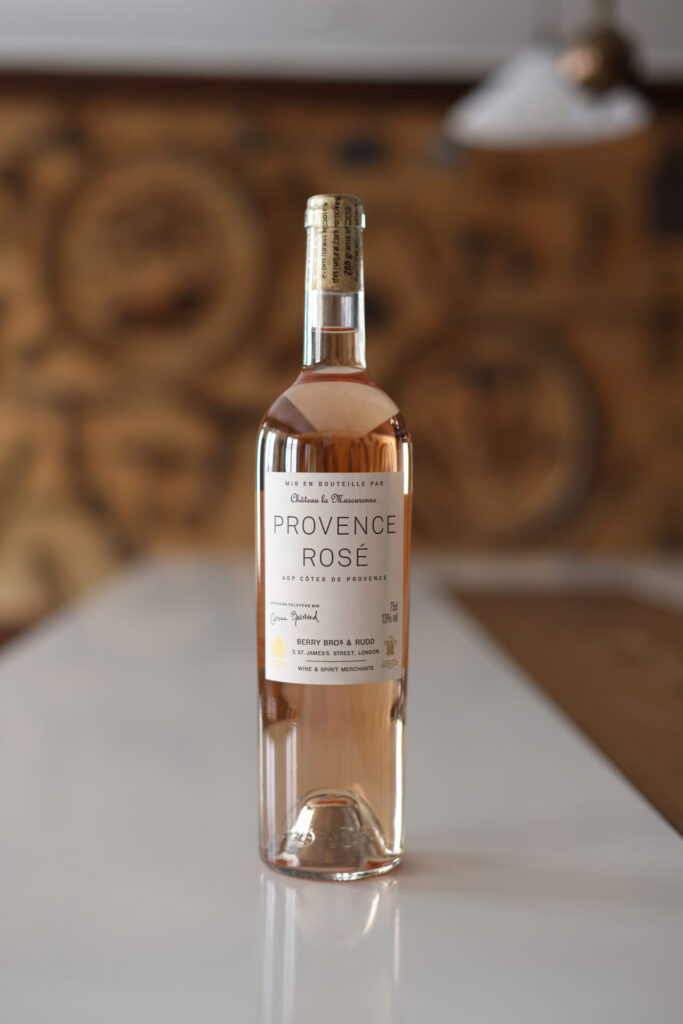
Berrys want to deliver all their own label wines capsule free.  This saves aluminum and makes bottle recycling easier. With 830k bottles produced pa of their own label wines this starts to make a considerable difference. As of 1st October, they removed capsules on their  Châteauneuf-du-Pape and now on their Rosé de Provence from Château la Mascaronne. 

Capsule free Rosé de Provence

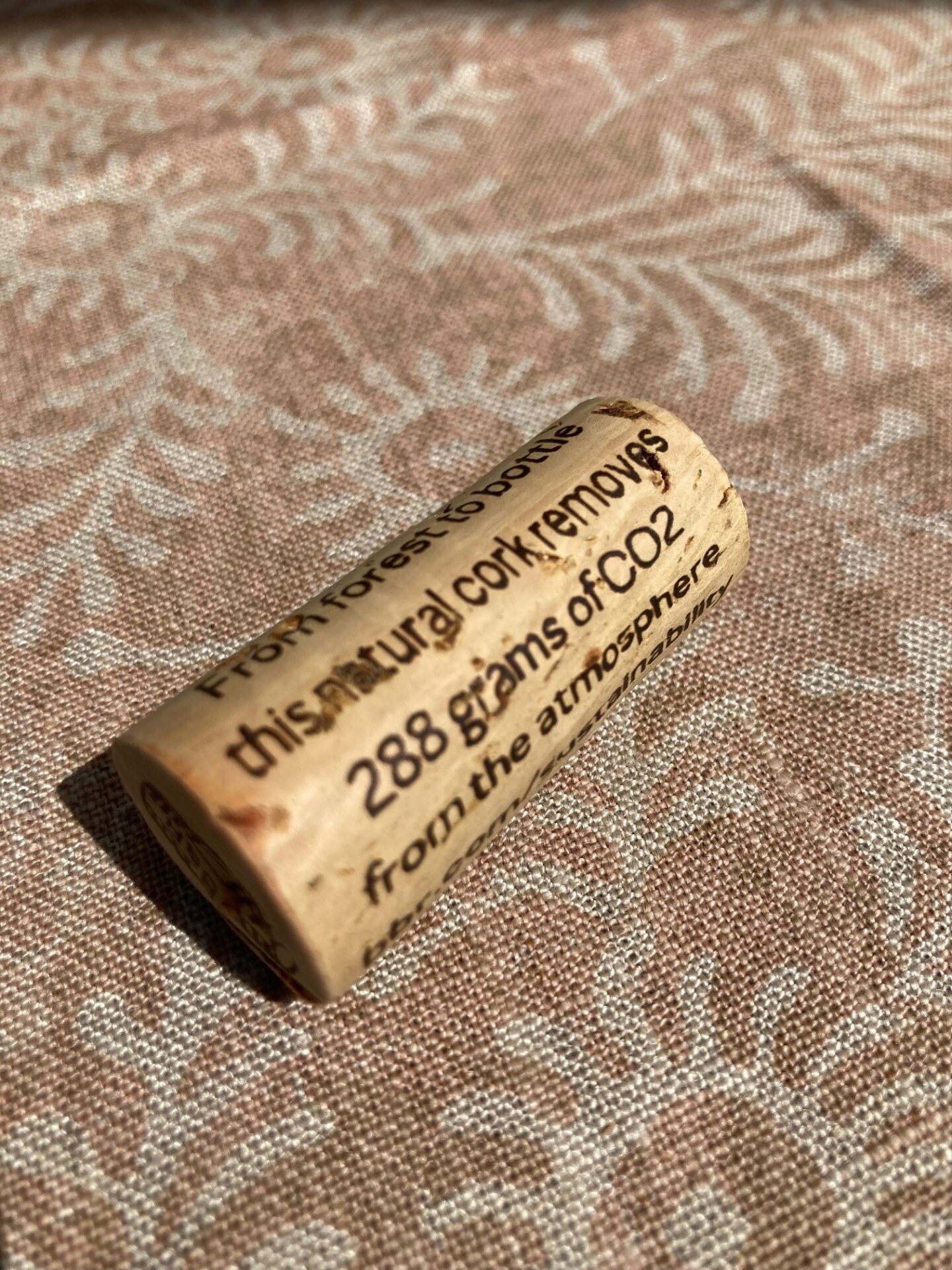
They use 100% natural cork. Each natural cork stopper has a positive CO2 balance of 288gr, which goes some way to offset the glass. They print this data on their corks, and with no capsule it’s easy for consumers to see. Corks check other sustainability boxes, the cork industry supports local biodiversity, cork forests are UNESCO biodiversity hotspots, they act as fire retardants compared to non-endemic eucalyptus, are less greedy on water and they support the local economy and cultural heritage. Every time you pull a natural cork, you’re helping the environment. They also offer customers a cork recycling scheme at their shops or via their delivery drivers. Just remember to put the empty bottle in the recycle!

Making carbon credit clear

Packaging 

Plastic shrink-wrap for palettes currently presents a problem, most replacements unreliable and costly, but trials are underway.

It’s not just wine, their spirits are bottled with 40% recycled glass & recyclable plastic free packaging, wooden stoppers and cellulose capsules. The plastic free philosophy even includes eliminating plastic pens, cups and stationery in the offices.

Bordeaux represents 60-70% of their sales and the region has gone from sustainability zero to hero as wineries act on sustainability. It’s good to know that communication around the sustainability initiatives in Bordeaux is acknowledged through the trade.

Bordeaux has some outstanding performers that I’ve mentioned in previous posts,  Château Smith Haut Lafitte and Château Montrose recuperating CO2 from fermentation (despite questions about what to do with all that bicarbonate of soda) and high profile estates using biodynamics and organics. 

Certification is not an obligation for Berrys, nor a limiting criterion for suppliers. Case by case analysis favours and encourages a regenerative approach to viticulture, a sentiment a lot of producers share as the demands and cost of certifications can be prohibitive for some. Their long and close relationship with suppliers is an opportunity to progress together on carbon footprint as well as other areas of sustainability. 

Less Ordinary 

Bottled by Bordeaux negociant Dourthe, Berry’s Good Ordinary Claret (GOC) has been part of the Berry portfolio since the 1950s and is the single biggest selling wine of the  company. It’s the perfect place to start looking at how they can ‘decarbonise’ supply lines . 

A limited edition of the GOC is bottled every vintage. This year, the label by print maker Tom Frost, combined a wine glass and a tree clearly showing their commitment to sustainability with a nod to agroforestry. It has already sold out. 50% of profits from this edition went to the Woodland Trust to support The Queen’s Green Canopy – Plant a tree for the jubilee. It touches on another part of their sustainability programme, that of philanthropy. 

Clearly sustainable, capsule free charity bottling for the Woodland Trust

Own label

Their own label range goes beyond Good Ordinary Claret. They work with leading wine makers most of which have a commitment to the environment, such as Château Climens, Château Angludet and Château Haut Bailly.  

Interestingly this movement to sustainability is currently driven more by suppliers thanby consumers. Long-term working partnerships with properties allows a dialogue, sharing knowledge and a sense of stewardship between family owned businesses. 

Bees and biodiversity in Basingstoke 

Carbon footprint analysis is the easiest but as we‘ve seen in previous posts, it’s far from the full sustainability picture. Monoculture harms biodiversity, hence, their support  for regenerative viticulture. At their own premises in Basingstoke, as well as solar panels, they have created a staff garden including a vegetable garden, part of a locavore move for the in-house catering and for staff. Just as we’ve seen in some Bordeaux vineyards.    

Philanthropy, 

As well as the charity bottling of Good Ordinary Claret, their Kings Ginger belongs to 1% for the planet, they back charity initiatives proposed by staff as well as numerous gifts to and participation in charity events.

They have the stated aim to  be an over-riding force for good, within the industry, helping to build awareness with industry partners and with consumers. As many within wine, they are aware that if action isn’t taken there will be no wine industry in the long term.

Optimism.

Despite the challenges, they remain optimistic about the future, thanks to positive feedback from suppliers and consumers, the research and innovation within the industry and the attention to detail that brings change. Over 300 years of history shows they are sustainable. They are working on remaining so. 

 Please sign up here to receive future blog posts delivered directly to your inbox. 

To learn more about Bordeaux, you can buy Bordeaux Bootcamp here, and to learn more about Wine and Wellness read The Drinking Woman’s Diet here.