
This is the first in a six-part series of blog posts covering the evolution of sustainable viticulture in Bordeaux.
As the CIVB (Bordeaux Wine Council) announces that 75% of the Bordeaux vineyard is now under sustainable certification (up from 65% in 2019), I wanted to take a closer look at the different labels and certifications involved.
It’s complicated
What exactly does sustainable mean? It’s not a precise nor a protected term.
Organic and biodynamic might be well known to consumers, but what do they really mean? What other certifications are available to French wine growers? Who controls them? Who subscribes to them?
If all these labels claim to work towards reducing the environmental impact of farming, how do growers decide which ones to sign up to?
Diversity
The more I looked, the more labels, certifications and associations I found in France – a diversity that is confusing for both consumers and the trade. So much so that I’ll post my findings over a series of six posts, to keep your attention span sustainable, too.
I’m unlikely to cover all the different initiatives from individual properties, associations and appellations; every time I look, I find new ones. Forgive me if I have forgotten any (you?) but please let me know if I do and I’ll be happy to add them in a future blog post.
I’ll look at ISO, HVE, Terra Vitis, Bio (organic), Biodynamic, then at other organisations and initiatives covering biodiversity, agro-forestry, etc., not forgetting the social implications of sustainability and other issues that are skirted around in some of the certifications.
These certifications are not mutually exclusive: they feature overlapping conditions, and some vineyards will have several certifications. I’m reluctant to use the word hierarchy, as that implies a defined quality ladder, but there does seem to be a process, a pathway of certifications that producers can progress through. Some cautiously take it step by step, others dive right in.
Status quo
Bordeaux has (2021 figures) 5,660 vineyards, 300 negociants (wine merchants) and 29 cooperatives (grouped into three unions), all producing or marketing wine from the Bordeaux vineyard of over 110,000 ha.
It has the highest area of certified organic vines in France (13,900 ha in 2019), the highest number of growers certified HVE (Haute Valeur Environnementale) and the highest number of Demeter biodynamic labels.
Everyone is concerned with the environment, be they producers, trade partners, consumers, workers, neighbours, etc.
Family future
The vast majority of properties in Bordeaux are family owned. With family ownership comes the notion of stewardship; the belief that the land is there to be looked after and passed down to the next generation. There is also an innate sensitivity to the risk of toxicity when it’s your family that is out in the vineyard.
Fear of Failure
Some growers are reluctant to sign up for a sustainable certification. The uncertainty of the Bordeaux climate is often cited. The warm humid climate of France’s west coast is the perfect breeding ground for mildew, oidium and botrytis, so wine makers have to look for safe ways of dealing with fungal diseases. The fear of losing a crop is real if their hands are tied and they are unable to aggressively treat a vineyard hit by oidium.
Expense and expertise
There is also the expense involved in certification; its implementation, but also membership fees and auditing.
Wine growers (all farmers?) are an independent bunch, and don’t like being told what to do. Many who are passionate about the environment prefer to hold themselves accountable rather than defer to a great power.
Those who have signed up to a certification, putting their money where their mouth is, tend to have a rather cynical view of others that use the term with no accountability.
Sustainable Marketing or Greenwashing?
Is the client sensitive to an environmental label? Increased consumer awareness has created an obligation to pay attention to inputs. Renowned properties with a faithful following and long history may not need to add their certification to the wine label, for others it’s a way to attract new clients or even a prerequisite to enter certain markets. There is an economic argument as well as an environmental and philosophical one. In 2019, sales of certified organic Bordeaux wine increased by 6% in volume and 9% in value and represented 5% of total Bordeaux sales (increasing from 4.3% in 2018).
As hand-selling bottles is rare, labels, logos and certifications provide proof and reassurance. For example, starting in mid-January of 2022, 50 wine shops across the Bordeaux region will be promoting a month of ‘Vins Engages de Bordeaux’ a selection of wines certified with sustainable credentials.
What is sustainability?
Financial and social sustainability
The notion of sustainability is larger than the health of the soil. It includes economic viability, the success of the people who live on and from the land, both their physical and financial health. A living wage, but also working conditions. In a recent post I talked about the problems of recruiting staff; their wellbeing is important if wine makers want to recruit and keep staff on the vineyard.
Sustainable energy
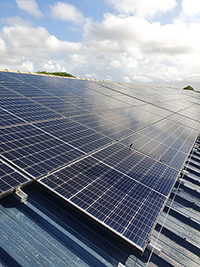
New cellar design with insulation and heat pumps (such as at Château Pontet Canet) to reduce energy consumption, and solar panels to produce green energy are part of the equation. Château Chasse-Spleen in Moulis is self-sufficient in energy thanks to solar panels, and Château Lagrange installed 800 m2 of solar panels in 2019 that now supplies about 15% of power used at the winery.
Copper conundrum
The copper argument surfaces regularly. Copper, in the Bordeaux mixture, is allowed in organic and in biodynamic certification, albeit in minuscule amounts. Some argue that, given the history of treatment in the vines, even a little is too much, and that systemic treatment using synthetic chemicals is a better long-term solution for soil health.
To till or not to till
Ploughing and tilling the soil between rows of vines is a more environmentally friendly way of dealing with weeds than spraying herbicides. Ploughing between vines forces vine roots down deeper, developing a more drought resistant root structure as well as destroying weeds.

It can however also dry out the soil and release carbon stored in the soil (producing more carbon emissions), encourage topsoil loss through erosion, and kill valuable microbiological life. Planting green cover crops between vines increases the life of the soil, ploughing them back in acts as green fertilizer.
Some plants, however, such as couch grass, are very invasive and ploughing can spread them rather than reduce them – see, not easy!
Carbon footprint
In 2010, Bordeaux was the first vineyard region to measure their carbon footprint. An online carbon footprint calculator, available for all producers and merchants, allows them to understand exactly where and how carbon economies can be made.
Organic treatments can get easily washed off in damp weather and need re-applying more regularly than systemic treatments. Sending a tractor through the vines more often also increases the carbon footprint of the vineyard, as well as being cash- and labour-intensive.
Carbon capture
Tree-planting and biodiversity capture carbon, but fermentation is a big carbon dioxide producer. Both Château Smith Haut Lafitte, in their carbon neutral cellar, and Château Montrose have pioneered capturing the carbon produced during fermentation.
Decisions, decisions
As I spoke to producers, it became clear that there is no one simple answer to the question of how to farm sustainably. This is unsurprising in a region as large as Bordeaux, with its diversity of terroir, microclimates, ownership structures, but also philosophies. Different shareholders and stakeholders, family members or corporations, don’t always hold the same beliefs or share the same priorities, and financial constraints vary enormously from property to property.
Strength in numbers
Wine growers can’t and don’t act in glorious isolation. What they do affects the neighbours. Sexual confusion is the perfect example; putting pheromone traps in your vineyard to control grapevine moth will only work if the neighbours do it too.
Bordeaux winemakers are used to working together within appellation organisations (ODG, Organisme de Défense et Gestion) that cover quality control and promotional events. Many of the appellations already include environmental objectives in their directives. In 2020 I wrote about the collective initiative ‘Margaux, Terroir de Biodiversité’. In Saint Emilion, 60% of growers here were already certified, or engaged in the process in 2019. As of 1st January 2023, the AOC appellation status will only be granted to growers with an environmental certification.
The ODG of Medoc, Haut Medoc and Listrac will also require every grower to have at least a HVE (Haute Valeur Environnementale) level to qualify for the appellations by 2023.
Cru Bourgeois
In February 2020 the Crus Bourgeois announced the latest classification. It reintroduced the historic three-tier system of Cru Bourgeois, Cru Bourgeois Supérieur and Cru Bourgeois Exceptionnel. The levels were awarded by an independent jury, based on a blind tasting, but the obligation to engage in the HVE certification process was a qualifying criterion.
Agriconfiance.
The cooperative movement is a poster child for working together in agriculture – the clue is in the name. No surprise then that they have implemented their own sustainable label called Agriconfiance.
This guarantees that the grape growers of the co-op use sustainable practices: limiting chemical inputs, managing waste and natural resources. It also ensures the cooperative wine-making facilities adhere to sustainable production conditions. In 2020, 485 Bordeaux growers, covering 18,743 ha were certified Agriconfiance.
Community Leader
The CIVB (Bordeaux Wine Council) has spearheaded initiatives to help producers in their journey towards more eco-friendly production. Conversion to sustainable, organic or biodynamic agriculture is a long and expensive process both financially and – particularly for family-run vineyards – in time and expertise.
The SME (Système de Management Environnemental), or EMS – Environmental Management System in English) was introduced in 2010 to help with the off-putting complexity and expense of some certifications.
This associative management tool helps individual properties work together to improve their environmental performance, gain certification, and accelerate change whilst creating a sense of community. It’s open to all Bordeaux actors, (châteaux, negociants, coops) regardless of their environmental status or size.
In the first-year pilot, 28 companies covering 2000 ha started the adventure, in 2018, 800 companies had engaged, with 246 certified ISO 14 001, of which 92% are châteaux, 7% négociants 7% and 1% co-ops.
The original objective was a collective ISO 14001 certification; now the SME system includes individual HVE certification and most recently the RSE, (Résponsabilité Sociale des Entreprises, or Corporate Social Responsibility in English).
Members share resources with the advantages of economies of scale; financial, organisational and material, but also mutual support to compare progress and find solutions to common problems. An accredited manager helps members reach individual and collective goals; goals that are fixed after an initial diagnostic of the environmental impact across all activities of the property. This includes input reduction but also water management, energy consumption, carbon footprint, biodiversity, the working and living environment and employee engagement.
Sustainability is a constant work in progress.
Château Grand Corbin-Despagne: an evolution, not a revolution
Grand Corbin-Despagne is a member of the very first Association for the SME of the wines of Bordeaux, gaining ISO 14001 and HVE3 (High Environmental Value Level 3) certification in July 2013.

The Despagne family is one of the oldest in Saint Emilion; current owner/winemaker François Despagne can trace his family here back to the 13th and 14th century. They bought vines in 1812 here at Grand Corbin, in the north of Saint-Emilion near Pomerol, naming it Château Grand Corbin-Despagne in the 19th century.
François is the seventh generation, passionate about the environment, and proud of his heritage. When he took over in 1996, no herbicides had ever been used at this Classified Growth and the vines have been farmed sustainably ever since. The property was certified Terra Vitis in 2005 by AFAQAFNOR.
In 2004, he started organic trials, converting fully to organic farming in 2010, obtaining the “Organic Wine” certification in 2013. Since 2018, he has been experimenting with biodynamics.
He uses the same approach in his other vineyards: Château Laporte Reine Blanche Saint-Emilion Grand Cru, Château Le Chemin in Pomerol and Château Ampélia in Castillon-Côtes de Bordeaux, and the latest property in his portfolio Château Rochers de Joanin, all of which are certified organic. He has started the also R.S.E. ((Responsabilité sociale des entreprises) at Château Grand Corbin-Despagne.
It’s not only chateaux who take part in the SME. Negociants (Bordeaux wine merchants) represent over 70% of Bordeaux turnover. CVBG Dourthe Kressman is one of the largest, trading over two million bottles a year to 3,000 clients in 85 countries. Their sustainable objective is to minimise waste. In 2003, they were the first to install their own water recycling plant, and in the last 10 years they have recycled all water used on their bottling lines, reducing water use by 66%. 75% of all waste is up-cycled and they use lighter-weight bottles for their branded wines. Through SME, this led to their ISO 14001 certification.
From the big to the small, SME covers the diversity of Bordeaux. Chateau de Cérons, in the smallest Bordeaux appellation of Cérons, is part of SME since 2012; they obtained both HVE certification and ISO 14001 status in 2019. The work continues, implementing new agro-ecological practices in the vineyard and cellar: monitoring vines on a plot-by-plot basis, planting cover crops, mechanical weed-killing, use of organic products, etc.

Why now?
Most winegrowers agree that mistakes were made in the past, as producers were pushed by economic and political factors into pumping up the volumes of production without real awareness of the damage that chemicals were doing to the soils and the environment. Now, there is the realisation that all this came with a cost. Wine makers and wine consumers are pushing for change.
As you can see, there is more to it than chemical inputs. Economic sustainability, carbon footprint, biodiversity, and social responsibility are all part of the challenge – different certifications and labels prioritise some of these aims differently.
Let’s look at them in more detail over the next few posts.
Want to read more? Please sign up here to receive future blog posts directly to your inbox.To learn more about Bordeaux, buy your copy of Bordeaux Bootcamp here, to learn more about Wine and Wellness, buy your copy of The Drinking Woman’s Diet here. I look forward to your feedback.


