Cos d’Estournel welcomes you home.

If you follow this blog you’ll know I’m a cheerleader for wine tourism in Bordeaux. It’s been very exciting over the last few years to see doors opening throughout the region with chateaux welcoming enthusiastic amateurs as well as professionals.

The Médoc is a major pull for visitors to Bordeaux. Saint Emilion may be the most picturesque town of the region, with its history and beautiful topography, Sauternes has the mysterious mists, Graves offers some of the best value wines of the region and the Entre deux Mers enjoys beautiful countryside and fortified towns. But the Médoc remains a priority for visitors. Why? Thanks to the famous classification, and the iconic names of the properties within it.

The choice of accommodation in the Médoc has been limited up until now; Chateau Cordeillan Bages was the only 5 star venue. Now there’s a new address to make it worth the drive: La Maison d’Estournel.

And a drive it is. The Medoc is an 80 km long narrow strip of vines tucked between the wild Atlantic coast and the Gironde Estuary. The topography is flat; drainage comes from the warm gravel soils that run in a series of outcrops from north to south rather than the elevation. The highest point is just 44 m above sea level. What is outstanding is the architecture of the chateau that run along ‘La Route des Chateaux’ 

It’s like driving through a wine list; heading north from Bordeaux you wind through the villages that give their names to the famous appellations of Margaux, Saint Julien, Pauillac and finally Saint Estèphe. It’s here you should stop. 

The impressive facade of Château Cos d’Estournel

The first chateau you see as you enter the appellation of Saint Estèphe is the impressive Chateau Cos Estournel. Cos has always been famous for its architecture. The oriental design was created by Louis Gaspard d’Estournel. He inherited land here in 1791 and continued to invest, buying neighbouring land expanding the vineyard from 14 to 45 hectares, improving the wine as he went. 

These investments resulted in the chateau being included in the 1855 classification as a Deuxieme Grand Cru Classé. Sadly, he died just two years before this accolade 

There was no house at Cos but instead of building himself a chateau to live in, he built a chateau for his wines. The impressive facade you see from the road is the winery and ageing cellar. The inspiration for the oriental architecture came from his frequent voyages to Asia. His obsession for the orient earned him the nickname of Maharajah of Saint-Estèphe and is clearly seen with pagodas atop the building (Pagodes is the name of the second wine of the property) and an obsession with elephants that are everywhere, including on the bottles.

Pagodes de Cos is also available as a Semillon driven white Bordeaux

As there was nowhere to live at Cos d’Estournel he made his home at Chateau Pomys, an elegant chateau he also inherited, just a stones throw away towards village of Saint Estèphe.   

Both properties are once again in the hands of the same family thanks to Michel Reybier. 

Reybier purchased Cos d’Estournel in 2000. He has also invested heavily since the purchase. From the outside the property looks the same but inside the change has been remarkable. A spectacular, all stainless steel, gravity fed fermentation cellar was built behind the facade with a huge underground barrel cellar and vertical wonderful wine library (more elephants).  
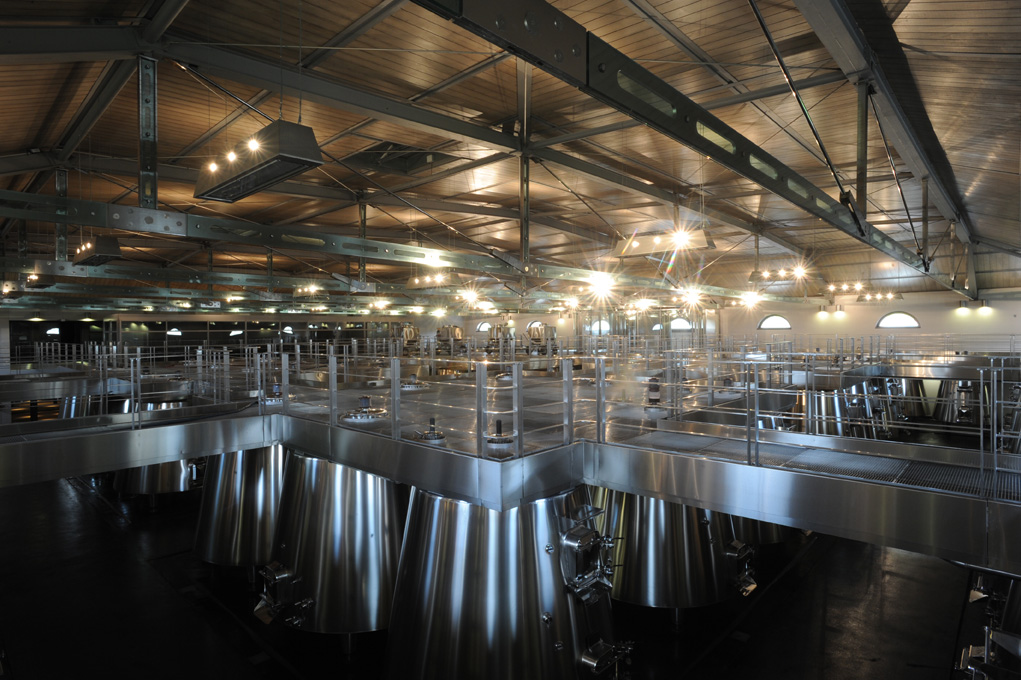
The gravity fed cellar of Château Cos d’Estournel

In 2009, he added to his wine portfolio buying the Hétszolo Estate in Hungary and in 2013, he created his own Champagne Cuvée. These three vineyards make up Domaines Reybier.

Reybier is perhaps more famous for his hospitality. The Michel Reybier Hospitality group is a collection of high-end luxury hotels including La Reserve Geneva, Paris and Ramatuelle. There are also properties in Crans Montana, Zurich and so much more. 

It was no surprise then that when he re-invented the cellars of Cos d’Estournel, he also renovated part of the buildings (that previously housed a museum) to create La Chartreuse. La Chartreuse in not a hotel but a ‘family home’ available to rent as a whole. With six bedrooms and two suites, 2 swimming pools (indoors and out), a hammam, beautiful sitting and dining rooms, it is a beautiful place to stay, but perhaps not really suitable if you are looking for a romantic weekend away for two (depending on your budget of course). It’s certainly discreet!
La Chartreuse at Cos d’Estournel
© Dimitri Tolstoï

Now the Reybier luxury signature is a little more accessible. 

Reybier bought Louis Gaspard d’Estournel’s private home, Chateau Pomys a few years back. It was already a hotel, albeit a rather dreary one. The vines that came with the chateau have now been incorporated into the vineyard of Cos but the building has been transformed into La Maison d’Estournel.

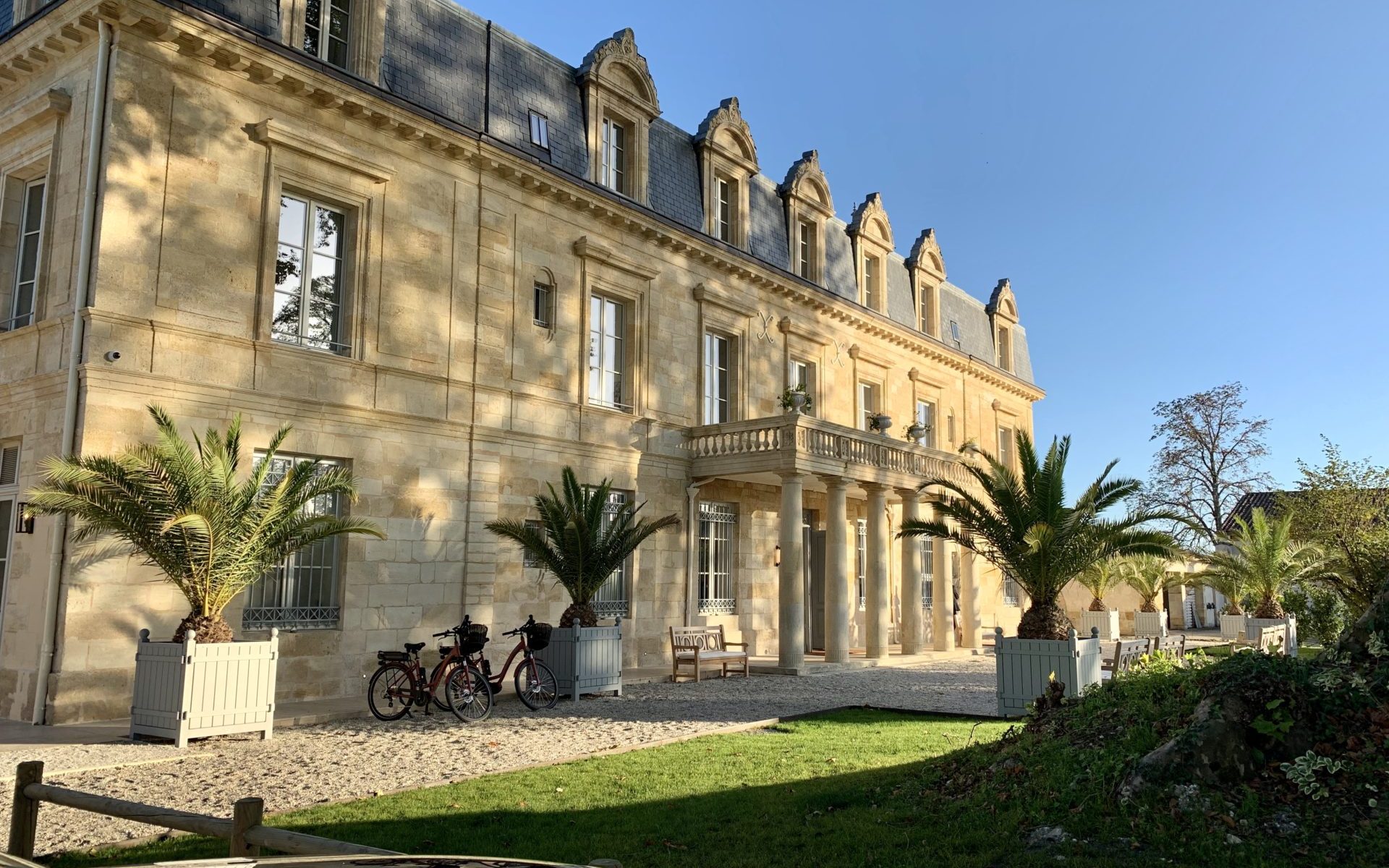
It is a beautiful, classic Bordeaux building in the lovely local limestone. Cross the threshold and you are in an atmosphere of accessible luxury, created by the English designer Alex Michaelis. The restaurant leads onto a beautiful, tree lined park over looking vines that run down to the estuary in the distance. There are more elephants here too! 
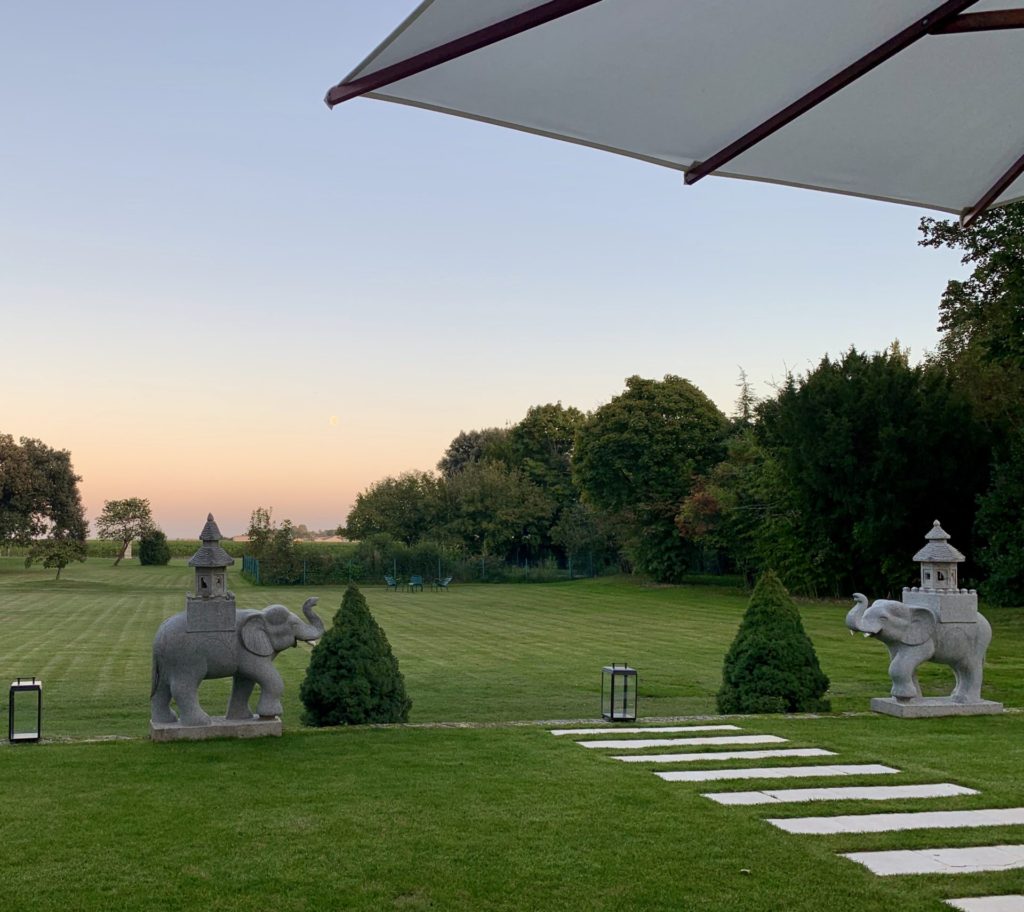
Sunset over the park – with elephants.

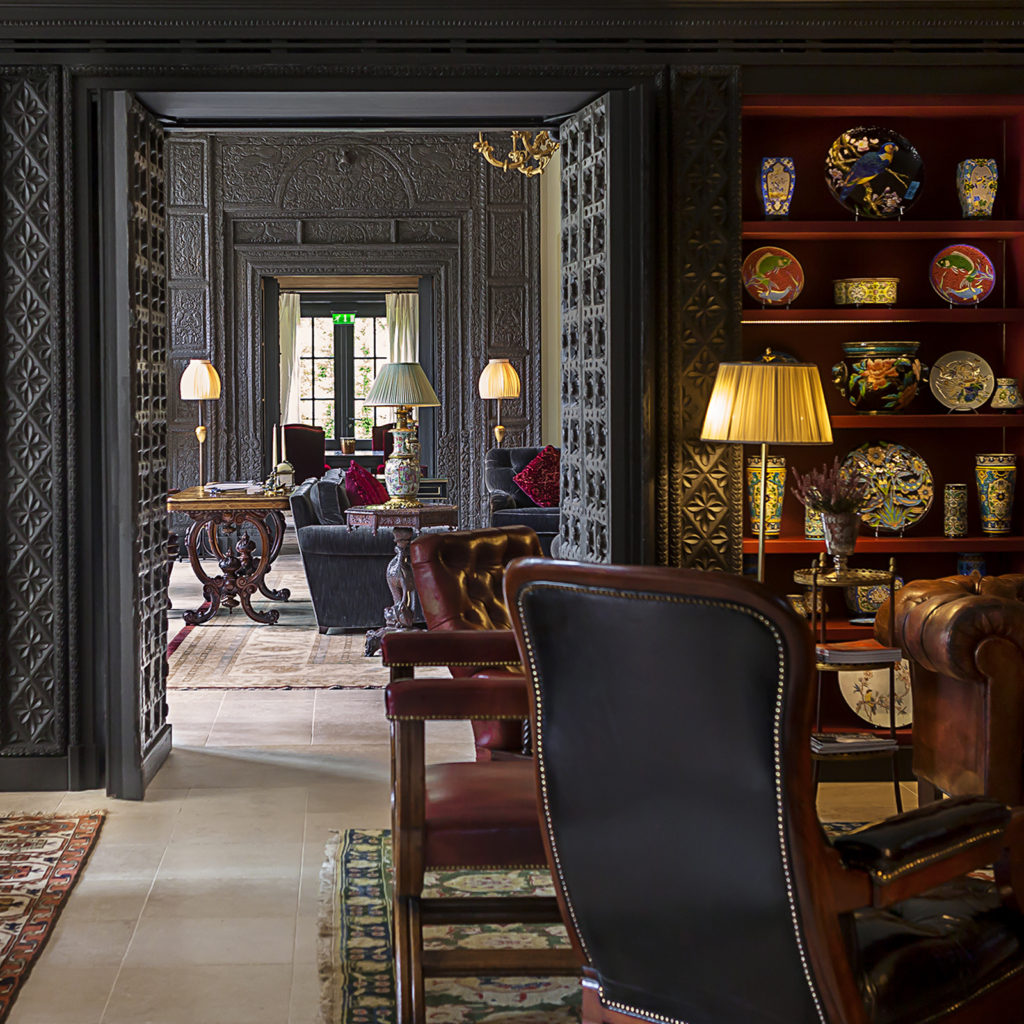
It still has an atmosphere of a home rather than a hotel, a cosy and colourful library is the perfect place to taste the wines from the Reybier properties (and further afield) and the fourteen rooms and suites offer elegant comfort.

The cosy and conmfortable salon-library

The food is delicious, a mixture of local produce and international and a perfect show case for the wines. 
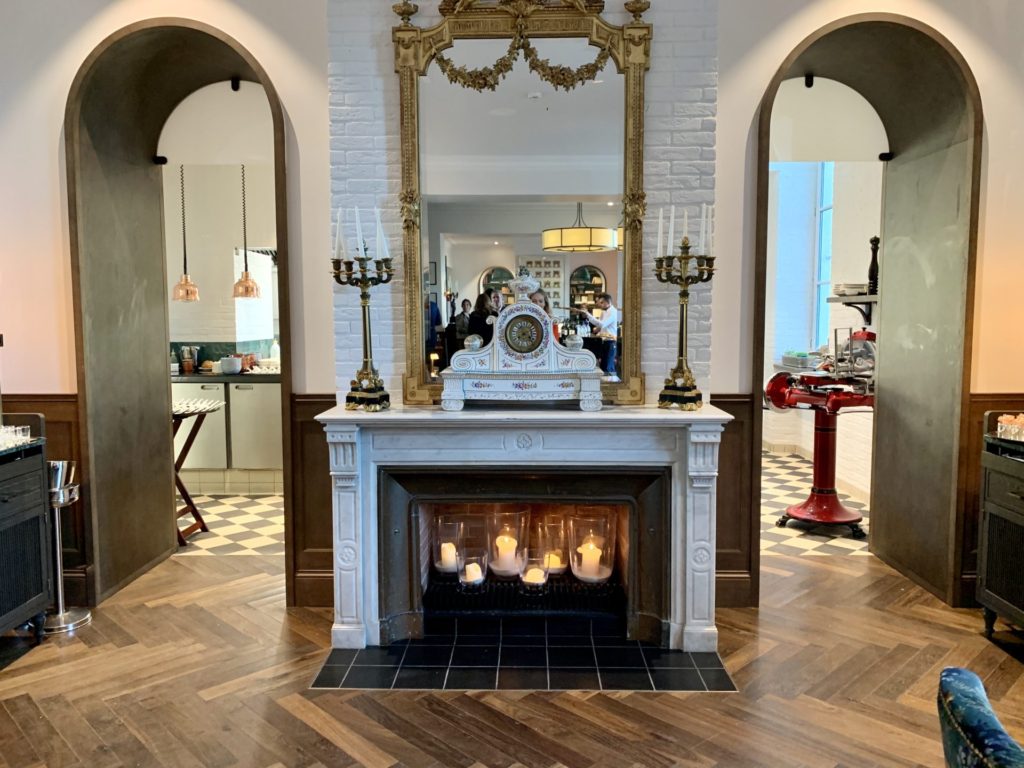
A view of the kitchens from the dining room

The word’s out already, a new destination that feels like the top of the world when you are driving there, but once there, you’ll see it’s at the top of its game.

Cru Bourgeois, the latest chapter.

Laura Clay kindly reports back from the tasting of the Cru Bourgeois 2017 selection tasting in London. Laura is a leading wine educator in the UK, president of the Association of Wine Educators and an accredited Bordeaux Educator. She often runs tastings for the Wines of the Médoc in the UK and, like me, is a fan of the Cru Bourgeois.

The latest Crus Bourgeois classified wines have just been released. They are from the 2017 vintage which, by any standards, was a tricky one with the unusual extreme spring frosts being the biggest culprit for causing yields to be very low, as much as 50% lower than normal in some areas. The classification is only for wines of the Médoc, and those appellations closest to the estuary suffered the least and were able to produce very high quality wines. It seemed to me, admittedly tasting through only a small selection of 32 wines, that location, which is always particularly relevant, was key in 2017. The vines of the communes of Margaux, St Julien, Pauillac and St Estèphe suffered little and produced good wines. Those of the northern Médoc were not so lucky and it seemed to me that because yields were so low there were some less than ripe grapes in the mix. Apparently, according to Jane Anson in Decanter there was some co-fermentation of different grapes to fill the tanks. There’s nothing wrong with this in itself if all your grapes were sufficiently ripe at the same time – unlikely for Cabernet and Merlot grapes.

The eight appellations of the Medoc.

This may all sound a bit negative and you might think I wasn’t impressed with the wines. Actually, I was.  And this is the whole point of the classification. The wines have to be blind tasted annually (for now) and it seems that the fact there were far fewer châteaux which were successful in attaining the classification proves that it works. This year there were 226 Crus Bourgeois compared with last year, the elegant yet structured 2016s, when 270 wines were classified. And I should make it clear, it is the wine and not the château which is classified. The 2017s are wines which show a lightness and early drinkability in some, with an attractive balance and length in those from the communes and from my point of view, those with a good proportion on Cabernet Sauvignon seemed to do best. 

You can find the full list of the Crus Bourgeois along with a great deal more information on the Crus Bourgeois website. However, here are my picks, with their retailer references in the UK, from the limited range I tasted:

Médoc: Château Vieux Robin (O.W. Loeb, Fine & Rare)

Haut-Médoc: Château d’Agassac (Hedonism),

 Château Bernadotte (Farr Vintners), 

Château Cambon La Pelouse (Millesima, Vinissimus), 

Château de Malleret (Crump, R ichmond & Shaw), 

Château Peyredon Lagravette (O.W. Loeb) 

Listrac: Château Fonréaud (Goedhuis, Tanners, Berry Bros, Fareham Wine Cellar)

Moulis: Château Caroline (Goedhuis, Tanners, Berry Bros, Fareham Wine Cellar)

Margaux: Château Deyrem Valentin (Waitrose)

St Estèphe: Château Le Crock (Uncorked)

I have always been a fan of this classification. There is value to be had in these wines in an area where prices can be steep for even the deepest pockets. There is a clarity about the wines and the chateaux they come from – you can scan the QR code on the wine to have access to a lot of information about the wine before you buy it, they work together as the Alliance des Crus Bourgeois and I note a pride in this. I have faith that this will still be the case when things change a bit next year.

The Cru Bourgeois label can be read as a QR code to learn more about the wine.

What’s afoot is a back to the future scenario. In the past, prior to 2003, the wines were classified in a three tier structure but since 2009 the wines were blind-tasted two years after the vintage and declared Cru Bourgeois (or not), all at the same level. From next year, and the 2018 vintage, there will be three hierarchical levels – Cru Bourgeois, Cru Bourgeois Supérieur and Cru Bourgeois Exceptionnel – and the wine will be classified for five years. The selection process will be rigorous with several criteria needing to be followed including good agricultural and environmental practices, traceability at every point of production and active marketing of both the wine and the classification including reception of the public and trade to the property. The most important factor is what’s in the bottle and this will be judged on vintages between 2008 and 2016. For the next classification in 2025, the wines will be tasted blind from 2017 and 2021 vintages. 

I like the direction the classification is taking. It’s clear and fair, and, for consumers, will explain why there might be a difference in price between one Cru Bourgeois and another. Do look out for wines with the Cru Bourgeois logo and note that wines from slightly older vintages are worth buying. I can recommend 2012’s and 2014’s for their freshness and elegance both drinking beautifully now, and 2015’s for their ripeness and generosity

Here’s a few tmore o whet your appetite.

  1. Château du Cartillon, Haut-Médoc 2015 (Aldi online £11.99)
  2. Château Lamothe Bergeron, Haut-Médoc 2014 (Fraziers £24.00)
  3. Château Petit Bocq, St Estèphe 2014 (Crump, Richmond and Shaw £18)
  4. Château Caroline, Moulis 2010 (Alexander Hadleigh £21.45)
  5. Château La Roque de By 2016, Médoc (Tanners £13.50)

If you have enjoyed this post please sign up here  to receive future blog posts directly to your in box. If you would like to learn more about Bordeaux buy your copy of Bordeaux Bootcamp here.