There’s a light-hearted welcome at Château de Ferrand. A huge sculpture of a chewed Bic pen top (we’ve all been there) by Julien Gudéa waits by the entrance. It’s a brilliant introduction to a property that integrates history, innovation and art without taking itself too seriously.

Elie de Bétoulaud built the chateau in 1702, as a homage to Louis XIV. Sadly, the French King never made it to Château de Ferrand, and Elie de Bétoularud never met his hero, dying on his way to his meeting with Louis XIV. He left the chateau to the Marquis de Mons, and it remained the sleeping beauty of the family until 1978, when Baron Bich, creator of the Bic® pens (and so much more), purchased it.
Since 2010, his daughter, Pauline Bich Chandon-Moët and her husband Philippe have brought Château de Ferrand firmly into the 21st century with important and design-led technical, architectural, environmental and artistic renovations.
In 2012, Chateau de Ferrand was included in the select club of Grand Crus Classés of Saint Emilion.
Natural architecture.
On one of the highest points of Saint Emilion, right on the edge of the limestone plateau, Château de Ferrand enjoys stunning 360° views over a curve in the Dordogne valley. At the heart of the UNESCO Heritage site of Saint Emilion, all cables and telephone wires are buried to preserve these views. This altitude and exposure together with the clay limestone soils, keeps temperatures cool and gives an elegance and tension to the Merlot dominated wines.

The chateau is built around a courtyard, with a central gallery running between two wings, one technical, one residential. Visitors pass through this windowed gallery, to reach the park to the west of the estate. It is one of the largest green spaces on prime appellation land not planted with vines. The unique collection of trees dating back over 200 years includes beautiful cedars and an old Cork Oak, well north of its normal habitat. Along with the wooded ridge around the estate, the park is part of ten hectares of woods, thickets and meadows, a kitchen garden and beeshives that all that add to the biodiversity of the estate and their Terra Vitis, ISO 14001 and HVE sustainable agriculture certifications.

Down the limestone slope from the small hamlet and church, also part of the 42 ha estate, are the mysterious grottos of de Ferrand. These galleries carved out of the hillside are open to the views across the Dordogne Valley. Perhaps they were created for shady afternoon walks or discreet 18th century rendezvous?
Wine and design.
Thanks to the iconic creations of Baron Bich, the family are intimately connected with design. The Bic Contemporary Art Collection includes over 200 works by international artists curated by Charlotte Bich-Goury du Roslan. They acquire important historical and contemporary works created with, or inspired by, Bic pens and ink. Over 30 works from the collection now grace the walls of the château.
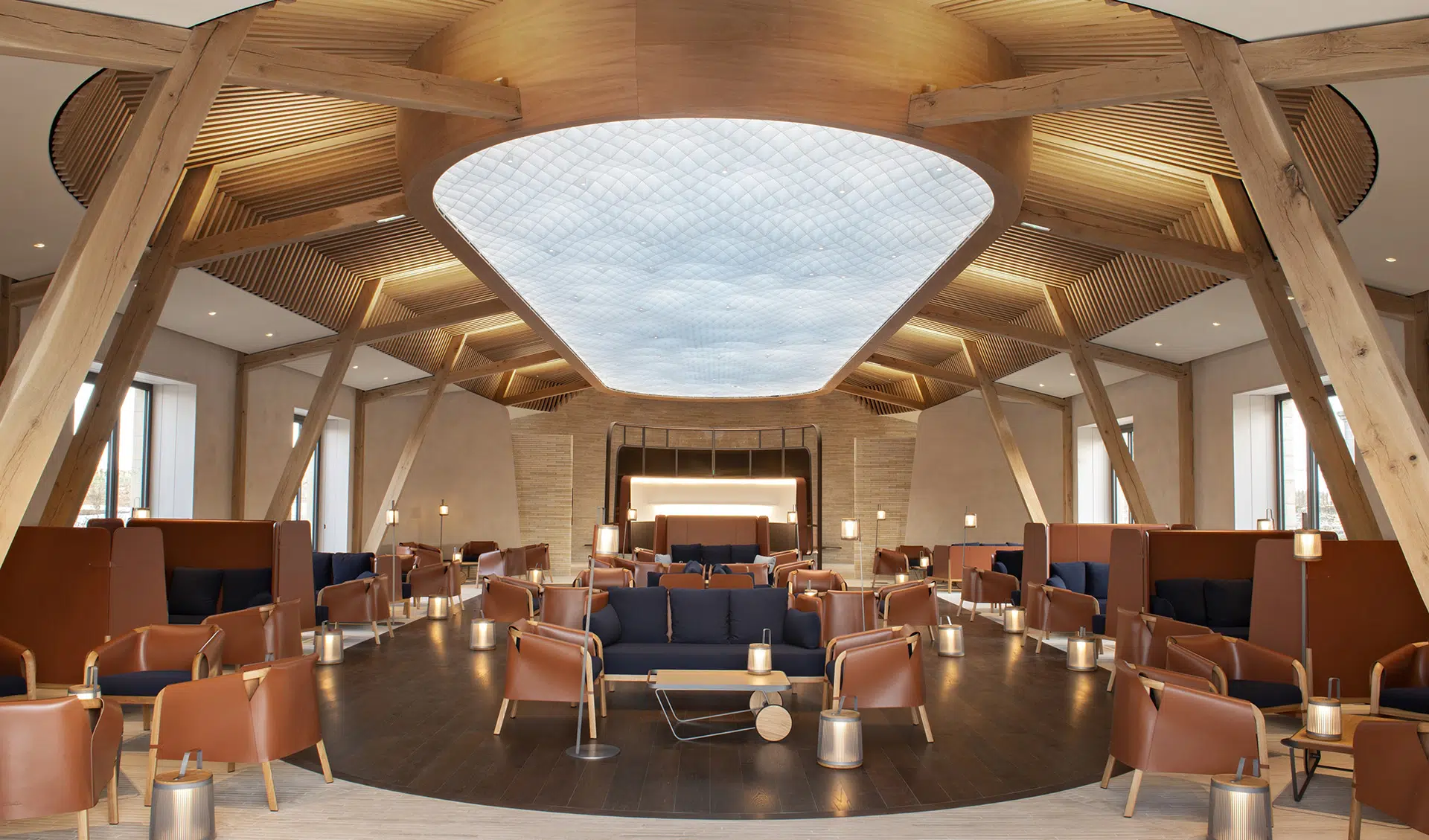
In 2019, Pauline and Philippe Bich Chandon-Moët asked interior architects Patrick Jouinet and Sanjit Manku, to create a design-led renovation project that respected the past but opened the property to a future of welcoming guests.
Local Frontenac limestone (a link to the terroir) and oak (a nod to the barrels) were used in the renovation and creation of new tasting rooms and reception areas as the property turns towards wine tourism.

Stairs lead up from the 18th century barrel cellar to a tasting gallery overlooking both the vintage in the cellar and the views across the vines and the Dordogne valley. In the château, the Orangery, with its cloud like ceiling, welcomes up to 300 guests, but the very cool rotating tasting bar makes it intimate enough for small groups. The walls of the ‘Salon Bic’ tasting room are covered with a fresco by Alexandre Doucin, drawn uniquely in Bic biro. Bic® Cristal®

Cellar art
Thanks to the iconic creations of Baron Bich, the family are intimately connected with design. The Bic Contemporary Art Collection includes over 200 works by international artists curated by Charlotte Bich-Goury du Roslan. They acquire important historical and contemporary works created with, or inspired by, Bic pens and ink. Over 30 works from the collection now grace the walls of the château.
This summer Château de Ferrand hosts the exhibition l’Humble Bic from the collection of Le Musée de la Création Franche. This museum on the outskirts of Bordeaux, holds the largest collections of works created with Bic pens. As the museum is currently closed for renovation, Château de Ferrand has transformed their barrel cellar into an art gallery showing 62 works created by 24 artists from nine different countries throughout the summer.
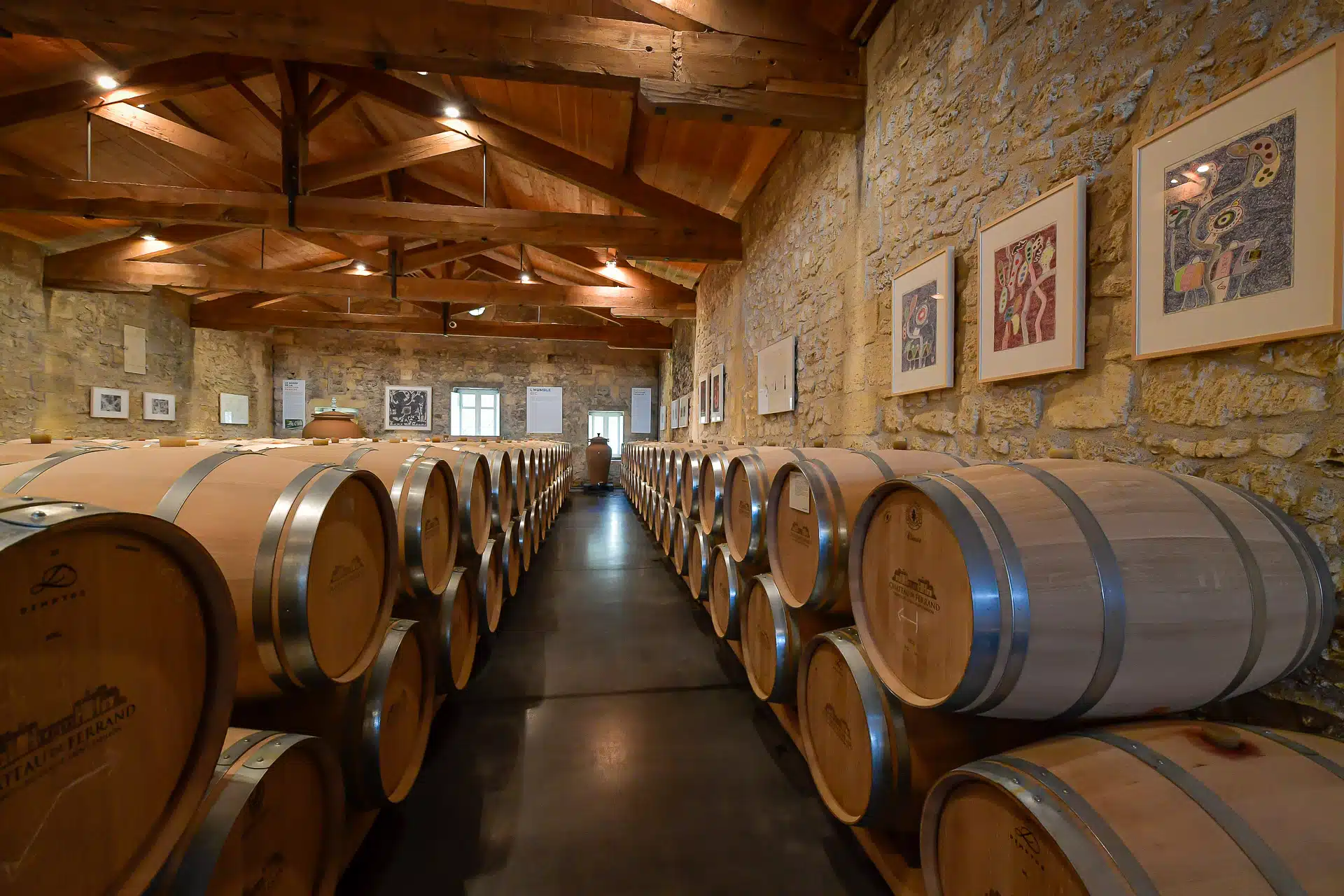

This is firmly on point with their desire to open the chateau to both art and wine lovers. Visits of the vines and cellars are conducted by qualified sommeliers followed by vertical tastings or blending workshops. In-house chef Marilyn Madray creates private lunches, dinners and tasting experiences, served in the dining room surrounded by Bic art, the orangery or on the terrace overlooking the kitchen gardens and park.
If this all sounds a bit exhausting, don’t worry. The warm welcome extends to overnight stays. The renovation included three elegant en-suite château guest rooms. You can taste, eat and sleep within a work of art.

If you’ve enjoyed reading this you can sign up here to make sure you don’t miss future blog posts.
To learn more about Bordeaux, you can find Bordeaux Bootcamp here and to cultivate a healthy passion for wine, watch the free Daily Detox webinar here, buy your copy of The Drinking Woman’s Diet or discover the new online 7 days to a Liver friendly Lifestyle here.