
In 2012 I asked the question, ‘Is Barsac and Sauternes the perfect dry white terroir?’ It would seem so, since then several excellent new dry white wines have been released that are well worth your attention.
In the article I mentioned La Demoiselle de Sigalas from Château Sigalas Rabaud in Sauternes, Opalie from Château Coutet in Barsac and of course the alphabetical classics of Sauternes, G de Guiraud, R de Rieussec, S de Suduiraud, not forgetting Y d’Yquem.
What is interesting with the newcomers is the increased importance given to Semillon. Sauvignon Blanc makes up a high percentage dry white blends across Bordeaux, but the classy and classic Pessac Léognan and Graves have always had an important part of Semillon in their blends.
Semillon dominates Sauternes and Barsac of course, thanks to the elasticity of its skin, which makes is particularly sensitive to Botrytis. It’s unsurprising that it is favoured in the dry whites made by the Sauternes wine makers.
Back to the future.
Producing dry white wines in the region is nothing new, Château Doisy-Daëne in Barsac can trace dry white production back to the early 1950s, although today the Le Grand Vin Sec du Château Doisy Daëne is 100% Sauvignon, in no small part due to the influence that Denis Dubourdieu has had on the excellence of Sauvignon Blanc in the region.

Grand Vin sec de Doisy-Daene
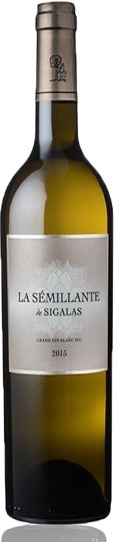
One of the first champions of dry Semillon in Sauternes is Laure de Lambert, owner winemaker of first growth Château Sigalas Rabaud. She introduced a dry white wine when she took over the family property, the Demoiselle de Sigalas, which hovers around 70% Semillon, then in 2013, she released her La Sémillante, 100% Sémillon.
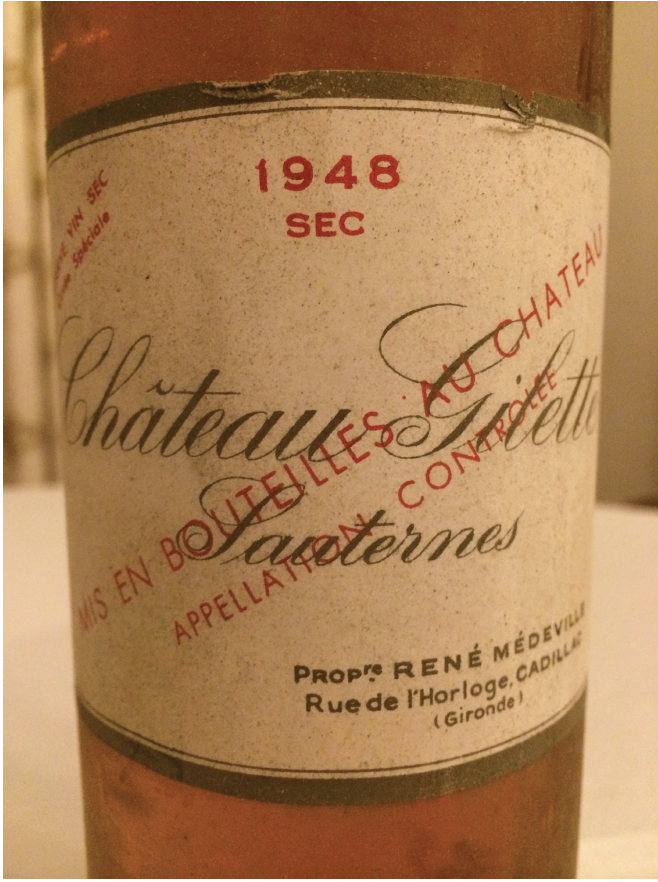
In researching dry Sémillon wines, Laure was inspired by the staying power of Sémillon wines from Pessac Léognan, but also from Sauternes. She tasted a Château Gilette labelled as a ‘Sauternes Sec’ from 1948. Known as the ‘Antiquaire de Sauternes’, Gilette only releases wines once aged for 20-odd years in tanks and a couple more years in bottle.
A newer arrival on the Sauternes scene is Silvio Denz. He purchased first growth Château Lafaurie Peyraguey in 2014. The previous owners, Suez had already renovated the cellar but Denz set about renovating the chateau into a splendid 13-room hotel and Michelin star restaurant. He also reintroduced dry white wine to the property. Back in the 1950s, under the ownership of Cordier, the château produced a dry white, bottled in an Alsace bottle, reflecting the family origins. Carefully selected from certain plots, originally with the help of Denis Dubourdieu, they favour a Sauvignon dominated blend, looking for a lightness of touch and elegance, also the signature of their Sauternes.

and dry in 1957
Château Lafaurie-Peyraguey Grand Vin Blanc Sec is presented in a bottle embossed with the Rene Lalique ‘Femmes et Raisins’ motif, as is the Sauternes, but differentiated by its bronze colour. In 2019, they released a clear glass magnum edition, quite the table piece.

Chateau Lafaurie-Peyraguey
2018 was the first vintage of Asphodèle, the dry white from Château Climens in Barsac. Bérénice Lurton, the owner wine maker, is no newcomer in Barsac; she is a pioneer in biodynamic viticulture at her family vineyard. Her 100% Semillon wine is made from grapes selected from plots of younger vines and subject to the same stringent quality and biodynamics as her Barsac wines.

Why so many new wines?
I’m the first to rave about the fabulous ‘liquoreux’ wines of Sauternes and Barsac; it was these wines (or rather a producer of them) that brought me to Bordeaux in the first place. There is sadly no denying that demand for these wines has seen better days. It’s a mystery to me why more people don’t drink them more often. I have never served a glass of Sauternes or Barsac to guests unfamiliar with them without them commenting, ‘Oh this is delicious’ with a note of surprise.
Historical heyday.
The heyday for these wines was the 19th century, when the Bordeaux classification gave 27 of them classified status. That’s a lot compared to 61 in the Medoc, on a much larger surface area. The classification is limited to the top three levels, compared to five levels in the Médoc. Château d’Yquem, was only vineyard to be awarded the highest accolade of Premier Grand Cru Supérieur, lording it over Lafitte, Latour, Margaux and Haut Brion with ‘only’ first growth status. The 1855 classification was based uniquely on sales price, a clear indication of their 19th century success, thanks in no small part to a flourishing pre revolution Russian market.
Why not?
Why are these beautiful wines less popular now? A change in consumer habits? The public certainly hasn’t lost its sweet tooth, sugar consumption as never been so high, but there is a move away from sweet wines. Perhaps there is a memory of tasting a sticky ‘Spanish Sauternes’ back in the day when other wines would appropriate the name, adding sugar to wine that in no way resembled the balanced acidity of the real thing. There is a fear of not finishing a bottle once opened. You don’t need to worry, they last for at least a couple of weeks in the fridge on opening. What to pair them with? They are remarkably versatile, or drink them alone as a pre-dinner or after-dinner drink. I think there is a misconception about these wines; I come back to my delighted guests. These complex, low yielding wines remain remarkable value for money. Go out and buy and drink some today!
Commercial reality.
The difficulty of relying on sales of sweet white wines, to a fickle clientele is hard, even for a property as famous as Yquem. The expense of production, the low yields and the extreme climate sensitivity essential to create the unique combination of warmth, humidity and drying breezes winds needed for the Botrytis magic to operate, mean these wines are expensive, difficult and unreliable to produce. Increased climate variability is making these already vulnerable wines even more so. The terrible frosts across France last week hit the region very badly.
Producing a more reliable and more approachable wine in the range, such as a dry white, is a welcome steady source of income for some of these properties.
Sauternes Sec
Just as we’ve seen in previous posts for Médoc and Right bank, no specific appellation exists for dry whites produced in Sauternes and Barsac. The wines are labelled “Bordeaux Blanc” or “Bordeaux Blanc Sec.” All the more surprising here as the region is known for it’s excellent white wine terroir, from the rolling limestone and gravel outcrops of Sauternes to the limestone, sand and clay of Barsac. This, despite the use of ‘Sauternes Sec’ seen on some older labels. Will this change? There are two schools of thought, fear by some that it will dilute the Sauternes brand and confuse customers, frustration by others that these special wines are not valued enough if only labelled as Bordeaux Blanc.
Graves
A compromise could be to use the Graves Appellation. Sauternes and Barsac are at the southern tip of the Graves appellation that runs South from Bordeaux. Graves is an appellation for both red and dry white and also a semi-sweet white Graves Supérieur (a tiny and almost impossible wine to find). Some properties do have land on the Graves. Chateau de Malle, a second growth of Sauternes, has land in Graves which enables it to bottle its dry white and red under the Graves appellation, as can properties in the sweet white appellation of Cérons region, which is also in the regional Graves appellation.
The co-presidency of the Sauternes and Barsac growers association was recently handed over to two local personalities; Jean-Jacques Dubourdieu, co-owner and wine maker of Château Doisy Daëne, and David Bolzan GM of Lafaurie Peyraguey. It sounds like they already have a lot on their agendas, perhaps this is amongst them?
A gateway drug.
In the meantime I encourage you to try one of these dry Semillon driven wines, if you’re not already a fan of sweet white Bordeaux, they could just be your gateway drug to one of the finer tasting experiences of Bordeaux.
If you have enjoyed this post please sign up here to receive future blog posts directly to your inbox. If you would like to learn more about Bordeaux, you can buy your copy of Bordeaux Bootcamp here, to learn more about Wine and Wellness, you can buy your copy of The Drinking Woman’s Diet here.