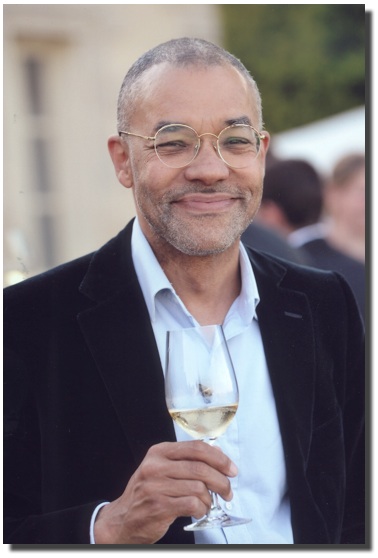
Dewey Markham Jnr was a native New Yorker and a Bordeaux insider.
Dewey and I both arrived in Bordeaux within a few years of each other, a Bordeaux very different to the city we know today. Our paths crossed often as educators with the Bordeaux Wine School and for the Medoc Wine council. We would meet often in the vineyards and restaurants of Bordeaux as he accompanied lucky wine enthusiasts through the vineyards. He was easily recognisable by his shirt, tie and cardigan signature look.
I have memories of him as a wonderfully entertaining dinner guest. On one French Wine Explorers tour, where he kept us spellbound with his dry humour and anecdotes in the glorious dining room of Château Pichon Baron.
This is hardly surprising, as his father was a well-known New York entertainer and Dewey graduated from NYU School of Arts with a Masters in Cinema
Food and wine.
A passion for food preceded his passion for wine. Having studied at the Culinary Institute of America, Dewey moved to Paris, working at the French cooking school École de Cuisine La Varenne from 1986 to 1989. His time in France ignited his interest in wine.
Back in NY he worked in wine shops and told that it was when working at Sherry-Lehmann he first became intrigued by the notion of classified growths. He became fascinated by what it really meant and why customers systematically were drawn to these wines when buying Bordeaux.
He returned to the Culinary Institute, this time to teach about wine, and a passion for education was born. In 1993, he wrote his first book Wine Basics, still in print.
That was also the year he moved back to France, to Bordeaux, starting research into the classified growths of Bordeaux. A project triggered by his curiosity back during his time at Sherry Lehman and largely unexamined by both the properties and the Chamber of Commerce of Bordeaux, holding the archives.
Four years of research that led to his seminal work 1855: A History of the Bordeaux Classification.

Whilst researching his book, he met his future wife, Catherine, who worked at Mouton Rothschild, a property that features prominently in the book. If you don’t already know the unique place of Mouton Rothschild in the history of the classification, now is the perfect time to read his book to find out.
1855, A History of the Bordeaux Classification, was published by Wiley in 1997 to both critical and professional acclaim and was winner of the James Beard award for wine book of the year.
The book remains the reference for anyone curious about the history of Bordeaux; his detailed research also includes the keys to the classifications of the Sauternes and Barsac properties as well as the red wines and challenges a lot of preconceived ideas and myths around this historic date for Bordeaux.
His unique understanding of the classification made him the authority in Bordeaux for anyone wanting to know more. He taught in leading schools across the world for the Wines of the Médoc and, for many Master of Wine candidates, was their introduction to the region.
He was a great ambassador for the wines of Bordeaux through both his teaching and his writing.
He had so much more to contribute. Bordeaux will be lesser place without him, and he will be missed by many in the trade who owe him their deeper understanding of this complex region. Including me.
He is survived by his wife Catherine and their children Lucie and Dewey III.