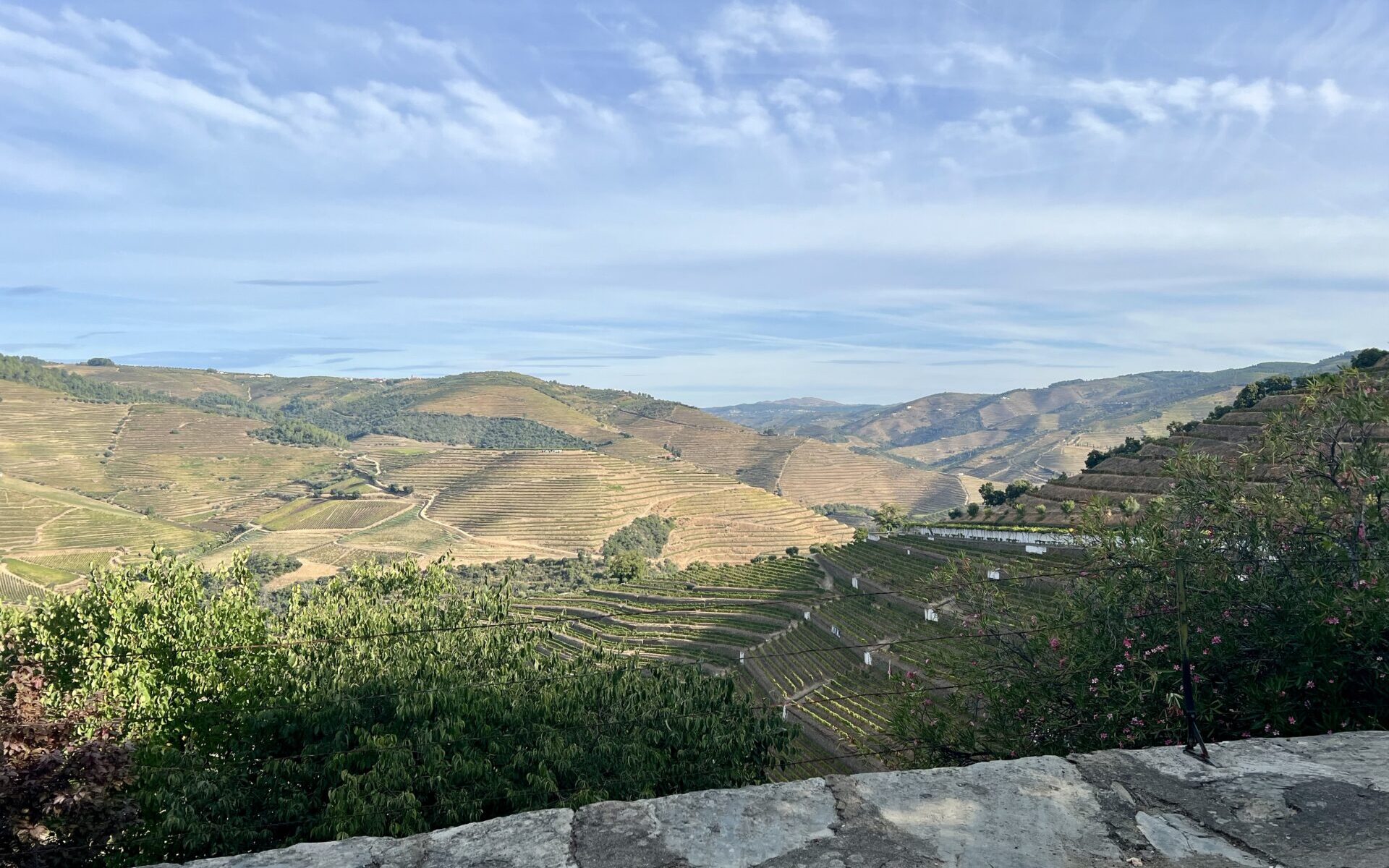
The Port vineyards are in the Douro, 80kms inland to the east of the city of Porto, They start on the eastern side of the Serra do Marao, the mountains that shield the vines from the Atlantic influence we felt so keenly in the city. The resulting hot and dry continental climate is a stunning contrast, it feels like a different country.
The further east, the hotter and dryer the vineyards become, with only altitude mitigating the high temperatures. We stayed near the Vale do Inferno – the name says it all.
A noisy diesel train took us out of the city, it chugged up the hills, emerging from a tunnel into the sunshine of the eastern flanks of the Sierra do Marao. From here it runs along the right bank of the Douro all the way to Pocinho. You need your wits about you, there are few signs or announcements, but the locals are friendly and helpful, fortunately my intrepid travelling companion Nicola speaks Spanish, so we (or rather she) muddled through.
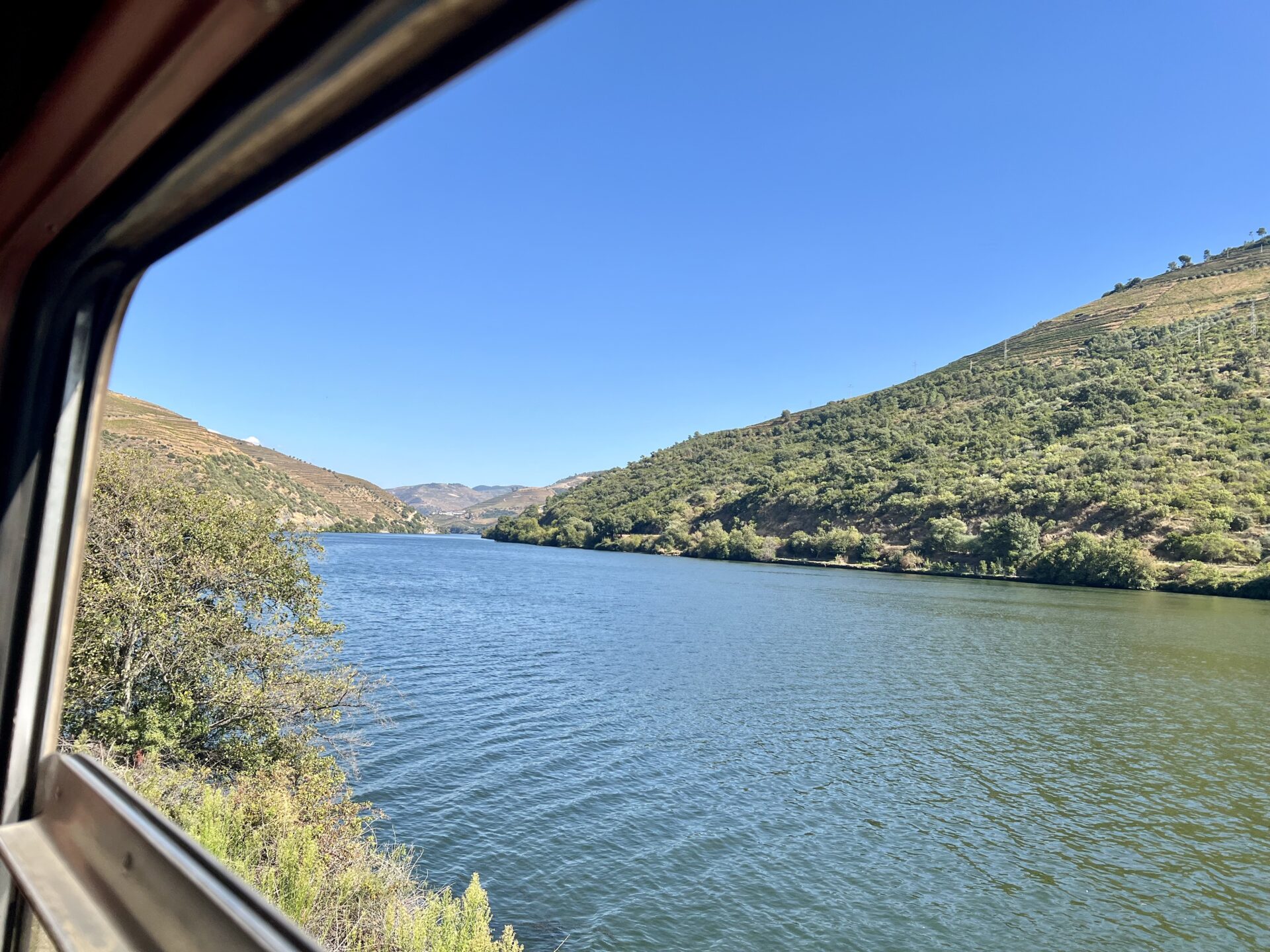
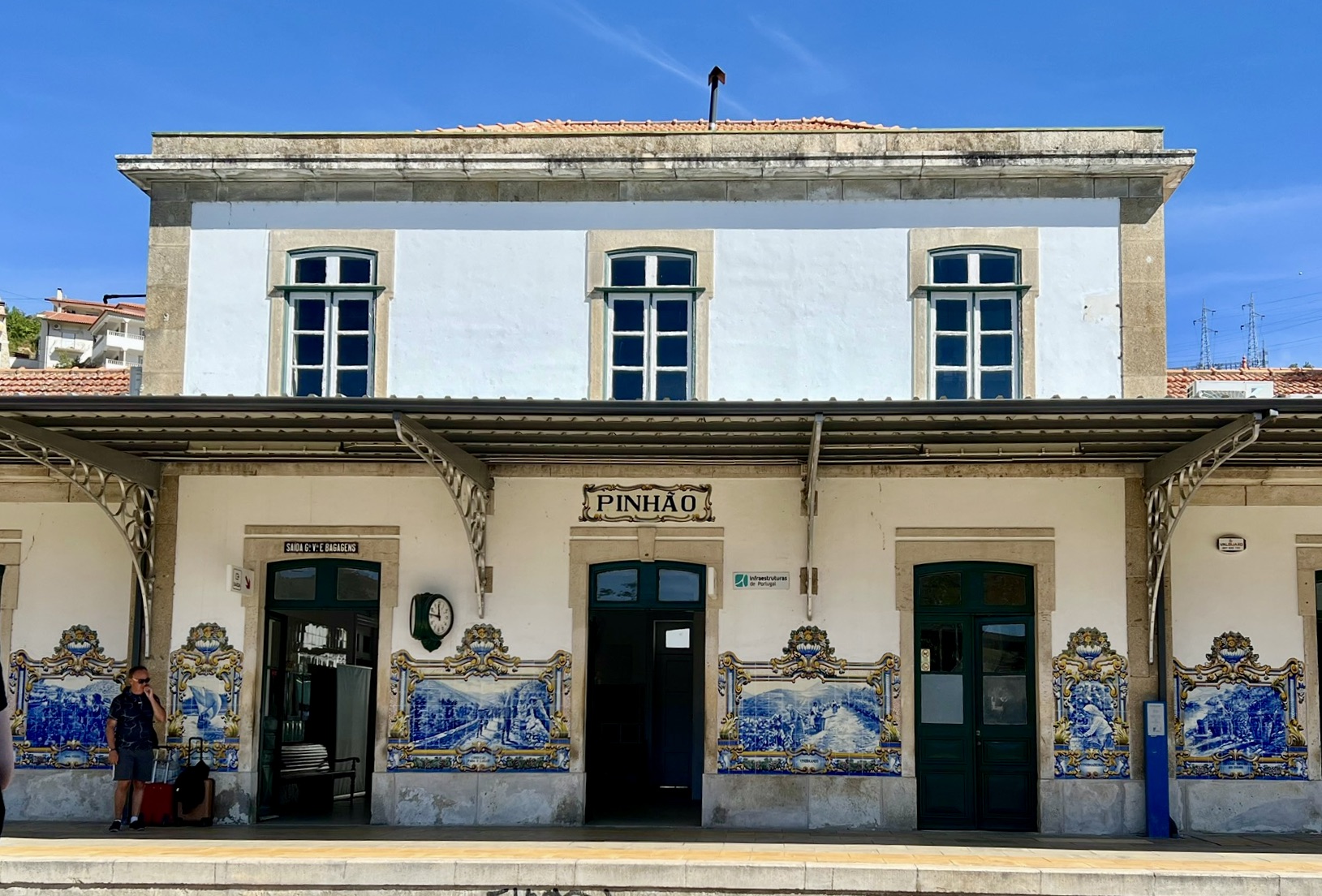
We stopped about two thirds of the way up, in the small town of Pinhao, where the Pinhao Valley runs into the Douro Valley. A region known for the excellence of its steep vineyards. The magic of ageing might happen in the cellars of the city, but the seduction of the natural environment is right here amongst the vines reaching high up above the Douro River.
Mountain viticulture and micro climates
53% of the world’s mountain vineyard is right here in the Douro planted on these steep rocky hillsides with an incline of 30% or more, the very designation of mountain viticulture. Defined in 1756, the Douro is the oldest designated wine region in the world. Covering 24,600 ha it’s also the world’s largest region practicing hot climate, hillside viticulture on these steeply terraced slopes.
Wine has been made in the Douro valley for over two thousand years; a history of human intervention that has created this unique cultural landscape of narrow terraces, supported by hand-built dry stone walls. The Douro Valley was awarded UNESCO World Heritage Status in 2001, a tribute to the continuous work of vine growers here since the Romans.
Micro climates and climate change
As with many wine regions, climate change has brought more erratic weather, more storms. High rainfall has always presented a challenge on these steep slopes, leading to erosion and loss of the precious, thin topsoil.
Terroir
The narrow terraces, or ‘socalcos’ are built to reduce erosion. Shored up by the stone walls that retain both water and soil, with often only one or two rows of vines planted on each terrace. The effect is stunning, but these terraces need continuous maintenance, and everything has to be done by hand. Expensive to maintain and to farm, it’s increasingly difficult to find the skilled labour needed.
Small roads across the slopes access vines with harvests carried up to waiting trailers. It’s not unusual to see horses ploughing the more inaccessible terraces. These fragile soils lie on top of a loose, schist bedrock that allows vine roots to find their way down to water reserves remaining from winter rain. Over the years, the use of herbicides and loss of cover crops has exacerbated the problems, a philosophy that has definitely now changed across the valley.
To make vineyards easier to manage, a system of wider ‘patamares’ terraces, without walls was introduced in the 1980s. Tractors can access these vines, that are easier to maintain whilst still offering protection from erosion and retaining as much water as possible.

On the lower slopes, with less than a 30% incline and less water loss risk, vertical planting is allowed. These greener, unterraced ‘vinha ao alto’ vines looked more familiar to my Bordelais trained eye.
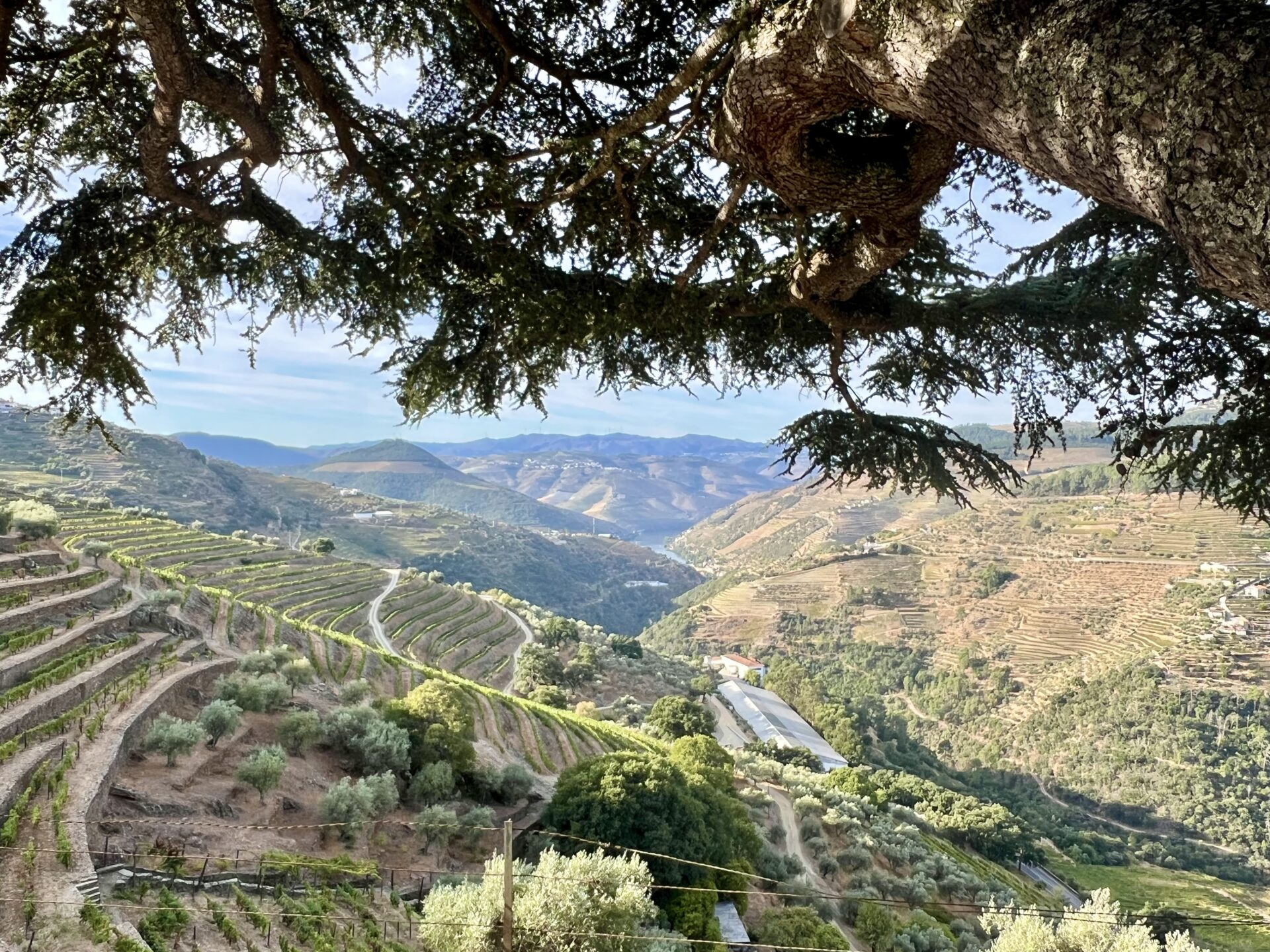
Looking across the valley you can clearly see these three types of terracing and vine cultivation. It all adds to the beauty of the landscape.
Porto Protocol
Given these challenges, it’s perhaps fitting that a dynamic global movement to help the wine industry mitigate climate change and promote sustainability came out of this region. The Porto Protocol was founded by Taylor’s Port, and has over 250 members from 20 countries. They are all working together to share solutions, innovations and resources campaigning for change to protect these and other fragile wine regions.
Delicious agroforestry
Like the fruit trees being planted in and around Bordeaux vines, here olive and citrus trees create biodiversity, shade and protect against erosion. You’ll find delicious olive oils for sale in Quinta shops alongside their wines.
The wines
As the slopes twist and turn around the Douro and its tributaries, grape growers dedicate the warmer south facing orientation for Port production and the cooler north facing slopes for dry table wines. These wines now make up around 50%, production, a dramatic change over the last 20 years, but the excellent fortified wines still carry the image of the region.
90% of grapes here are red, with white grapes planted on higher elevation for maximum freshness and acidity. Producers have over 70 red indigenous grape varieties to choose from, but both Port and unfortified wines are dominated by five principal varieties: Touriga Nacional, Touriga Franca, Ti Roriz (Tempranillo), Tinta Cao with some Tinta Barroca.
Touriga Nacional is the most well-known and one of six new grape varieties recently introduced to Bordeaux under experimentation. Its intense colour, flavours and high tannins are perfect for Port and for the warm climate.
Winning Wine Tourism
Viticulture here is not easy, and the fortified wine market is complicated. Wine tourism has become key to the economic model of the region, and they are very good at it. These famous wines and the stunning landscapes pull in visitors who have a huge and positive economic impact on the region. Vineyards are opening restaurants and guest rooms; river cruise boats glide up the Douro alongside small day cruises and kayakers. Having kayaked up the Margaret River earlier this year, we took a boat and Kayak trip up the Douro, an excellent way to visit and see the wildlife as well as the vines.

Big business
The Taylor Fladgate group has embraced tourism in the city. They converted 10-acres of their old cellars in Vila Nova de Gaia into the WOW (World of Wine) in 2020 opening museums,restaurants, boutiques and wine shops. This was built off the success of their Relais & Chateaux Yeatman Hotel and spa, that opened in 2010 and now has over 100 rooms. The whole project cost close to around $150 million.
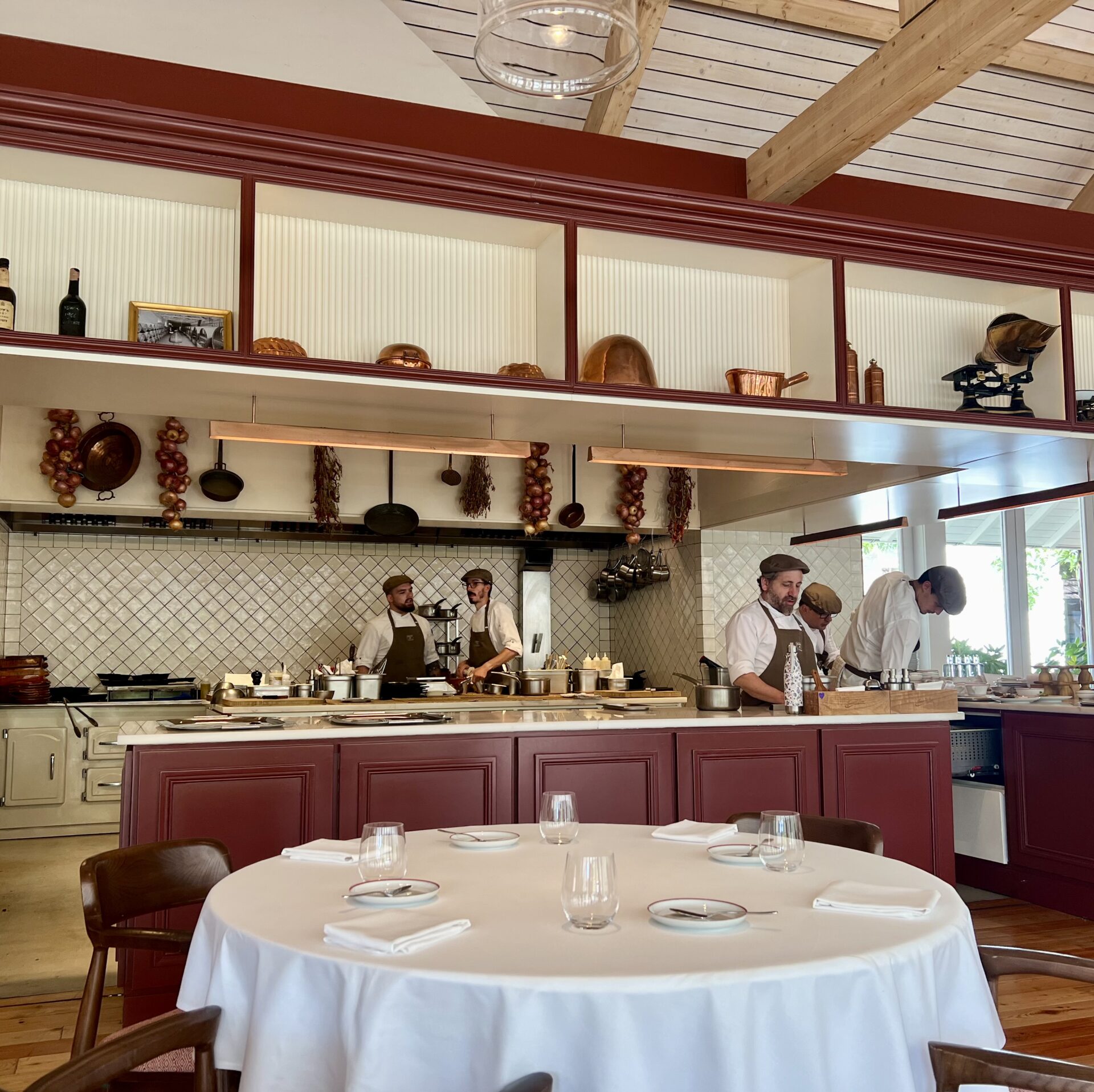
The Symington group, the largest Porto operator with 28 properties including famous names Grahams, Cockburn and Dowes, also own Quinta do Bomfim (a Best of Wine Tourism winner). Right on the bank of the River in Pinhao, they are open to guests for tours and tastings, and have a stunning restaurant with floor to ceiling windows overlooking the river and the terraced vines on the opposite bank. The open kitchen serves delicious locally sourced food, lots of veggie options and their range of Tawny Ports served from impressive double magnums. We also discovered more white port cocktails and Vértice, a vintage Vinho Espumante do Douro made in the hills up above the town.
Intimate welcome
It’s not only the big players that have branched out into wine tourism. We stayed at the gorgeous Quinta de La Rosa, just 2kms across the river and up the slope from Pinhao centre. A family vineyard since 1906, they were one of the very first to embrace wine tourism, offering summer lets for their Quinta Amarela since 1985, way before it was popular. They opened a B & B in 2011, and now the winery is also a boutique hotel with 23 bright, comfortable rooms scattered across the property and two independent four bedroomed Quintas in the vines.
Quinta de la Rosa opened one of the first winery shops in the Douro, offering tours and selling directly to customers and, in 2017, they opened the Cozinha da Clara restaurant followed by Tim’s Terrace offering more casual dining.

Quinta de la Rosa opened one of the first winery shops in the Douro, offering tours and selling directly to customers and, in 2017, they opened the Cozinha da Clara restaurant followed by Tim’s Terrace offering more casual dining.
After the change in the law in 1985 allowing ageing in the Douro, Quinta de la Rosa started making, ageing and bottling their own Port here in 1988. They started making table wines in 1991, which today represents about 2/3rds of the production, and now have their own brewery, the first in the Douro.

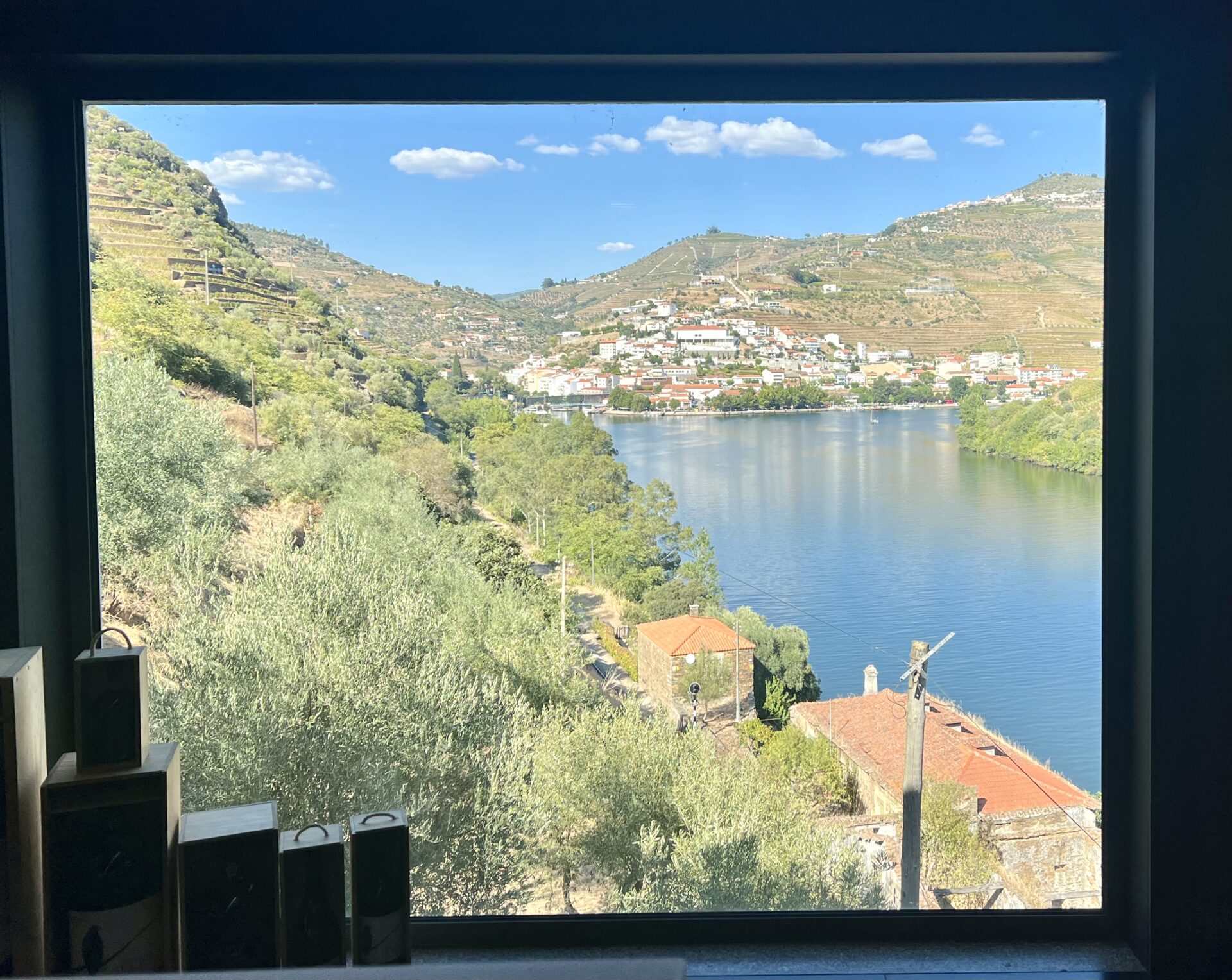
Quinta de la Rosa is a Single-Quinta, meaning all their grapes are grown on a single estate. The 62 hectares of vines are on the north bank of the Douro and enjoy the cooler morning sun. And so did we, with morning yoga and a dip in the pool on the terraces overlooking the valley. We had the same stunning view over breakfast, served in the Cozinha da Clara restaurant.

It’s surprising that a smaller, family owned and run Quinta is such a pioneer but when you meet current owner Sophia you understand. We watched her taking her morning swim across the river dodging river cruise boats as we enjoyed breakfast! The property has a history of strong women. It was a christening present to Sophia’s grandmother, Claire from her English grandmother. Nearly 100 years ago, she planted the ‘Paradise’ vegetable garden that now supplies the restaurant – keeping it in the family.

Quinta do Noval
We wound our way up the slopes above the Pinaho River to visit another local icon, neighbouring Quinta do Noval, part of the Axa Millésimes portfolio (see how those Bordeaux connections keep popping up?)
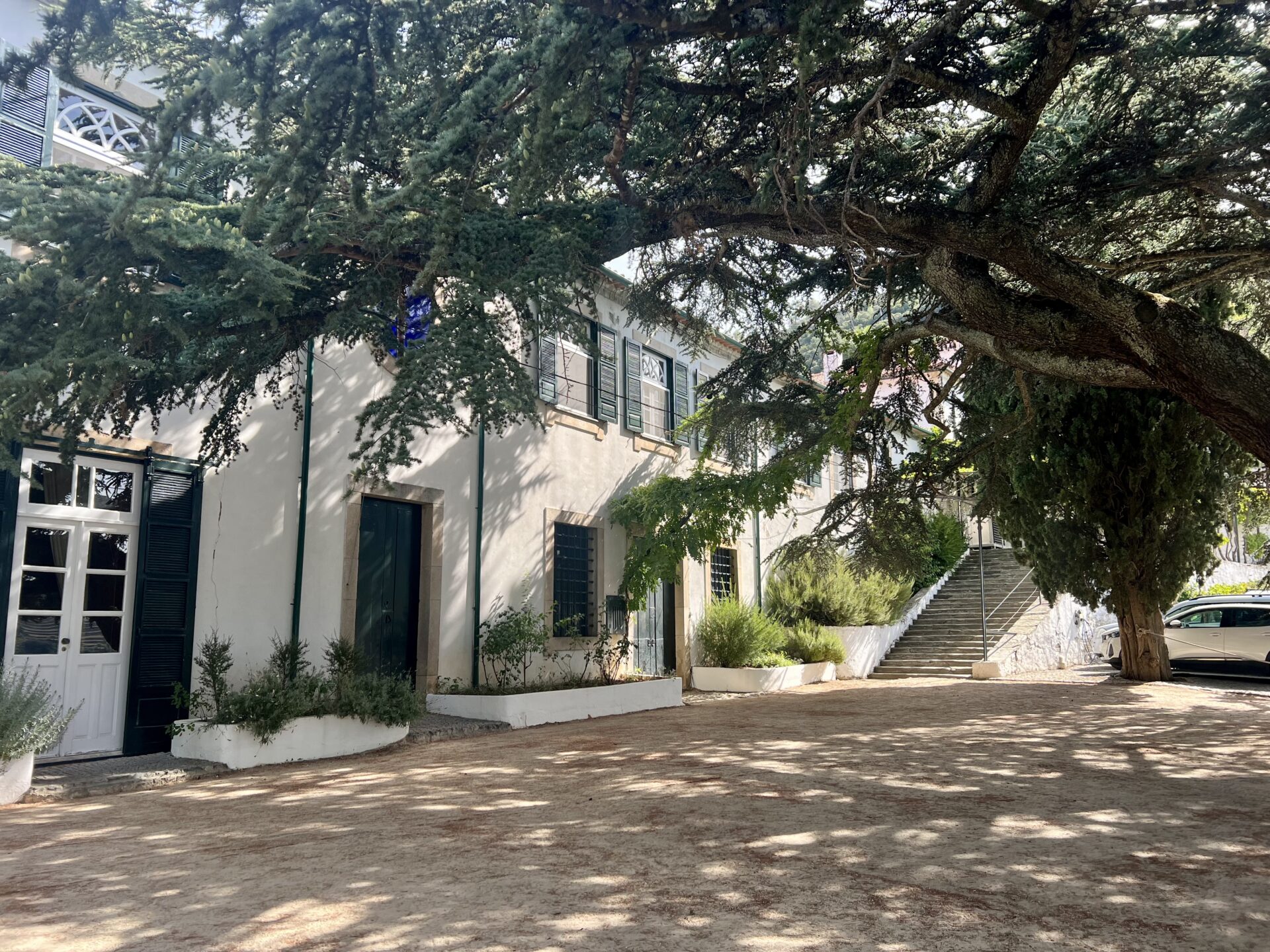
This estate dates back to 1715, with the old buildings, white washed to reflect the heat, perched high up on the slopes. 192ha of vines reach from 100 to 500m above sea level with 30 ha of Olives trees that produce up to 7 000 litres pa.
From the vantage point of the beautiful old house, we could clearly see all three types of vineyard terracing. They use horse drawn ploughs and tiny, specialised Swiss tractors to access them. Such a large vineyard offers a diversity of orientations, sun exposure and altitude across the schist and clay terroir, a diversity that explains the complexity of their wines.

Since the purchase by Axa in1993, a hundred hectares have been replanted and they have introduced plot by plot viticulture, adapting pruning methods and harvest dates to each parcel of vines and fermenting them separately.
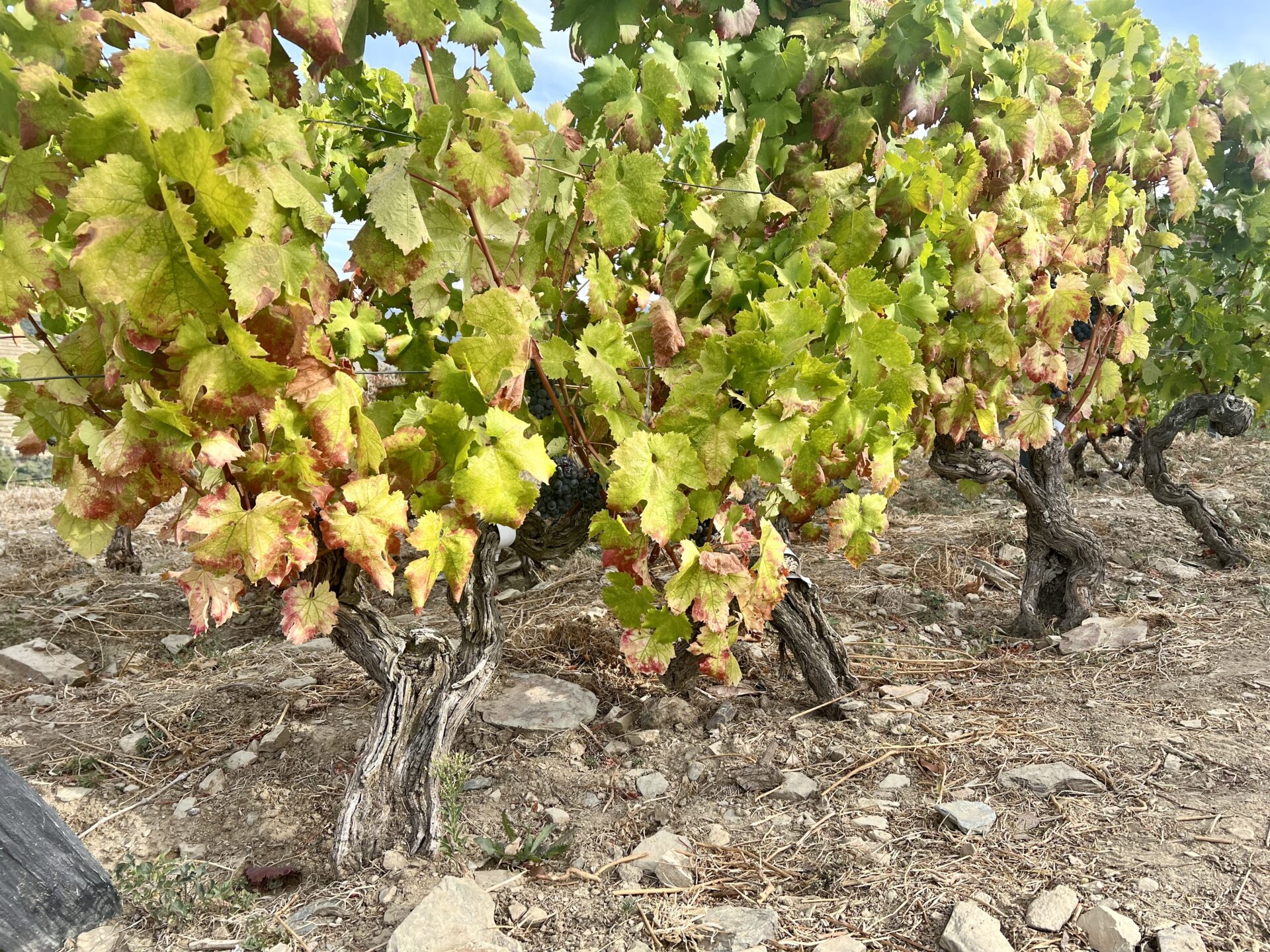
10 of the oldest plots are still planted to field blends, complanted with varieties that are co-fermented in the traditional way and at the very heart of the vineyard there is a tiny, 1.6 ha plot, Nacional. This is a unique plot, planted with rare, ungrafted pre phylloxera vines. From a distance the trellising looks normal but look closer and the staves supporting the trellising wires are in fact cut from pieces of the same schist stone. They are really part of the terroir. This plot produces one of the rarest Port wines of the region, only 200 to 250 cases a year.

Since 1986, Quinta do Noval age their wines here in the Douro. From the terrace of the estate, looking across the valley to Alijo we could see the bottling line and warehouse built 1997. Here they perfectly imitate the Atlantic conditions of Porto with 28% humidity and 16°C temperature. All their activities are centralized here in the Douro Valley, although they still have a shop in Porto where you can buy and taste.
Their Porto wine making is traditional with just a little innovation, they still use the ancient abrasive Granite lagars, foot stomping for a soft extraction then using the robotic ‘feet’ if needed. They add chilled 77° Portuguese, French or Spanish brandy to stop fermentation and bring the wines to 19-22° alcohol.
In the old cellars, big ‘tonéis’ are used to age the Ruby, LBV and Vintage Ports. The wines are tasted in the January of the second year to qualify for vintage with a second tasting to justify. The vintage is always unfiltered.
As you would expect from such a large vineyard, they offer a splendid range and we were again spoiled by the tasting thanks to Patricia Bastos.

Noval has made LBV since the 1950s, the wine to buy in years when no vintage is declared. In 2010 they added the elegant Noval Black reserve to the range, a Ruby blend, it’s a modern take on the label but also the fruitier and lighter style.
Their Tawny Ports are aged in 640L ‘cascos’ and they recently added their very first Fifty Year Old Tawny Port to the 10, 20 and 40 year olds and the Vintage Colheita. These older Tawnys seem increasingly popular, and I can see why – they are simply stunning.
Since 2004 they have added dry Douro wines to their range – next time!
Majestic
I’m very aware that our trip only skimmed the surface of this region and its wines. I had totally underestimated the diversity of Porto. I’ll be back for more port but also more of the table wines, we tasted a few, enough to pique my curiosity. I’d also like to venture further up the river to Vinho Verde – a champion choice for lower alcohol wines.

We made our way back to the city for our last night by the sea and found our way to the stunning Porto Campanha train station. As well as the famous tiled décor there is an amazing collection of food stations running along the side of the station. A final reminder of the diversity of food the region also has to offer and how food friendly these wines really are.
Time was too short, Sally and Laura we missed you. Next time – there’s a lot more to see and taste.
Many thanks to Corinne IIic of Axa Millésimes in Bordeaux for organizing such a fabulous visit and tasting to Quinta do Noval
Thanks for reading right to the end, if you enjoyed this post and would like to receive future posts directly to your in box, please sign up here . You can learn more about Bordeaux with the new Green Edition of Bordeaux Bootcamp, and explore Wine and Wellness, with The Drinking Woman’s Diet or just say hi here.
Comments always welcome below.